Industrial brush density describes how closely the filament, wire, or bristle fill is packed in the working area of the brush. It is one of the main reasons two brushes with the same outside diameter can behave very differently in the same machine.
Density should not be selected alone. It works together with trim height, filament diameter, filament material, wire form, brush pattern, speed, contact pressure, and the surface being brushed. A dense brush can give more coverage and steadier contact, but it can also increase stiffness, machine load, heat, clogging, or surface marking if the rest of the specification is wrong.
What Is Brush Density?
Brush density is the amount of working fill in a defined brush area. In a tufted roller brush, it may relate to tuft count, row spacing, and fill pattern. In a strip brush, it may relate to filament packing inside the metal channel. In a wire wheel brush, it may relate to wire count, wire diameter, crimp, knot construction, and face width. In a spiral brush, it may relate to winding pitch and how closely the strip or fill is wound around the core.
For custom industrial brushes, the practical question is not simply high density or low density. The better question is what contact the process needs: soft guiding, flexible sealing, wide wiping, aggressive cleaning, controlled deburring, bore finishing, product support, or repeatable surface conditioning.
Density, Trim Height, and Filament Diameter Work Together
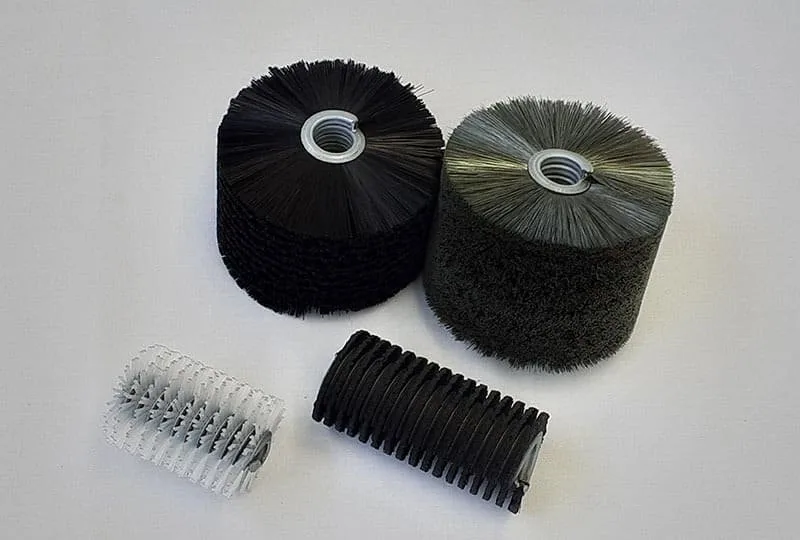
Brush stiffness is not determined by density alone. A brush with long fine filaments can still feel flexible even when the fill looks full. A brush with short thick filaments can feel firm even when the fill pattern is more open. This is why density should be reviewed together with trim height and filament diameter.
| Factor | What It Changes | Practical Effect |
|---|---|---|
| Fill density | Number of contact points across the working area | Changes coverage, wiping consistency, debris release, and machine load. |
| Trim height | Working filament length from the base, core, channel, or backing | Longer trim is usually more flexible; shorter trim is usually firmer and more direct. |
| Filament diameter | Individual filament or wire stiffness | Thicker filaments usually increase stiffness and contact force; finer filaments usually give softer contact. |
| Fill material | Recovery, wear, temperature behavior, corrosion resistance, and surface effect | Nylon, PP, PBT, abrasive nylon, wire, natural fiber, and specialty fills behave differently at the same density. |
| Brush pattern | How the fill contacts the surface over time | Straight rows, staggered rows, chevron, spiral wound, open wound, or dense panel layouts change contact and debris movement. |
How Density Affects Brush Performance
Contact Pressure and Stiffness
Higher brush density usually increases the number of contact points and can make the brush feel firmer. This may help when the process needs stable wiping, repeatable guiding, or more even surface contact. If density is too high for the material or trim height, the brush may become too stiff, overload the machine, or mark the workpiece.
Cleaning and Debris Release
Dense fill can improve coverage, but it can also trap debris, chips, powder, or residue. More open fill may release debris and cleaning media more easily. This is especially important for conveyor cleaning, food processing, bore cleaning, and applications where trapped particles could scratch the surface or contaminate the process.
Surface Finish and Deburring
For abrasive nylon, disc brushes, wire brushes, and polishing brushes, density affects how many cutting or finishing points touch the workpiece. Higher density can give more uniform contact, while lower density can give more flexibility around profiles, edges, and uneven surfaces. The final finish still depends on abrasive grit, wire type, filament size, RPM, pressure, and dwell time.
Heat, Wear, and Machine Load
More fill usually means more friction and more resistance. In powered brushes, that can increase heat, motor load, and wear if speed and pressure are not controlled. Open spacing can improve air or fluid movement through the brush, but may reduce coverage. There is no universal density value that fits every machine.
Density by Brush Type
Different brush families use different ways to create density. For a custom project, the supplier needs to know the brush form before density can be reviewed correctly.
| Brush Type | How Density Is Usually Reviewed | Related Brushcustom Page |
|---|---|---|
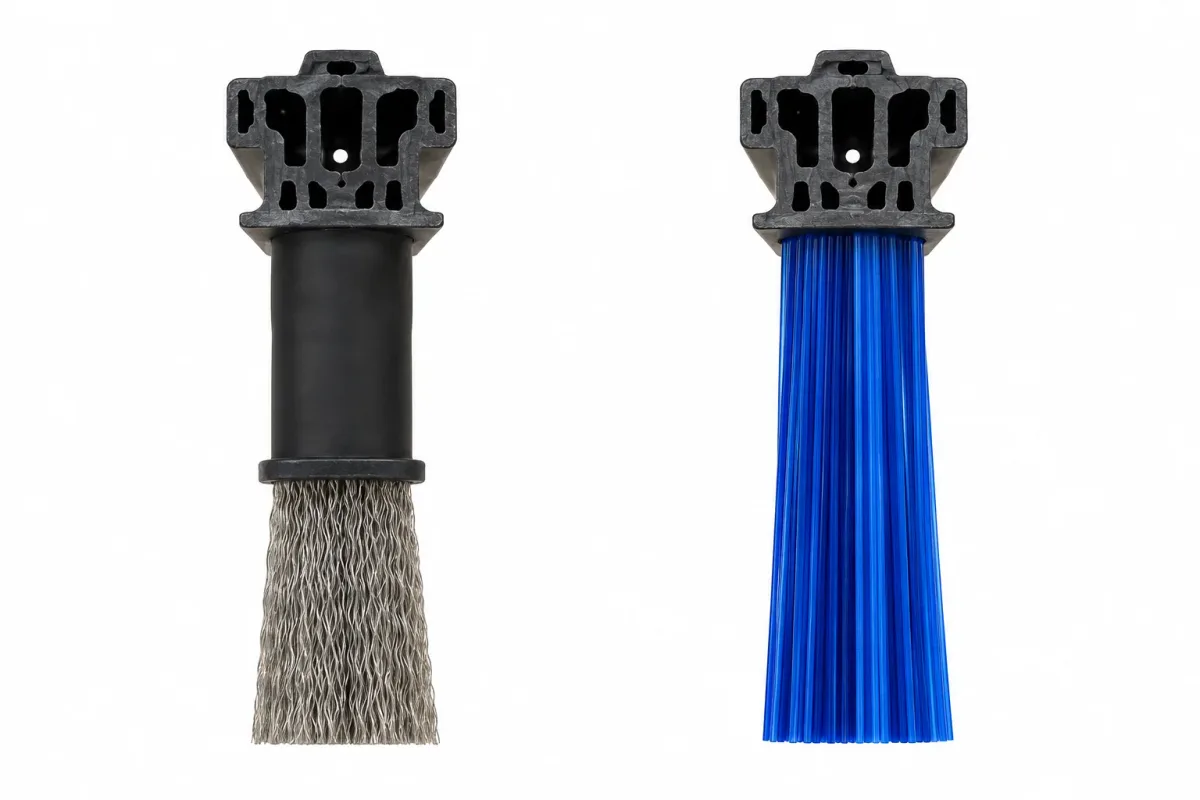
| Strip brushes | Filament packing in the channel, trim height, channel size, and whether the brush must seal, guide, wipe, or block dust. | Custom Strip Brushes |
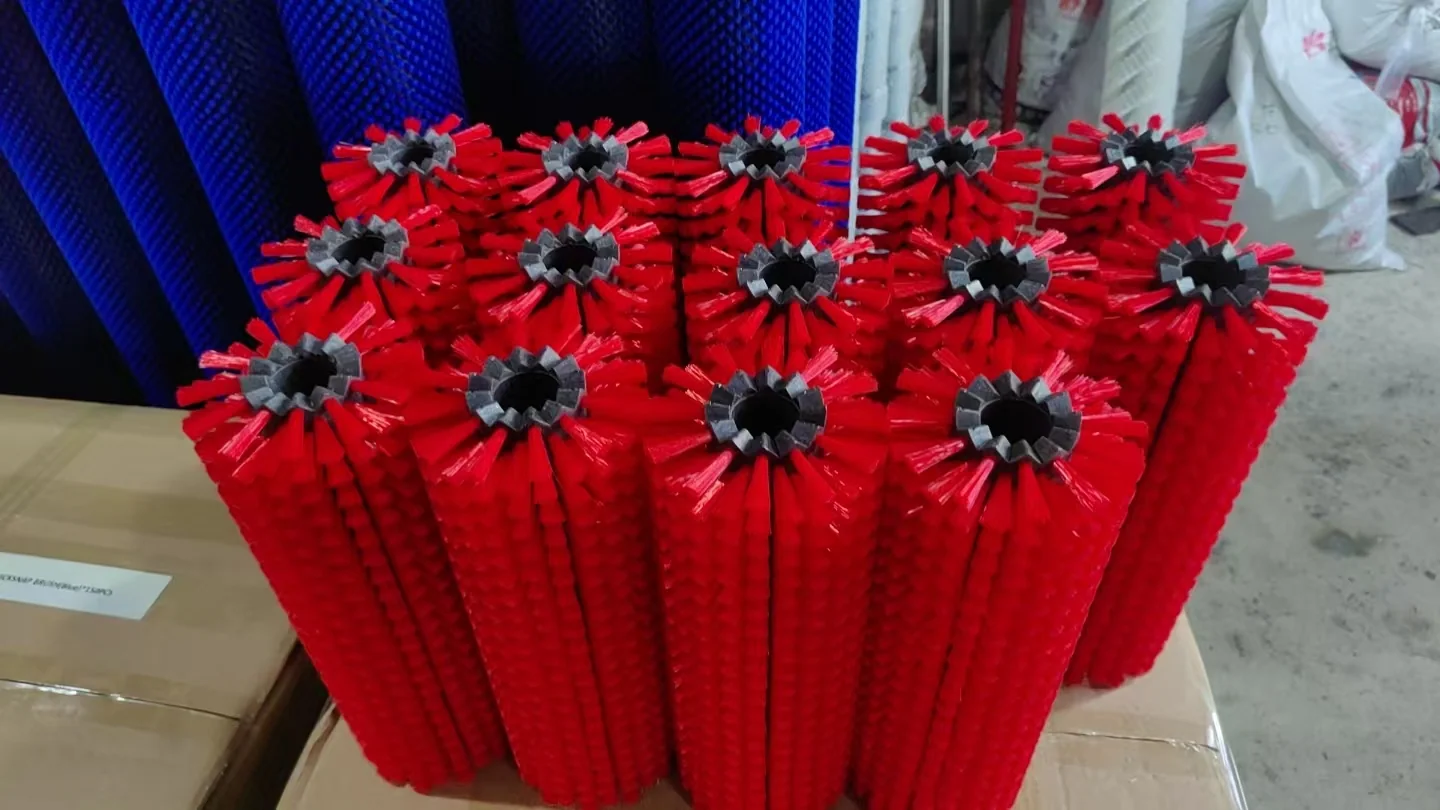
| Cylinder and roller brushes | Tuft count, row spacing, face pattern, finished OD, trim height, and working face width. | Custom Cylinder Brushes |
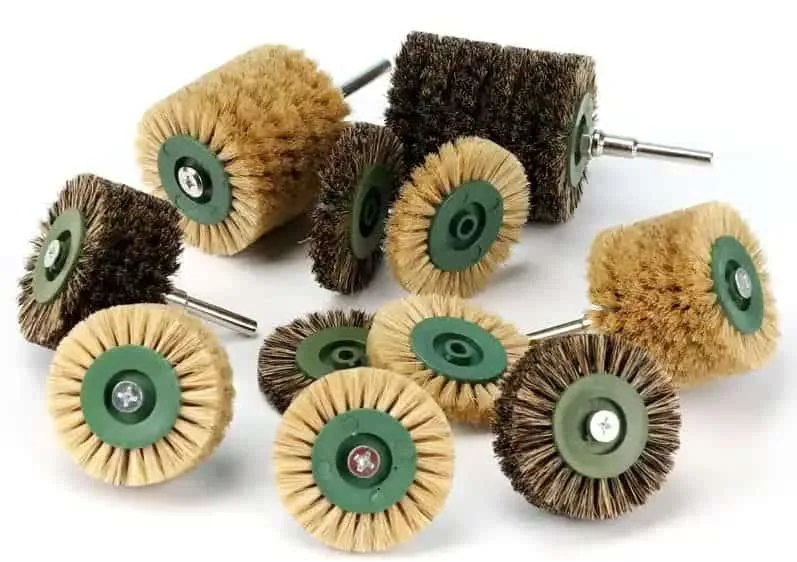
| Disc brushes | Face density, filament type, base or hub design, trim height, working face width, and RPM. | Custom Disc Brushes |
| Wire wheel brushes | Wire count, wire diameter, crimped or knotted form, face width, arbor detail, and safe operating speed. | Custom Wire Wheel Brushes |
| Pipe and tube brushes | Brush diameter relative to the tube ID, fill material, filament stiffness, stem strength, and cleaning depth. | Pipe and Tube Brushes |
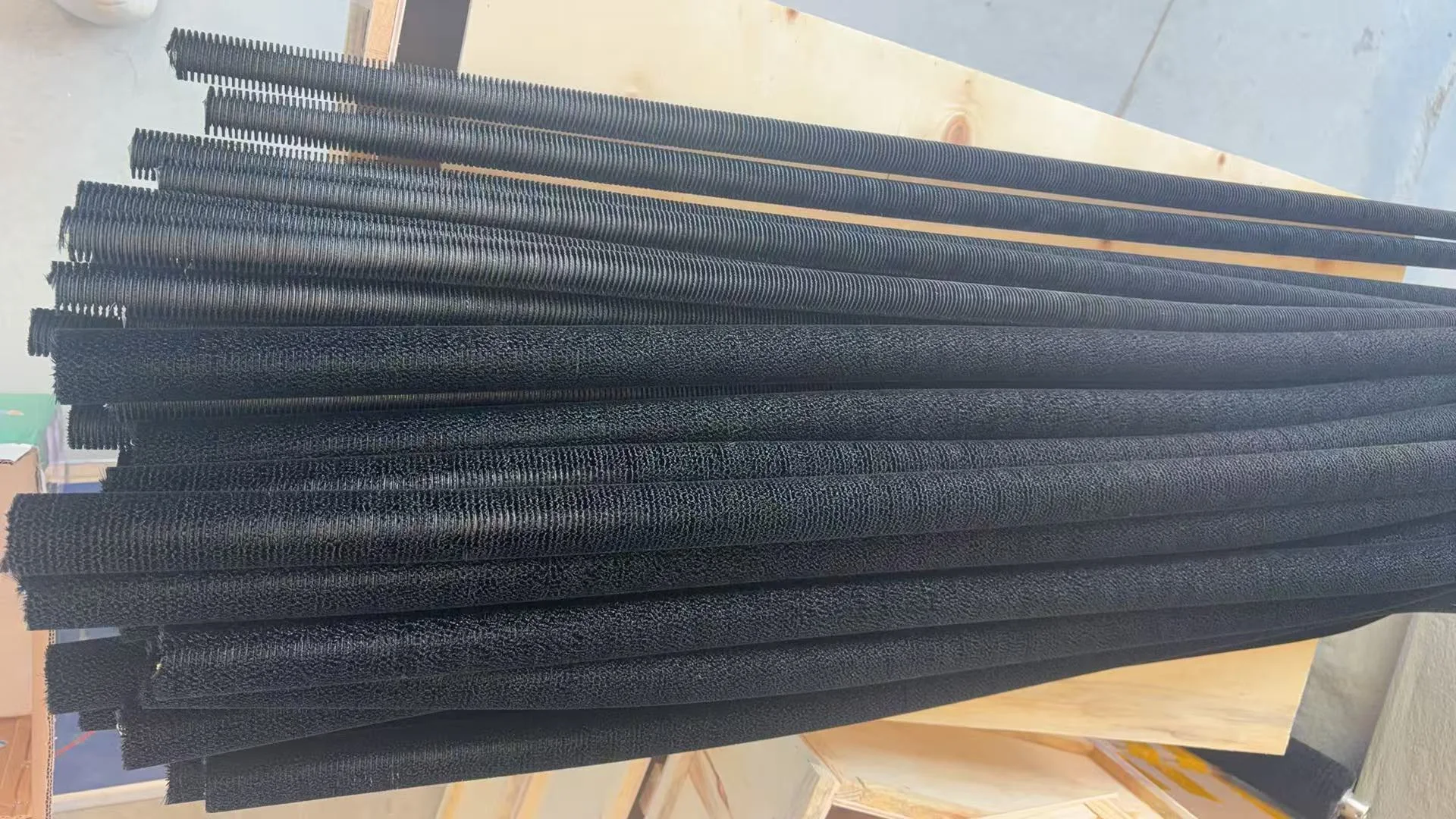
| Spiral brushes | Winding pitch, open or close wound layout, finished OD, trim height, and whether the brush needs cleaning, conveying, or wide contact. | Coil and Spiral Brushes |
| Panel brushes | Fill area, row layout, base size, trim height, hole pattern, and the required support, guiding, wiping, or sealing contact. | Panel Brushes |
When Higher Density Helps
Higher brush fill density can be useful when the process needs more contact points, smoother coverage, or a more continuous brushing effect. It is often reviewed for consistent wiping, broad surface contact, stable product support, polishing, and controlled finishing.
- Sealing and dust control: denser strip brush fill can close uneven gaps more completely, but trim must remain flexible enough to follow the surface.
- Wiping and washing: denser roller brush fill can improve coverage across a wider working face.
- Surface conditioning: denser disc or roller brush fill can help create a more uniform contact pattern.
- Product support: denser panel brush fill can spread load across more contact points and reduce hard-contact pressure.
When Lower or More Open Density Helps
Lower or more open density is not automatically lower quality. In many industrial applications, an open pattern is selected because the process needs flexibility, debris release, product clearance, lower friction, or gentler contact.
- Conveyor cleaning: more open fill can release dust, chips, powder, or carried material instead of packing it into the brush.
- Food and washdown equipment: open spacing may help water movement and reduce residue trapping, depending on the cleaning method.
- Tube and bore cleaning: the brush must contact the internal surface without becoming too difficult to push, pull, or rotate.
- Irregular parts: lower density and longer trim can help the brush follow profiles, corners, or uneven surfaces.
Density Problems Buyers Often Miss
Copying the Old Brush Without Checking Wear
A worn brush can look less dense than the original part. If the old brush has lost trim height, broken filaments, or become clogged, copying only the current appearance may repeat the wrong contact condition. For replacement work, send photos of the installed brush and explain the performance problem.
Using High Density to Fix the Wrong Problem
If cleaning is weak, the issue may be trim height, filament material, filament diameter, speed, pressure, contact angle, or brush position rather than density alone. Increasing density without checking those factors can make the brush stiffer without improving the process.
Ignoring Speed and Balance on Roller Brushes
For larger or faster roller brushes, fill density and pattern affect running behavior, machine load, and balance. If the roller is long, heavy, or high speed, also review shaft detail, finished OD, face pattern, and whether dynamic balancing is required. See Brush Roller Dynamic Balancing.
Forgetting Cleanability and Contamination Risk
Dense fill can hold residue, chips, dust, or broken particles. In food, pharmaceutical, solar, electronics, and sensitive finishing applications, density should be reviewed with cleanability, shedding risk, and surface protection in mind.
What to Provide for a Custom Brush Review
For a custom brush quote, density should be described as part of the full brush specification. If exact density is not known, send a sample or close-up photo and describe what the brush must do in the machine.
- Brush type, photo, drawing, or sample if available.
- Finished OD, working face width, overall length, trim height, and mounting detail.
- Fill material, filament or wire diameter, fill density if known, and color if required.
- Current problem: under-cleaning, surface marking, fast wear, clogging, vibration, poor sealing, or wrong fit.
- Application: sealing, guiding, wiping, washing, deburring, polishing, bore cleaning, conveying, support, or surface preparation.
- Operating conditions: RPM, line speed, contact pressure, wet or dry use, temperature, chemical exposure, and workpiece material.
- Quality target: cleaning result, edge condition, finish requirement, product protection, cleanliness target, or inspection method.
Related Specification Guides
Brush density is one part of the full specification. For dimension and mounting details, see How to Specify a Custom Industrial Brush. For a broad material comparison, see Industrial Brush Filament Materials; for narrower decisions, compare Nylon Brush vs. Wire Brush and High-Temperature Brush Filaments. For abrasive finishing work, see Abrasive Brushes.
FAQs About Industrial Brush Density
Is higher brush density always better?
No. Higher density can improve coverage and contact consistency, but it can also increase stiffness, friction, clogging, heat, and machine load. The correct density depends on trim height, filament diameter, material, brush form, speed, and process duty.
How does trim height affect brush density?
Trim height changes how the density feels in use. Longer trim usually makes the brush more flexible and forgiving. Shorter trim usually makes the brush firmer and more direct. Two brushes with the same density can feel very different if the trim height is different.
What is the difference between fill density and brush stiffness?
Fill density is the amount of fill in the brush. Brush stiffness is the working resistance felt during contact. Stiffness depends on density, filament diameter, material, trim height, brush pattern, and how much the brush is compressed against the surface.
Can Brushcustom match the density of an existing brush?
Brushcustom can review an existing brush from a sample, drawing, or close-up photos. For accurate replacement, also provide the installed function, wear condition, mounting detail, dimensions, and what needs to improve on the old brush.
What if I do not know the current brush density?
You can still start the review. Send photos of the brush face, side view, mounting detail, and the machine contact area. Describe whether the current brush is too soft, too stiff, wearing too fast, clogging, marking the surface, or not cleaning enough. Brushcustom can then review the density direction with the rest of the specification through the RFQ form.