High-temperature brush selection is not decided by the filament material alone. A heat-resistant industrial brush may use metal wire, ceramic fiber, or a specialty synthetic filament, but the same material can behave differently depending on exposure time, contact pressure, RPM, dry or wet operation, chemical conditions, and the way the brush is built. A brush with metal wire may still fail early if the backing, adhesive, core, hub, or mounting detail is not suitable for the real operating environment.
This guide reviews the main documented filament directions used in temperature-resistant cleaning brushes and elevated-temperature industrial brush applications, including stainless steel wire, carbon steel wire, brass or copper wire, titanium wire, ceramic fiber, and nylon grades. Use it as a starting point before confirming the exact material grade, brush form, and supplier technical data.
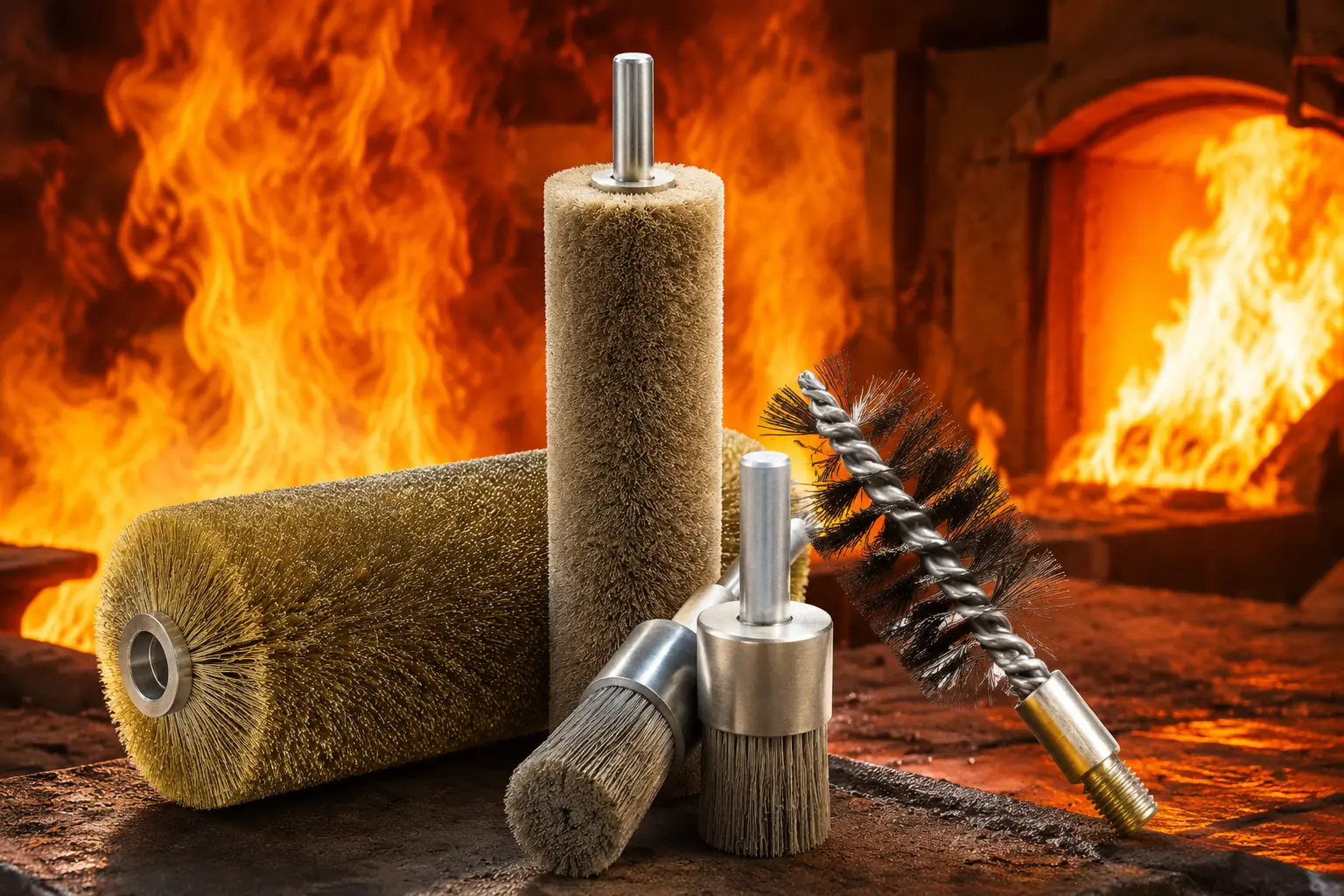
What High Temperature Means for an Industrial Brush
For brush selection, high temperature should be defined by the actual working condition, not by a single catalog number. The review should separate continuous operating temperature, short peak temperature, hot surface contact, radiant heat near an oven or furnace, and friction heat generated by brushing pressure or speed.
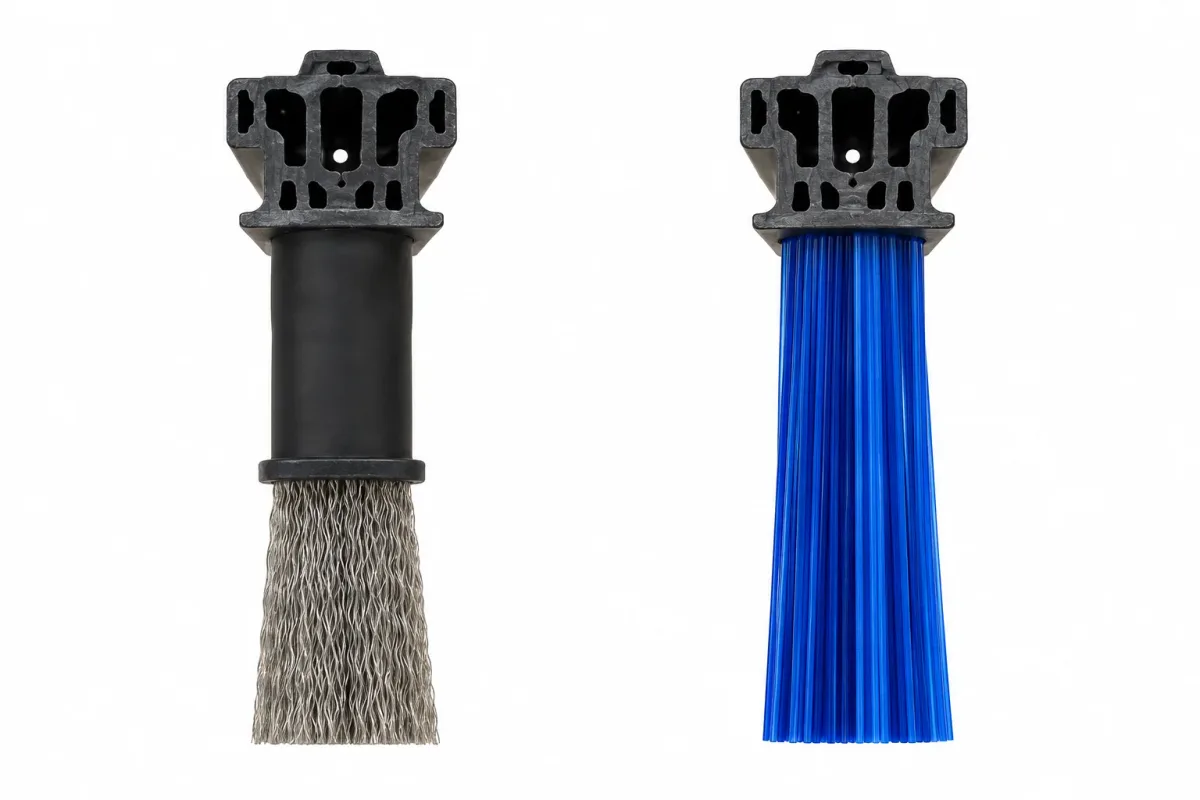
The full brush construction also matters. Metal wire may tolerate more heat than nylon, but the brush may include a plastic core, aluminum hub, adhesive, crimped channel, welded holder, shaft, bearing interface, or other component that sets the real limit. For severe heat exposure, an all-metal construction or mechanically retained fill may be required.
Quick Reference Temperature Ranges
The brush filament temperature ranges below are practical references from material guides and data sheets. They are not a finished-brush temperature rating. The final limit may be lower if the brush uses adhesive, plastic backing, a temperature-sensitive core, high RPM, heavy contact pressure, chemical exposure, or repeated thermal cycling.
| Material Direction | Approx. Temperature Reference | Where It Is Usually Reviewed | Important Limit |
|---|---|---|---|
| PA6 nylon | About 80-100°C continuous; short exposure around 150°C by grade | General cleaning, washing, conveying, wiping, and moderate-temperature contact | Heat can soften the bristle well below its melting point, especially under pressure. |
| PA66 nylon | About 120°C continuous; short exposure around 180°C by grade | More heat-resistant nylon direction for moderate industrial cleaning | Still not a true high-temperature filament for hot metal or oven-adjacent work. |
| PA612 nylon | Use the selected filament grade and supplier TDS | Wet or humid applications requiring more consistent stiffness | Lower moisture absorption does not automatically make PA612 a high-temperature filament. |
| PP | About 80-100°C continuous; short unloaded exposure may be higher by grade | Light-duty wet cleaning, low-cost synthetic fill, chemical or moisture-sensitive applications | Low heat limit; should not be selected for elevated-temperature work. |
| PET / PBT | About 120-150°C | Moisture-resistant synthetic fill where nylon is not ideal | Useful for warmer environments, but not a high-temperature metalworking material. |
| Carbon steel wire | Review carefully above about 300-400°C | Aggressive rust, scale, weld residue, paint, and heavy surface preparation | High heat can reduce hardness and spring recovery; carbon steel can rust, oxidize, or leave ferrous residue. |
| 304 stainless steel wire | Material data often cites about 870-925°C oxidation resistance in air | General stainless wire brushing, cleaning, deburring, and oxide removal | As fine brush wire, long service at much lower temperatures can still accelerate oxidation and spring loss. |
| 316 stainless steel wire | Similar temperature class to 304; about 870-925°C oxidation reference in air | Moisture, chemical exposure, washdown, or corrosion-risk environments | Often chosen for corrosion resistance, not because it is always the highest-temperature stainless option. |
| 310 / 310S stainless steel wire | About 1040-1150°C high-temperature oxidation reference by data sheet | Oven-adjacent, heat-treatment, hot metal, high-temperature dust removal, and repeated elevated-temperature exposure | Best reviewed when oxidation resistance and heat cycling are the main concerns. |
| Brass wire | Conservative continuous review around 150°C; intermittent exposure around 260°C by alloy and duty | Softer non-ferrous contact, lower-sparking needs, mold cleaning, and reduced ferrous contamination | Do not select mainly for high temperature; softening, oxidation, and wire fatigue must be checked. |
| Phosphor bronze wire | Conservative continuous review around 90-100°C; intermittent exposure around 200-230°C by alloy and duty | Non-ferrous contact where more fatigue resistance than brass may be useful | Spring force can decline under heat; confirm alloy and duty cycle. |
| Copper wire | Conservative continuous review around 150°C; intermittent exposure around 200-250°C by duty | Very soft contact, conductive contact, anti-static brush directions, and easily marked surfaces | Lowest stiffness among these non-ferrous options; generally for light cleaning or compatibility needs. |
| Titanium wire | Industrial pure titanium is often reviewed around 300-350°C; specialty titanium alloys may be higher by grade | Titanium parts, aerospace hardware, medical components, and corrosion-sensitive assemblies | Main value is material compatibility and reduced ferrous contamination; above about 600°C in air, oxidation risk becomes severe. |
| Ceramic fiber | Resin-bonded ceramic fiber brush products are often specified around 400°C | CNC deburring, cutter mark removal, edge finishing, and precision surface refinement | Abrasive finishing direction, not a soft cleaning filament; process testing is important. |
Stainless Steel Wire: 304, 316, 310, and 310S
Stainless steel wire brushes are usually the first direction to review when the process needs metal-wire cleaning with better corrosion resistance than carbon steel. They are used for cleaning, deburring, oxide removal, weld cleaning, and surface preparation on industrial parts and equipment.
304 Stainless Steel Wire
304 stainless steel wire is a common general-purpose stainless brush wire. It is often reviewed for cleaning and deburring where corrosion resistance is needed but the environment is not especially chemical, wet, or high-temperature oxidizing. It may be used in wheel brushes, cup brushes, strip brushes, cylinder brushes, and other custom brush forms. Although 304 stainless steel material data gives a high oxidation reference in air, fine brush wire can lose spring recovery, oxidize, or break earlier under repeated brushing, friction, and thermal cycling.
316 Stainless Steel Wire
316 stainless steel wire is reviewed where the process includes moisture, washdown, chemicals, marine exposure, or other corrosion risks. It is not automatically the best choice for every high-temperature job, but it can be the better direction when corrosion resistance matters more than cost or maximum stiffness.
310 and 310S Stainless Steel Wire
310 and 310S stainless steel are reviewed for stronger high-temperature oxidation resistance. If the application is near ovens, heat treatment, hot metal processing, furnace dust removal, or repeated elevated-temperature exposure, 310 or 310S may be a better starting point than 304 or 316. 310S is a lower-carbon version that is often reviewed where welding, heat cycling, or longer high-temperature exposure is part of the process. For continuous furnace transport applications, review our 310S brush furnace rolls. The exact wire grade, wire diameter, brush construction, and exposure cycle still need to be confirmed before release.
Carbon Steel Wire
Carbon steel wire is selected for aggressive cleaning, rust removal, paint removal, weld cleaning, scale removal, and heavy surface preparation. It is usually stiffer and more economical than stainless steel, but it can rust and may leave ferrous residue on the workpiece. At elevated temperatures, carbon steel wire can lose hardness and spring recovery, so hot cleaning applications should be reviewed by wire grade, contact force, exposure time, and acceptable wear rate.
Do not use carbon steel wire as the default direction for stainless steel parts, titanium parts, medical components, food-contact equipment, or corrosion-sensitive assemblies unless the customer has approved the material. For those applications, stainless steel, titanium, brass, bronze, or another compatible material may be safer to review.
Brass, Copper, and Phosphor Bronze Wire
Brass, copper, and phosphor bronze brushes are selected when the process needs a non-ferrous brush direction or a softer contact than steel wire. They may be reviewed for electrical contacts, non-ferrous metals, softer surfaces, lower-sparking requirements, anti-static brush directions, mold cleaning, or applications where steel wire is too aggressive.
These materials should not be presented as the main high-temperature solution simply because their melting points are high. Brass and copper are softer than steel wire, and phosphor bronze may offer better fatigue behavior in some applications, but elevated heat can still reduce spring force and accelerate wear. If heat exposure is part of the process, ask for the exact alloy, continuous or intermittent exposure, and operating condition before confirming brass, copper, or phosphor bronze wire.
Titanium Wire Brushes
Titanium wire brushes are specialty brushes for titanium alloy parts, medical components, aerospace hardware, and corrosion-sensitive environments. Their main value is material compatibility, not general high-temperature cleaning. Titanium wire can help reduce ferrous contamination and dissimilar-metal corrosion risk when stainless steel or carbon steel brush wire is not appropriate for the part.
This direction is especially relevant when the customer works with titanium parts and wants the brush material to match the workpiece more closely. Commercially pure titanium wire is often reviewed in the 300-350°C range, while some specialty titanium alloys may allow a higher range by grade. Titanium should not be selected by melting point; in air, severe oxidation risk increases at high temperature. Confirm whether the process requires commercially pure titanium wire, the target wire diameter, the brush form, and any surface cleanliness or inspection requirement.
Ceramic Fiber Brushes
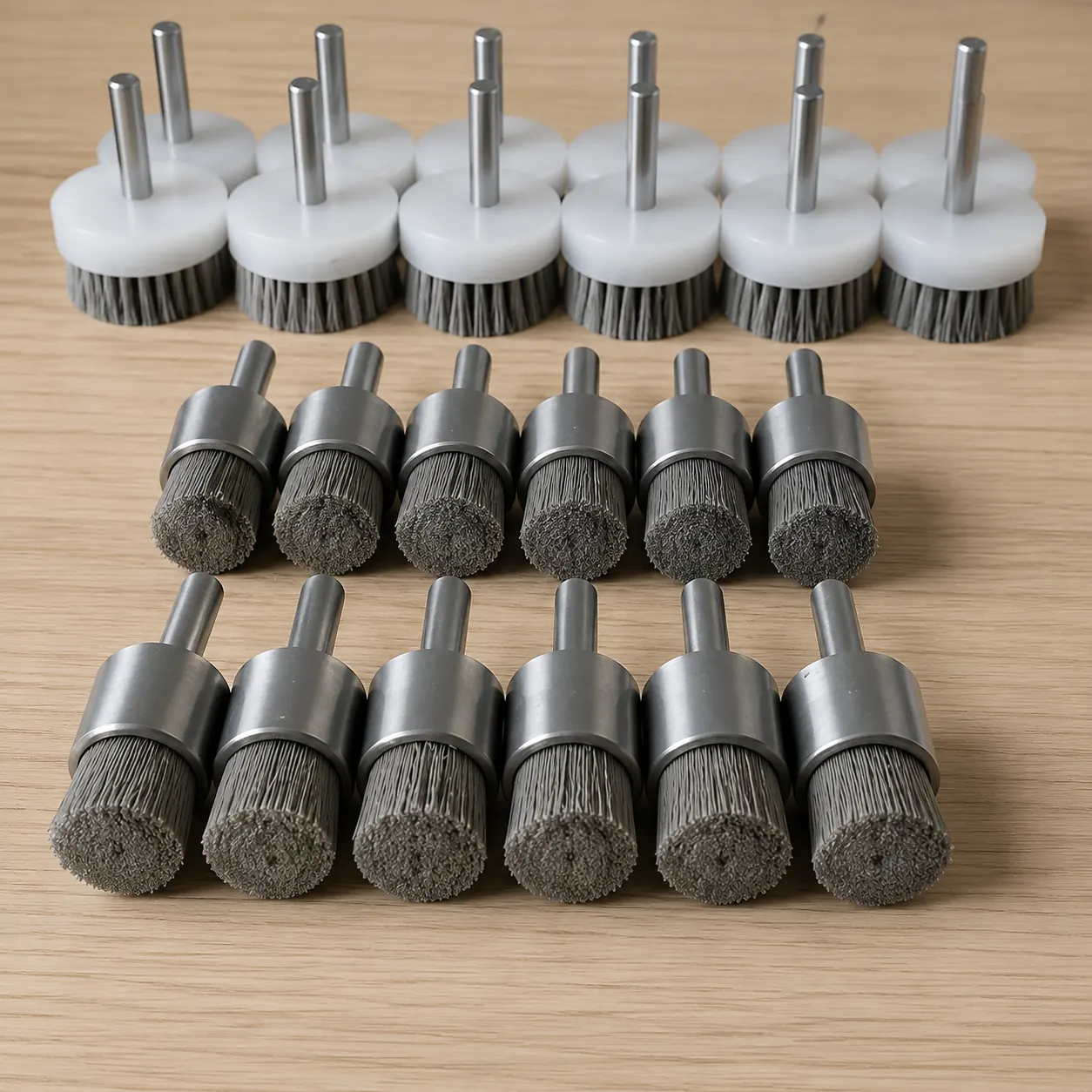
Ceramic fiber brushes are used for controlled deburring, cutter mark removal, edge finishing, and surface refinement. They are different from soft cleaning brushes. The ceramic fiber works as an abrasive cutting or finishing medium, and resin-bonded ceramic fiber brush products are often specified around 400°C. The buyer should define burr condition, material, edge target, machine speed, contact pressure, and inspection method.
Ceramic fiber may be useful where nylon is not strong enough and metal wire is too aggressive or not precise enough. It is commonly reviewed for CNC deburring, internal edges, machined parts, and precision finishing, but the approved process should confirm whether ceramic fiber is suitable for the part surface and tolerance requirement.
Synthetic Filaments and Heat Limits
Standard nylon, PP, PET, and PBT filaments should not be treated as high-temperature brush materials. They may be appropriate for normal cleaning, washing, conveying, sealing, wiping, or surface protection, but their performance drops as heat increases. PA6, PA66, PA612, PP, PET, and PBT each have different heat behavior, but the practical brush limit is usually controlled by continuous load, pressure, deformation, and recovery rather than by melting point alone. Heat can soften the filament, reduce recovery, change stiffness, or cause smearing on the work surface.
Brush Construction Matters as Much as Filament Material
A high-temperature brush should be reviewed as a complete assembly. The following details can decide whether the brush survives the actual process:
- Filament or wire material, grade, diameter, and density
- Brush form: wheel, cup, disc, roller, strip, pipe, or custom assembly
- Core, hub, shaft, channel, holder, or backing material
- Adhesive, welding, crimping, mechanical retention, or other fill-retention method
- Continuous temperature, peak temperature, thermal cycling, and exposure time
- RPM, line speed, contact pressure, and dry or wet brushing condition
- Chemicals, oils, coolants, solvents, moisture, or corrosion risk
- Surface sensitivity, contamination limits, and inspection method
Brush Types Commonly Reviewed
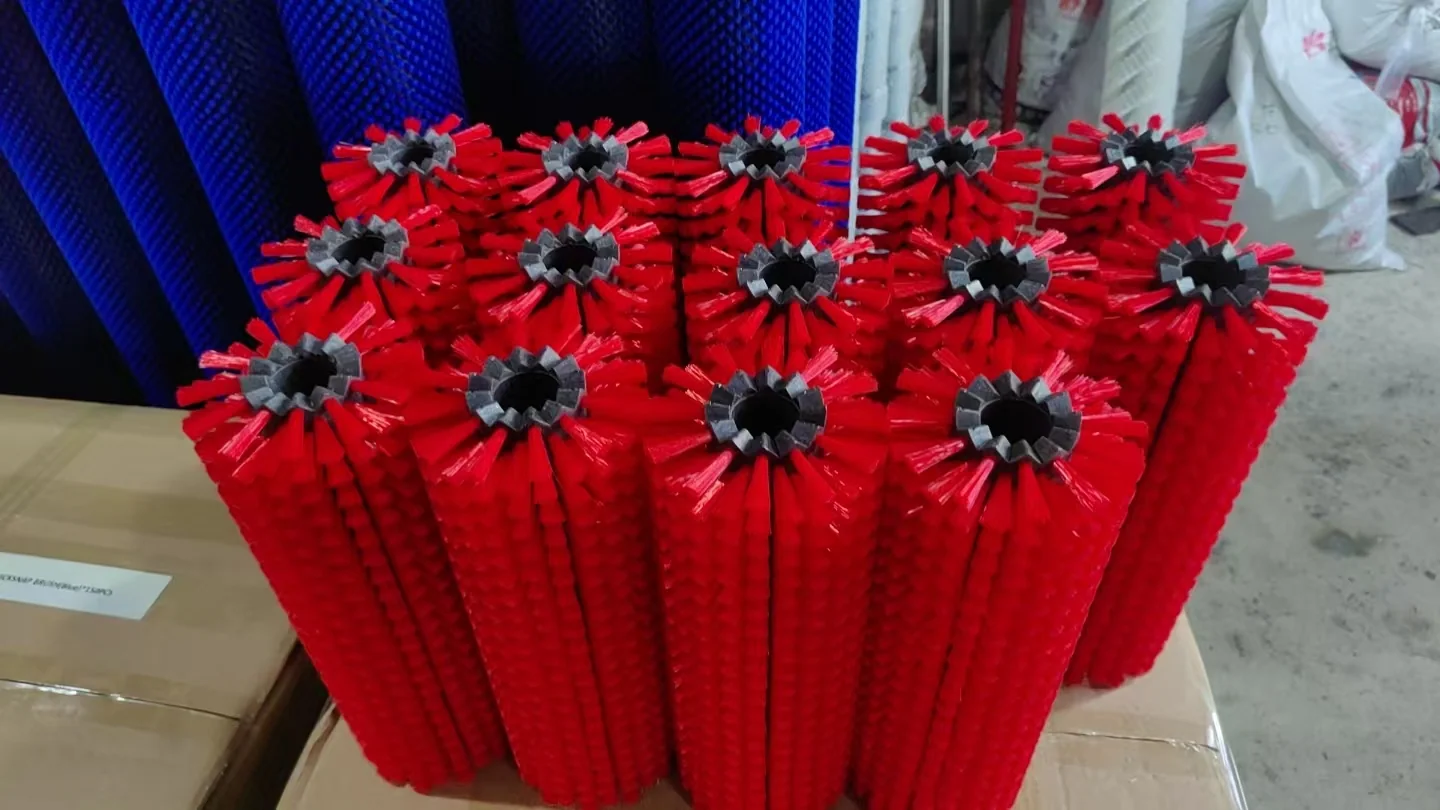
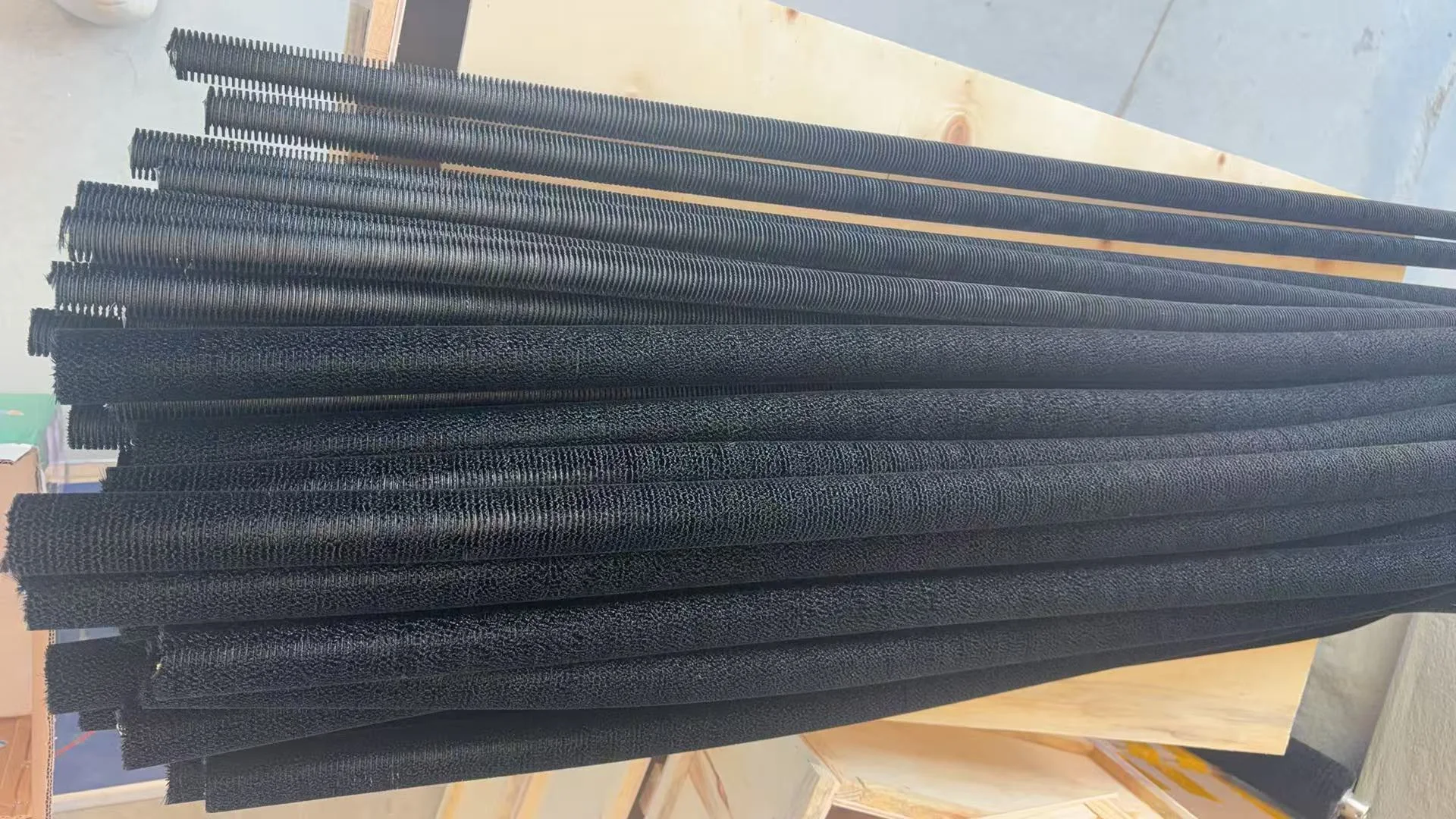
Different brush forms handle heat exposure differently because they contact the workpiece in different ways. Custom wire wheel brushes are reviewed for edge-contact cleaning, weld cleaning, and stronger surface preparation. Custom disc brushes are used where controlled face contact is needed for deburring or finishing. Custom cylinder brushes may be used for broad surface contact or line-mounted equipment, but the core, shaft, balance, and RPM need careful review. Strip brushes may be used near hot equipment openings or barriers when the backing and holder are suitable for the exposure.
For internal bores, tubes, ports, or cross-holes, review pipe and tube brushes. For abrasive finishing questions, see the abrasive brush guide.
If temperature is only one part of the selection and the project also needs a comparison of moisture, chemicals, wear, surface effect, or static control, begin with the Industrial Brush Filament Materials Guide.
Information to Provide Before Material Selection
For a high-temperature brush quote, send the operating temperature, peak temperature, exposure time, workpiece material, surface condition, cleaning or finishing target, brush type, RPM, contact pressure, chemical exposure, wet or dry condition, and any contamination restriction. A drawing, sample photo, worn brush, or machine reference is helpful because the mounting and retention method may set the real temperature limit.
If the project involves titanium, stainless steel, medical parts, aerospace parts, food equipment, or corrosion-sensitive components, include the required material compatibility or cleanliness standard before release. This helps avoid selecting a brush that cleans the surface but creates a contamination or inspection problem later.
FAQ
What is the best brush material for high-temperature cleaning?
For high-temperature cleaning, stainless steel wire is usually the first material direction to review. 304 stainless steel is a general-purpose option, 316 is reviewed where corrosion resistance matters, and 310 or 310S is reviewed where high-temperature oxidation resistance or repeated heat cycling is important. Carbon steel may be used for aggressive cleaning where ferrous residue is acceptable, while ceramic fiber may be reviewed for precision deburring and finishing rather than general cleaning.
Can nylon brushes be used for high-temperature applications?
Standard nylon brushes should not be selected for true high-temperature service. PA6, PA66, and PA612 have different moisture absorption and operating behavior, but elevated heat can soften the filament, reduce recovery, and change brush performance long before the melting point. Use the selected filament grade and supplier TDS before approving any heated application.
Which stainless steel wire is best for high-temperature brushes?
304 stainless steel is a common general-purpose direction, 316 is reviewed for stronger corrosion resistance, and 310 or 310S is reviewed when high-temperature oxidation resistance, furnace-adjacent use, or repeated heat cycling is important. The best choice depends on temperature, exposure time, corrosion, surface material, and brush construction.
Are brass and copper brushes high-temperature brushes?
Not by default. Brass and copper wire brushes are more often selected for softer non-ferrous contact, low-sparking needs, or reduced ferrous contamination risk. If heat exposure is present, the exact alloy, wire size, duty cycle, and surface requirement should be confirmed.
Why use titanium wire brushes?
Titanium wire brushes are reviewed for titanium alloy parts, medical components, aerospace hardware, and corrosion-sensitive environments. Their main purpose is to reduce ferrous contamination and dissimilar-metal corrosion risk, not to replace stainless steel as the normal high-temperature brush wire. Titanium temperature suitability should be checked by grade and by whether the brush works in air, moisture, or a protected process environment.
Are ceramic fiber brushes the same as wire brushes?
No. Ceramic fiber brushes are abrasive finishing tools used for controlled deburring, cutter mark removal, edge finishing, and surface refinement. They should be selected by burr condition, part material, machine setup, and finish target.
What is the safest way to confirm a high-temperature brush material?
Confirm the actual material grade, supplier technical data sheet, brush construction, operating temperature, peak temperature, contact pressure, RPM, and environment. For critical applications, test the brush on the real part or approved process before production release.