
Industrial Brush Manufacturers, Suppliers & Companies

Food Grade Brushes for Food Processing Lines

Custom food grade brushes for washing, conveying, grading, coating support, cleaning, and OEM food processing equipment where hygiene, repeat fit, and contamination control matter.

Food Processing Equipment

Built for Food Processing Equipment

Food processing brushes are usually selected around the production line first: what the brush touches, how it is cleaned, how often it is replaced, and what hygiene or foreign-body controls the plant follows.

For food manufacturers, OEMs, and maintenance teams, a food grade brush needs to do more than clean or move product. It should match the equipment dimensions, use suitable food-contact material direction, withstand the cleaning method, and fit the plant's HACCP, SSOP, color-coding, and replacement practices.

Food-contact material directionHACCP / SSOP reviewRepeat replacement fit
Common Uses

Where Food Grade Brushes Are Used

Food processing brush selection starts with the task on the line. Washing, grading, coating, wiping, and hygienic cleaning can require different brush forms, filament stiffness, and replacement practices.

01

Washing

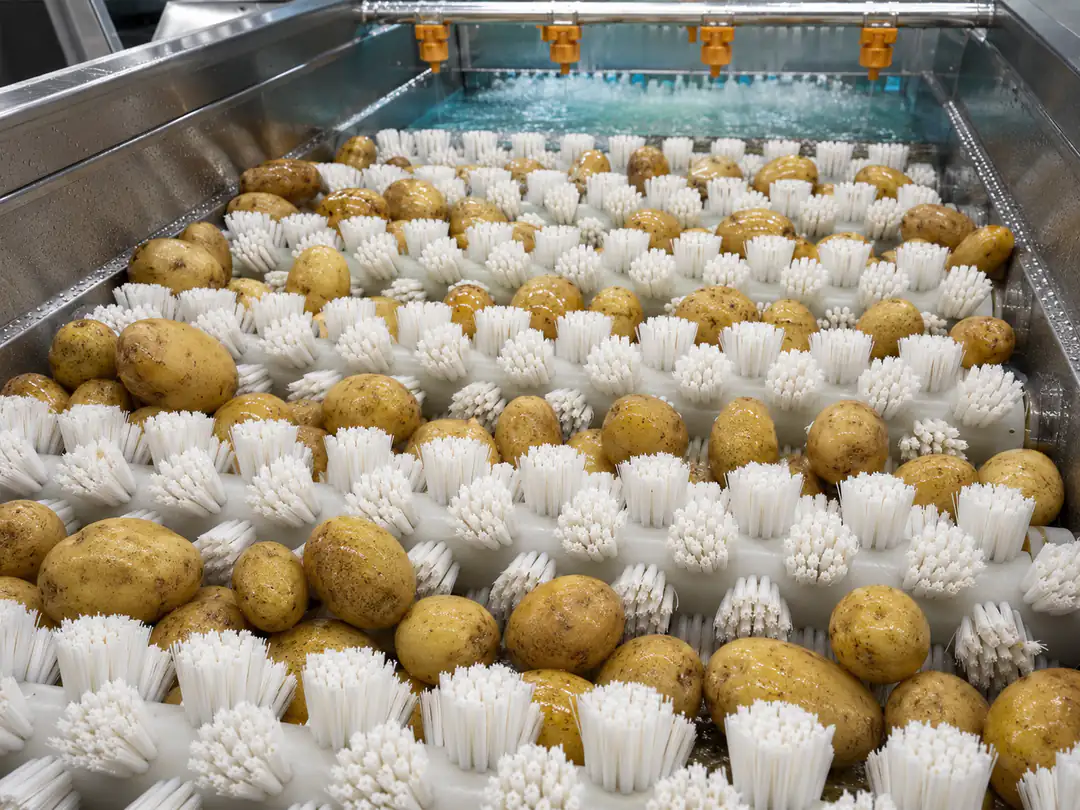
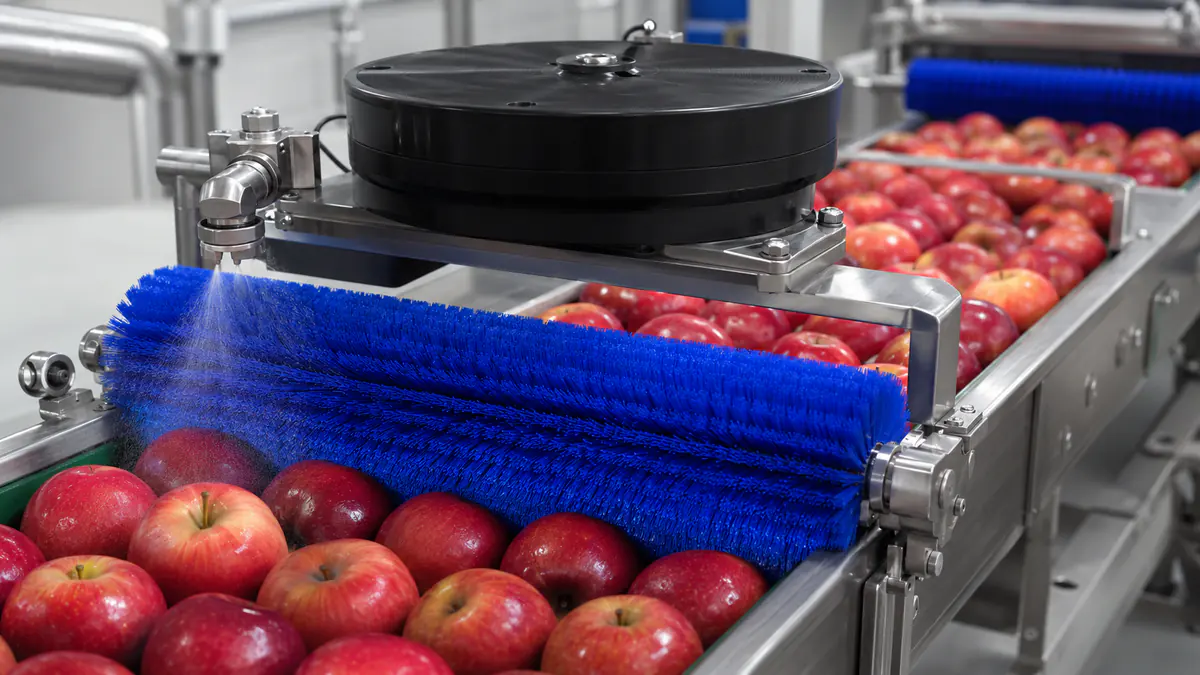
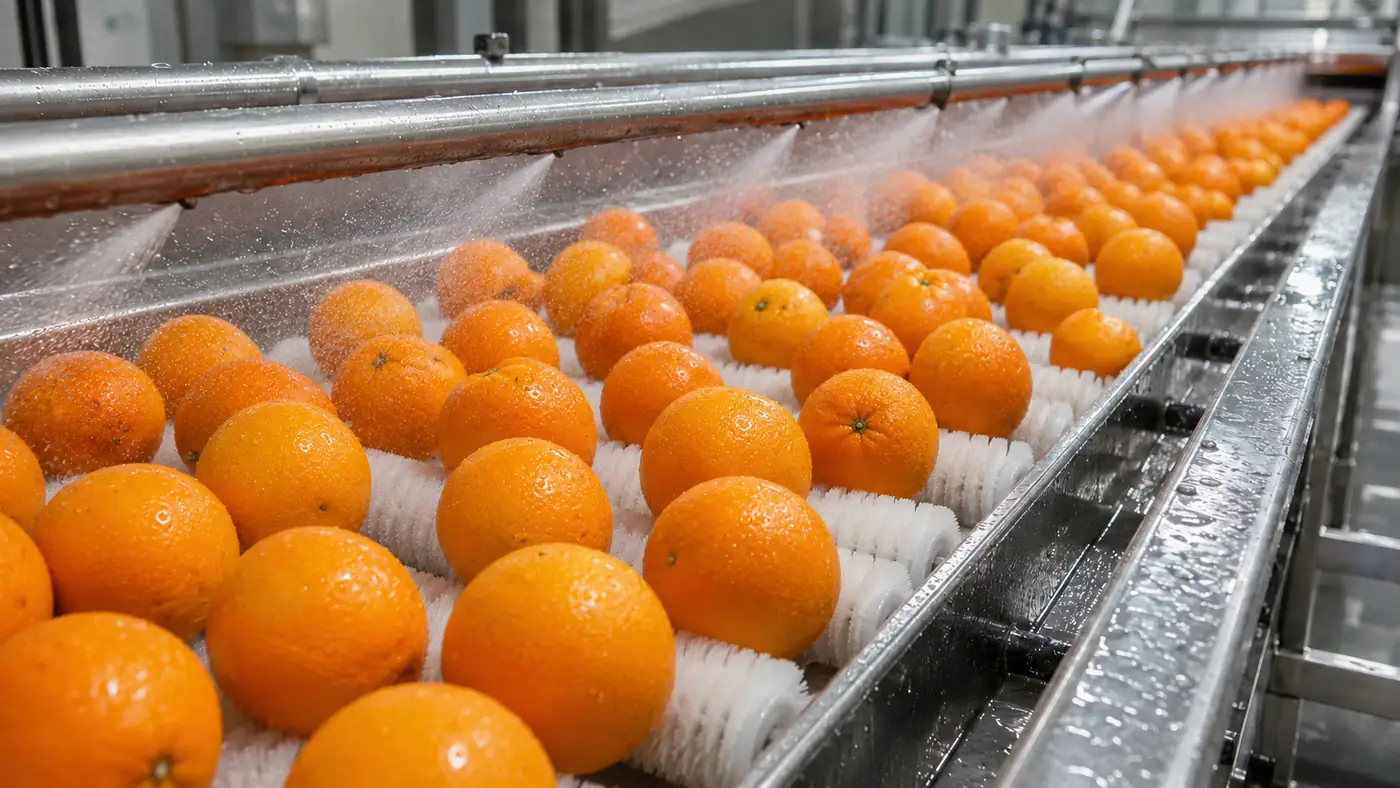
Tufted roller brushes are used in fruit, vegetable, and egg washing equipment where residue removal and gentle product contact must be balanced. Filament material, trim height, and roller pattern should match water exposure, cleaning temperature, product sensitivity, and wear requirement.

02

Grading and Gentle Conveying

Brush rollers can help guide, separate, rotate, or carry products through grading and sorting equipment while reducing bruising or surface damage.

03

Waxing and Coating Support

Food processing brushes may support fruit waxing, glaze application, oiling, seasoning, or coating distribution where the process needs controlled, even contact rather than aggressive brushing.

04

Conveyor and Equipment Cleaning

Strip brushes, roller brushes, and panel brushes may be used for conveyor cleaning, wiping, dust control, gap control, or machine support around food processing equipment.

05

Hygiene and Facility Cleaning Tools

Food plants may also need hygienic brushes for SSOP cleaning, color-coded zones, allergen control, and food-contact or non-food-contact area separation.

Brush Formats

Brush Types Commonly Reviewed

Most food processing brush projects begin by matching the brush form to the equipment first, then reviewing material, pattern, color, and cleaning exposure.

Food grade roller brushes with blue and yellow synthetic filaments

Food Grade Roller Brushes

Tufted roller brushes are often used on washing, grading, egg washing, fruit handling, and multi-roller food processing lines. Brush diameter, face length, shaft detail, filament material, filament diameter, and filling pattern should match the original equipment or process duty.

Food Grade Roller Brushes ->
Food grade spiral strip roller brushes with red and blue synthetic filaments

Spiral Strip Roller Brushes

Spiral strip roller brushes provide continuous contact across the roller face and are often reviewed for scrubbing, washing, and heavier-duty food line applications. Long rollers or higher-speed equipment may require attention to shaft strength and dynamic balance.

Spiral Strip Roller Brushes ->
Food grade strip brushes with red synthetic fill in black holders

Food Grade Strip Brushes

Food grade strip brushes can support sealing, guiding, wiping, dust control, and controlled contact around conveyors or machine openings. They should be reviewed by channel material, fill material, trim height, mounting method, and washdown exposure.

Food Grade Strip Brushes ->
Color coded hygienic pipe and tube cleaning brushes for food processing sanitation

Hygienic Tube and Cleaning Brushes

Hygienic tube brushes, pipe cleaning brushes, and long-reach cleaning brushes may be used for SSOP cleaning, pipe or nozzle access, valves, drains, machinery gaps, and color-coded sanitation programs. These should be reviewed by diameter, working length, stem material, filament stiffness, color system, cleanability, and replacement practice.

Hygienic Tube and Cleaning Brushes ->
Filling Pattern

Filling Pattern

Tufted roller patterns such as full, wavy, high-low, chevron, or spiral can change contact behavior, water movement, product rotation, and cleaning action. Replacement brushes should normally follow the original equipment pattern unless the process is being redesigned.

Food roller brush filling pattern options including full, wavy, high-low, chevron, and spiral patterns
Material and Hygiene Review

Material, Hygiene, and Contamination-Control Questions

Food-grade brush selection should be reviewed against the plant's actual product, washdown method, foreign-body controls, color system, and audit documentation needs. Avoid assuming one universal material or color rule fits every plant.

Food-contact brush material options shown as blue, white, and green synthetic roller brushes
01

Food-Contact Material Direction

Common food processing brush materials include PA nylon grades, PBT, PP, and stainless steel shafts or cores depending on the equipment and cleaning environment. Actual material suitability should be confirmed by application, temperature, chemical exposure, and any required food-contact documentation.

Food processing roller brushes showing different filament diameter and stiffness directions
02

Filament Diameter and Stiffness

Fine or softer filaments are used where gentle washing, product handling, or surface protection matters. Stiffer or more wear-resistant fills may be needed for scrubbing or heavier residue removal. The wrong stiffness can cause under-cleaning, product damage, or faster brush wear.

04

Color Coding

Food plants often use color-coded brushes or tools to separate hygiene zones, raw and ready-to-eat areas, allergens, or non-food-contact cleaning tasks. The color system should match the customer's written plant standard rather than a universal color rule.

05

Metal Detectable or X-Ray Visible Options

Metal detectable or X-ray visible brush parts may help with foreign-body control in open product areas, but detection is not guaranteed by material name alone. The plant should validate detectability against its own detector, product effect, fragment size, and inspection process.

06

Washdown, Heat, and Chemical Exposure

Wet lines, sanitizer exposure, alkaline or acidic cleaning, hot-water rinsing, and drying method can all affect brush life. Material selection should be reviewed together with the plant's cleaning program and the equipment location.

RFQ Specification Guide

Information Needed for a Food Brush Quote

The fastest way to quote a food processing brush project correctly is to review both the mechanical fit and the plant requirements. A drawing, measured sample, or clear marked photo is the best starting point for replacement work.

Request a Quote
01

Equipment and Process

Tell us whether the brush is used for washing, grading, conveying, waxing, coating support, sealing, wiping, or maintenance cleaning.

02

Dimensions and Interface

Provide outside diameter, total length, working face width, shaft diameter, bore or spindle detail, end connection, and whether the brush is supplied with or without a shaft.

03

Brush Construction

Confirm whether the brush is tufted, spiral wound, strip brush, panel brush, or pipe brush. If it is a replacement part, a drawing, measured sample, or clear marked photo is the fastest starting point.

04

Filament and Pattern

Provide filament material if known, filament diameter, trim length, fill density, color, and roller pattern. For food processing rollers, changing the pattern can change cleaning, water movement, and product handling.

05

Operating Conditions

Share water exposure, cleaning chemicals, temperature range, RPM, duty cycle, product type, and replacement frequency if available.

06

Compliance and Plant Requirements

Tell us whether the project requires color coding, food-contact material documentation, metal detectable components, X-ray visible parts, or customer-specific audit documents.

Food Grade Brush RFQ

Need a Food Grade Brush Matched to Your Line?

Send a drawing, sample, marked photo, or equipment details. We can review brush type, dimensions, material direction, hygiene requirements, and replacement needs before quoting.

Request a Quote