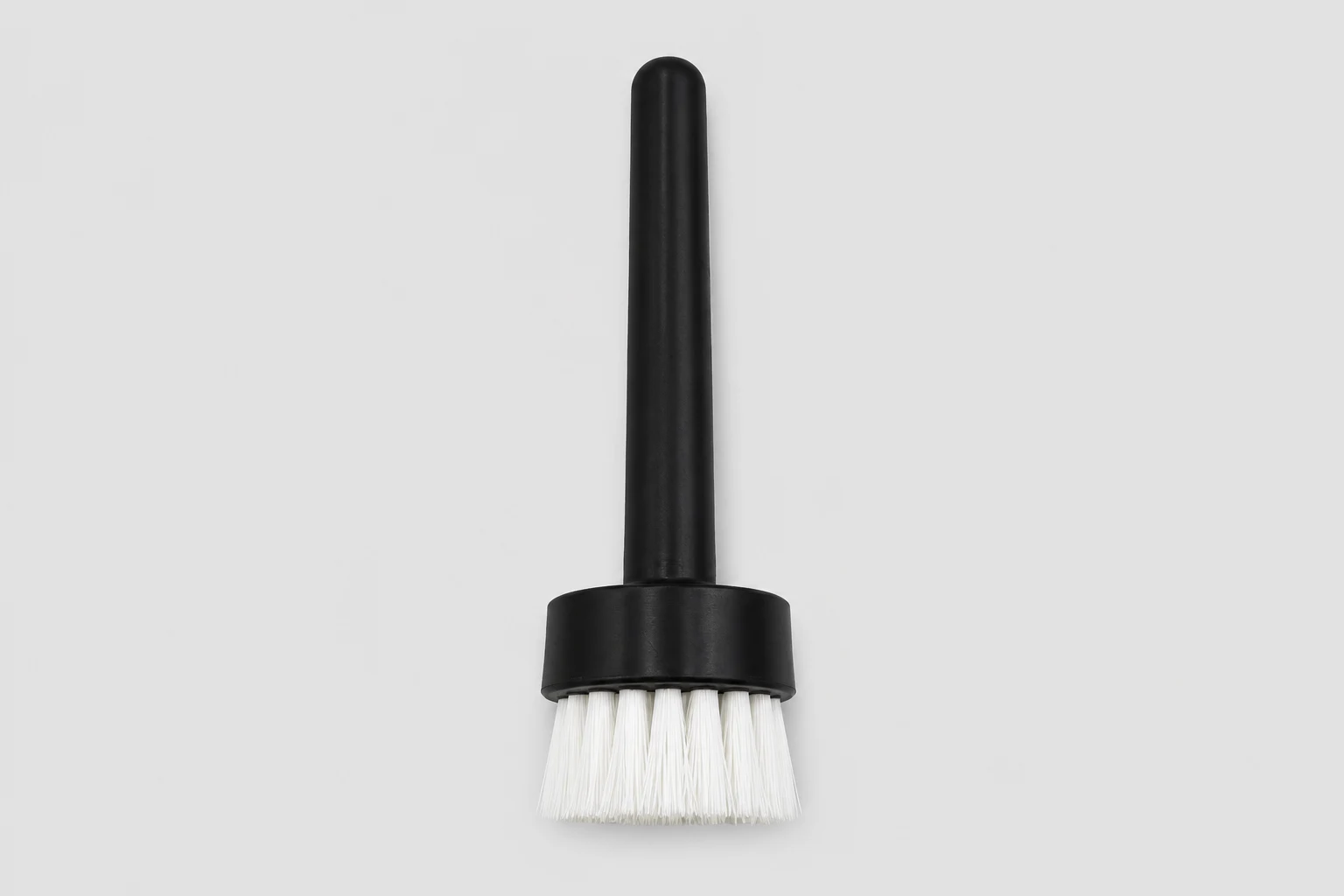
Tufted end brushes
Tufts are set into a brush body to create an axial working face. The body, tuft pattern, trim, and mounting can be made from the drawing for custom fixtures, jigs, and production equipment.
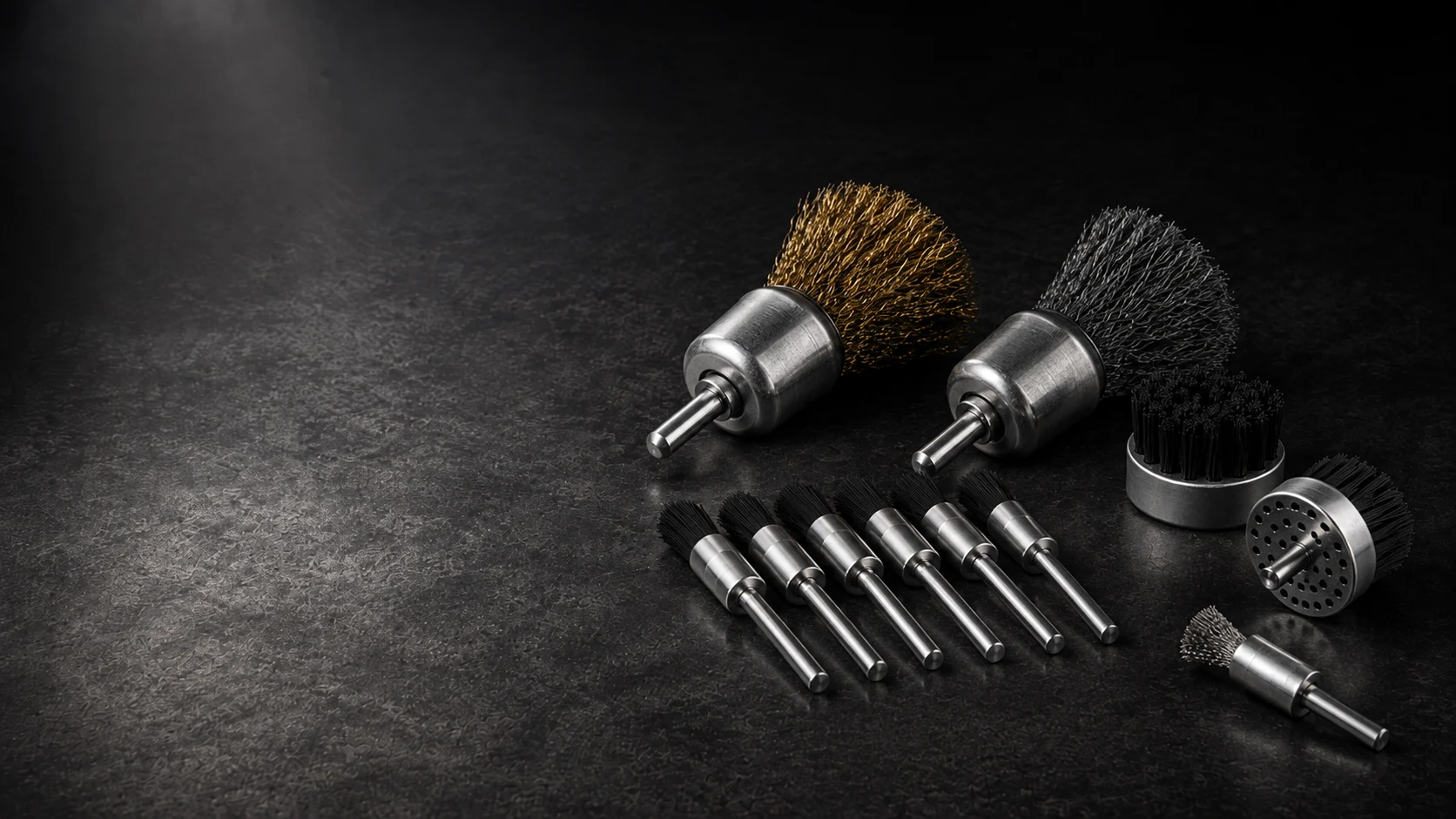
Custom end brushes for cleaning, deburring, rust removal, and surface finishing in confined or difficult-to-reach areas. Specify the construction, filament, brush body, mounting interface, and working dimensions for the application.
Request a QuoteAn end brush is a rotary brush with its working filaments oriented along the tool axis. Its compact face reaches corners, recesses, slots, and mold details for localized cleaning, deburring, or finishing.
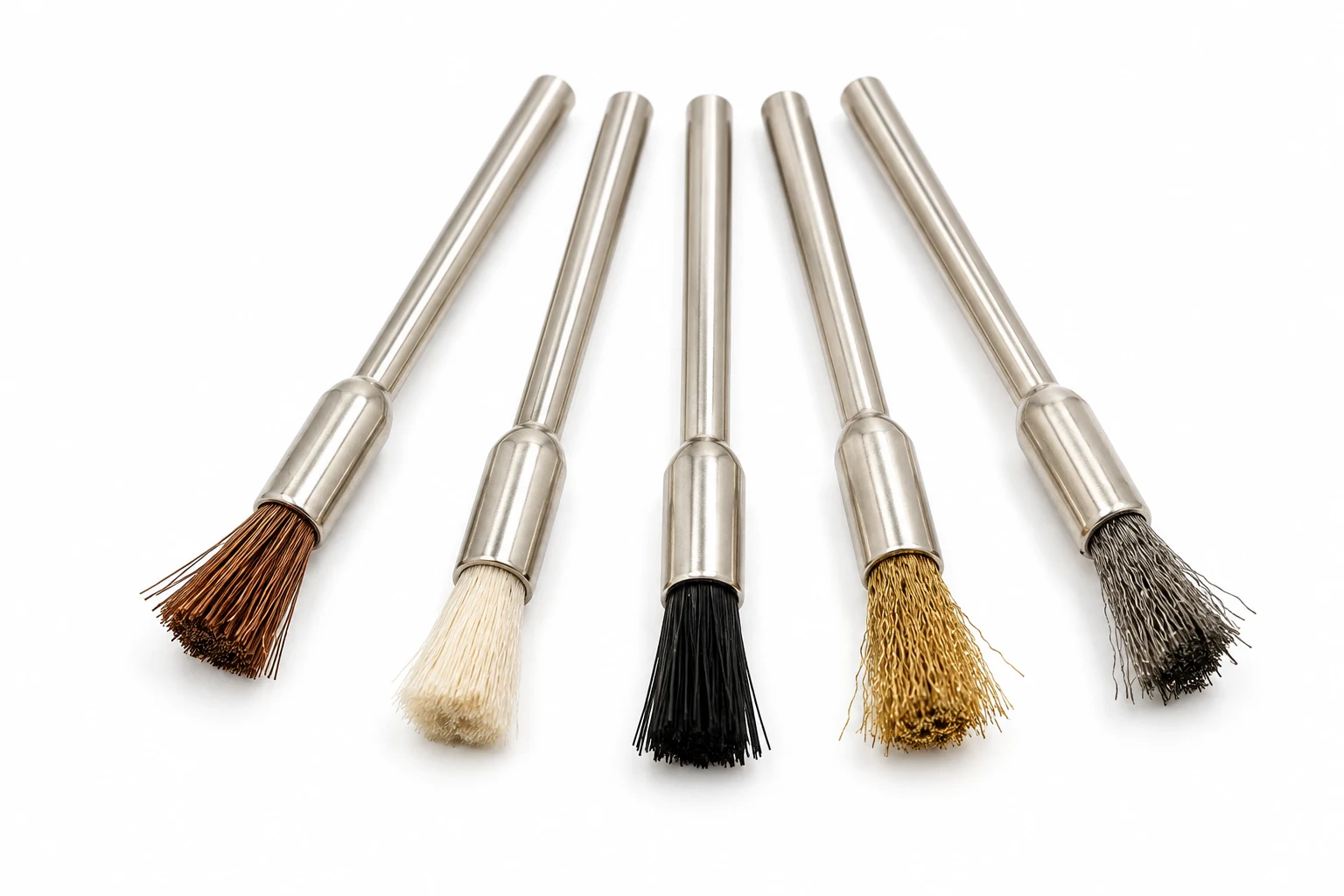
Choose the brush construction and, where metal wire is used, the wire form. Filament material and abrasive system are selected separately below.
Tufts are set into a brush body to create an axial working face. The body, tuft pattern, trim, and mounting can be made from the drawing for custom fixtures, jigs, and production equipment.
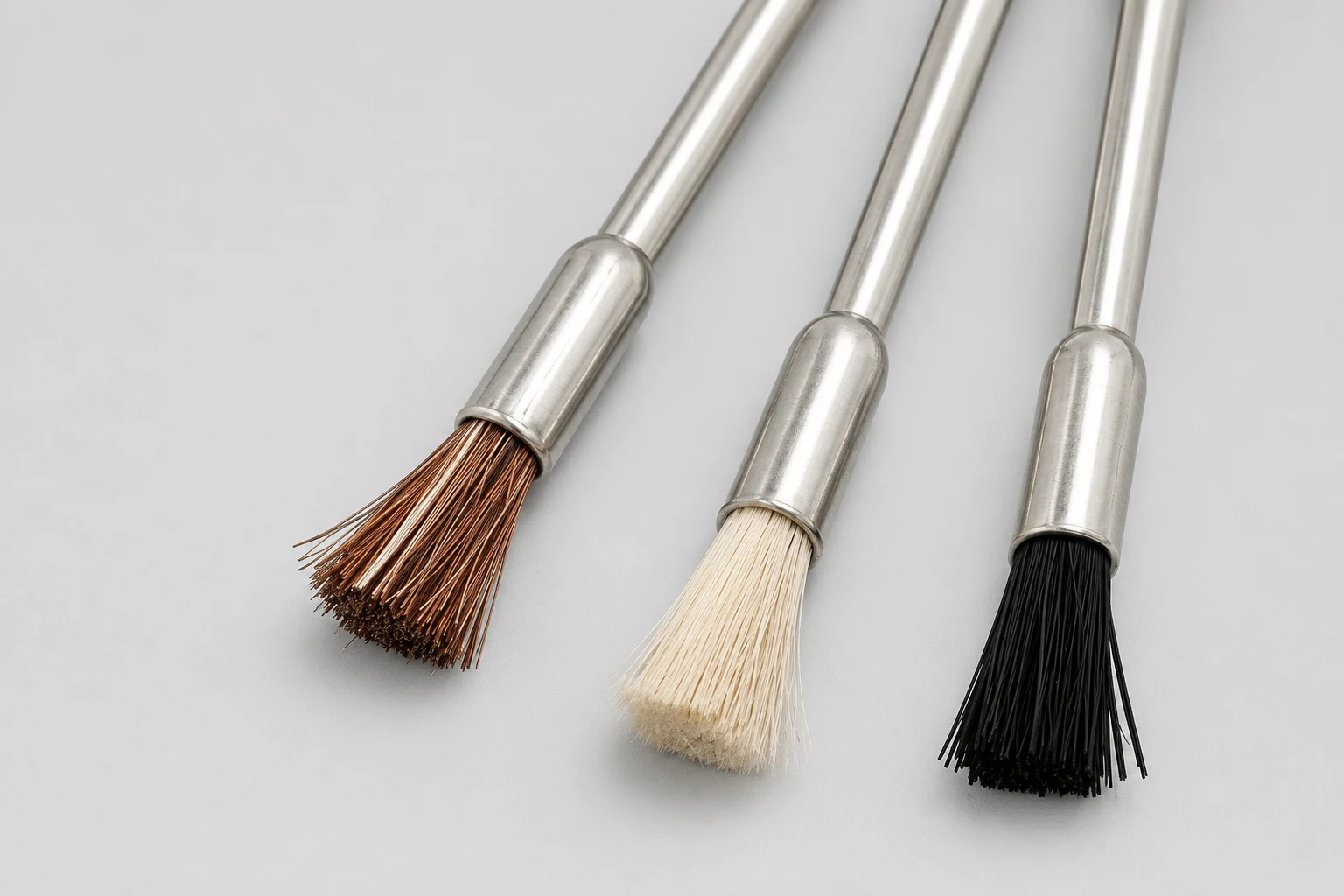
Individual straight metal wires provide direct, localized contact. Select the wire grade, wire diameter, trim, and brush face from the drawing for the required cleaning, deburring, or finishing work.
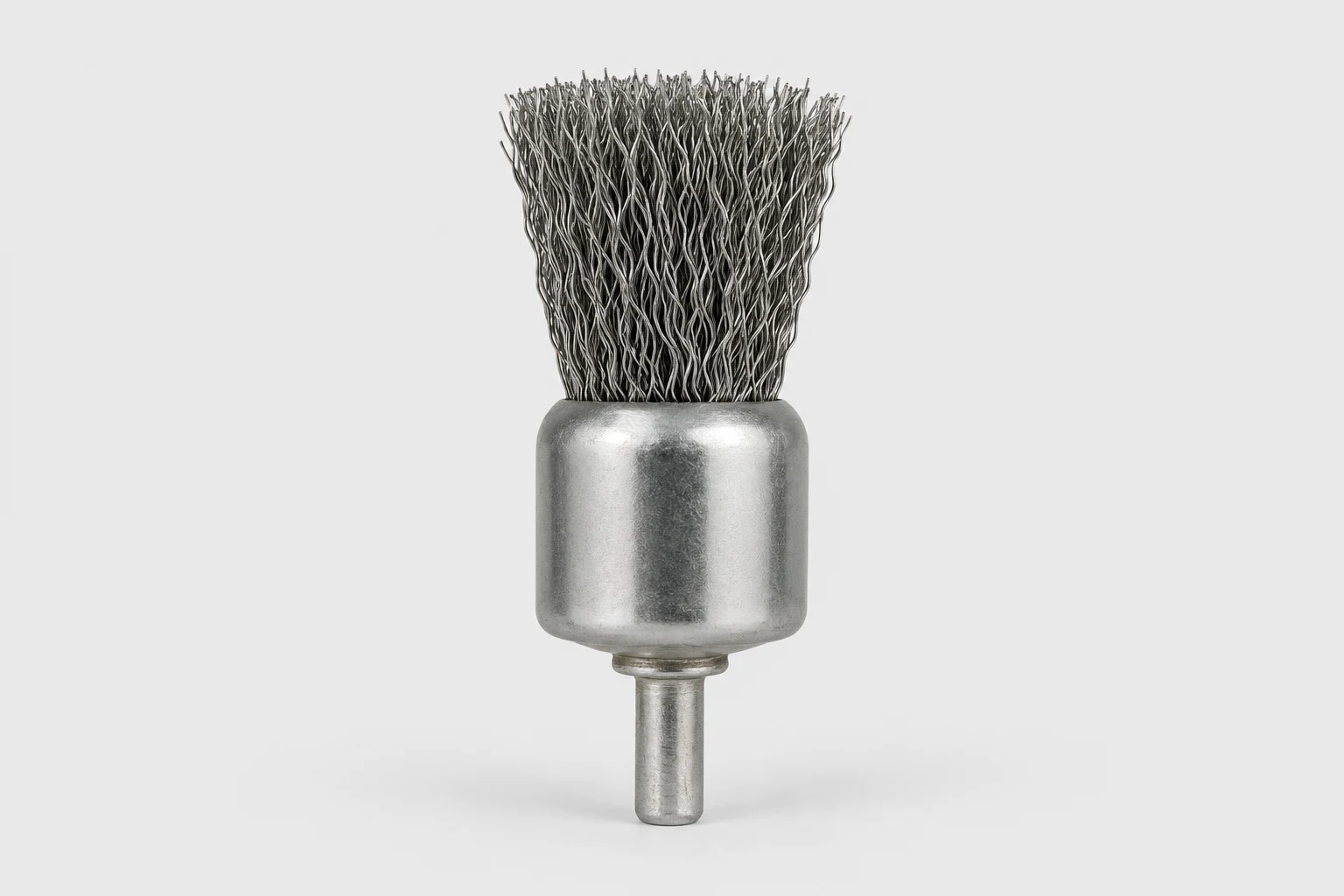
Crimped wire provides flexible contact for general cleaning, light-to-moderate rust or coating removal, and localized surface preparation.
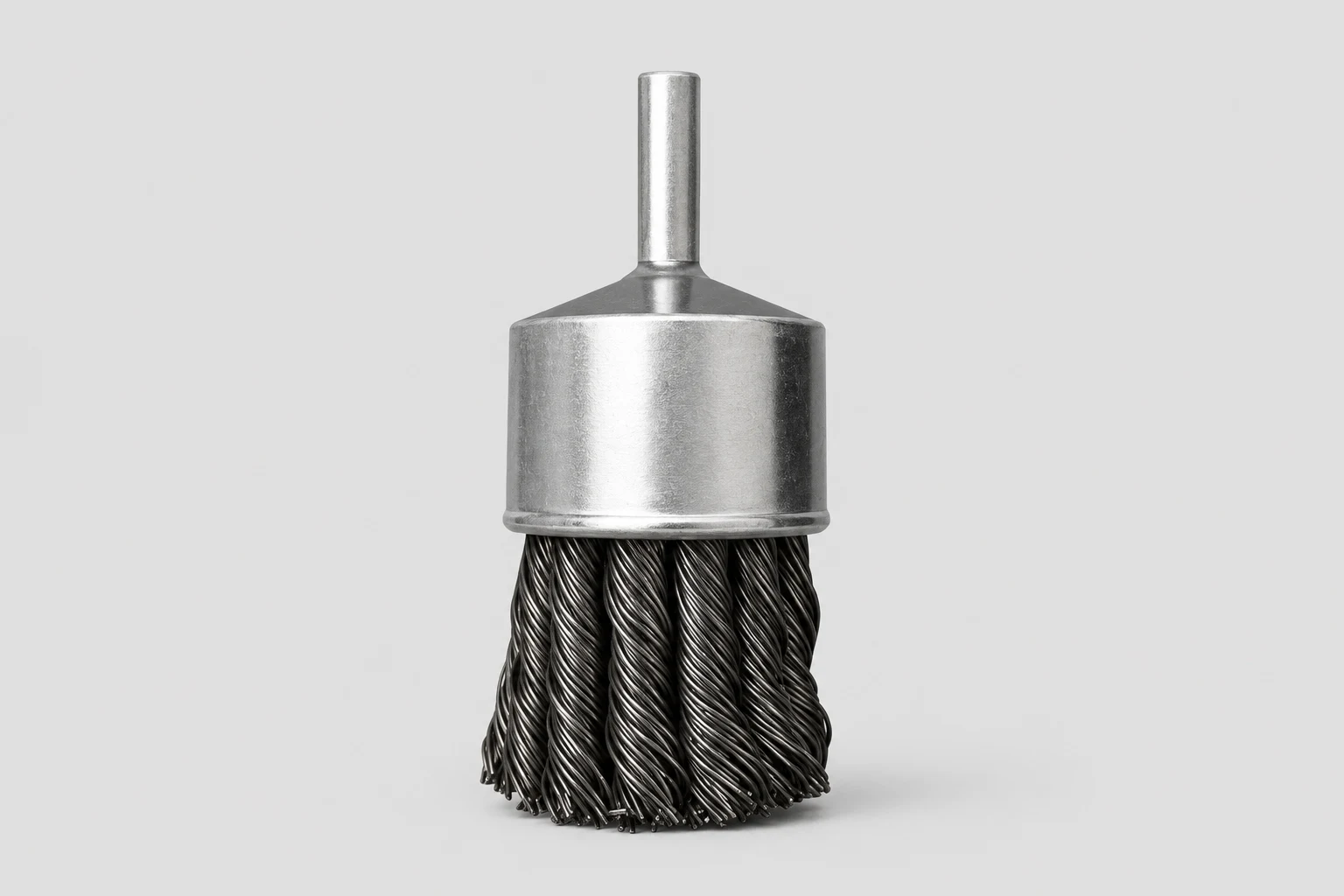
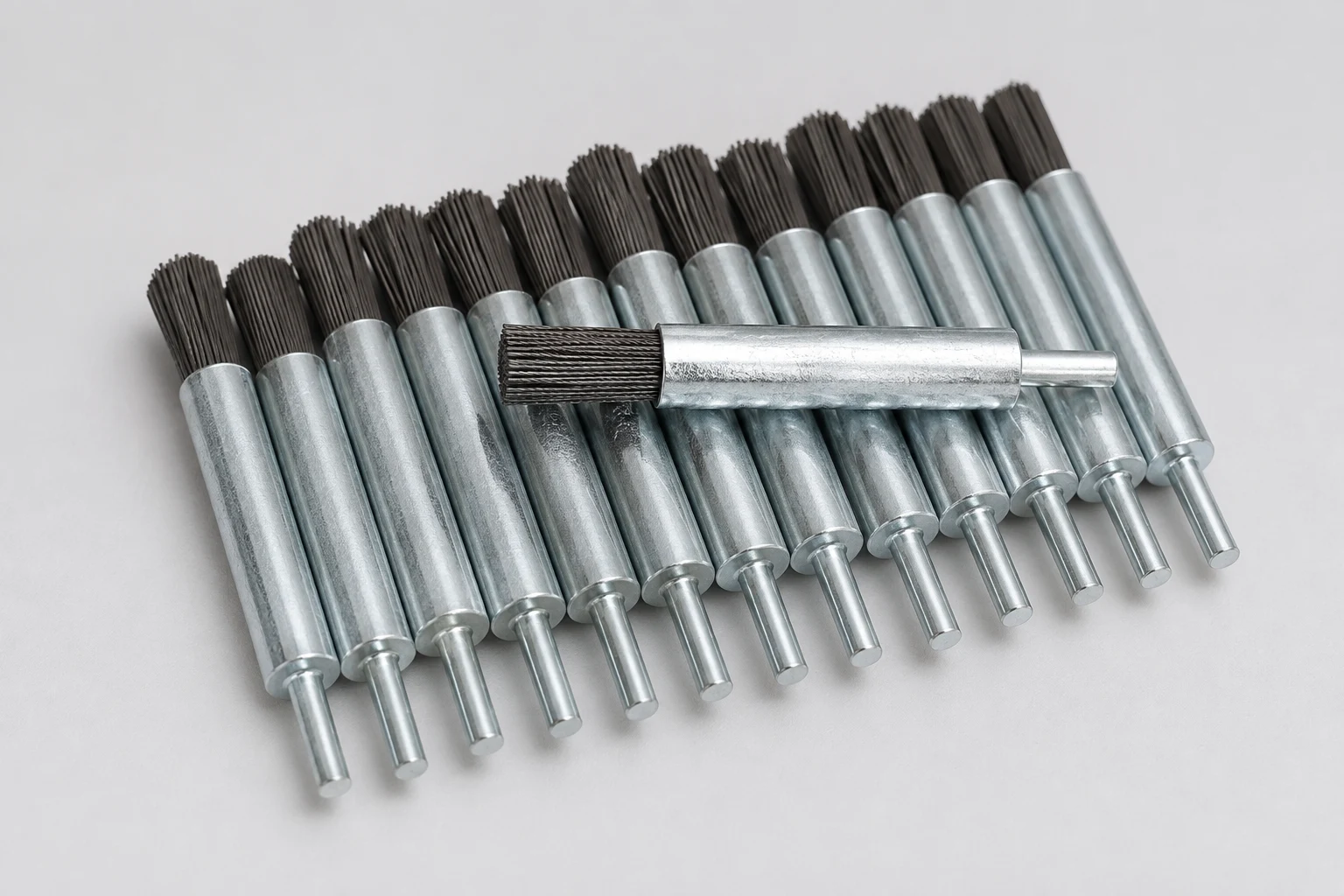
Multiple metal wires are twisted into rope-like bundles for stronger, more concentrated brushing action. Select this wire form for heavier rust, scale, weld residue, and stubborn deposits in confined areas.
Construction and filament selection are combined for the final brush. Confirm the contact condition, abrasive result, and working environment before production.
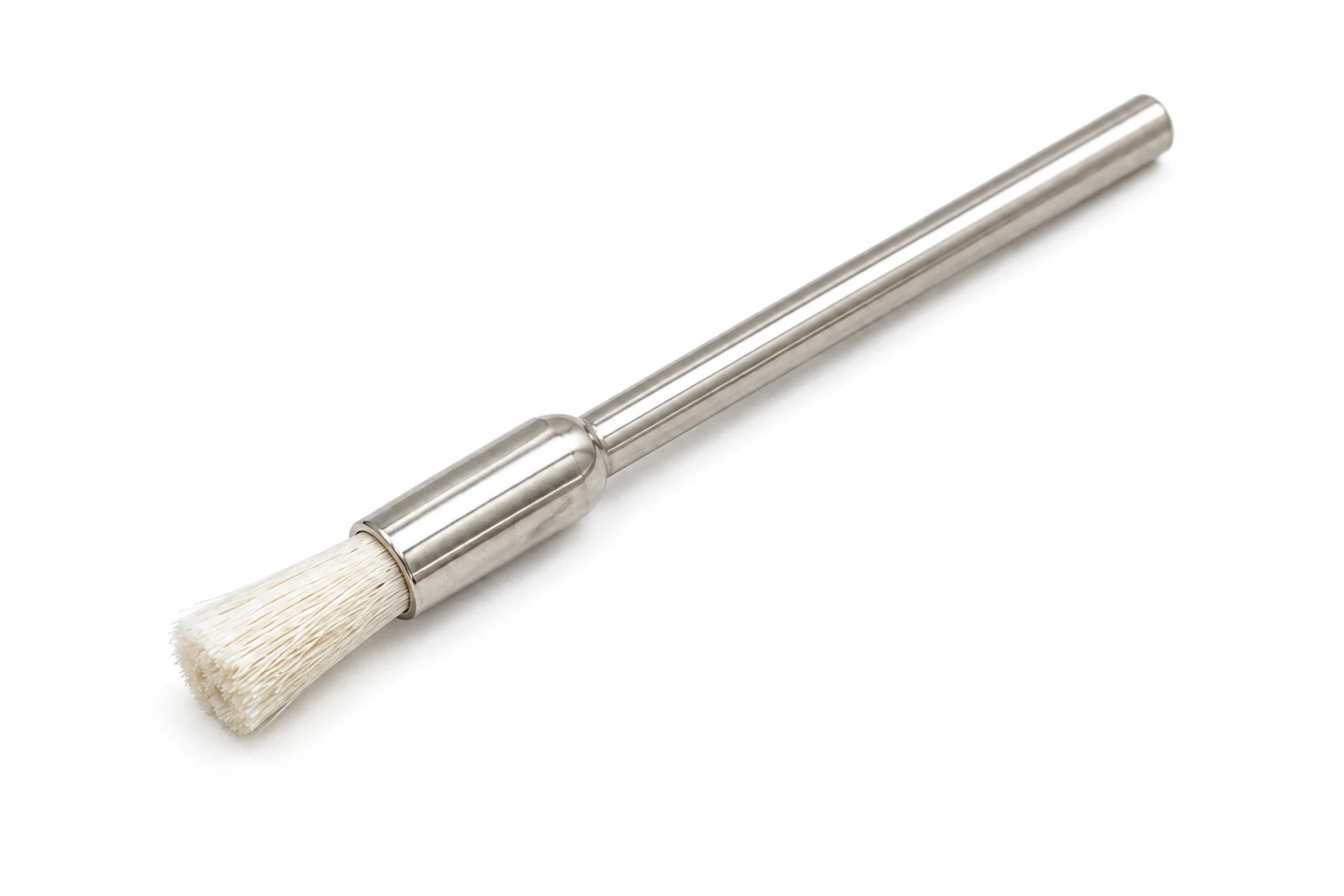
Nylon filament provides non-metallic contact for specified cleaning, light wiping, and surface-sensitive work. Confirm the required filament diameter, stiffness, and working environment.
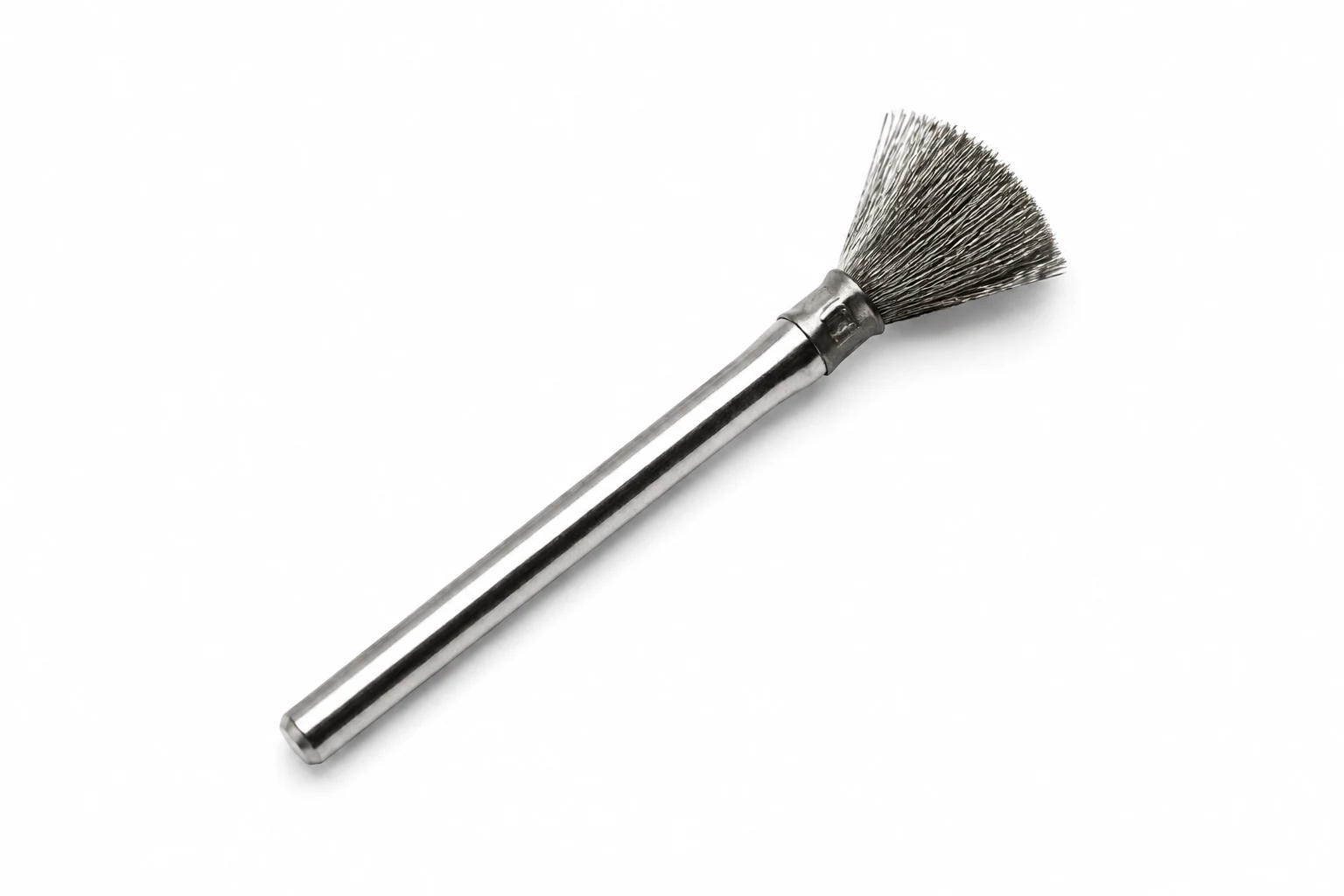
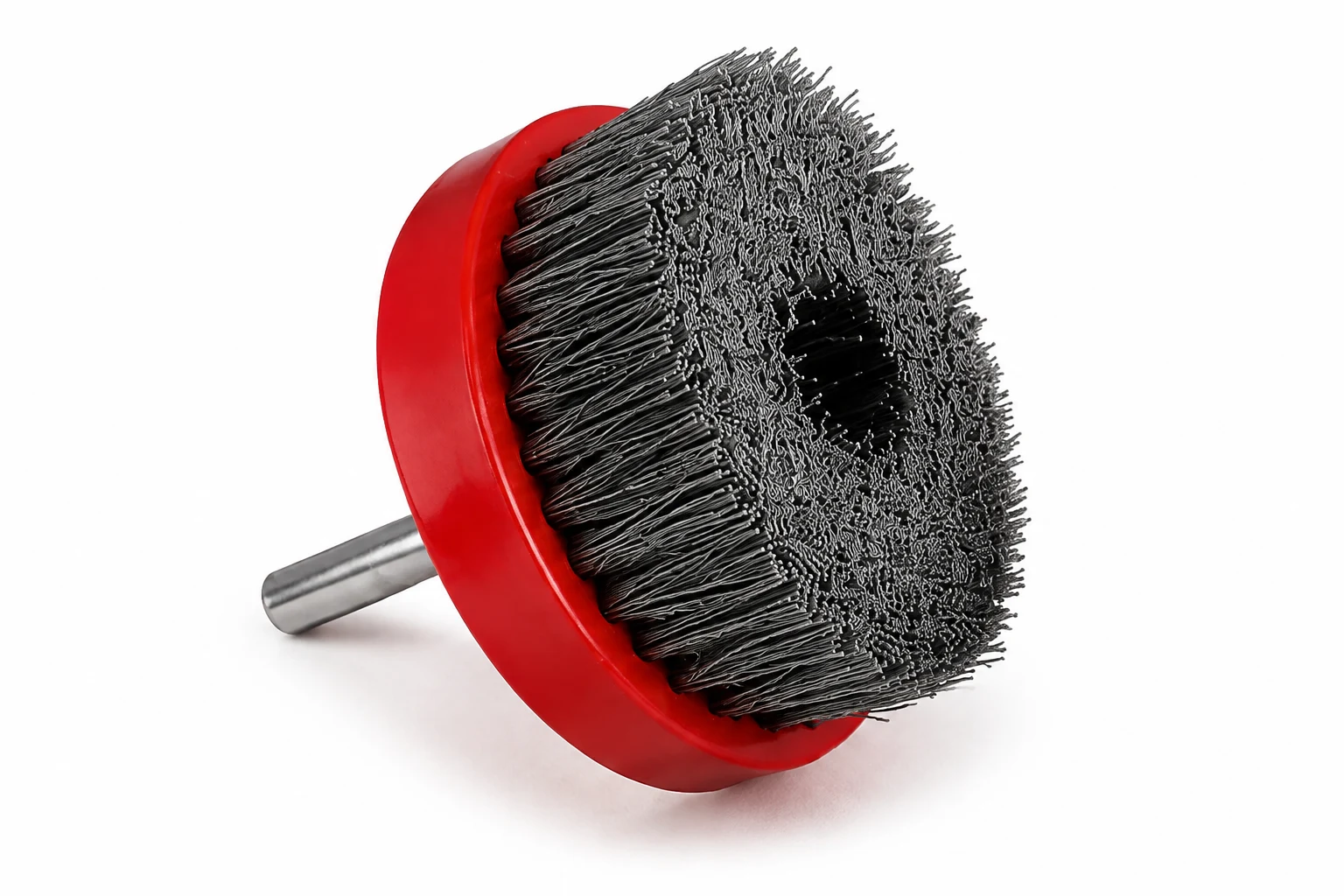
Available abrasive options include silicon carbide, aluminum oxide, ceramic abrasive filament, DuPont abrasive filament, and diamond abrasive filament. Select the abrasive type, grit, and required surface result for controlled deburring, edge blending, cleaning, and finishing.
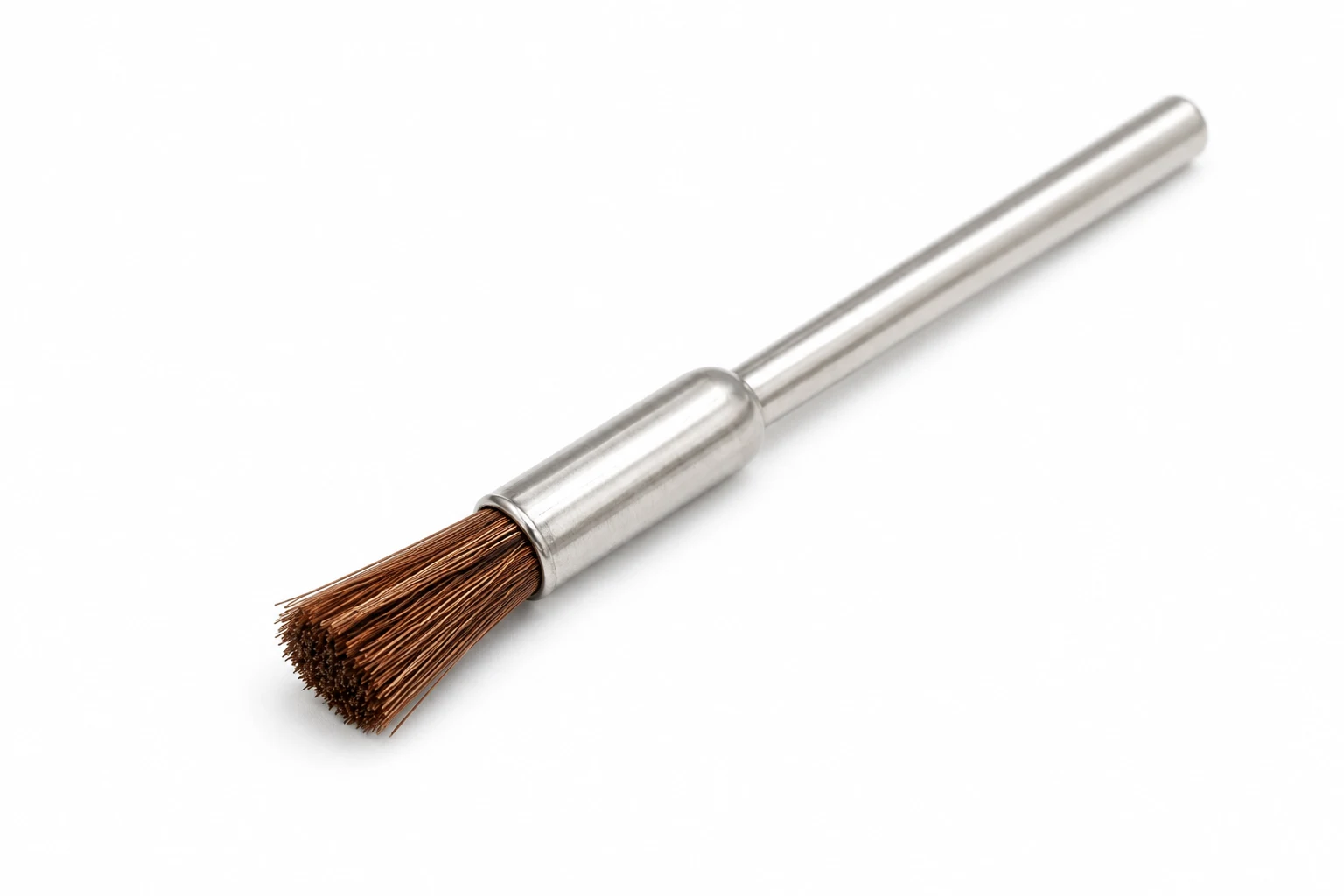
Natural fiber can be selected for application-specific brushing where tampico, sisal, horsehair, or hog bristle is required. Confirm the contact condition and required cleaning or finishing result.
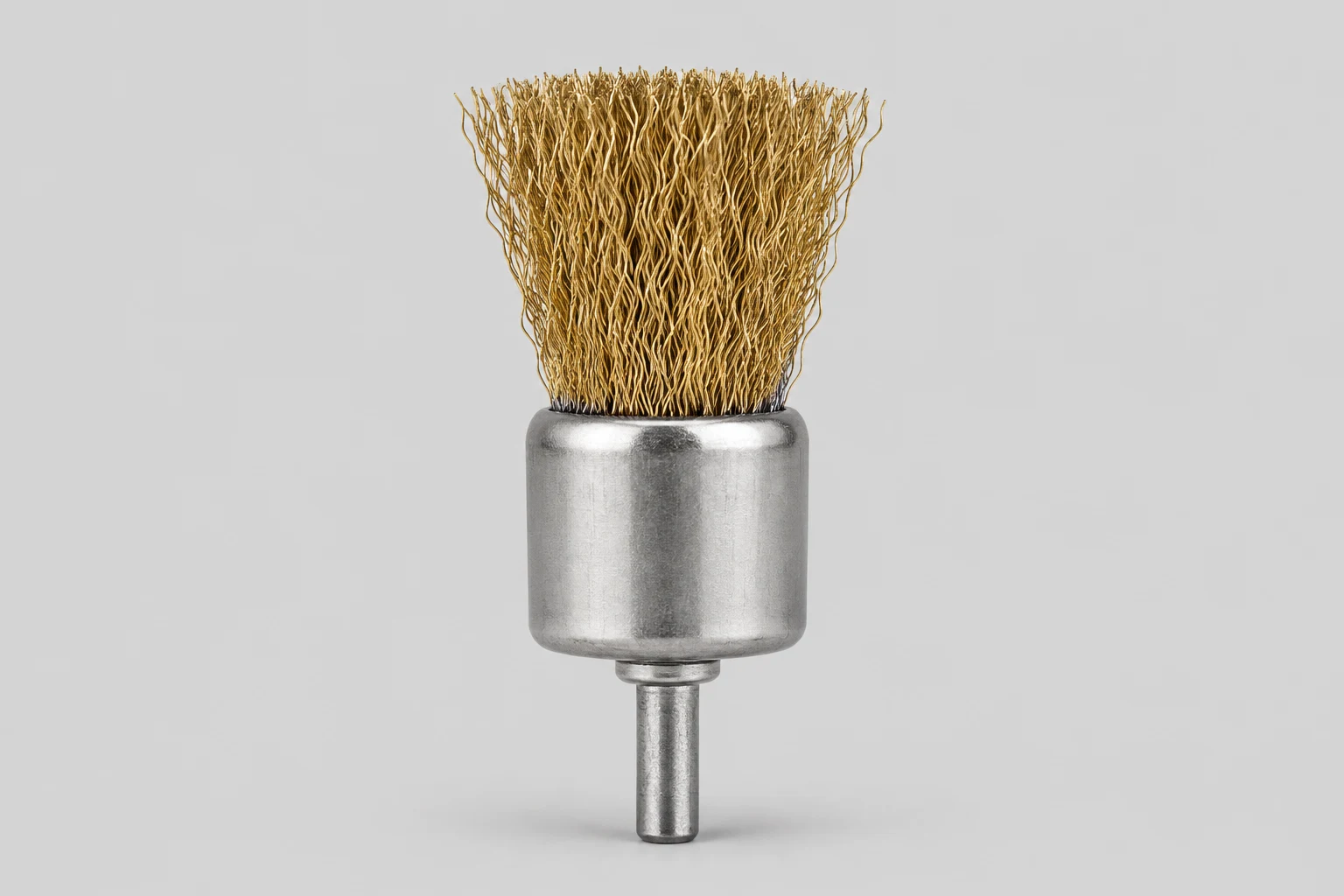
Stainless steel, brass, or copper-coated steel wire can be selected for specified cleaning, rust or coating removal, and metal-finishing work. Confirm the workpiece material and permitted surface effect before production.
The body and mounting interface are defined around the tool, fixture, access space, and required axial working face.
Plastic bodies or mounting parts can be selected where the drawing calls for a lightweight, non-metallic brush body or interface.
Aluminum or stainless steel bodies, hubs, and shanks can be selected for the specified mounting and working environment.
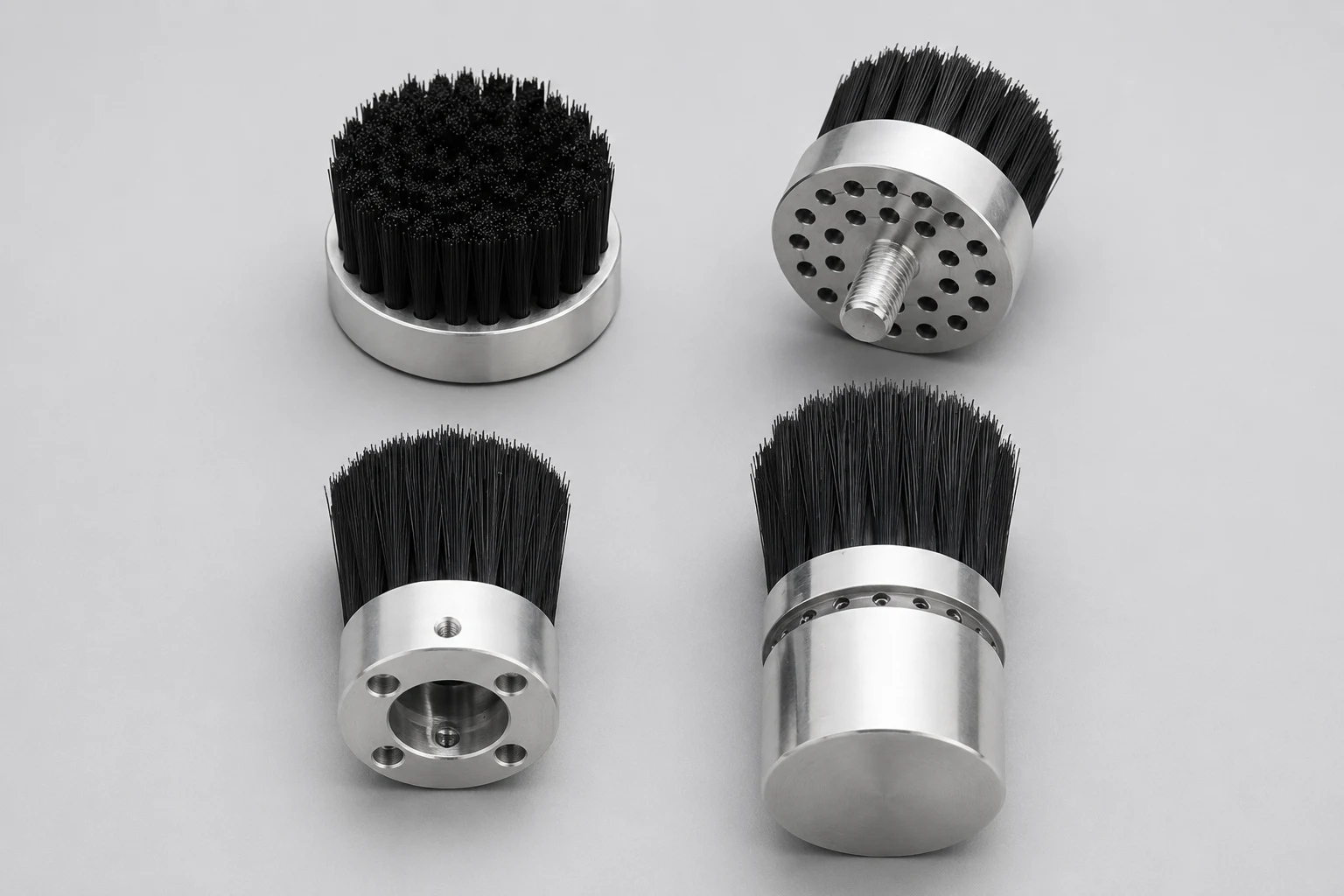
For non-standard equipment, specify the axial brush face, fill, retention method, body material, bore, flange, threaded connection, mounting-hole pattern, and any critical tolerances on the drawing.
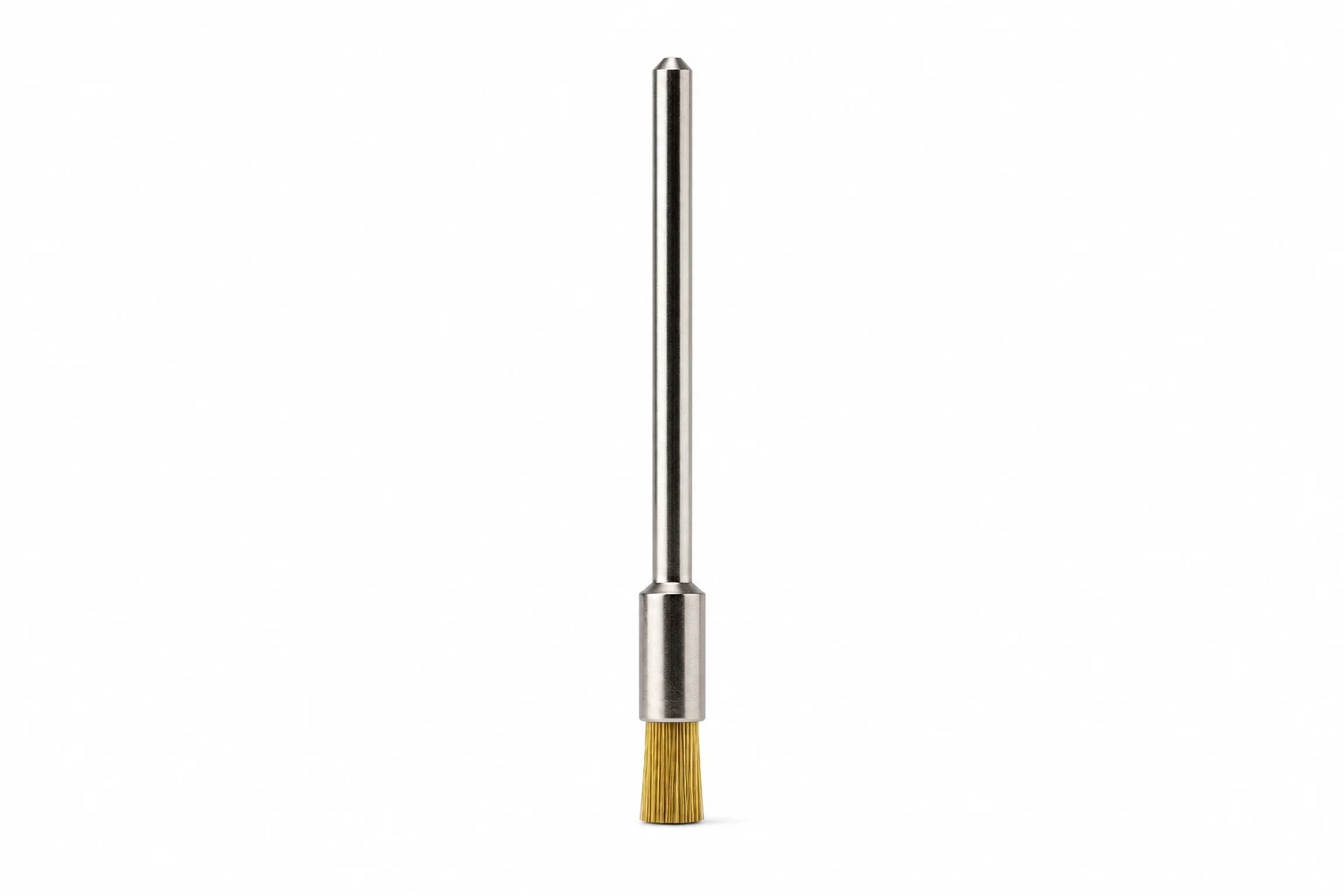
Small working formats are available for precision parts, narrow recesses, small features, and localized finishing.
Miniature describes the size format; the construction, fill, and mounting interface are defined from the drawing or sample.
End brushes provide concentrated axial contact where a larger rotary brush cannot reach the feature.
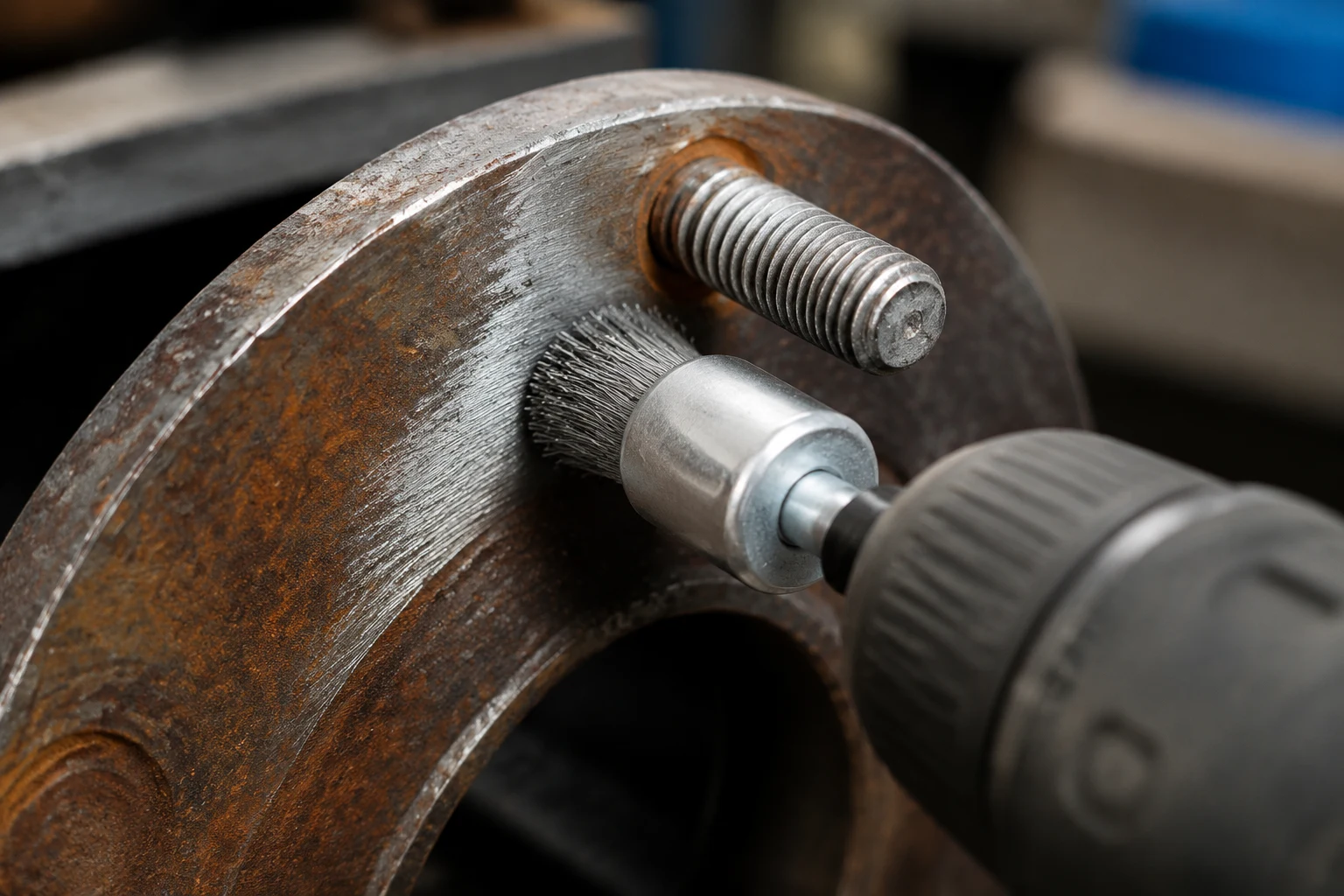
Reach corners, pockets, recesses, slots, mold details, and other localized surfaces.
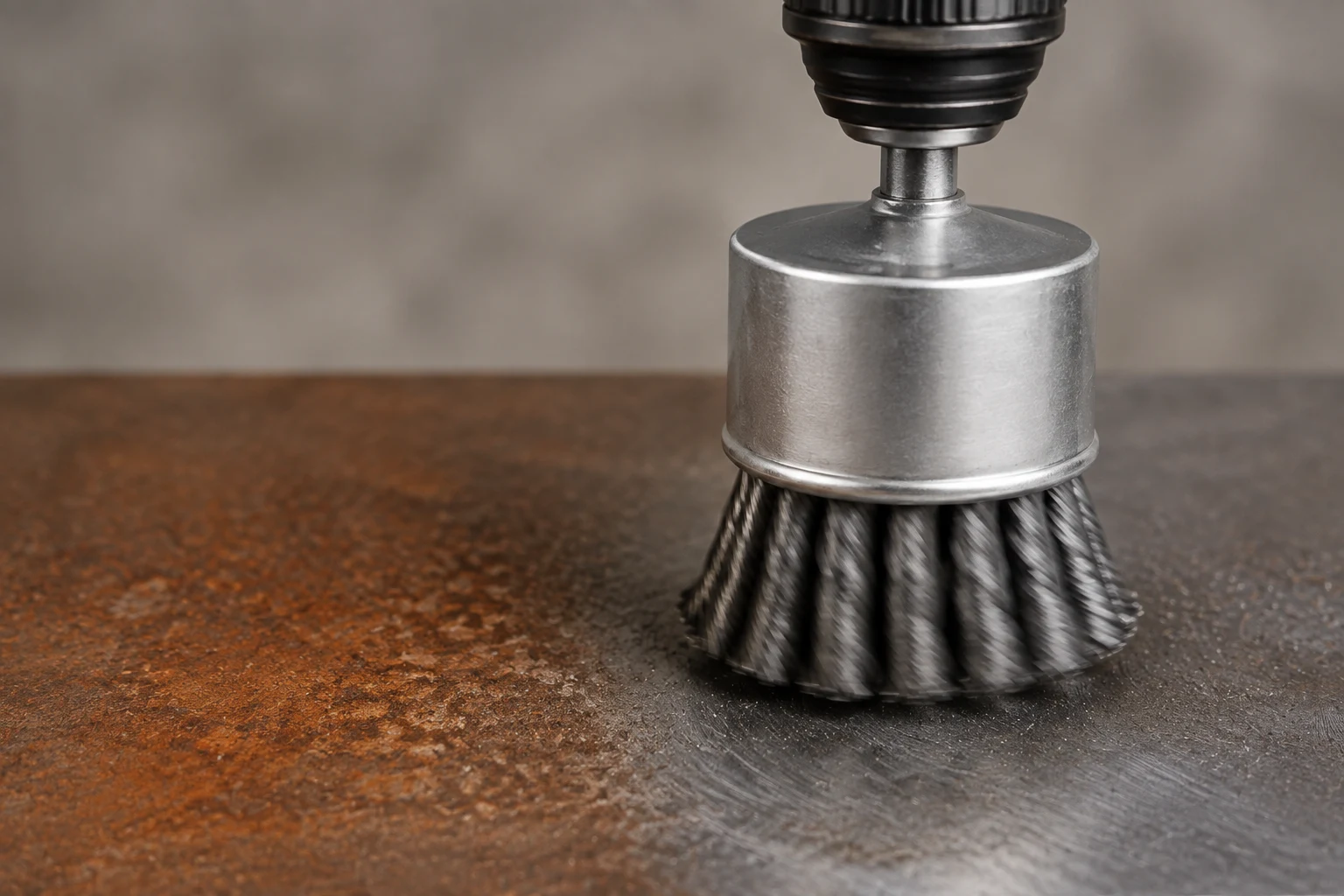
Use crimped or knot wire according to the required cleaning strength and the workpiece material.
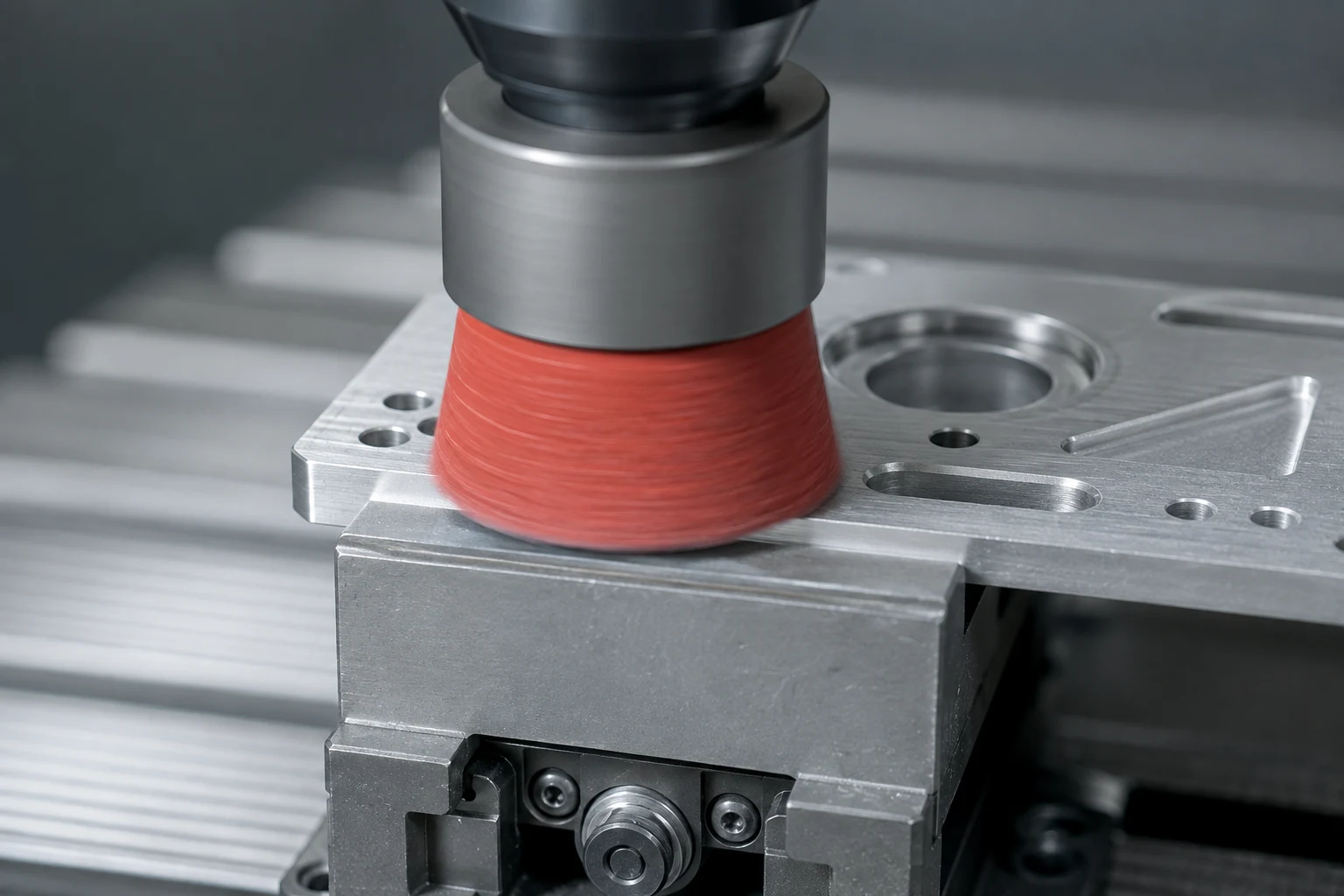
Use abrasive nylon or a suitable wire construction for light burr removal, edge blending, and controlled surface finishing.
End brushes are used for confined-area cleaning, localized rust and coating removal, mold and die cleaning, deburring, edge blending, and surface finishing.
An end brush works mainly from its axial face for concentrated contact in recesses and tight areas. A wire wheel brush works around its circumference for seams, edges, grooves, and longer working paths.
Crimped wire is more flexible and suited to general cleaning. Knot wire is more rigid and selected for heavier deposits and stronger cleaning.
A miniature end brush is a small-diameter format used on precision parts, narrow recesses, and small localized features. Its fill and mounting interface are defined for the tool and application.
Show the brush face, construction, filament, body material, mounting interface, and critical dimensions or tolerances. Add abrasive grit and operating speed where they are essential to the process or equipment.
Custom production from your drawing. Large-volume production is supported for OEM and replacement projects. Confirm the brush face, mounting interface, fill, and maximum RPM where required before production.