Industrial Brush Manufacturers, Suppliers & Companies

Aerospace Deburring and Finishing Brushes

Custom aerospace deburring and finishing brushes for machined components and internal features where controlled edge condition, material compatibility, and repeatable fit matter.

Aerospace Finishing

Built for Controlled Aerospace Finishing

In aerospace manufacturing, a brush is a process component rather than a general cleaning tool. It may remove a residual burr, blend an edge, or clean and condition an internal feature. The correct result depends on the alloy, contact zone, surface requirement, brush construction, machine parameters, and the customer's approved process.

For manufacturing engineers, the central question is whether the brush achieves the required finish without changing a critical edge, bore, profile, or surface condition. For quality and procurement teams, repeatability matters just as much: the approved material, geometry, trim, density, interface, and document requirement must remain controlled for repeat supply.

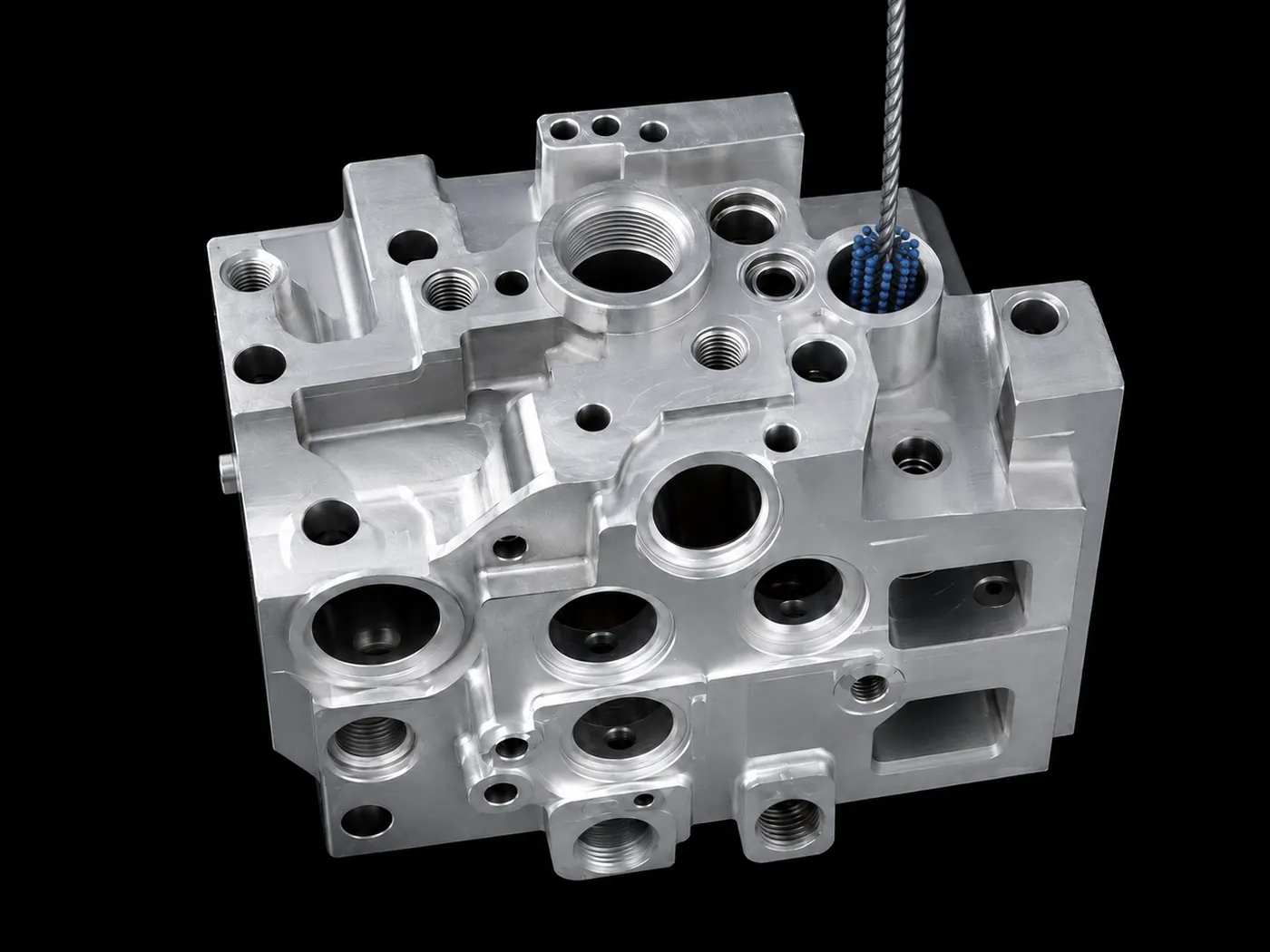
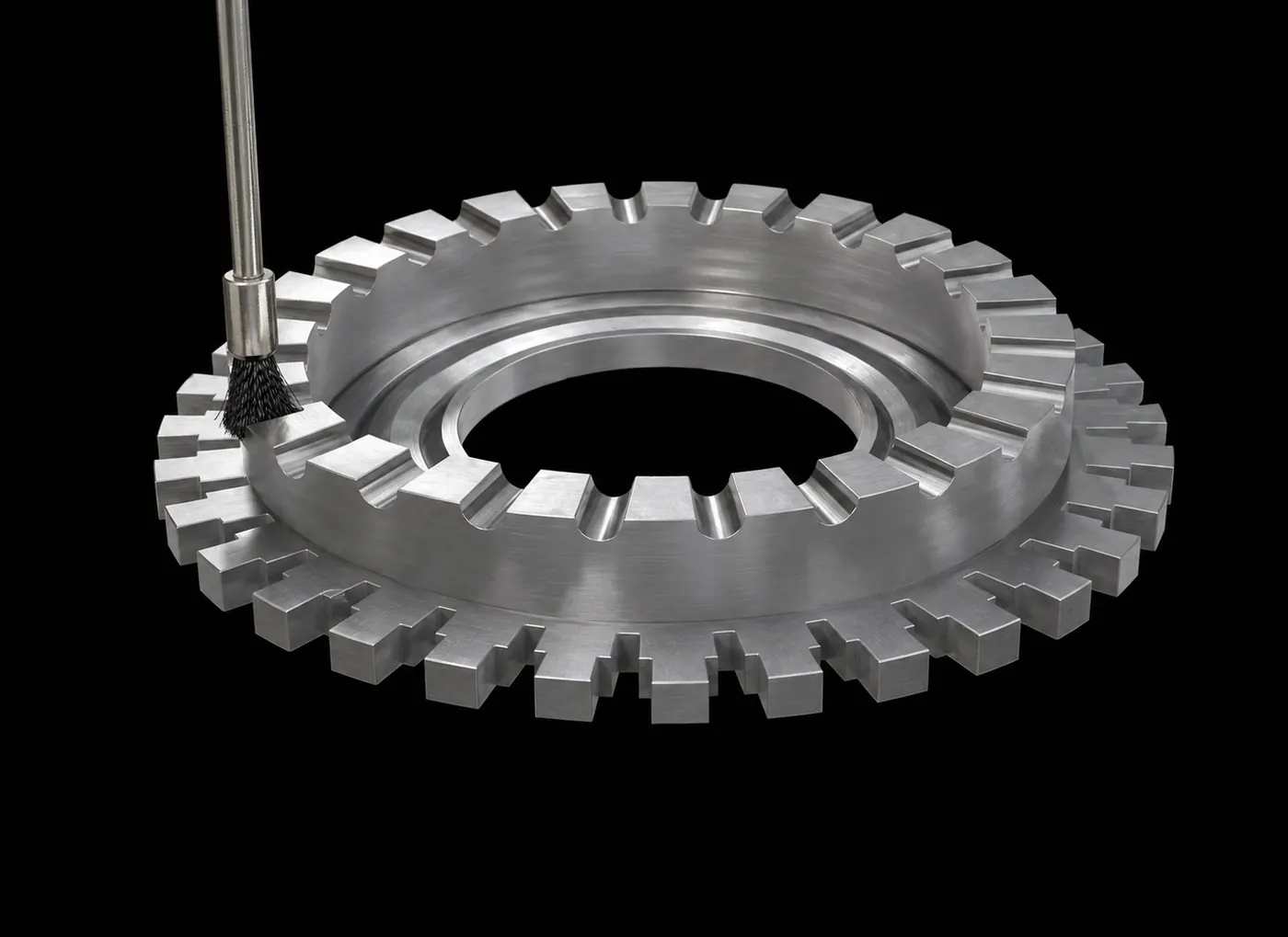
Aerospace turbine disk with brush tool for controlled deburring and finishing review
Aerospace Brush Applications

Where Aerospace Brushes Are Used

01

Deburring and Edge Blending of Machined Components

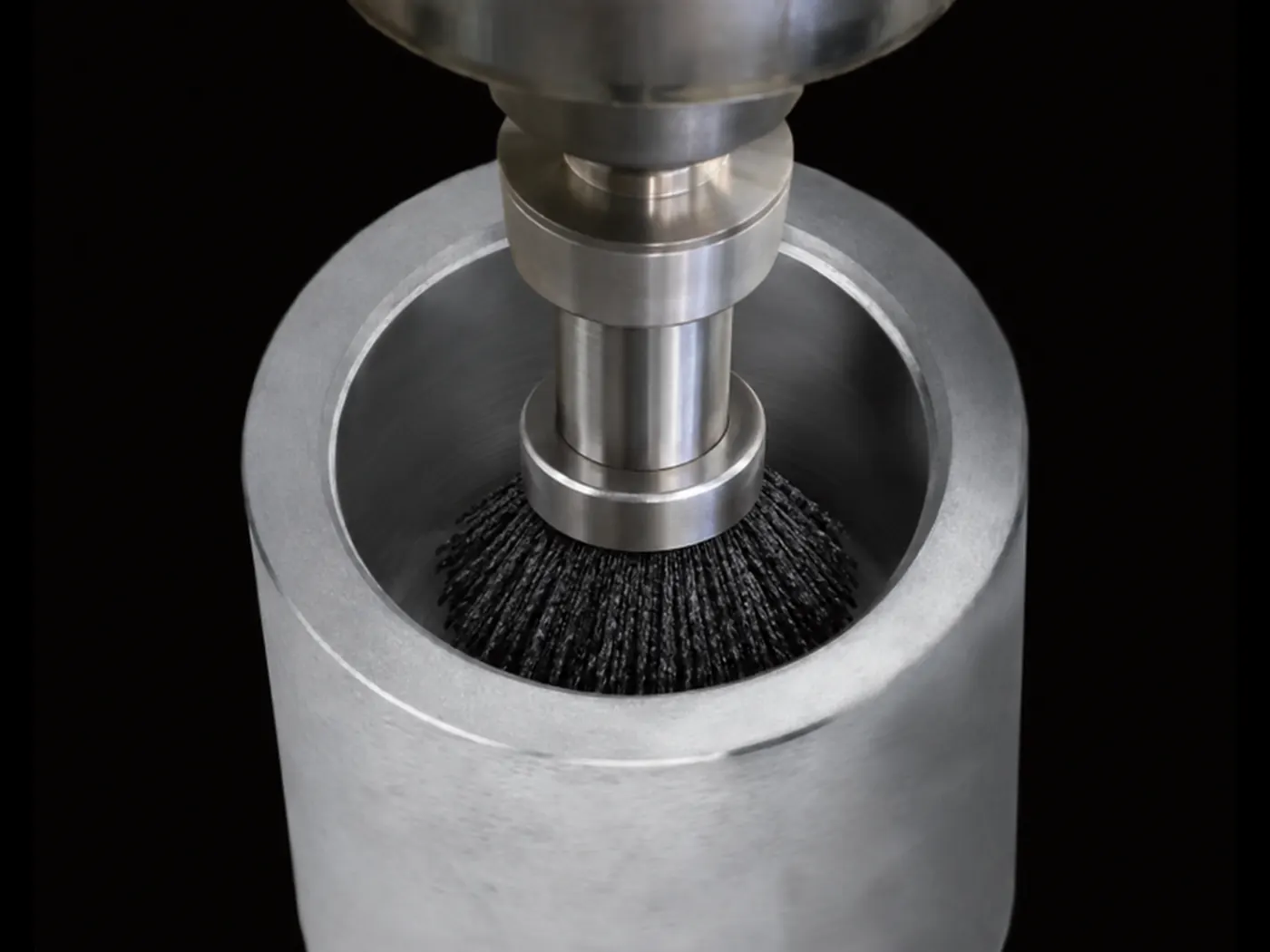
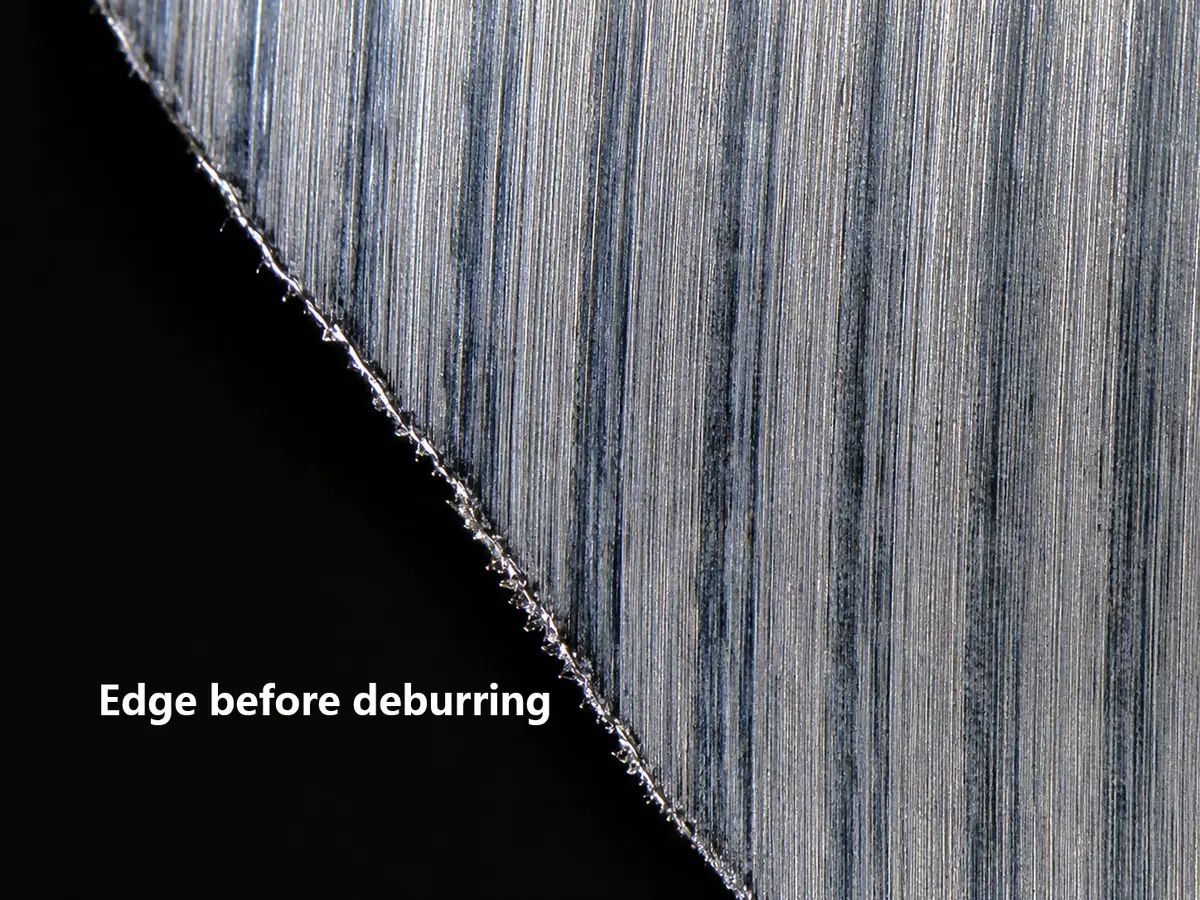
Disc brushes, wheel brushes, and abrasive nylon brush tools may be used after drilling, milling, reaming, or machining to remove light burrs and blend edges on aluminum, titanium, nickel-based alloys, stainless steel, and other specified materials. Brush selection must be based on the customer's process card, allowed material, edge-break target, surface requirement, and machine conditions. A more aggressive brush is not automatically a better brush when the process has tight contour or fatigue-critical requirements.

02

Internal Passages, Bores, and Hydraulic Components

Custom internal brushes can support deburring, cleaning, and surface conditioning in drilled holes, intersecting passages, bores, and other difficult-to-reach features. Working diameter, abrasive or filament direction, stem or shank interface, usable length, RPM, and contact area should be confirmed from the drawing and process requirement. The brush must remove the intended burr or residue without altering a sealing land, critical diameter, or specified surface condition.

Other custom aerospace brush applications may be reviewed for controlled surface preparation, composite-tooling cleaning, and non-marring component handling, subject to the customer's approved process and application requirements.

Process and Quality Review

Material, Process, and Quality Requirements

01

Start with the Alloy and Contamination Limit

Titanium, nickel-based alloys, aluminum, stainless steel, and composites do not share one default brush material. Ceramic filament, stainless wire, abrasive nylon, and other constructions may be reviewed according to the approved process. Carbon steel wire should never be assumed acceptable for titanium or other contamination-sensitive work; the customer's process specification determines the permitted material and any traceability requirement.

02

Define the Contact and Finishing Result

Confirm whether the brush is removing a burr, blending an edge, preparing a surface, cleaning an internal passage, or protecting an opening. Then define the critical dimensions, permitted edge break, surface-finish target, contact zone, rotation direction, RPM, feed, pressure, and replacement point. These details determine filament type, grit where applicable, diameter, trim, density, and brush face.

03

Control Running Stability and Wear

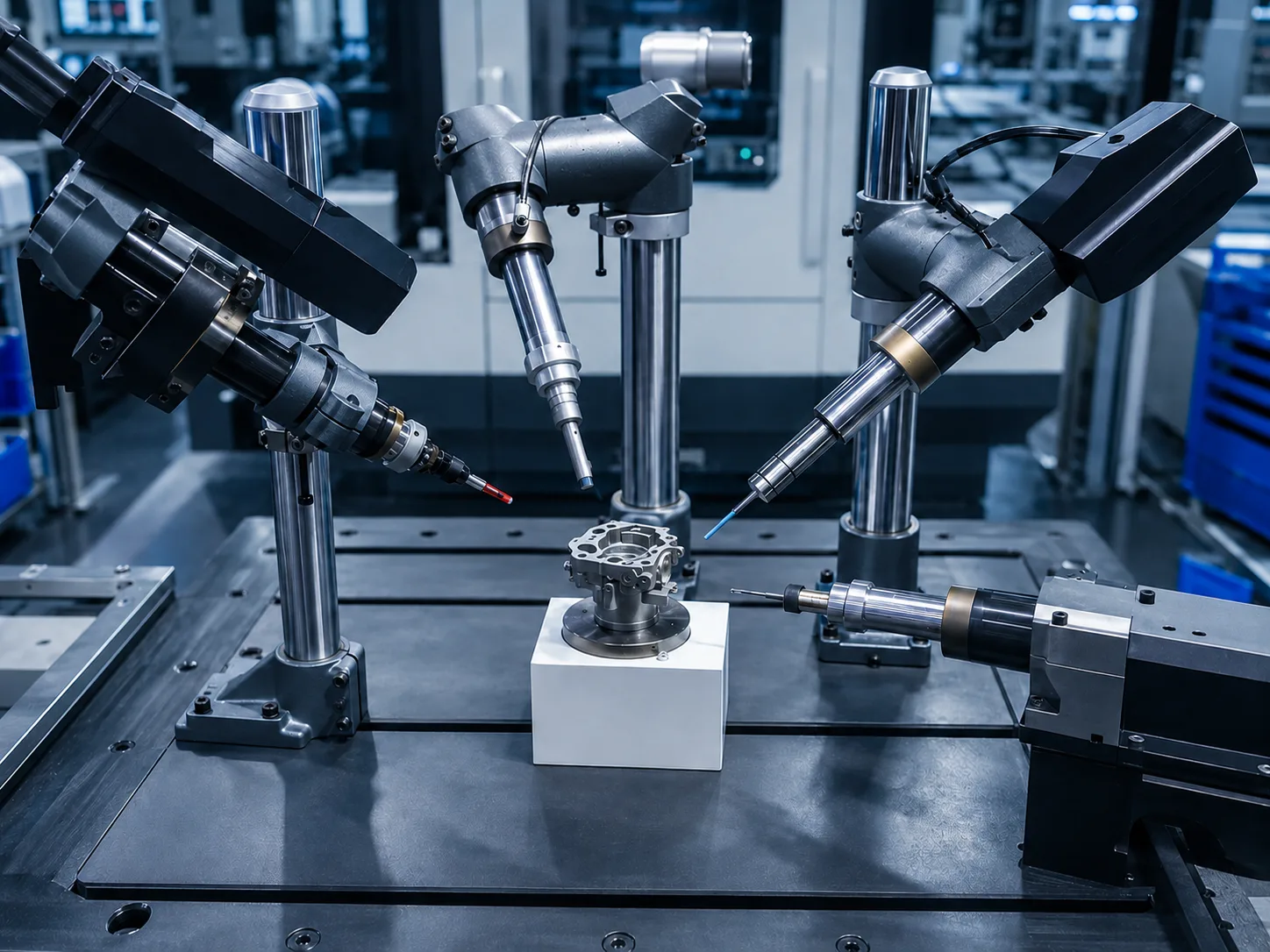
For rotating disc, wheel, and roller brushes, mounting accuracy and balance can affect spindle vibration and finish consistency. Brush wear can reduce the intended deburring action or change the final profile, so a production process may need a defined inspection and replacement condition rather than an open-ended service interval.

04

Keep the Approved Configuration Traceable

Aerospace customers may require a drawing revision, first article or sample review, dimensional record, certificate of conformance, material declaration, or lot traceability. Include the customer quality flow-down and requested documents at RFQ stage. Do not substitute the filament, backing, holder, or geometry on a repeat order without written review and approval.

RFQ Specification Guide

Information Needed for an Aerospace Brush Quote

A reliable quote depends on confirming the part material, contact zone, machine interface, process requirement, and documentation needs before production.

Request a Quote
01

Part and Process

Provide the part material, operation name, and target result. State whether the project is for deburring, edge blending, internal-feature cleaning or conditioning, or an OEM replacement. Mark the actual contact area and identify any contamination or material restriction.

02

Brush and Machine Interface

Provide the required brush format, outside diameter, face width, trim, filament or abrasive direction if known, stem, bore, arbor, shaft, keyway, flange, holder, or channel detail. For machine-driven brushes, include RPM, rotation direction, available space, and any balance requirement.

03

Quality and Supply Requirement

Send the applicable drawing revision, part number, acceptance criteria, requested first sample or FAI requirement, documentation list, annual quantity, and required delivery date. For an approved replacement brush, a retained sample or marked photo should be used together with the drawing, not instead of it.

Aerospace Brush RFQ

Need an Aerospace Finishing Brush Matched to Your Process?

Send the part drawing, alloy, process step, contact area, and machine interface. We can review brush format, material direction, finishing conditions, and repeat-supply requirements before quoting.

Request a Quote