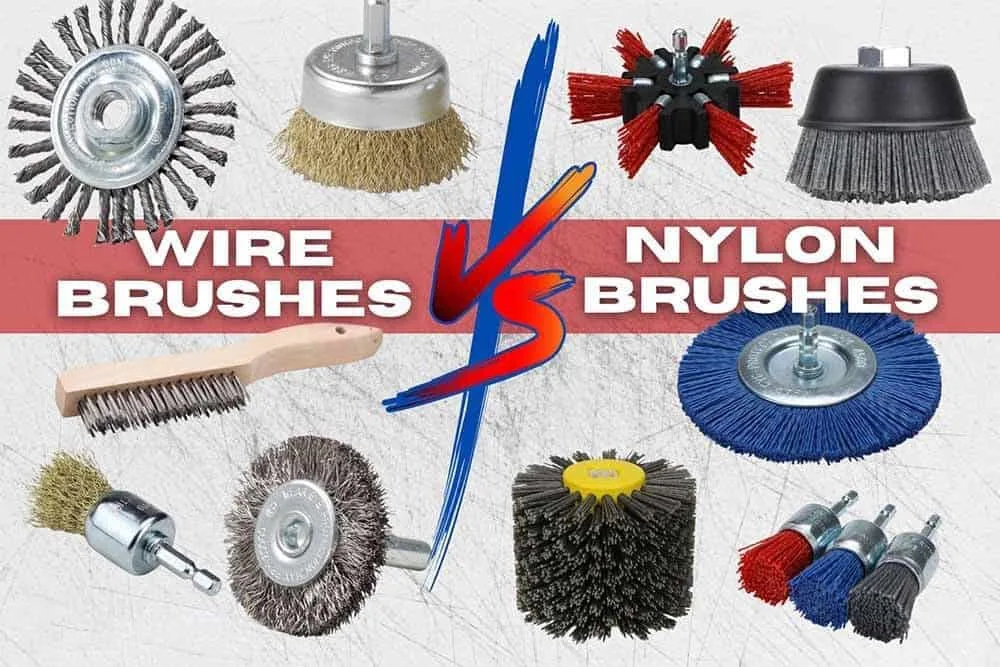
Trying to decide between a wire brush and a nylon brush for an industrial cleaning, deburring, or finishing task? The right choice depends on surface material, residue, required finish, operating environment, and how much brushing force the process can tolerate. This guide compares wire and nylon brushes using practical selection factors for industrial buyers.
What are Wire Brushes?
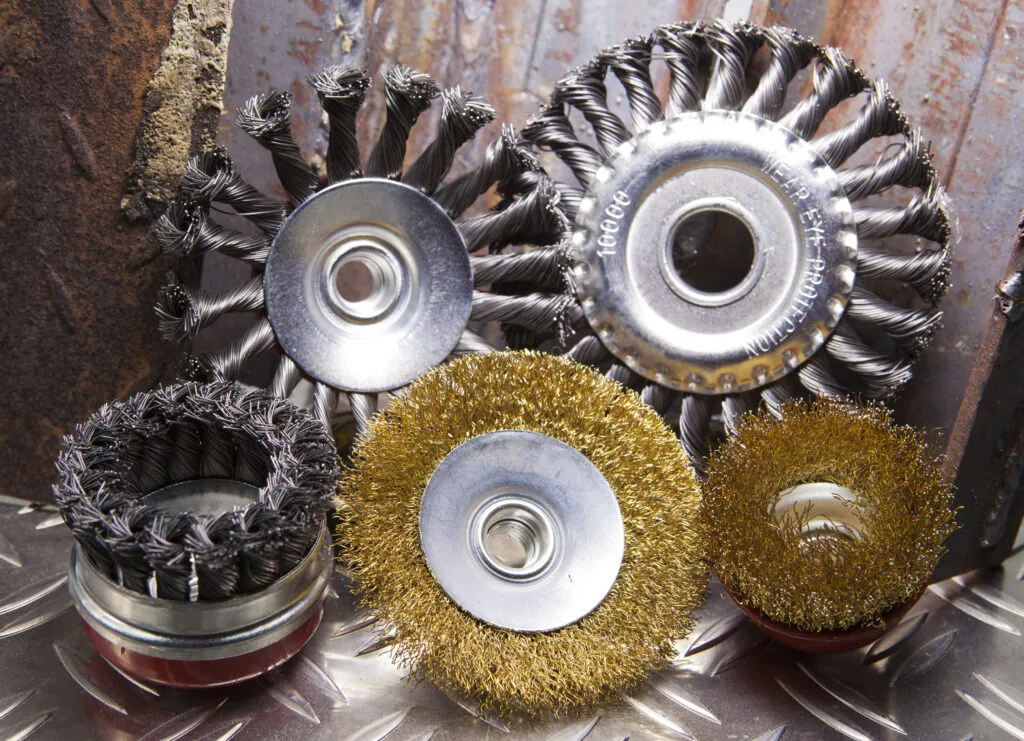
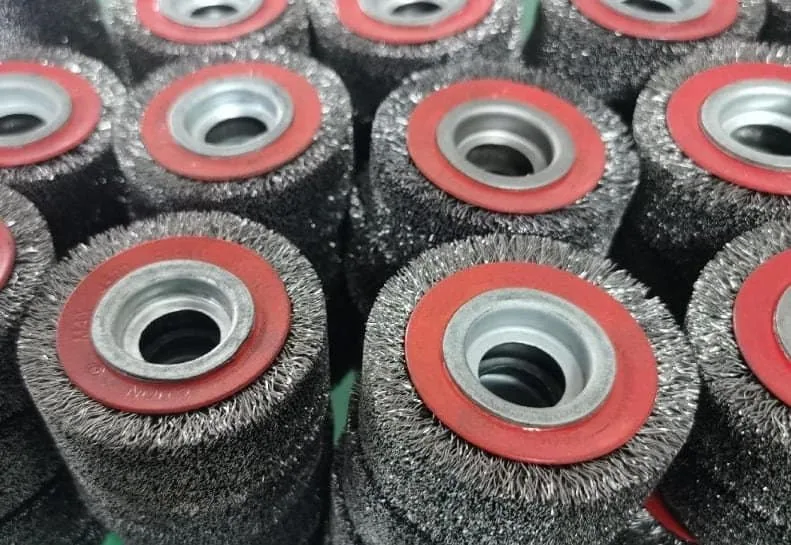
Wire brushes use steel, stainless steel, or brass wire fill. They are selected for stronger cleaning and surface preparation such as rust removal, weld cleaning, scale removal, and metal deburring. The right wire type, brush form, density, and RPM depend on the workpiece material and machine setup.
What are Nylon Abrasive Brushes?
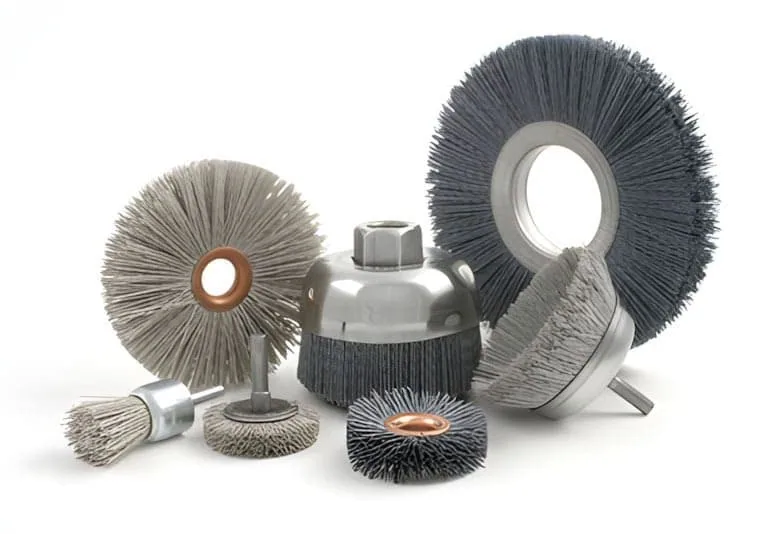
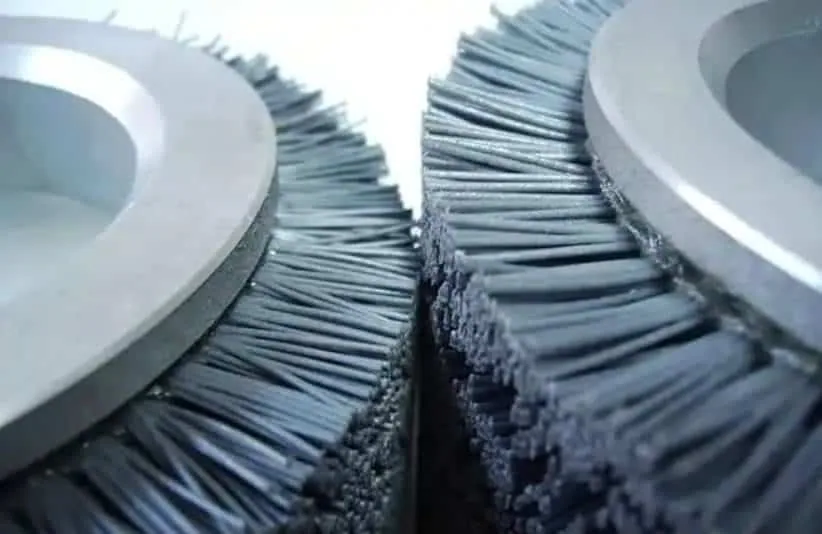
Nylon abrasive brushes use nylon filaments containing abrasive grain such as aluminum oxide or silicon carbide. They are often selected for controlled deburring, cleaning, and finishing where a more flexible brushing action is needed than metal wire. Standard nylon filaments are usually reviewed for moderate-temperature applications, while high-heat nylon formulations may be specified for elevated-temperature environments; the final limit should be confirmed from the selected filament grade and supplier TDS. Surface risk still depends on grit, filament diameter, brush pressure, RPM, workpiece material, and contamination on the surface, so the process should be tested on the actual part before release. For face-contact finishing, buyers may review custom disc brushes; for internal bores or cross-holes, review pipe and tube brushes.
Also See: Custom Disc Brushes and Custom Wire Wheel Brushes
Key Comparison between Wire Brush and Nylon Brush
Now that you know what each brush does, next we’ll compare the main differences between wire brushes and nylon brushes.
1. Bristle Material and Construction
Wire brushes
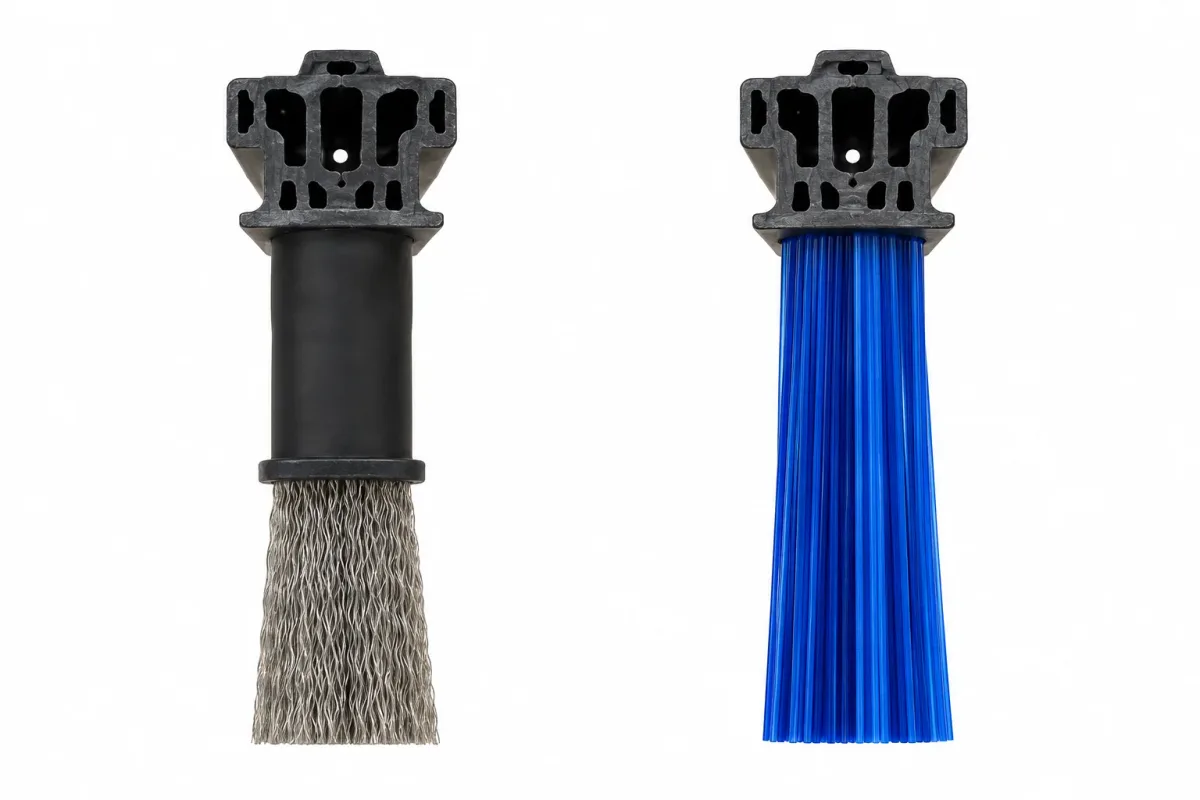
Stainless steel, normal steel or brass wires make up the bristles in wire brushes. Manufacturers can twist, crimp or knot these metal wires. The wire diameters mostly range from 0.1 mm to 0.5 mm. This construction gives wire brushes their stiffness so they can handle tough jobs.
Nylon brushes
Synthetic bristles form the base of nylon brushes and they mostly have abrasive grains like silicon carbide or aluminum oxide on them. Its flexible filaments come in different grits like 80 grit for rough work or 240 grit for smoother finishes. This flexibility lets nylon brushes keep proper contact and adapt to uneven surfaces.
For custom brush projects, Brushcustom can review brush form, fill material, density, and mounting details against the actual cleaning or finishing task.
2. Surface Finish
Nylon brushes
Nylon brushes generally provide a softer and more controlled finish than metal wire. Their flexible bristles can help reduce scratching risk when grit, pressure, RPM, and surface material are matched correctly.
Wire brushes
Wire brushes give a rough textured finish. You might use these for metal or weathered wood before painting. Moreover if these brushes are not used carefully then they can leave scratches or marks.
3. Cleaning Aggressiveness
Wire brushes
Wire brushes work aggressively. They can remove paint, rust as well as heavy scale from metal with ease. The stiff bristles break through tough layers very easily and quickly. This is the reason these brushes fit demanding surface preparation and industrial cleaning applications.
Nylon brushes
Nylon brushes clean with less aggressive contact than wire brushes. They may be reviewed for light oxidation, paint residue, or surface cleaning where the buyer needs lower surface risk than metal wire on softer materials such as wood, plastic, or coated parts.
4. Material Compatibility
Nylon brushes
Nylon brushes are versatile across plastics, metals, wood, and painted surfaces, but they still need to be matched to the surface. Abrasive nylon can clean while keeping better control over surface finish when the grit, filament diameter, and contact pressure are selected correctly.
Wire brushes
Wire brushes work best on hard materials like iron, steel as well as other metals. If you use them on softer materials like plastic, wood or painted surfaces they can damage or scratch them. Brass wire brushes are a gentler option for delicate metals.
5. Sparking and Safety
Wire brushes
When using steel wire brushes, sparks can appear. This makes them unsafe in areas with dust or flammable gases. You can find non sparking wire brushes made from aluminum, bronze or brass but these are costly and less common.
Nylon brushes
Nylon brushes do not spark. This makes them safer for use in an explosive or hazardous environment.
6. Precision and Accessibility
Nylon brushes
Nylon brushes are more flexible, so they can reach small areas and complicated shapes. Softer filaments may be used for sensitive parts or detailed components where the goal is controlled contact with lower surface risk.
Wire brushes
Stiff bristles on wire brushes let you clean small crevices and tight corners. This is useful for detailed cleaning in hard to reach areas. But their stiffness can make them less appropriate for delicate or intricate surfaces where fine detail is important.
If your project has hard to reach areas Brushcustom can create wire brushes with angled trims or special shapes. These options improve both cleaning accuracy & accessibility.
7. Durability and Wear
Wire brushes
Wire brushes last long and keep their shape even with heavy use. This is particularly true for brushes with stainless steel or steel bristles. Though bristles may bend or break over time in particular if used on rough surfaces or used aggressively.
Nylon brushes
Nylon brushes also last long. Their bristles hold their shape well and fight against flattening. As the abrasive nylon filaments wear down, they self sharpen. This feature helps the brush last longer and keep its performance consistent.
8. Cost Comparison
Nylon brushes
Nylon brushes have the lowest price for light duty jobs. Their entry level is around $5 and larger or specialty nylon brushes can be $35. In some cases you get better value for your money because of their longer life.
Wire brushes
You can find wire brushes between $2 and $40. Their price depends on the brush material, size as well as quality. Steel wire brushes are cheaper as compared to stainless steel & brass which are more expensive.
9. Dust and Debris Generation
Wire brushes
When you use wire brushes you see more debris & dust, in particular when you’re removing old paint or rust. Moreover metal bristles can break off which adds to the mess and can create hazards in your workspace.
Nylon brushes
Nylon brushes create less debris & dust because their synthetic bristles don’t break. This makes them a safer and cleaner choice for indoor jobs or when you work with sensitive equipment.
10. Applications
Nylon brushes
Nylon brushes are best when you need to polish, clean or finish delicate surfaces. They’re good for plastic, wood or painted metal. You’ll see them in woodworking, electronics, automotive detailing as well as any industry where surface protection is important.
Wire brushes
Wire brushes are good for tough cleaning jobs. You can use them to remove rust, clean welds and also prepare concrete or metal surfaces. Construction, metalworking & automotive repair shops use wire brushes for demanding jobs that need strong abrasion.
Advantages and Disadvantages of Nylon Brush
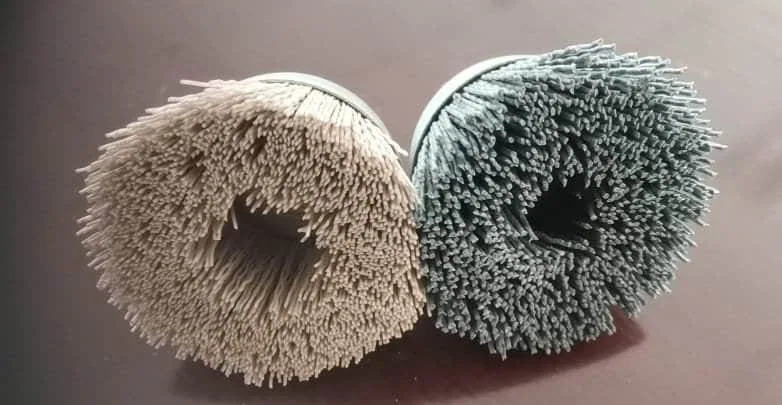
Advantages
- Nylon brushes last longer because their filaments don’t wear out. You can depend on them for their extraordinary durability.
- Nylon brushes don’t corrode and resist moisture & chemicals. Hence you can use them in dry and wet conditions.
- Flexible bristles can clean detailed surfaces with lower marking risk than metal wire when the brush is matched to the material.
- Nylon abrasive brushes produce a uniform & smooth finish. So they’re good for finishing and polishing jobs.
- You can use nylon brushes near flammable materials. This reduces fire risks in sensitive areas.
Disadvantages
- Nylon brushes don’t handle tough jobs well like paint removal or thick rust. You may need more time to get results.
- Nylon brushes don’t work as well on hard metals if they are compared with wire brushes.
- Its heavy use, in particular under heat or high pressure, can fray or deform it. Brushcustom solves this problem by offering nylon brushes with special polymers to help them maintain their shape even in harsh environments.
Advantages and Disadvantages of Wire Brush
Advantages
- Wire brushes remove paint, rust, scale as well as weld spatter from metal surfaces. So they are used for heavy duty cleaning.
- Wire brushes are of many sizes and shapes. You can find one for almost any industrial task.
- They are affordable for industrial cleaning. Also you will need very little extra grinding or welding after using wire brushes.
- Twisted‐in‐wire brushes are extra strong. They can hold up well to tough industrial use.
Disadvantages
- Wire brushes can scratch or gouge soft or delicate surfaces. So you can’t use them on sensitive materials.
- They can create heat, sparks or flying debris. This can be hazardous for some environments and risky toward safety.
Other Fill Options Buyers Ask About
Some projects also compare natural bristles, PP, PBT, or other synthetic fills. For Brushcustom's custom industrial work, natural bristles are usually secondary: they may fit soft wiping or liquid-carrying tasks, but they are less common where repeatable material properties, hygiene control, ESD behavior, or documented specifications are required. Compare these wider options in the Industrial Brush Filament Materials Guide.
When the buying question is surface risk versus cleaning force, nylon and wire are still the first comparison. Use the workpiece material, residue, required finish, environment, and mounting method to decide whether the brush should clean gently, cut more aggressively, avoid sparking, resist moisture, or hold a stable shape over repeated cycles.
Wire Brush vs Nylon Brush: Which One to Choose?
Your choice between a wire brush or a nylon brush depends entirely on what the job demands.
For removing rust, aggressive cleaning, or preparing hard metal surfaces, a wire brush is often the stronger direction. Nylon brushes are usually reviewed for plastic, wood, coated, or more sensitive surfaces where the goal is lower surface marking and a smoother finish.
Always think about the material, the finish you want and your safety before you decide.
If your project has special requirements or you’re not sure which brush will work best, Brushcustom’s team can help you design or choose the right brush for your needs.
Conclusion
Wire and nylon brushes both have their place in surface preparation & industrial cleaning. Wire brushes are outstanding for tough jobs like stripping paint and removing rust. On the other hand nylon brushes are better for gentle cleaning on sensitive materials. So choose the brush which fits your project and the material you’re working with.
If you need any kind of industrial brushes then Brushcustom is your best option. You can request a quote anytime for custom brushes tailored according to your particular needs.
Related Questions
Can wire brushes scratch stainless steel?
Yes wire brushes can scratch and may put marks or gouge stainless steel surfaces.
When to replace a brush?
Replace your brush when the bristles are bent, worn or frayed. Changing your brushes every 3 to 4 months is a good practice for daily use.
Do nylon brushes create sparks?
Nylon brushes do not create metal-wire sparks, but the full process still needs to be reviewed for heat, dust, static, and site safety requirements.
Can I use wire brushes with power tools?
Yes you can attach wire brushes to power tools like drills for surface preparation and cleaning.
Can I remove rust with nylon brushes?
Yes you can but nylon brushes can only clean-off oxide build‐up & light rust but not heavy rust.