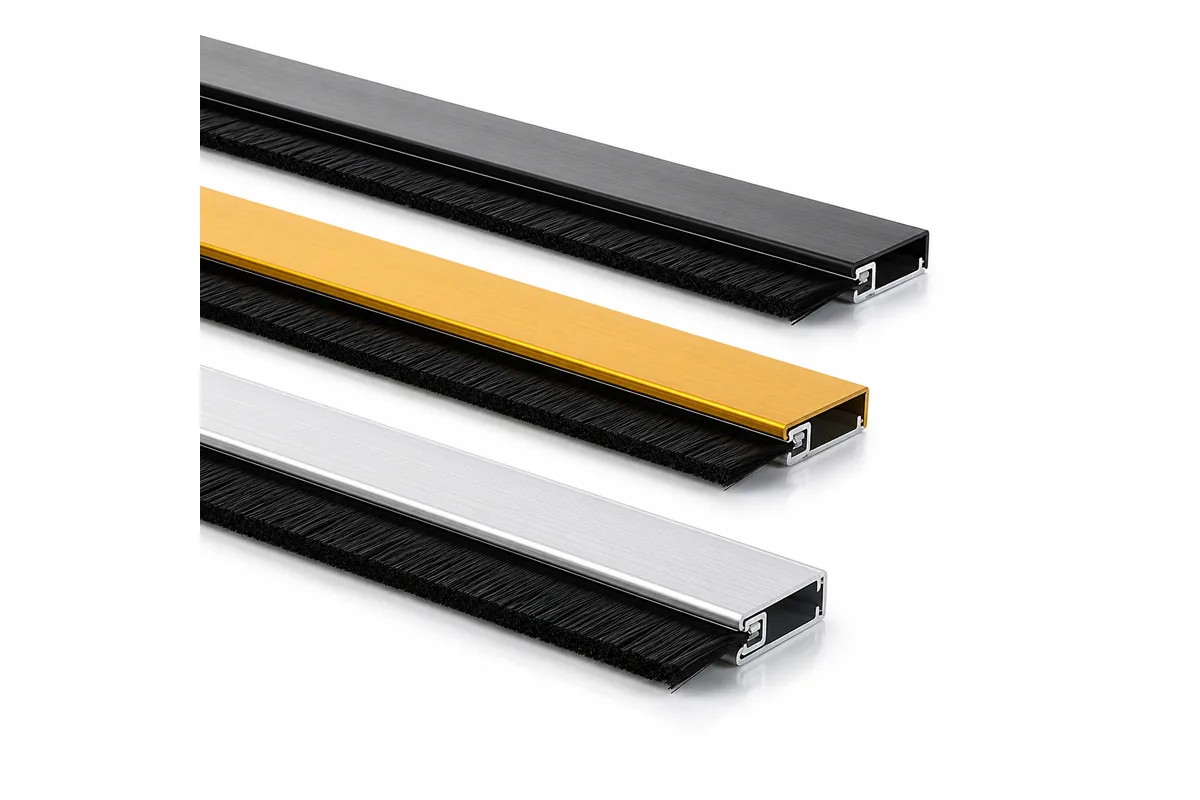
Metal channel strip brushes
- Straight brush strips for linear sealing and guiding
- Galvanized steel, stainless steel, or aluminum channels
- Holder, track, or mounting-profile replacement
- Custom channel details covered on the dedicated product page

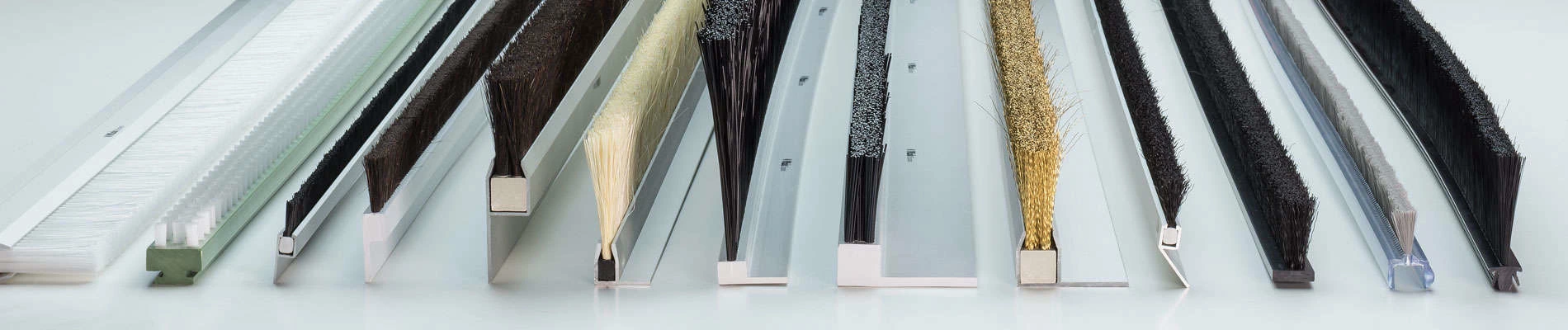
Custom industrial strip brushes for sealing, guiding, shielding, dust control, and light wiping. Choose metal-channel, formed, or flexible-backed profiles with filament and mounting options matched to your drawing, sample, and operating environment.
Request a QuoteA strip brush is a linear brush with filament held in a metal-channel or polymer backing. It creates a flexible contact edge for sealing, guiding, dust control, and light wiping around industrial equipment.
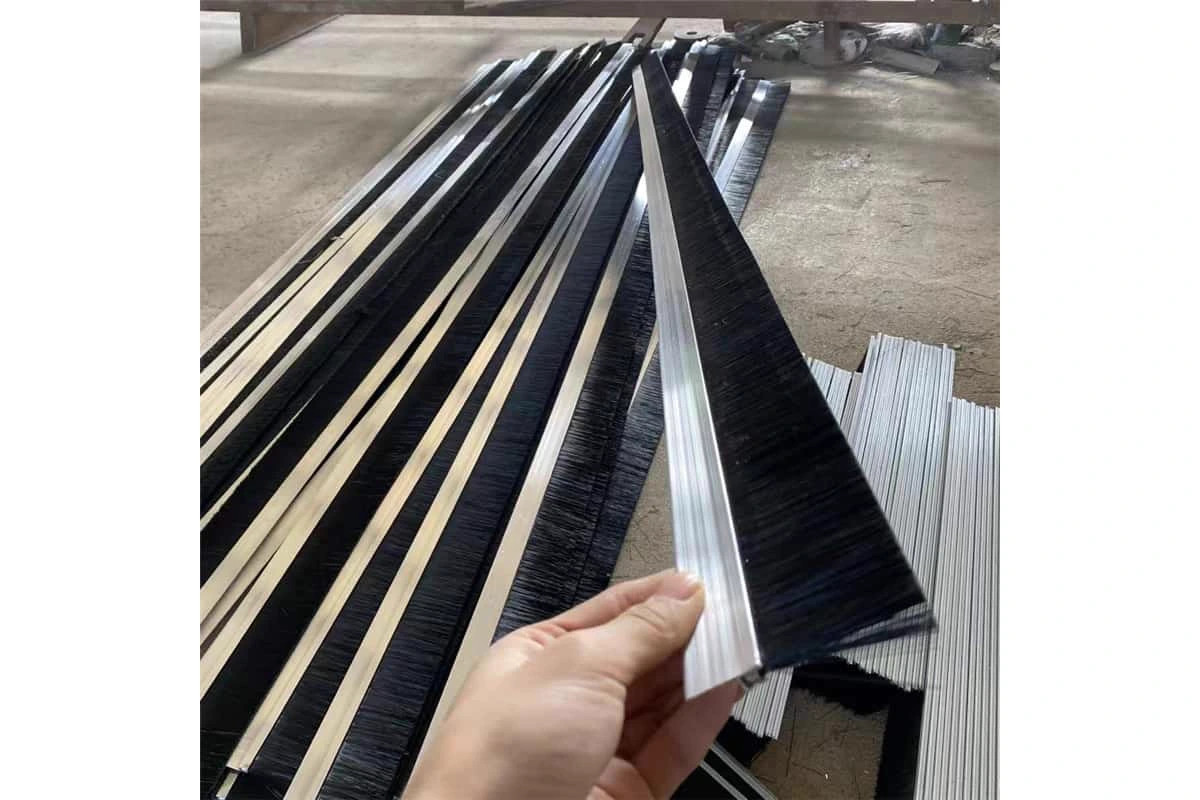
Choose the carrier or backing profile first, then confirm the filament and trim. The backing profile controls installation; the filament trim profile controls how the working edge meets the surface.
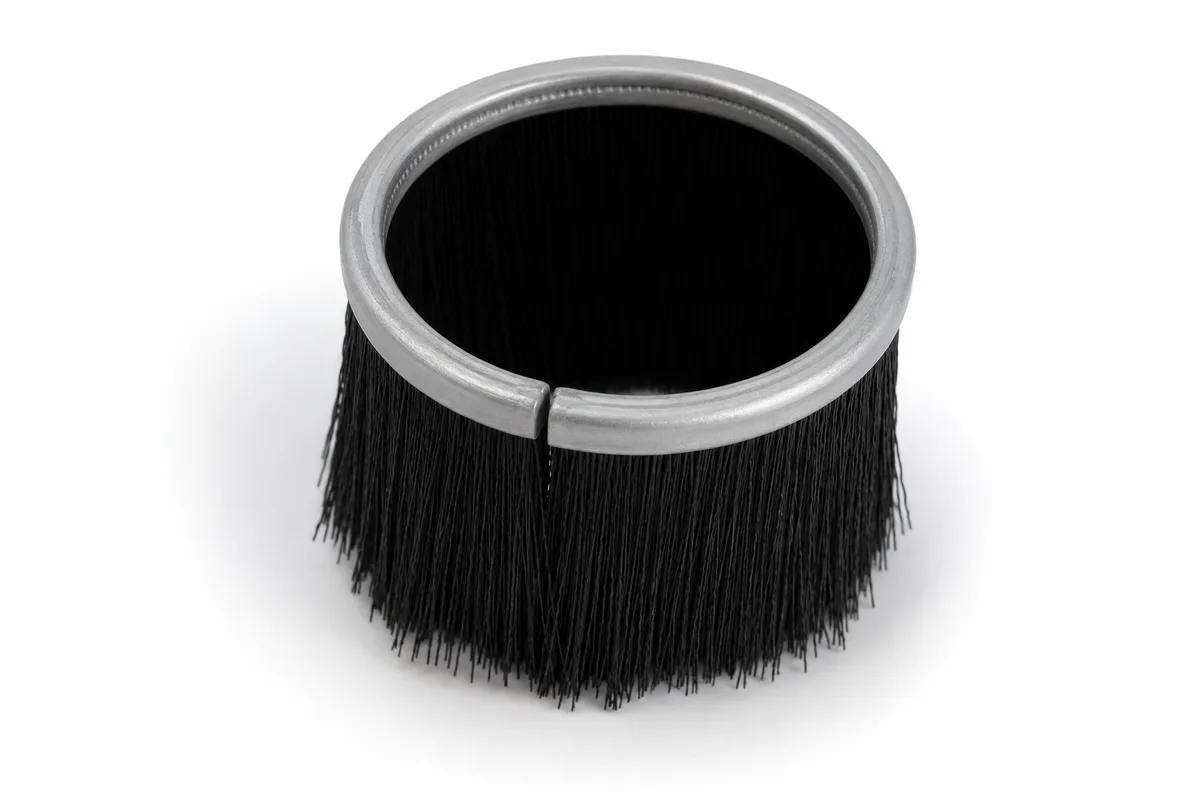
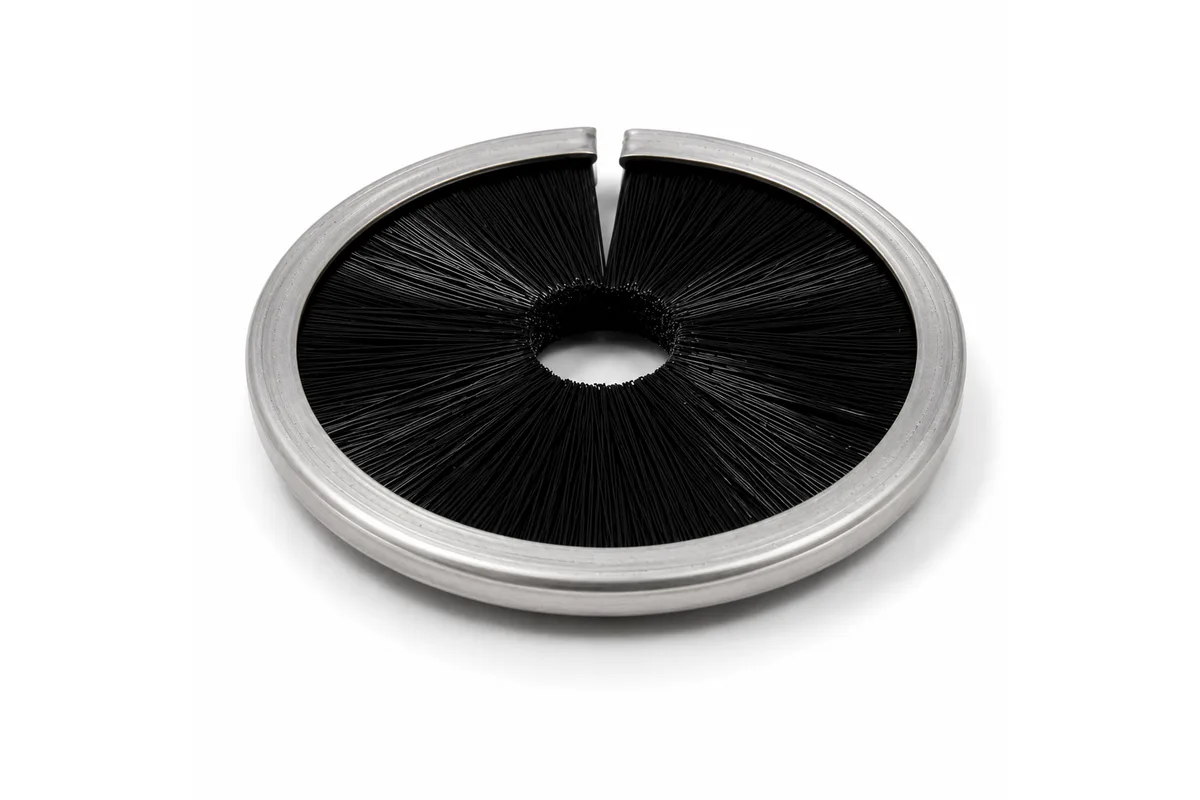
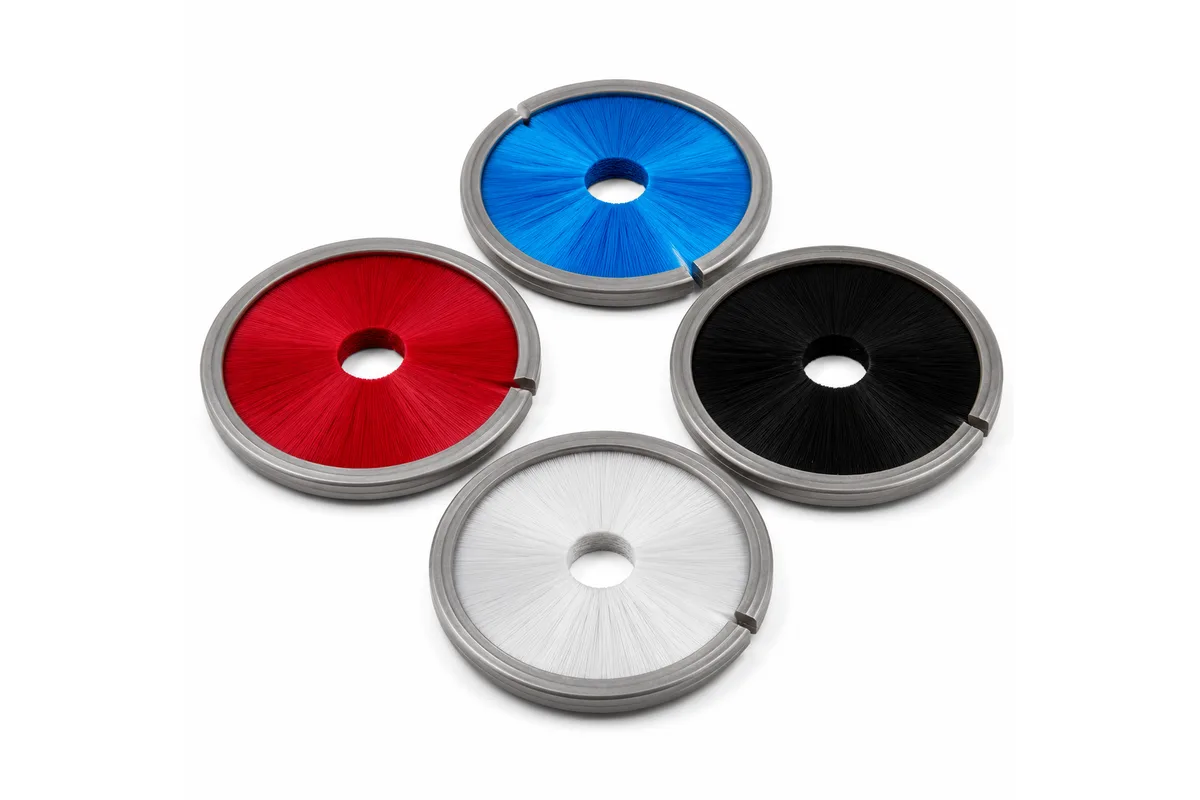
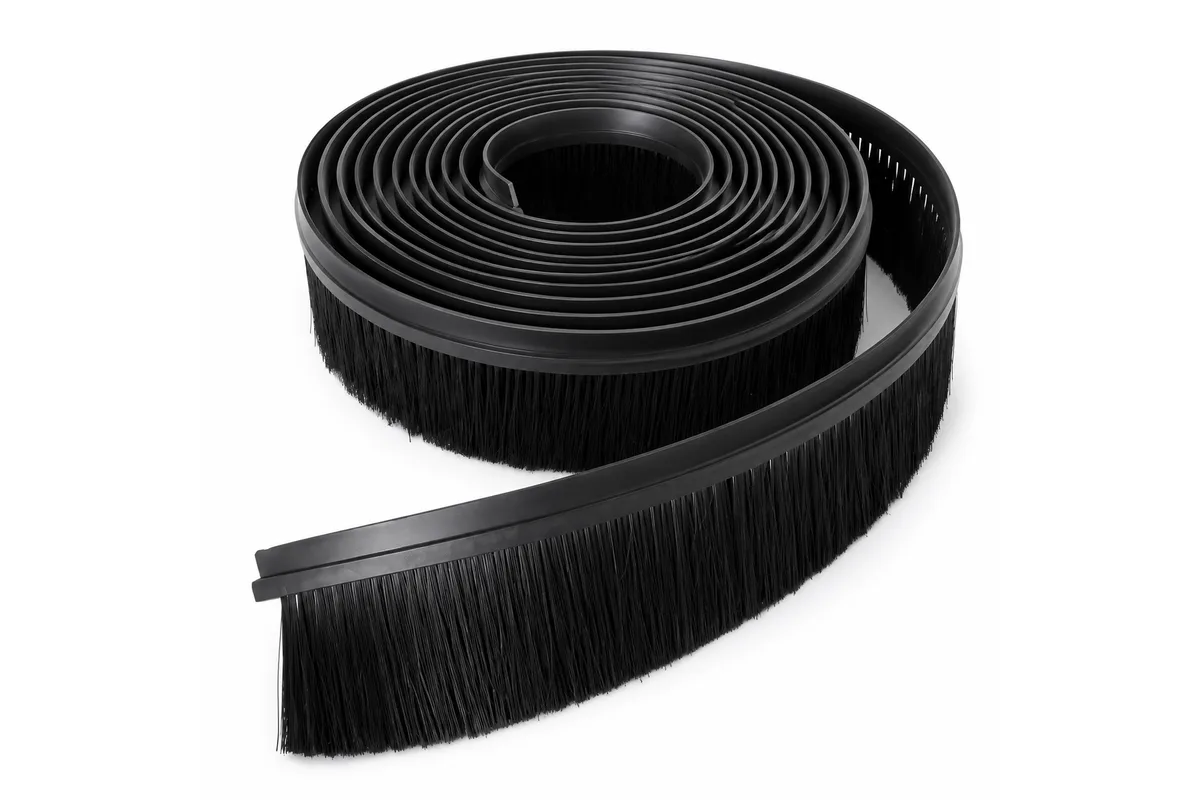
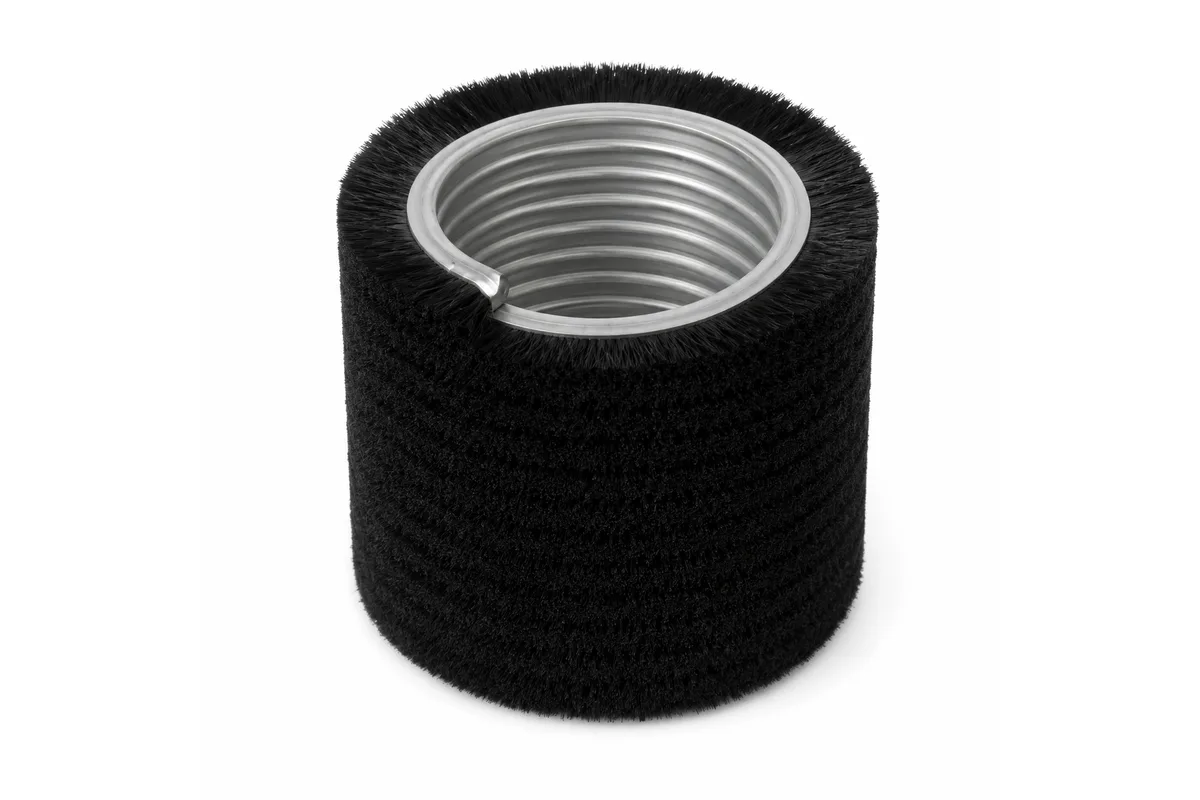
We provide metal channels, plastic or polymer backings, and PVC profiles matched to the mounting path, stiffness, and operating environment.
Rigid or formed carriers for straight sections, holders, tracks, rings, and application-shaped brush paths.
Flexible or rigid extruded profiles for coils, curves, uneven openings, and direct equipment mounting.
Application-specific PVC carriers can provide a flexible mounting base or a rigid shaped body.
We provide synthetic, metal-wire, natural-fiber, carbon-fiber, and application-specific filament options for different contact and operating conditions.
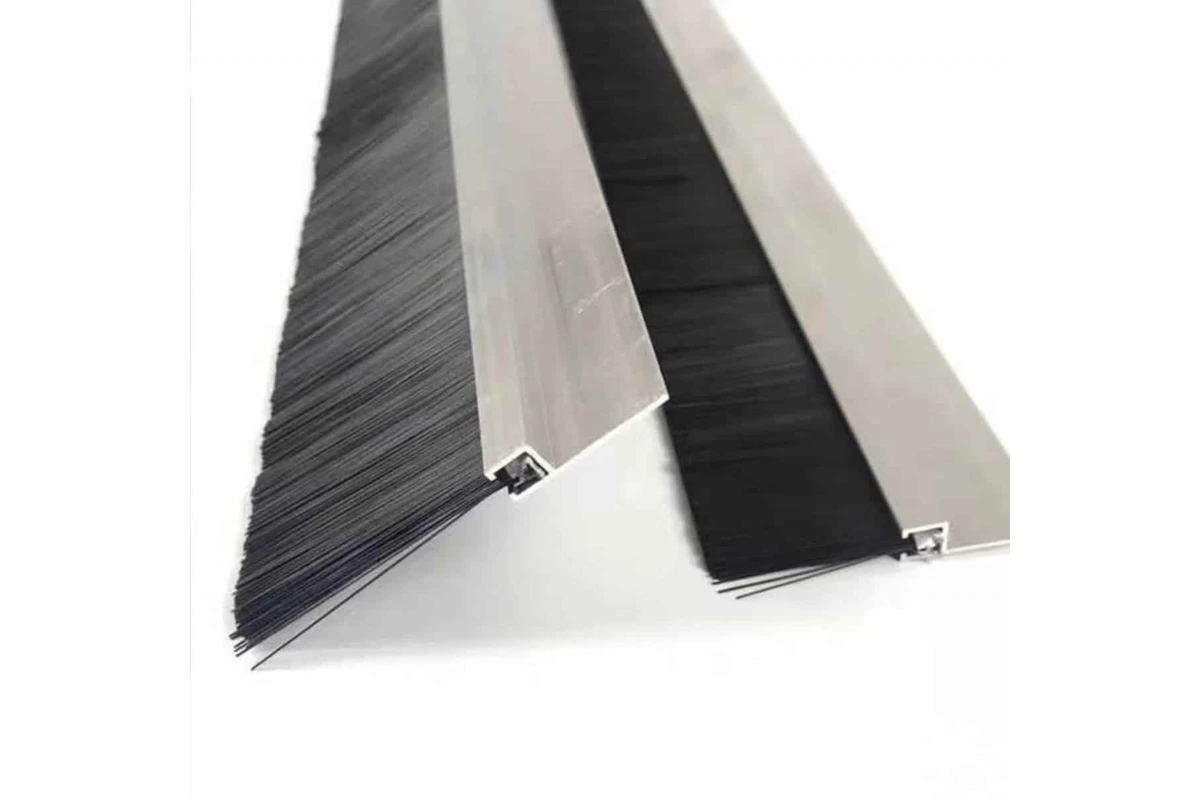
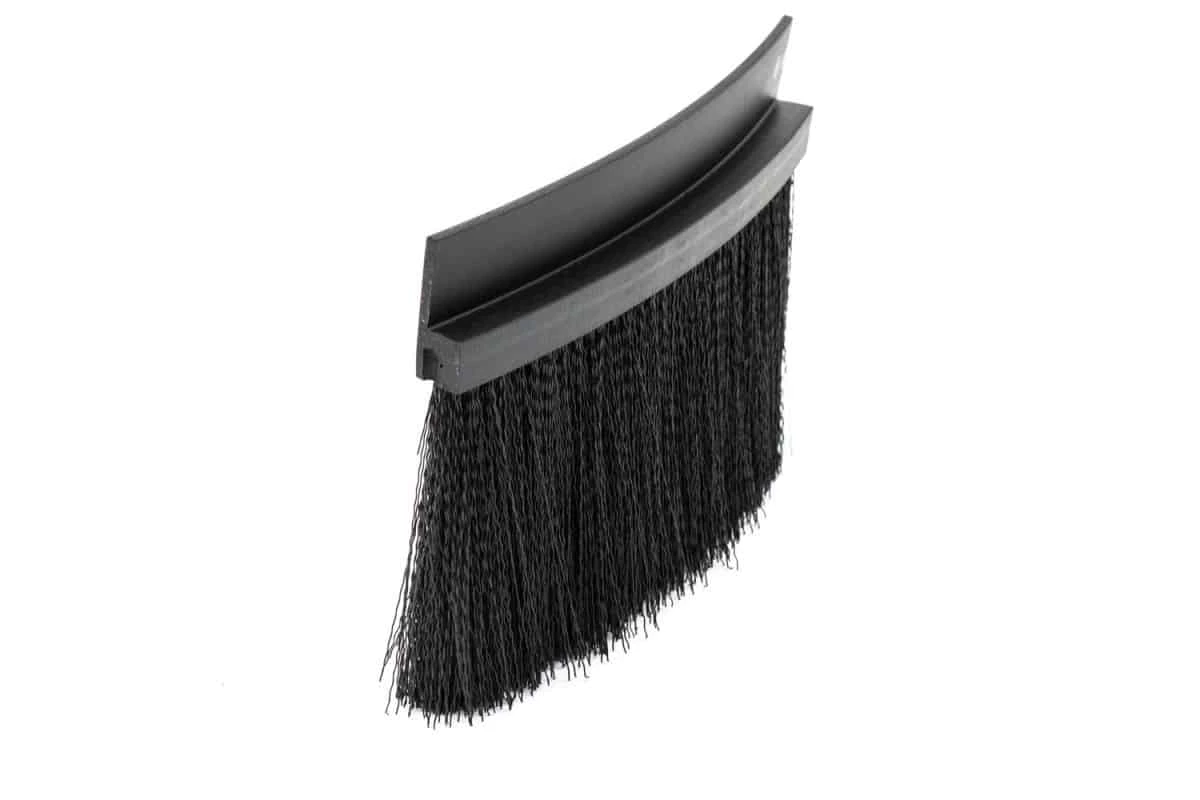
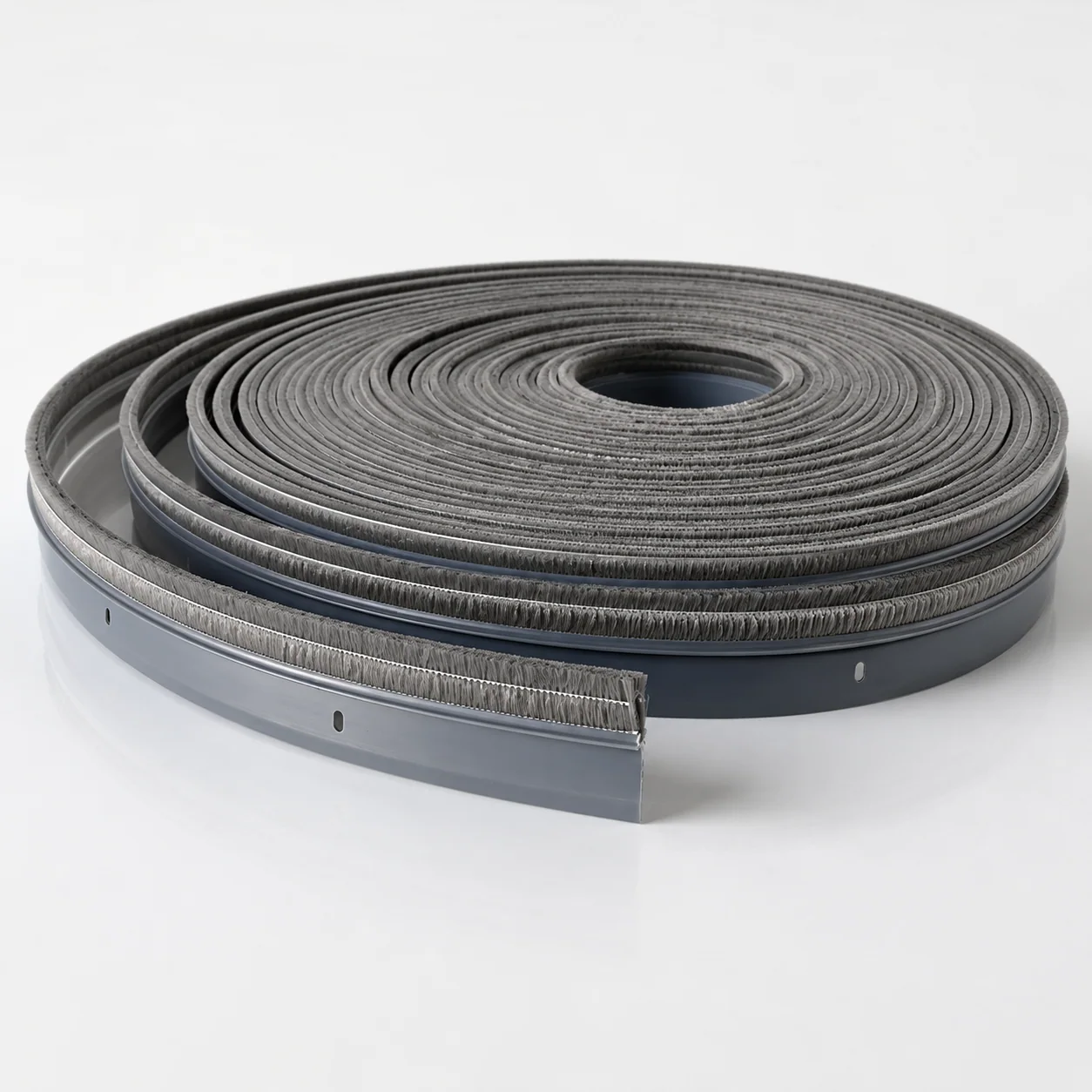
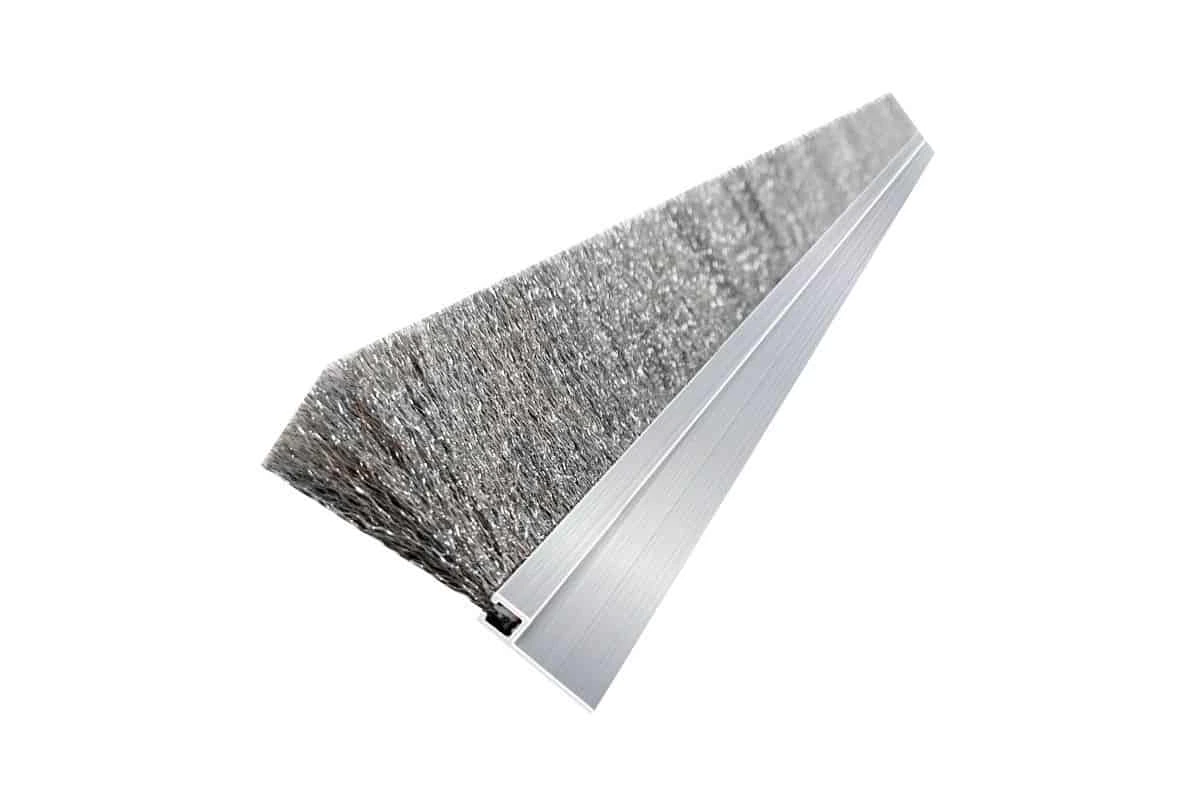
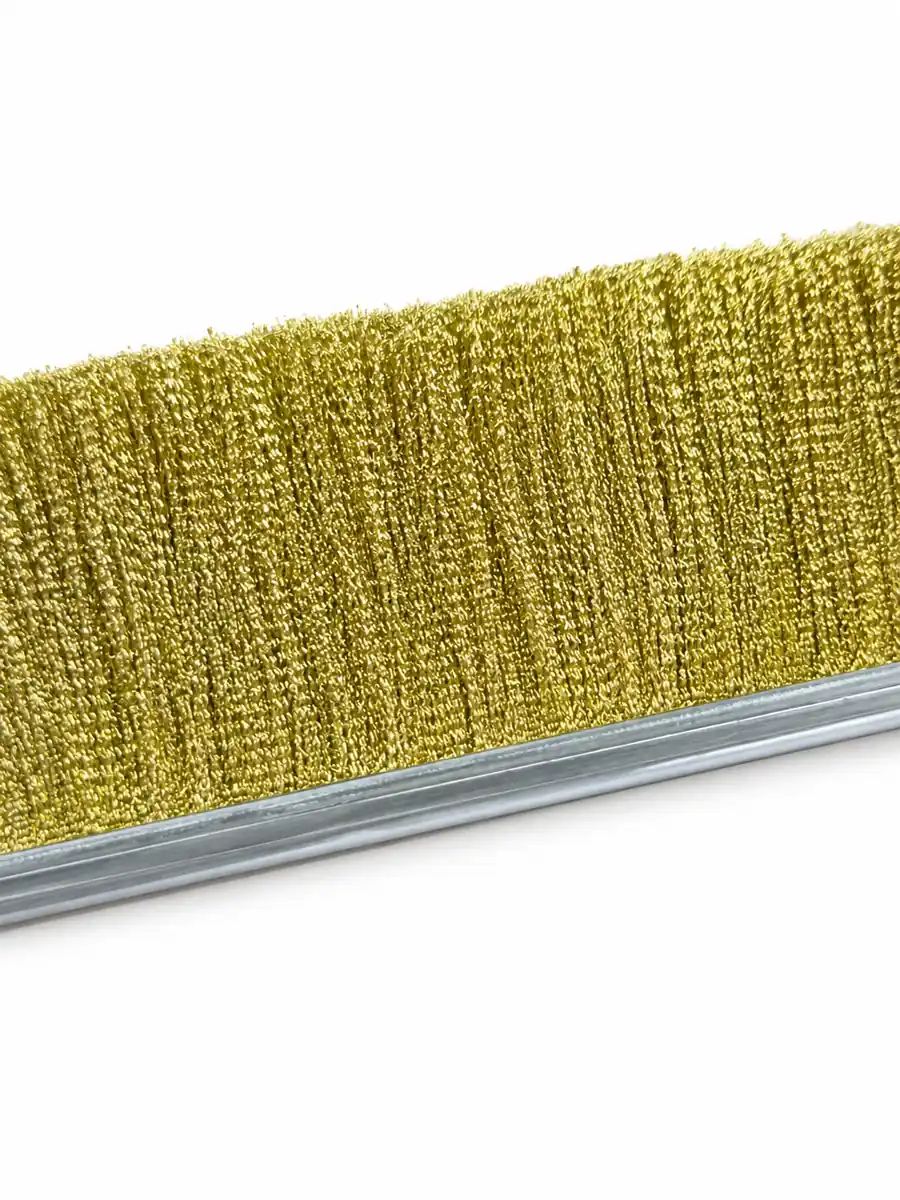
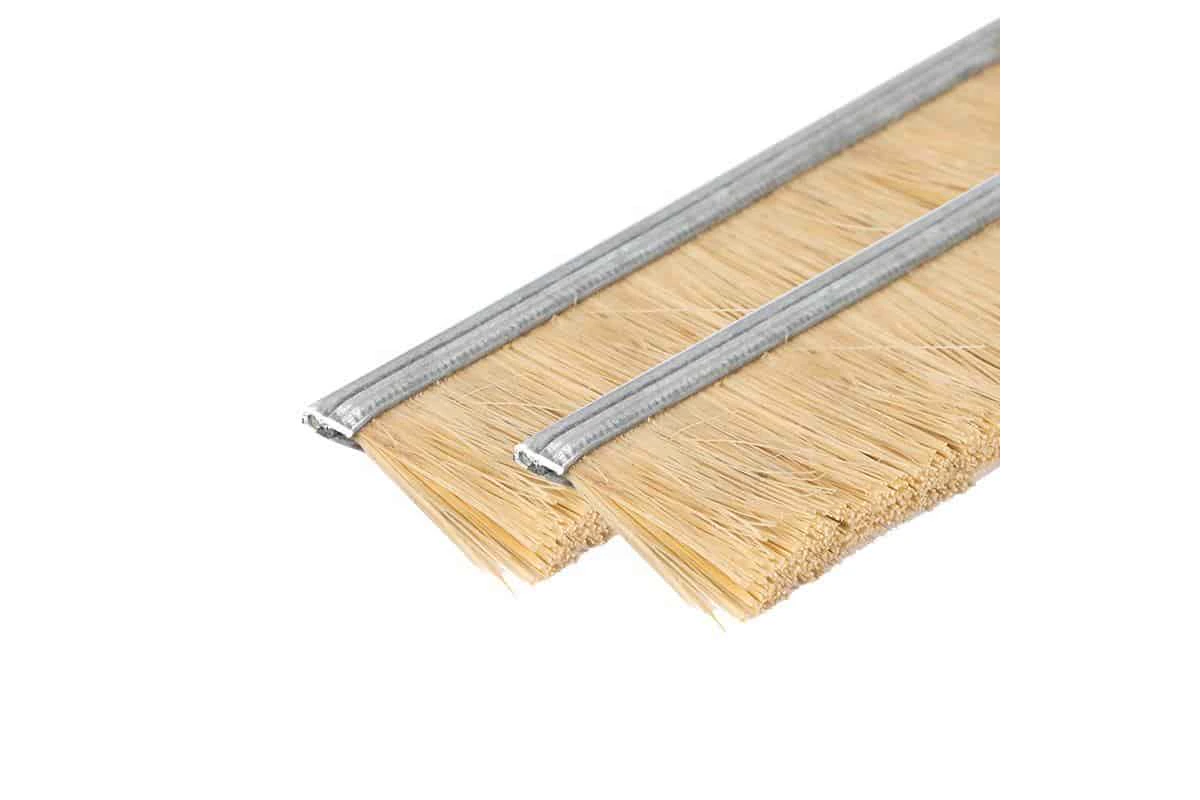
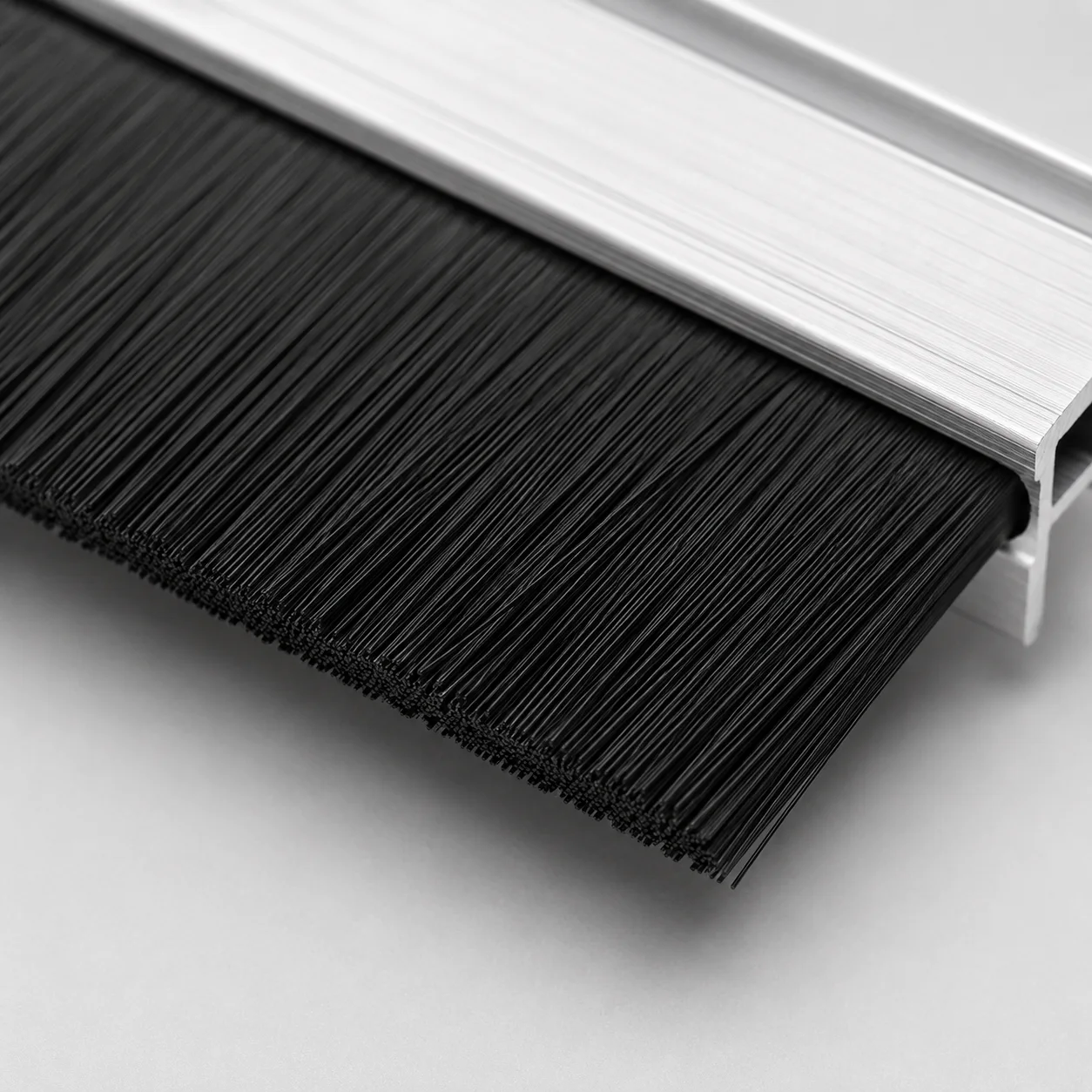
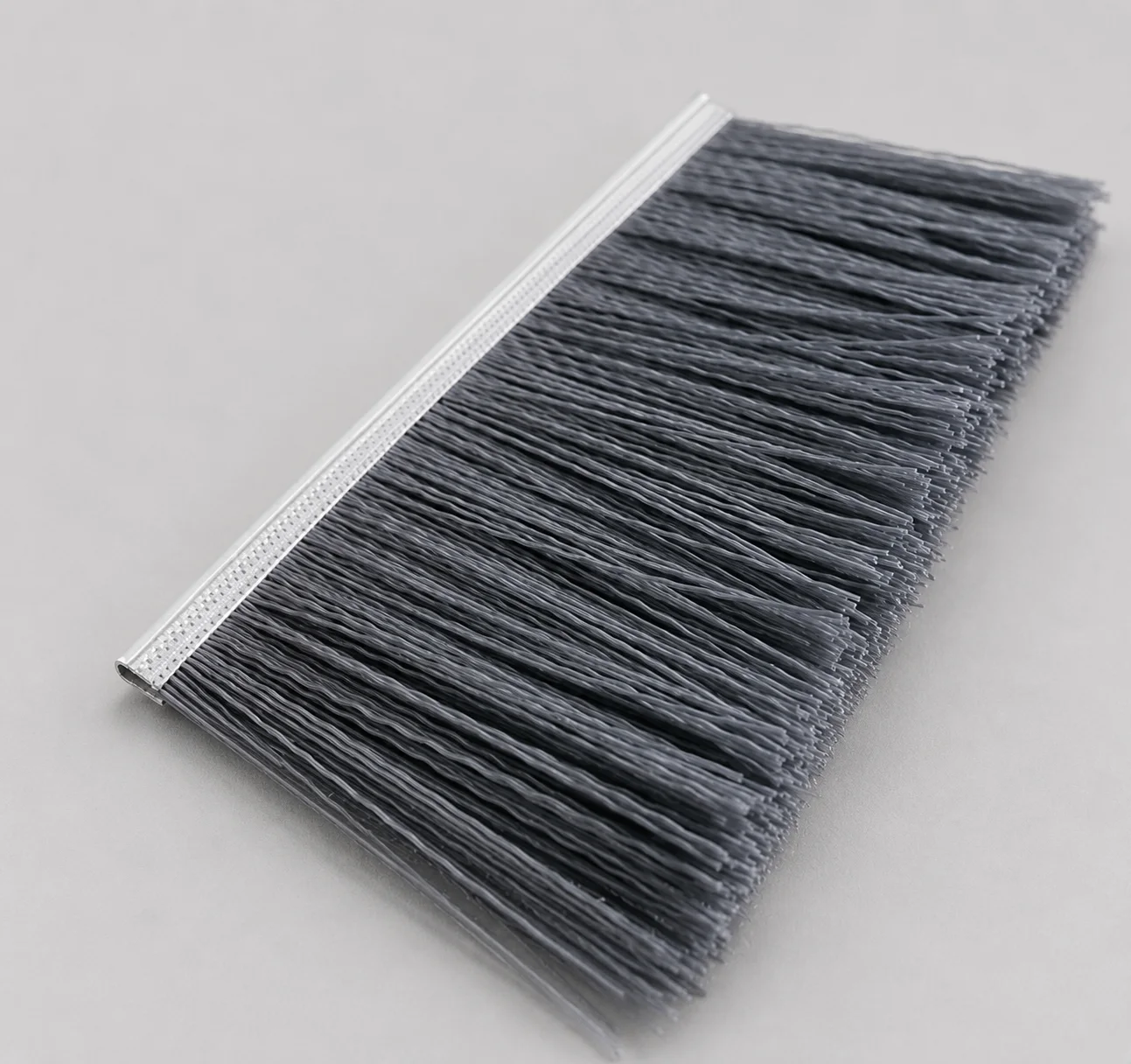
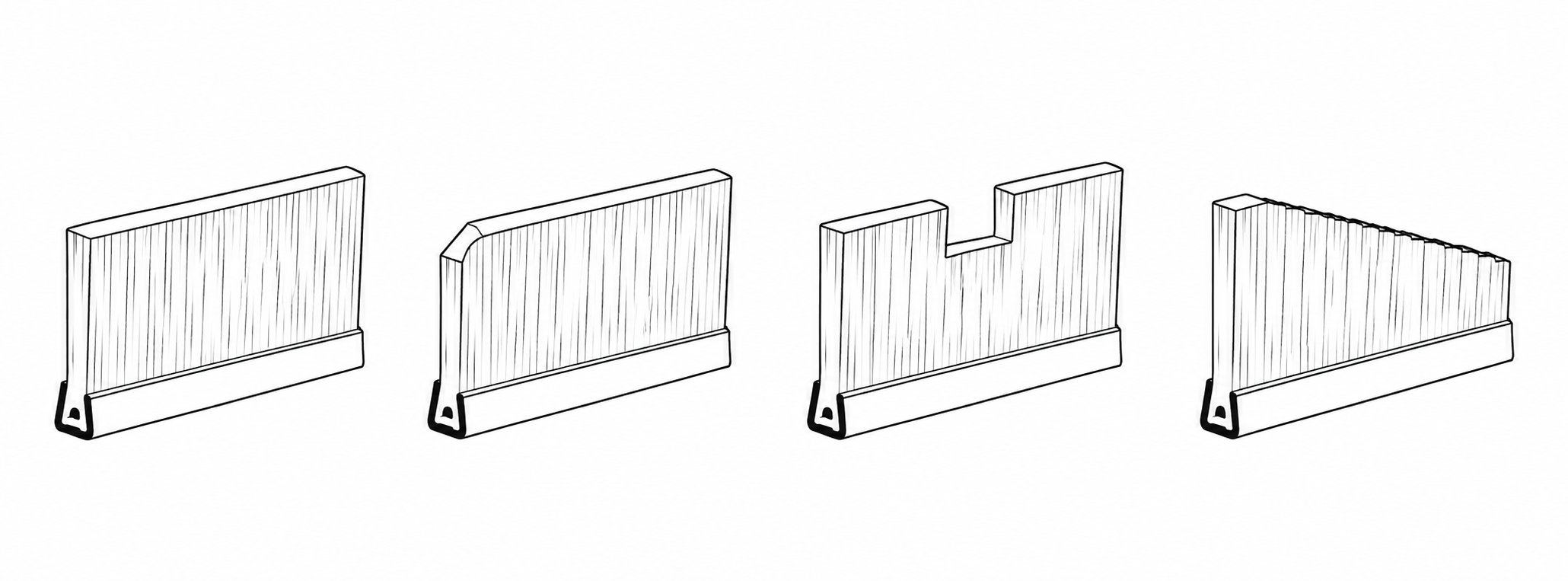
The filament trim profile is the shape of the working edge, not the metal or polymer mounting profile. It changes how the brush enters the gap and distributes contact across the surface.
Industrial strip brushes provide a flexible contact edge where rigid seals, guides, or wipers are unsuitable. Common OEM and replacement uses include:
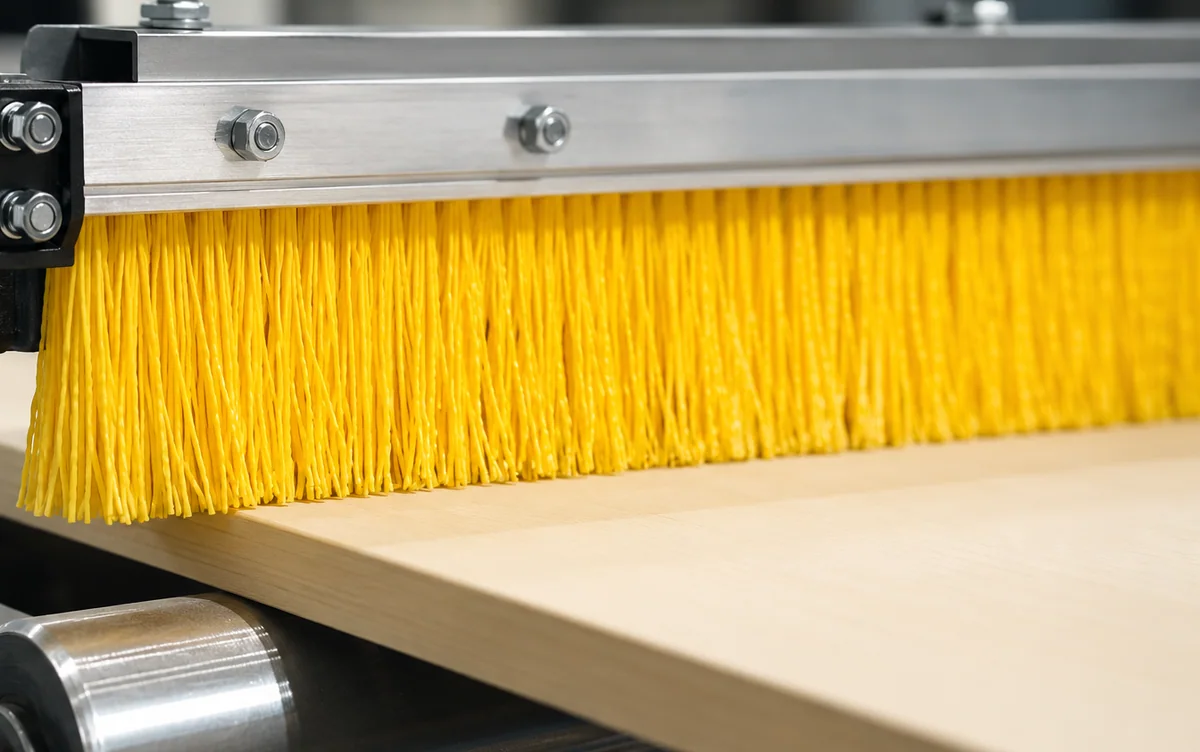
A flexible brush edge guides products where rigid rails could mark or catch the workpiece. Trim and stiffness are selected for the product and line speed.
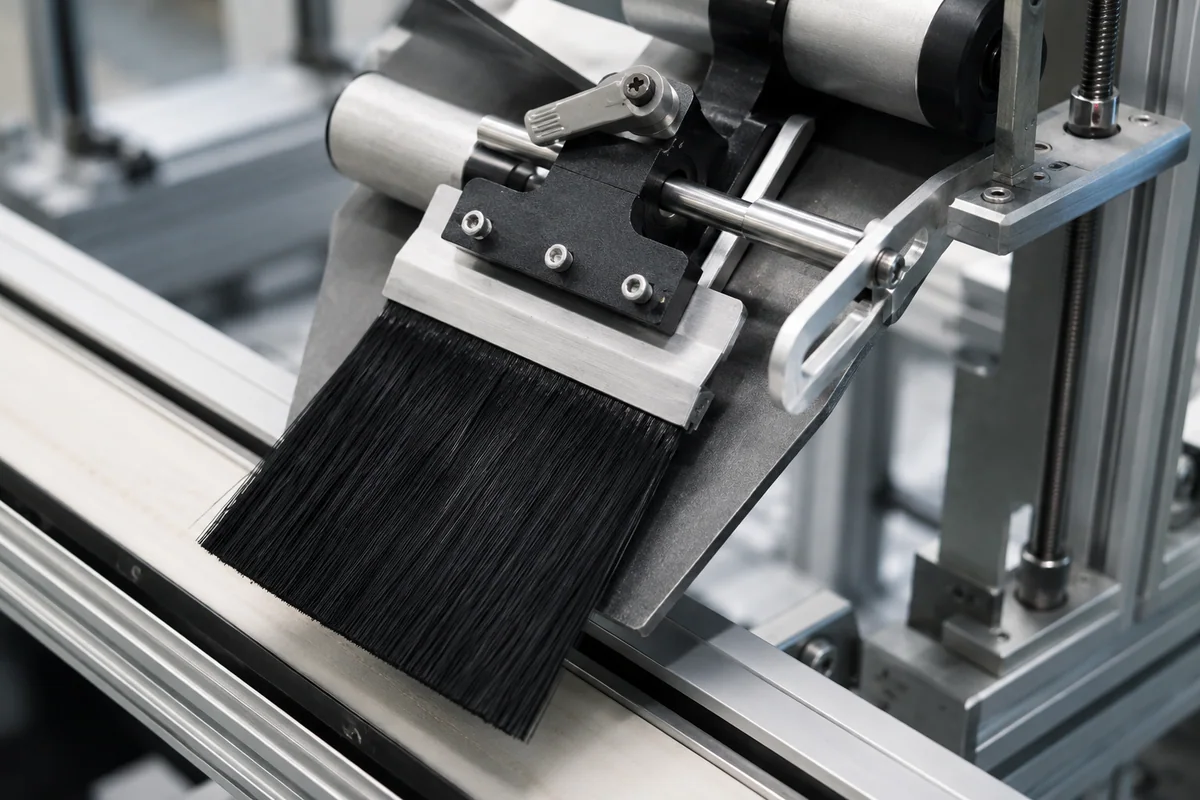
At conveyor transfer edges, strip brushes wipe loose material and help contain dust or spillage without a rigid scraper contacting the belt.
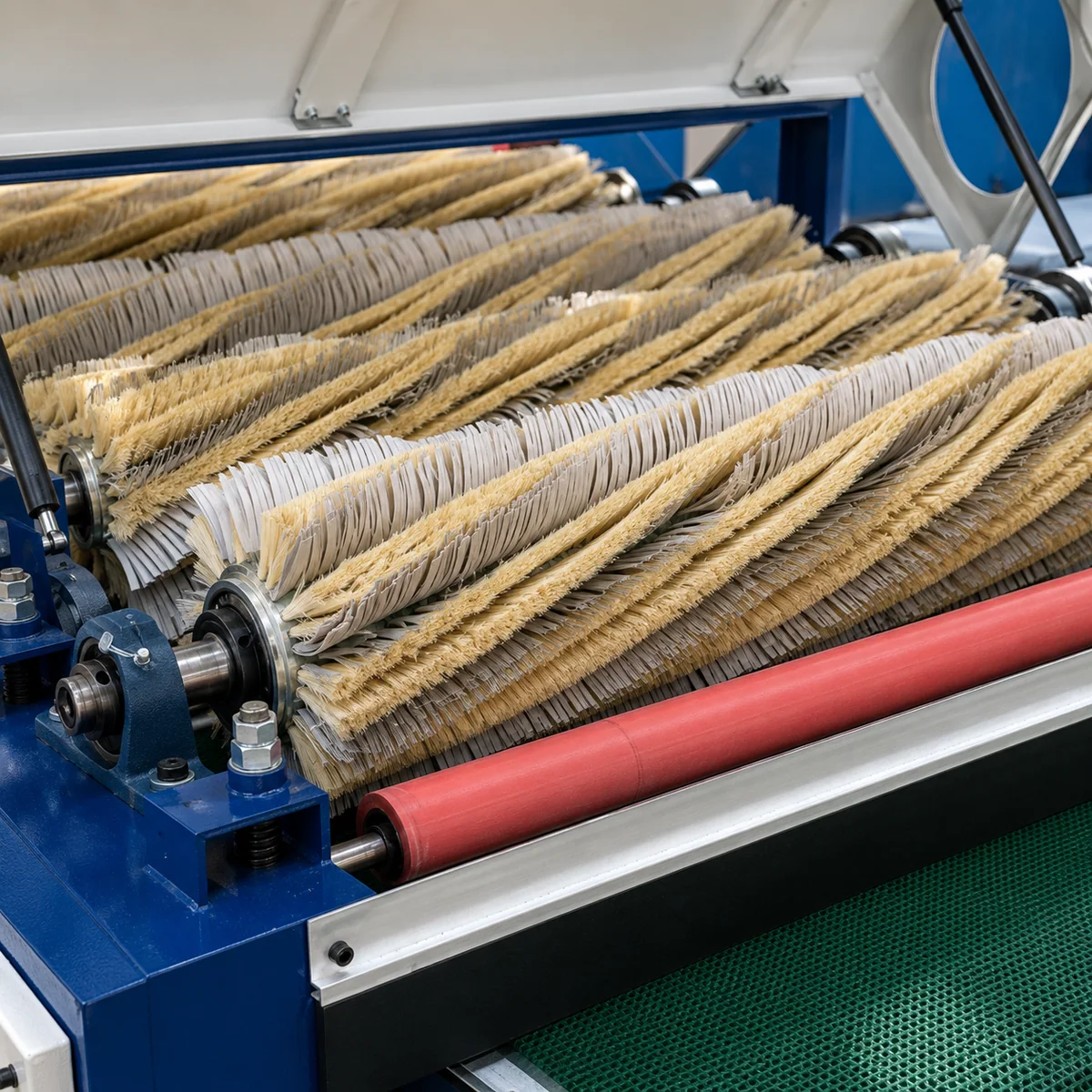
Fixed brush strips contact moving sheets or parts to remove loose dust and residue at a defined station. Fill and contact pressure depend on the surface.
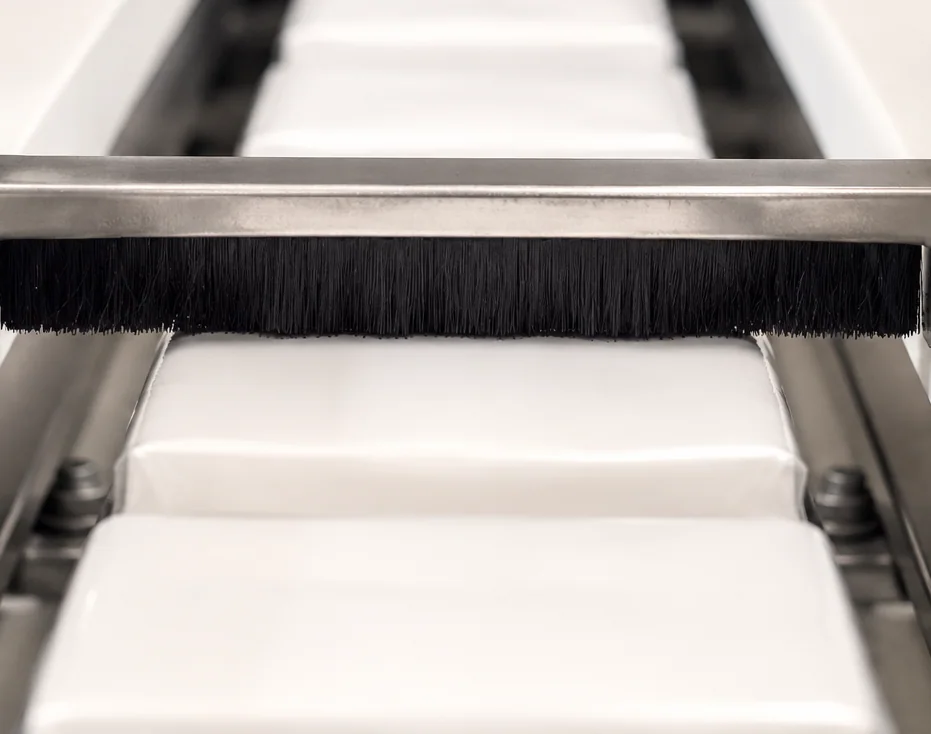
Parallel brush strips create light-contact lanes to separate or align products through handling equipment. Spacing follows the product size and travel path.
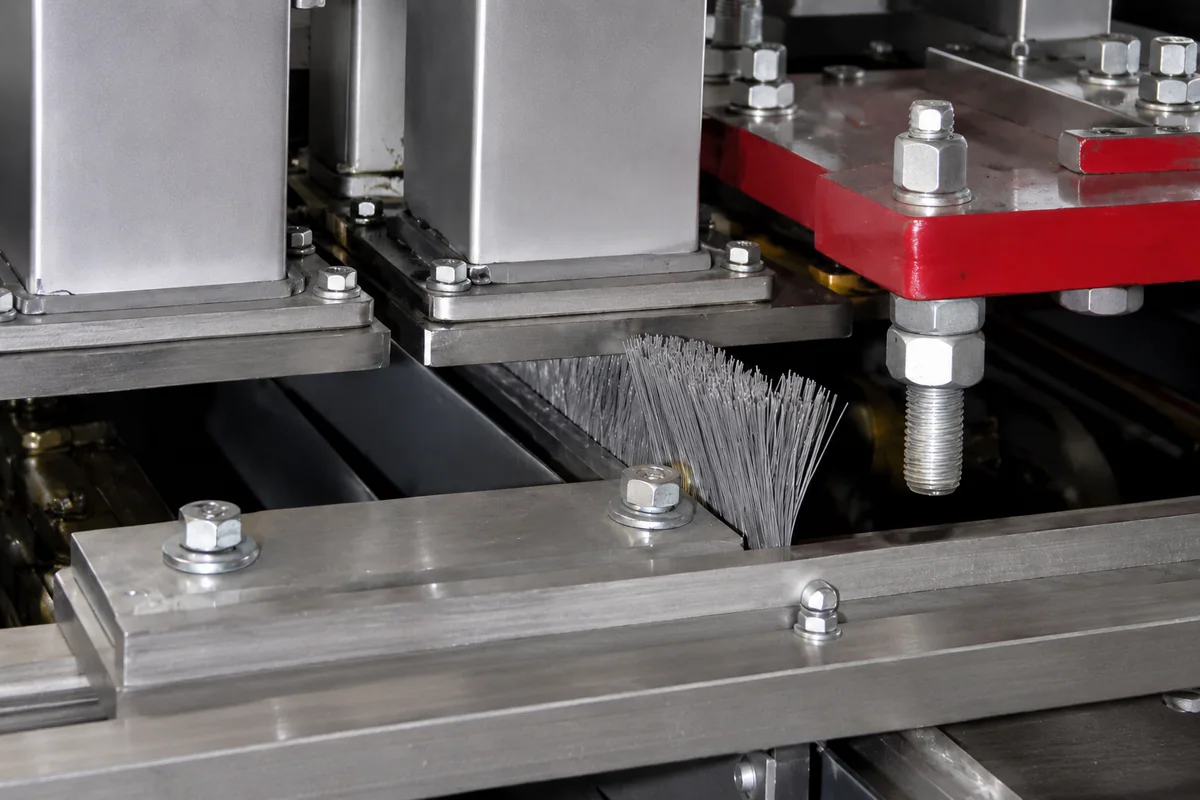
Strip brushes remove loose material from selected machine edges and transfer points. Abrasion, moisture, and mounting access guide the fill and holder choice.
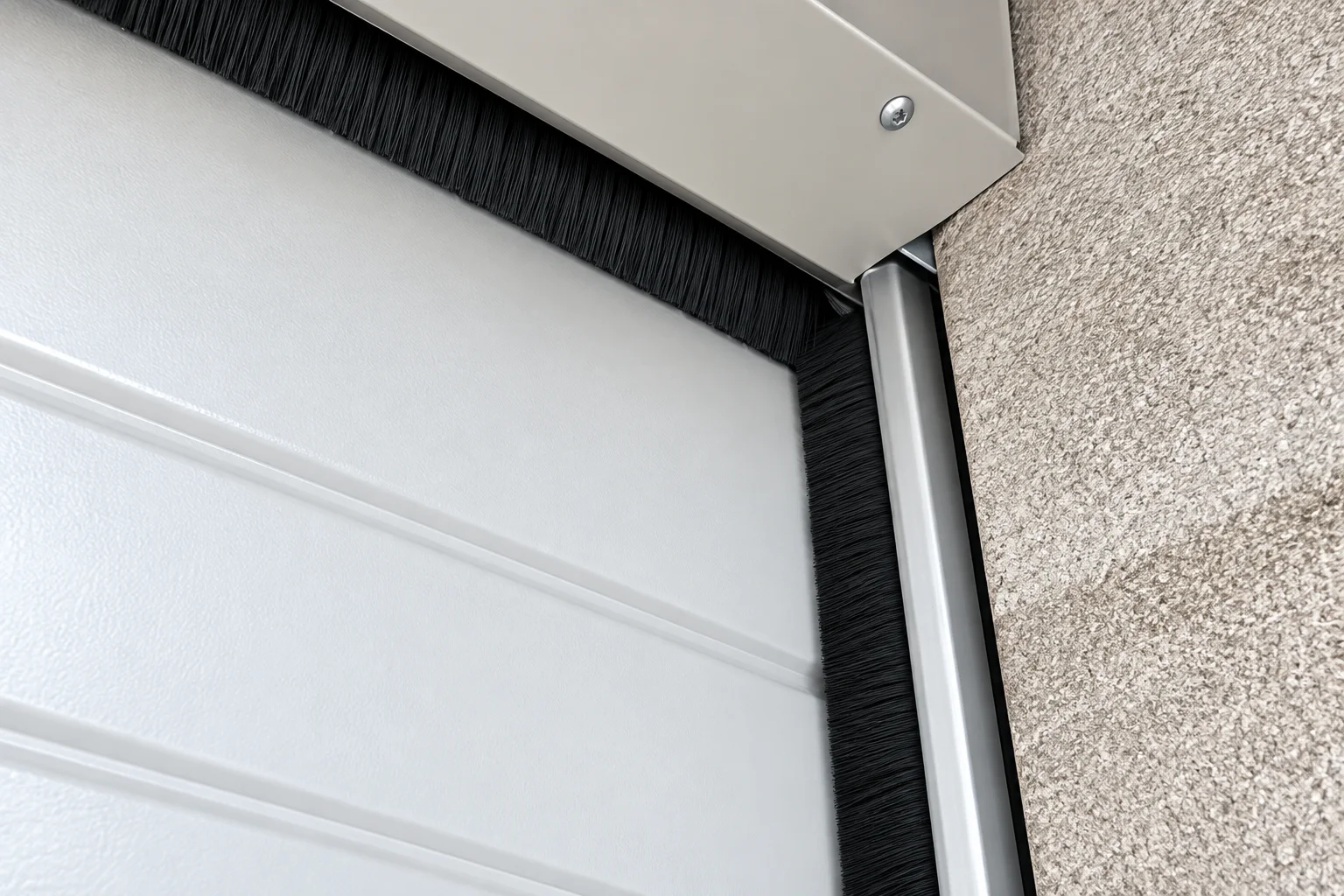
Brush strips cover uneven gaps along doors and equipment openings, helping limit drafts and larger debris while allowing the door or panel to move.
Door Brush Seal Applications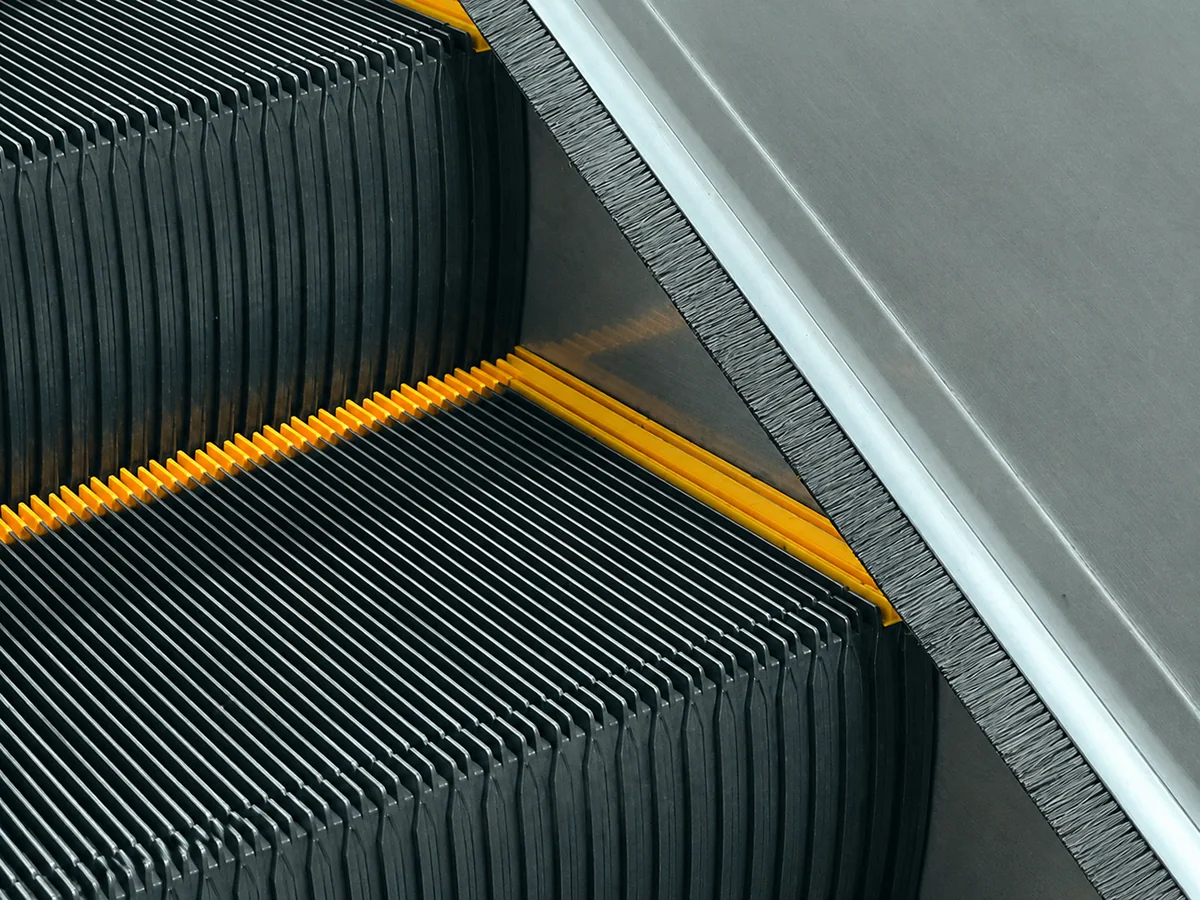
Brush strips fitted along escalator skirt panels help keep footwear away from the step-side gap. Placement and dimensions must follow the equipment requirements.
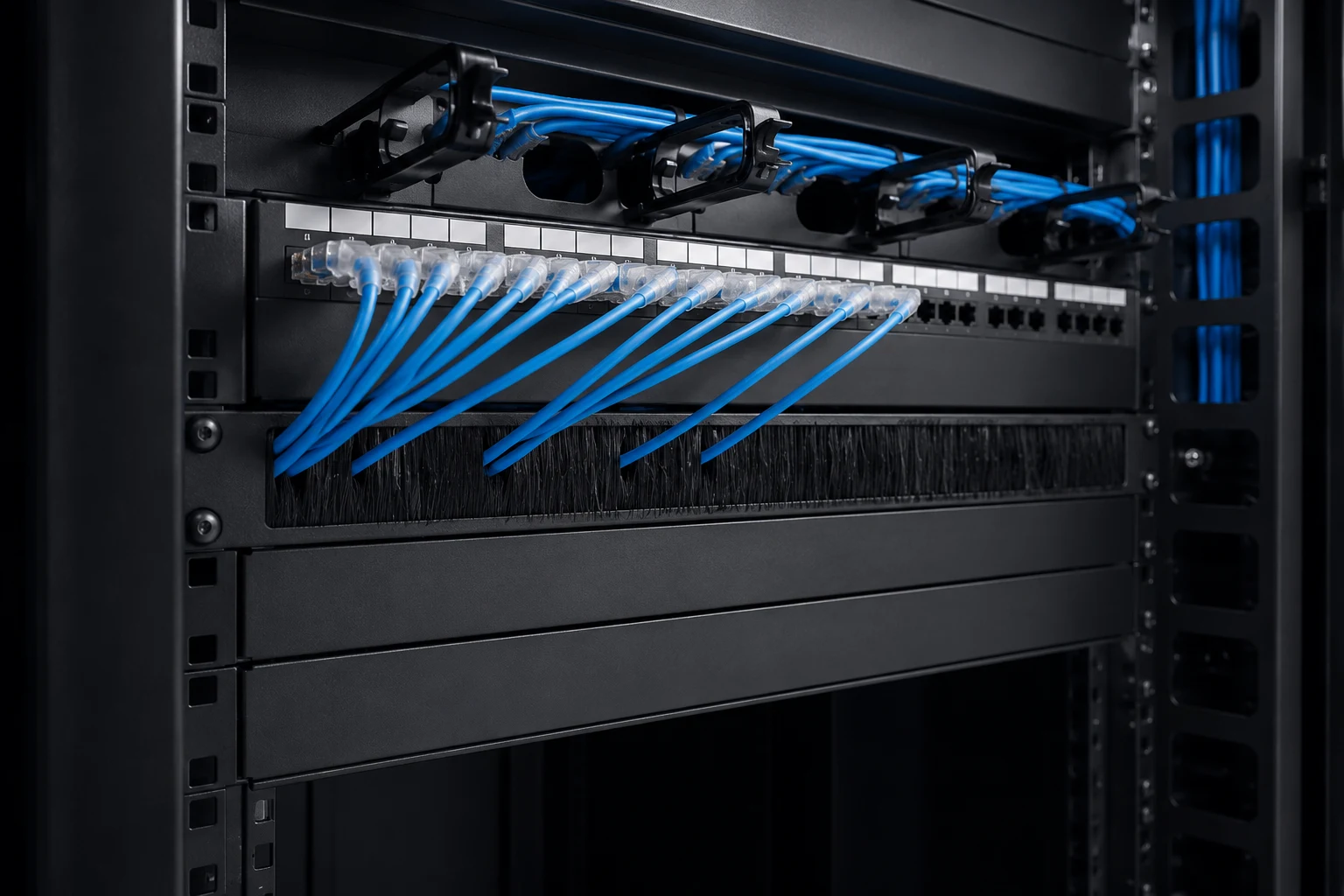
Rack-mounted brush panels provide a cable pass-through while covering unused space around cable bundles. Confirm the rack opening, mounting pattern, and available space.
Explore Rack Brush Panels
Custom brush strips cover cable-entry openings in cabinet base plates and side panels while allowing cables to pass through. Single or opposing layouts follow the cutout and mounting drawing.
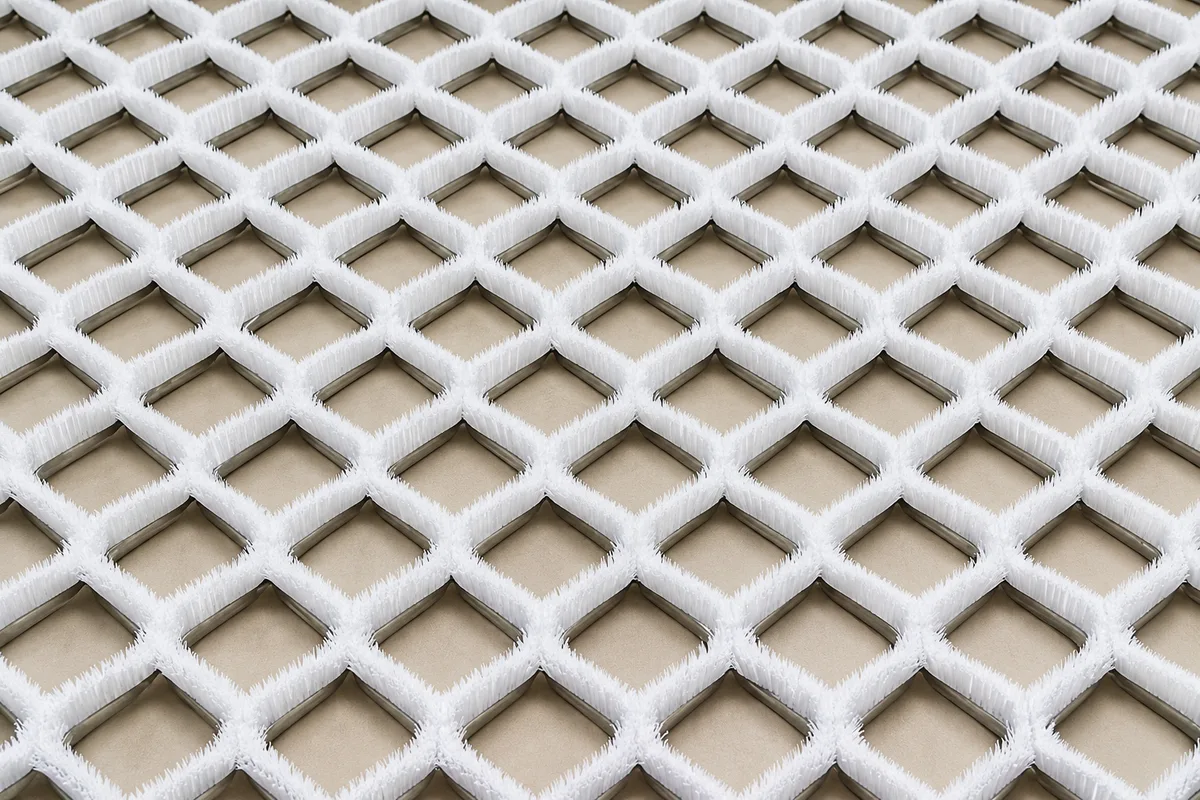
Formed metal-channel brush sections create a replaceable bristle surface for dry ski mats. Profile, bristle stiffness, and layout follow the mat system design.
Explore Dry Ski Slope Bristle MatsSend a drawing, sample, holder profile, or application details. We can manufacture brush-only replacements or complete strip brush assemblies with a custom aluminum or steel holder or mounting track, then confirm the fit, trim, filament, mounting method, and critical tolerances before production.
We confirm dimensions, materials, mounting, and application conditions from your drawing, sample, or marked photo.
A sample or first article can be arranged to verify holder fit, trim, and material performance before volume production.
Critical dimensions, trim, channel fit, and visible finish are checked before the finished brush sections are packed.
Long brush sections can be protected individually and packed in reinforced wooden cases when required.


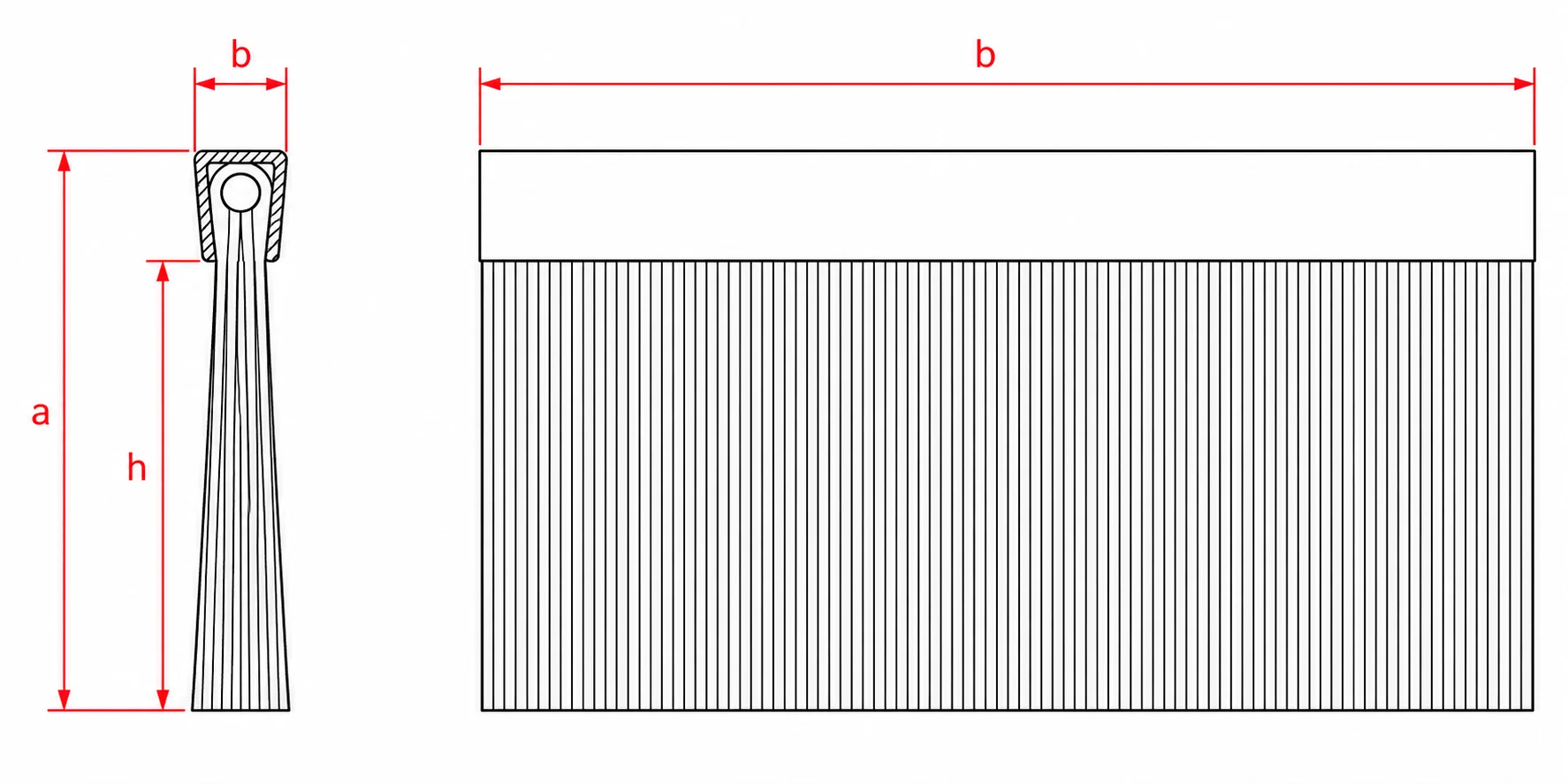
Please provide the application, brush length, overall or trim height, backing or channel dimensions, filament material and diameter, mounting method, operating environment, and required quantity. A drawing, marked photo, holder profile, or existing sample helps us quote more accurately.
Yes. We can match from the holder cross-section, measured dimensions, drawing, or an existing brush sample. Metal-channel size labels such as #4, #5, or #7 can vary between manufacturers, so the size label alone does not guarantee a fit.
Straight strip brush sections can be custom manufactured up to 3 m. Flexible strip brushes can be supplied in longer continuous lengths depending on the backing or profile construction. Final dimensions, section layout, packing, and shipping requirements are confirmed for each project.
The selection depends on moisture, chemicals, temperature, static requirements, contact pressure, and workpiece sensitivity. We can recommend a metal, plastic, or PVC backing and a suitable synthetic, natural, wire, abrasive, conductive, or BCF yarn filament after reviewing the application.
Yes. Strip brushes can be formed into curved, ring, coil, or other application-specific shapes, and the filament can be finished with flat, beveled, notched, or slanted trims. Please show the radius, direction, cross-section, and working edge on the drawing.
Yes. A sample or first article can be arranged to confirm holder fit, trim, mounting, and material performance before batch production.
Yes. We can supply a complete strip brush assembly with the brush pre-installed in a custom aluminum or steel holder or mounting track. Provide the holder profile, material or finish, overall length, mounting holes or slots, brush position, critical tolerances, and required quantity on the approved drawing.
Inspection focuses on the dimensions identified on the approved drawing, including brush length, trim height, channel or holder fit, mounting dimensions, and visible finish. Please identify any critical tolerances when requesting a quote.
Custom production from your drawing for brush-only replacements or complete holder-mounted strip brush assemblies. Large-volume production is supported for OEM and replacement projects.
Request a Quote
Send your requirements here. Drawings and photos are optional.