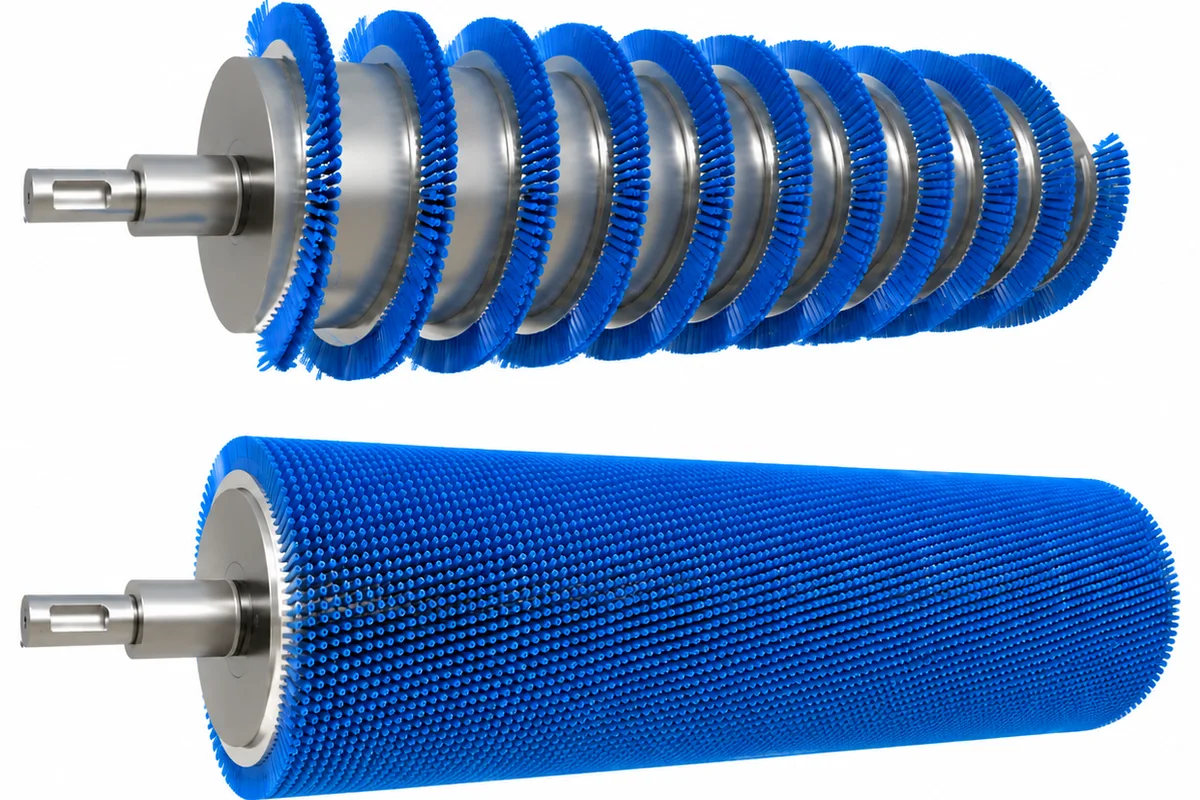
Winding Density: Open or Close Wound
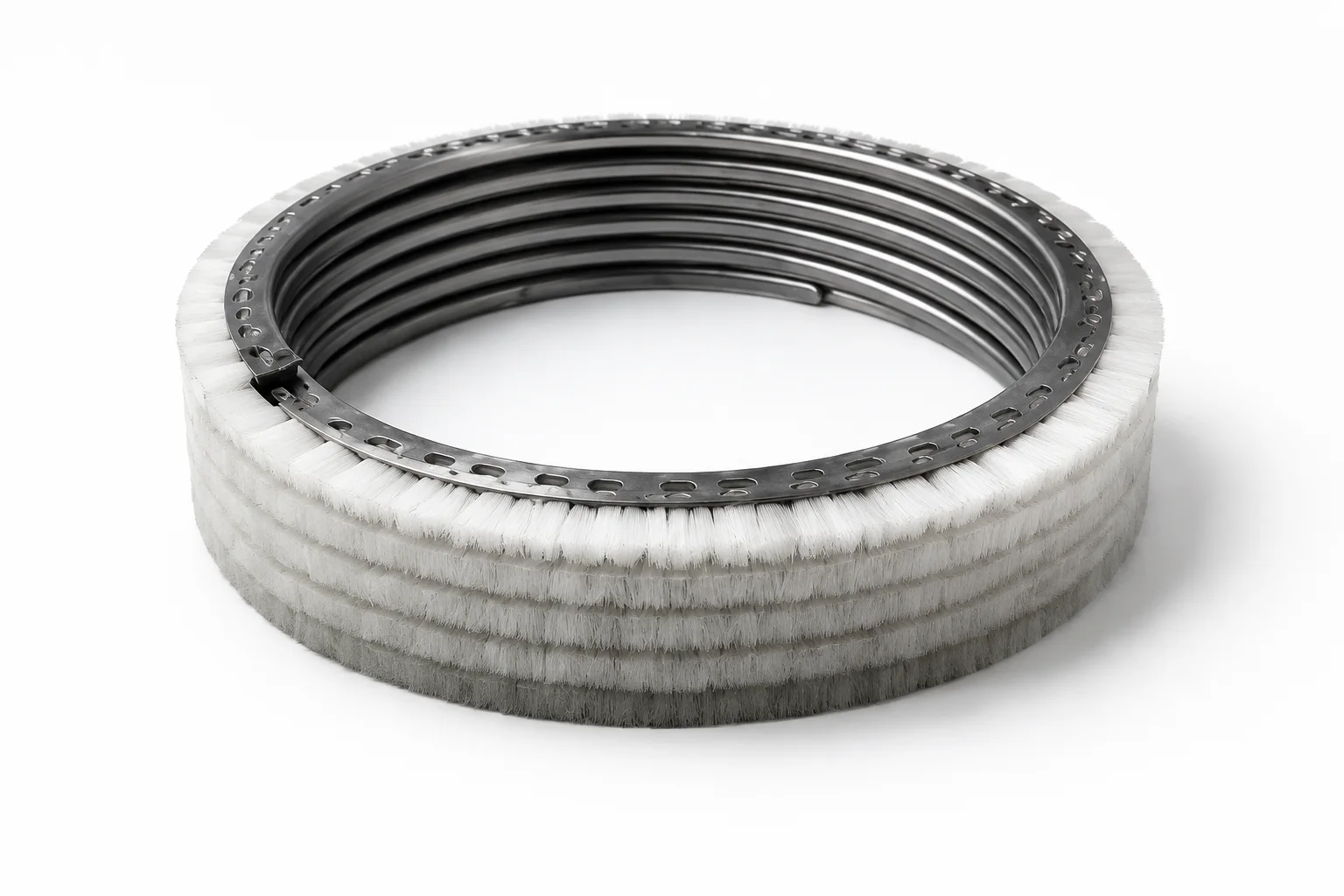
Open-wound builds leave a specified gap between helical rows. Close-wound builds provide denser, more continuous coverage across the working face.
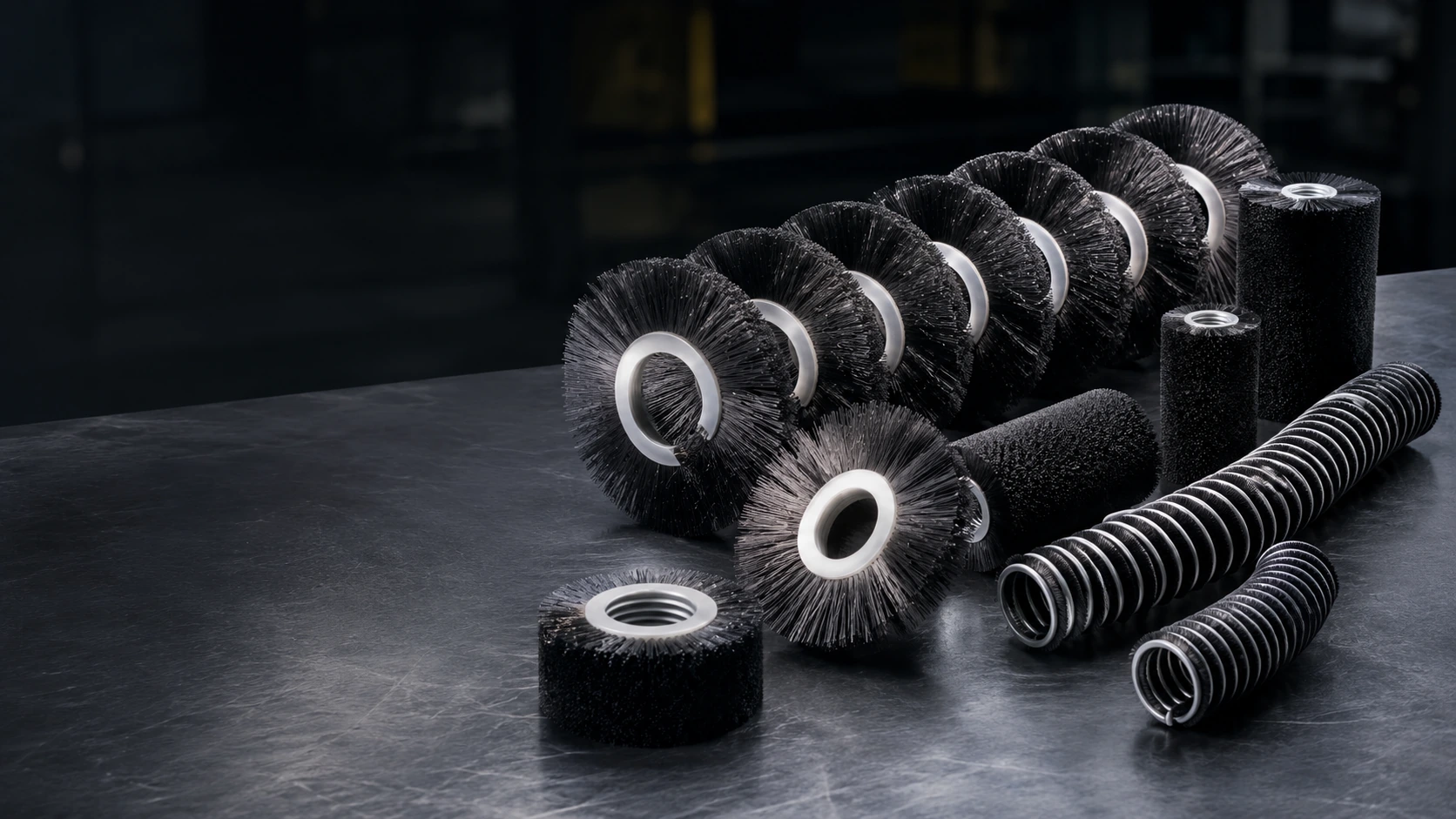
Custom spiral roller brushes for conveyor cleaning, washing, wiping, guiding, and other continuous-process contact. Built for your machine layout and required brushing result.
Request a QuoteA spiral brush, also called a spiral roller brush, is made by winding strip-brush material around a shaft, core, or holder so its external working face follows a continuous helical path.
Open or close winding creates the contact coverage needed across a moving line, roller, or rotating assembly.
This page covers exterior spiral roller brushes for conveyor cleaning, washing, wiping, guiding, and controlled process contact. For internal bores and tube passages, use a pipe brush instead.
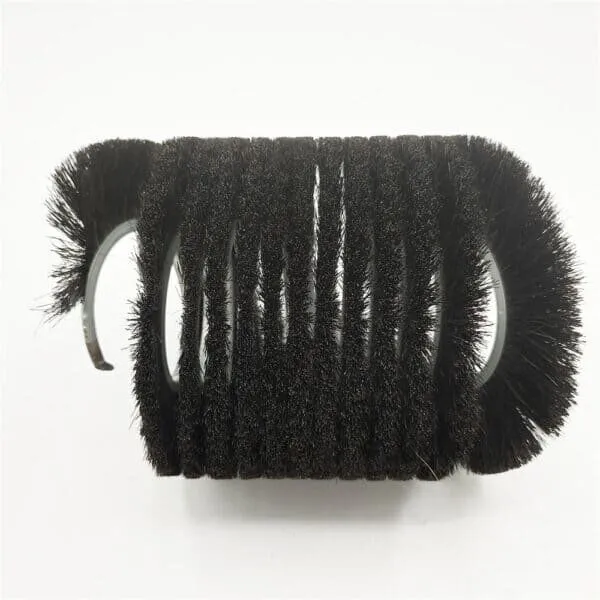
Choose the winding density and band construction first. Core, shaft, and mounting details are then specified from the drawing for the installed roller.
Open-wound builds leave a specified gap between helical rows. Close-wound builds provide denser, more continuous coverage across the working face.
Spiral-wound brushes are used where a helical brush face provides continuous or directional contact. Winding density, fill, backing, core, and direction are matched to the process line.
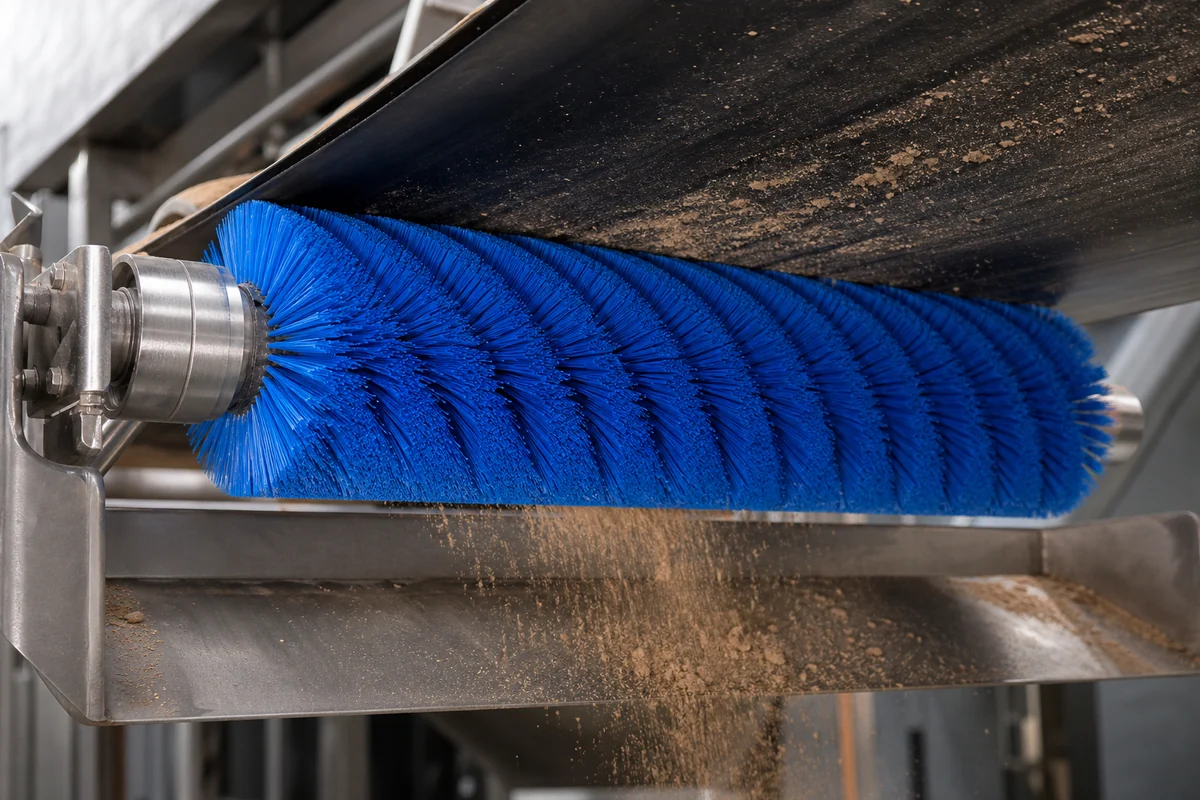
Open-wound spiral brushes remove carryback, dust, and loose material from belts, chains, and transfer lines. Winding hand, brush rotation, and product travel direction are specified together when the brush must also guide material or move debris laterally.
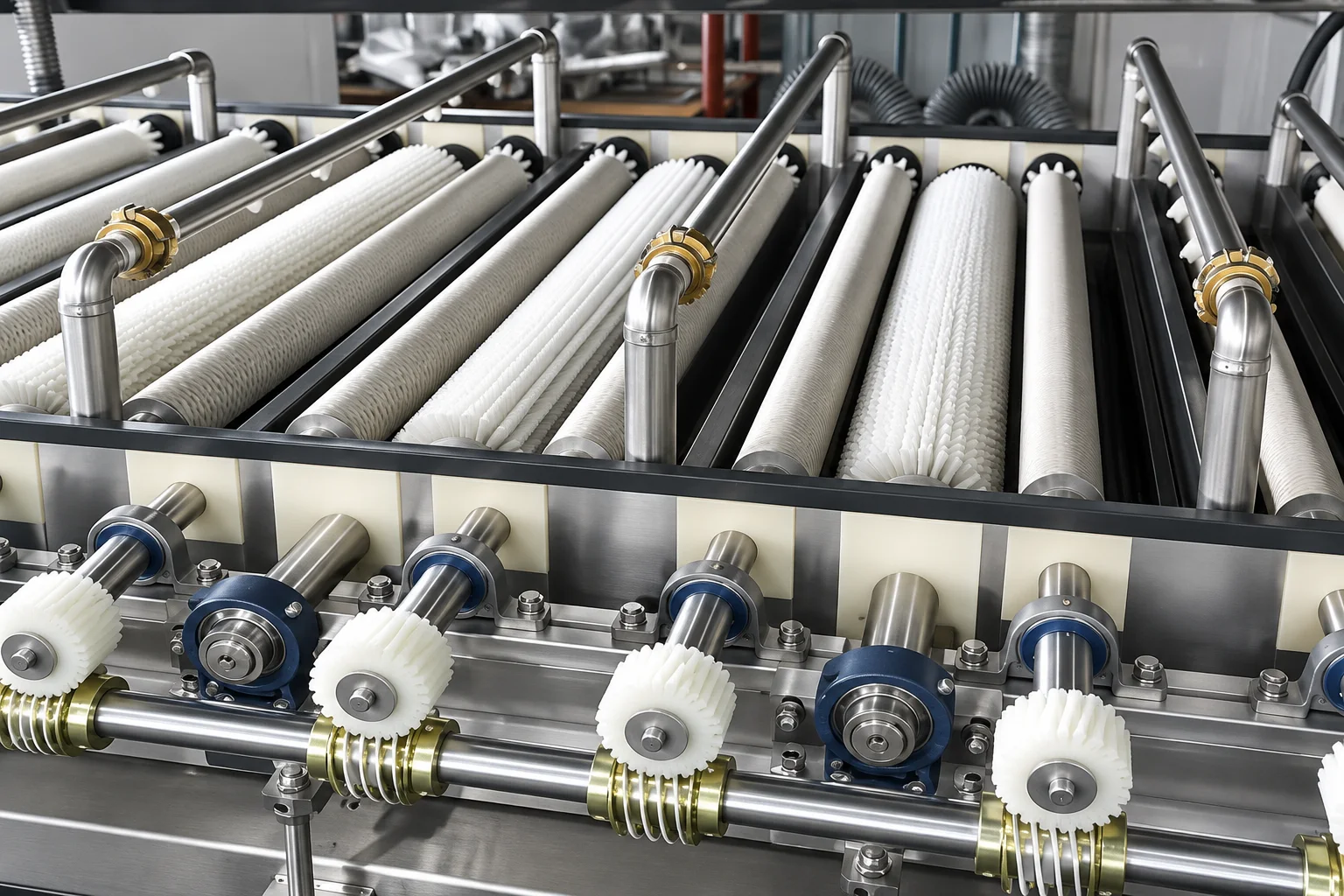
Close-wound nylon spiral brushes provide dense, continuous washing contact in horizontal glass washers and other flat-panel cleaning equipment. Filament diameter, face density, shaft construction, chemical exposure, and maximum RPM are reviewed for the machine.
Abrasive-nylon, non-abrasive synthetic, or confirmed wire fills can remove oil, rolling residue, oxide, scale, and other contamination or provide controlled surface activation and finishing. Typical positions include cleaning and degreasing, pickling and annealing, galvanizing, and coating lines for compatible steel, stainless steel, aluminum, and copper sheet or strip.
Steel-wire, abrasive-filament, or natural-fill spiral rollers can texture grain, remove loose fibres, denib, or prepare wood surfaces for finishing in brush sanders, drum sanders, and other woodworking equipment.
The filament or wire creates the working action, the backing channel secures the fill, and the core or shaft fits the machine. Each material group is selected separately for the process, environment, and approved drawing.
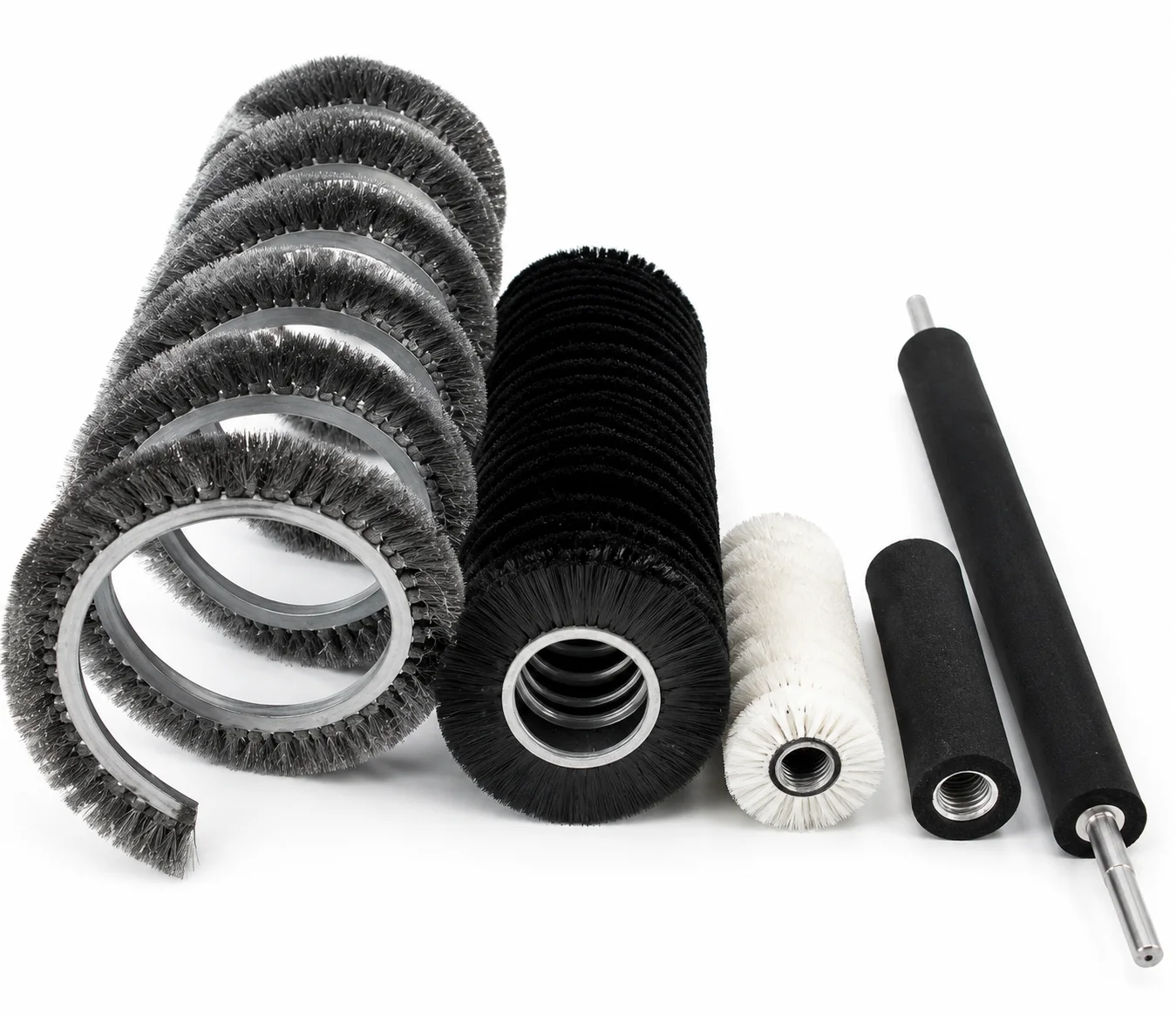
Nylon filament is used for washing, wiping, conveying, and controlled contact. Filament diameter and stiffness are matched to the surface and machine duty.
PP filament is available for wet cleaning and selected chemical-exposure applications where low moisture absorption is useful. Compatibility must be checked against the actual process liquid and temperature.
Silicon carbide or aluminum oxide abrasive grain is embedded in nylon filament for cleaning, deburring, oxide removal, surface activation, polishing, and controlled finishing. Abrasive type, grit, and filament diameter are selected together for the required result.
Tampico, horsehair, boar bristle, and ostrich feather for polishing, waxing, dust removal, and soft contact.
We can manufacture spiral brushes with carbon steel wire, galvanized steel wire, stainless steel wire, or copper-coated steel wire for stronger cleaning, oxide or scale removal, deburring, texturing, and surface conditioning. The wire grade is matched to the workpiece and contamination limits.
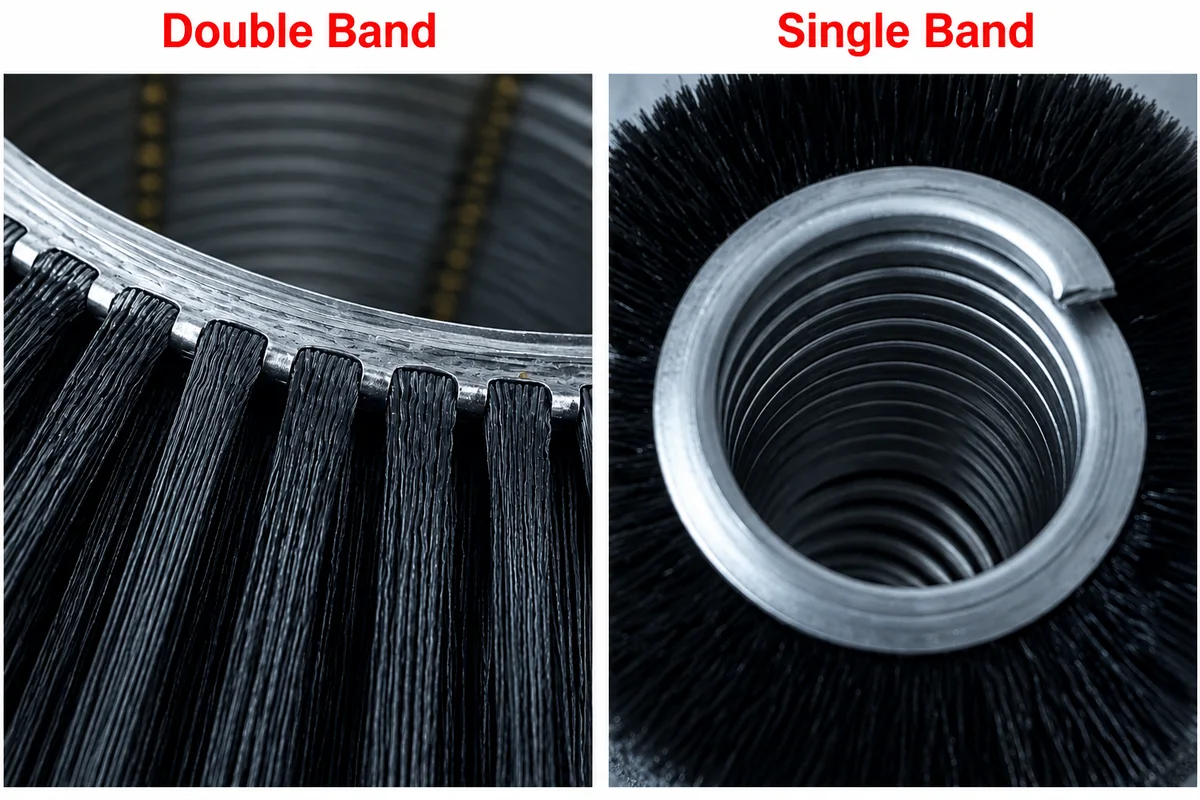
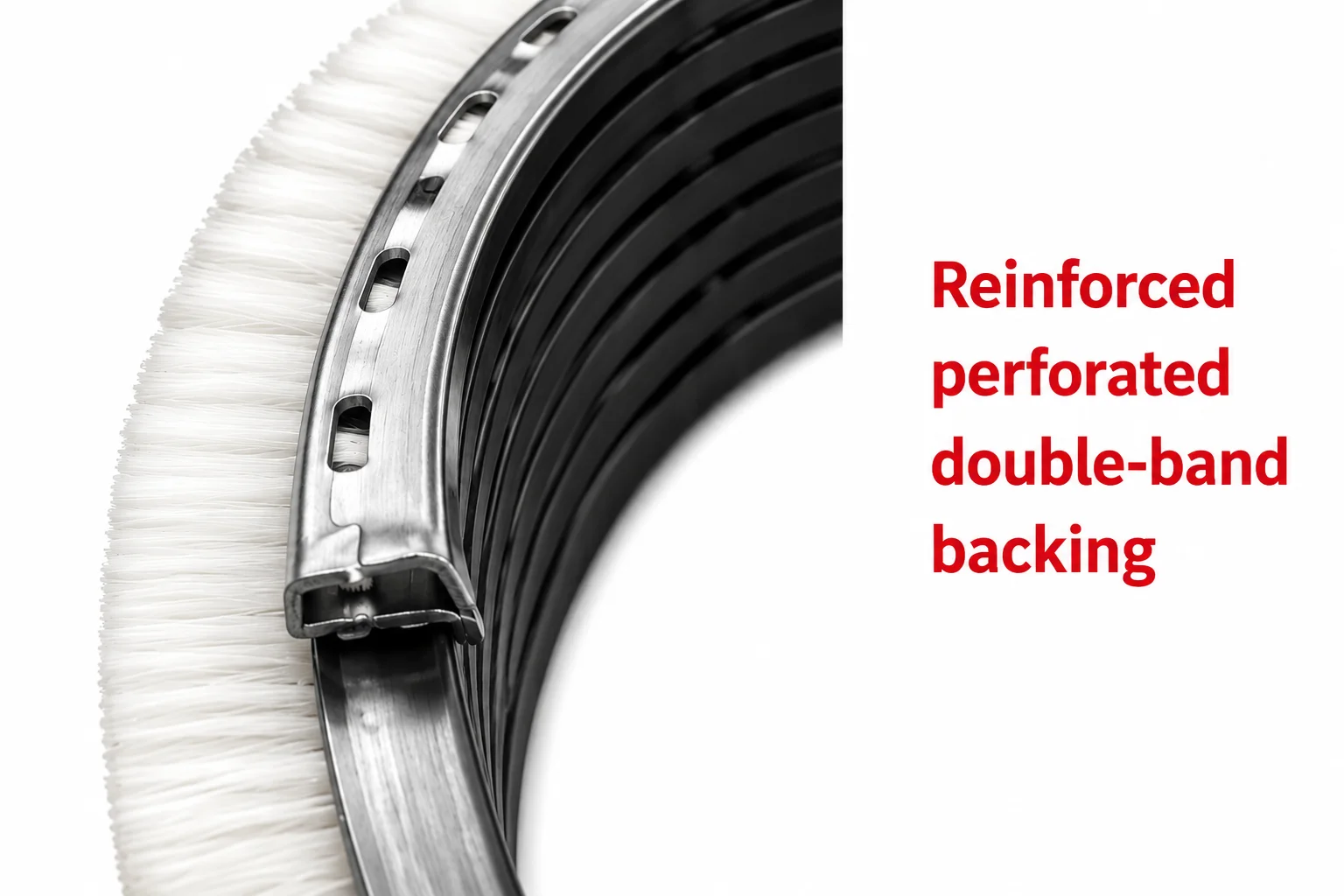
Stainless steel, galvanized steel, or cold-rolled steel backing is available for single- or double-band strip construction. Backing material and band construction are selected according to corrosion, washdown, chemical exposure, required fill density, and how the spiral is secured.
Steel, stainless steel, or another approved core and shaft material is selected according to load, corrosion, washdown, mounting, and operating conditions. Tube, journals, keyways, flanges, and other interfaces follow the approved drawing.
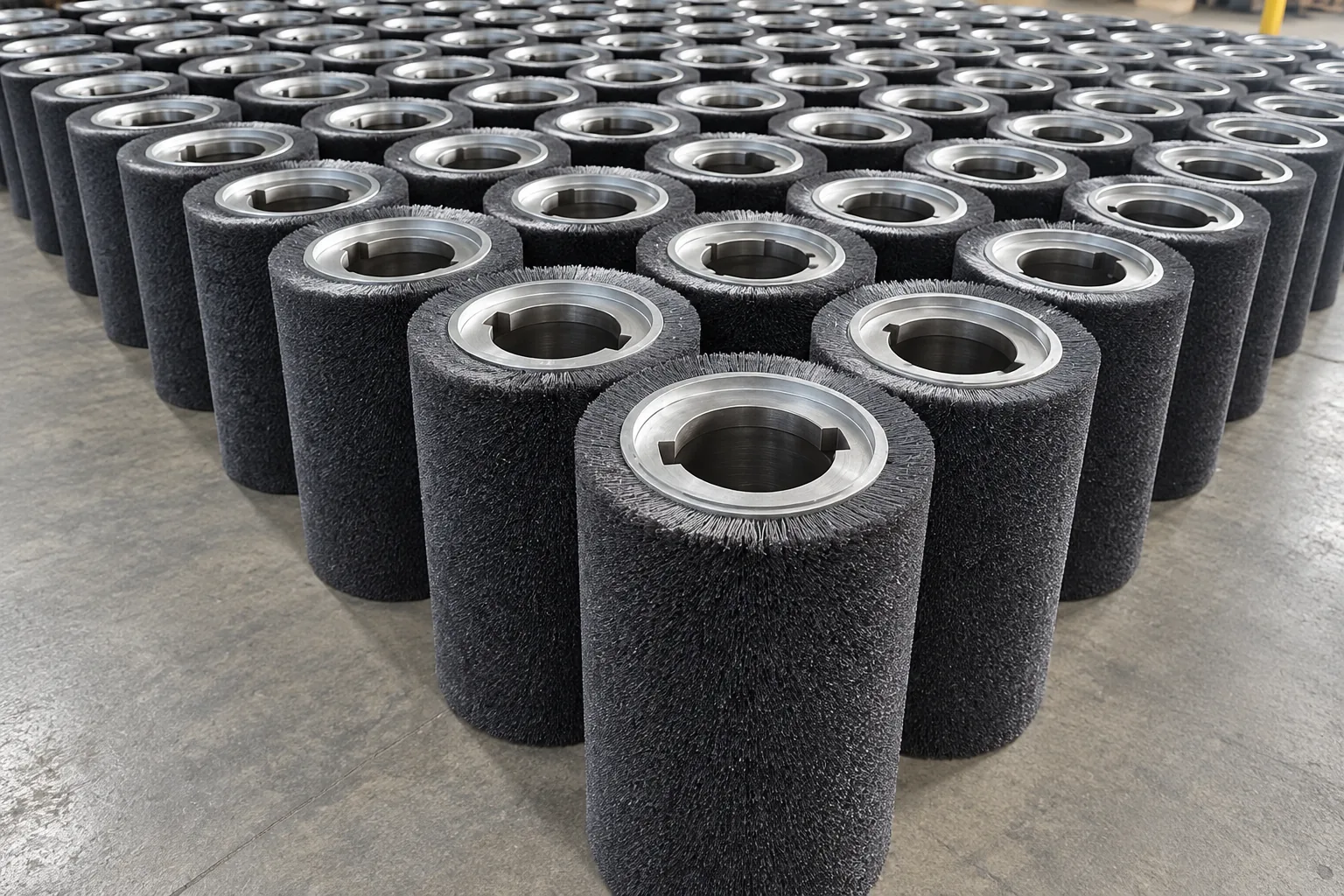
Custom spiral brushes can be produced for OEM and replacement projects based on your drawing, sample, or machine requirements.
Provide key dimensions — Finished diameter, working face length, shaft/core detail, pitch, and trim.
Confirm material & rotation — Specify fill material, winding direction, density, and operating conditions.
Bulk custom production — Suitable for repeat orders and volume production after the specification is approved.
For faster quoting, send a detailed drawing or marked sample photo.
Open-wound brushes leave a defined pitch between coils for debris release, washdown, lighter contact, or directional material movement. Close-wound brushes provide higher fill density and more continuous contact for washing, wiping, or uniform surface treatment. The correct pitch depends on the required contact, debris size, brush diameter, rotation, and line direction.
Single-band construction can suit applications where the required fill retention and mechanical load are moderate. Double-band construction provides stronger mechanical retention and is generally reviewed for denser fills, wire fills, heavier contact, or more demanding operating conditions. The final choice depends on the fill, channel size, winding diameter, pitch, RPM, load, and method used to secure the spiral.
Provide the application and required result, finished OD, winding or core diameter, brush face and overall length, open- or close-wound pitch, winding hand and viewing end, fill material and filament diameter or grit, backing material, single- or double-band construction, core or shaft drawing, maximum RPM, rotation and line direction, operating liquid, chemicals, temperature, quantity, and any critical tolerances. A dimensioned drawing, marked photo, or physical sample helps confirm replacement fit.
It matters when the helical layout is intended to guide or move material across the brush face, and it should also match an existing replacement drawing. State right- or left-hand winding from a clearly identified viewing end, together with brush rotation and product travel direction. Winding hand alone does not define the conveying result without those operating directions.
Choose a loose coil when your equipment or maintenance team will mount and secure it to an existing core. Choose a core-mounted brush when the assembly slides onto or replaces a reusable shaft. Specify a complete shaft assembly when journals, keyways, shoulders, or other machined end details must be supplied with the brush. Send the existing interface drawing and required fastening method before production.
Custom production from your drawing. Large-volume production is supported for OEM and replacement projects.