Industrial Brush Manufacturers, Suppliers & Companies
Custom industrial wire wheel, wire cup, and wire end brushes
Industrial Wire Brush Manufacturer

Custom Industrial Wire Brushes

Custom wire wheel, cup, and wire end brushes for industrial cleaning, deburring, weld preparation, rust and scale removal, and surface finishing. Choose the brush structure by contact direction, then specify the wire form, material, mounting, and operating speed for the application.

Category Overview

What Is an Industrial Wire Brush?

An industrial wire brush uses metal wire filaments to clean, deburr, remove coatings, or prepare a surface. Brush shape determines how the working wire meets the workpiece: around the circumference of a wheel, across the working face of a cup, or from the axial face of an end brush.

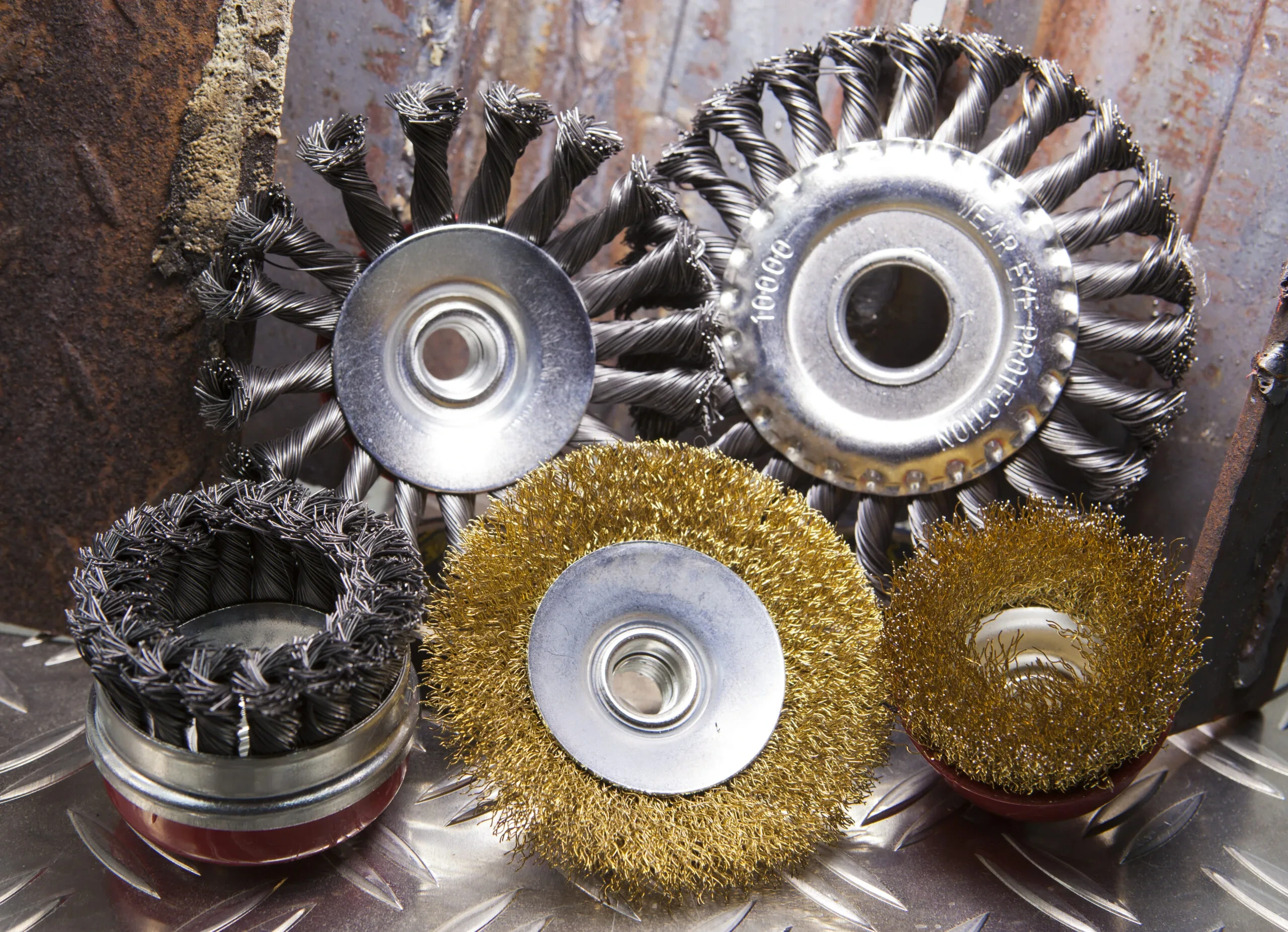
We manufacture custom wire wheel, wire cup, and wire end brushes for powered industrial equipment. Each configuration provides a different contact direction and access range, so selection starts with the surface that the brush must reach.

Industrial wire brush construction for powered cleaning and surface preparation
Choose by Contact Direction

Wire Brush Structures We Manufacture

We manufacture custom wire wheel, wire cup, and wire end brush constructions. Select the basic structure according to the direction and area of contact required on the workpiece.

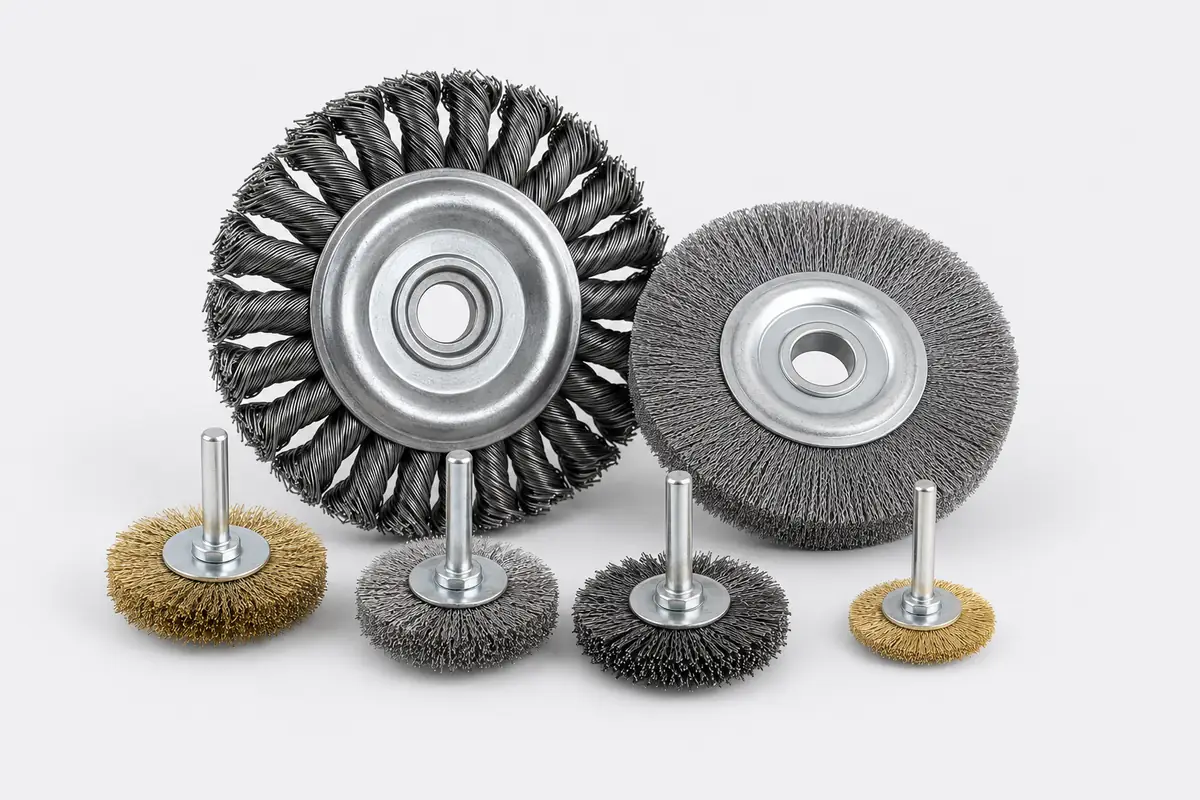
Custom industrial wire wheel brushes for circumference and edge contact

Wire Wheel Brushes — Circumference and Edge Contact

Wire wheel brushes work mainly around the outside circumference of the wheel. This geometry concentrates contact along an edge or narrow working face for weld lines, seams, edges, grooves, and longer brushing paths.

Use the dedicated product page to review crimped and knotted constructions, working face width, wheel diameter, arbor details, and application-specific mounting.

Custom Wire Wheel Brushes
Custom industrial wire cup brushes for broad face contact

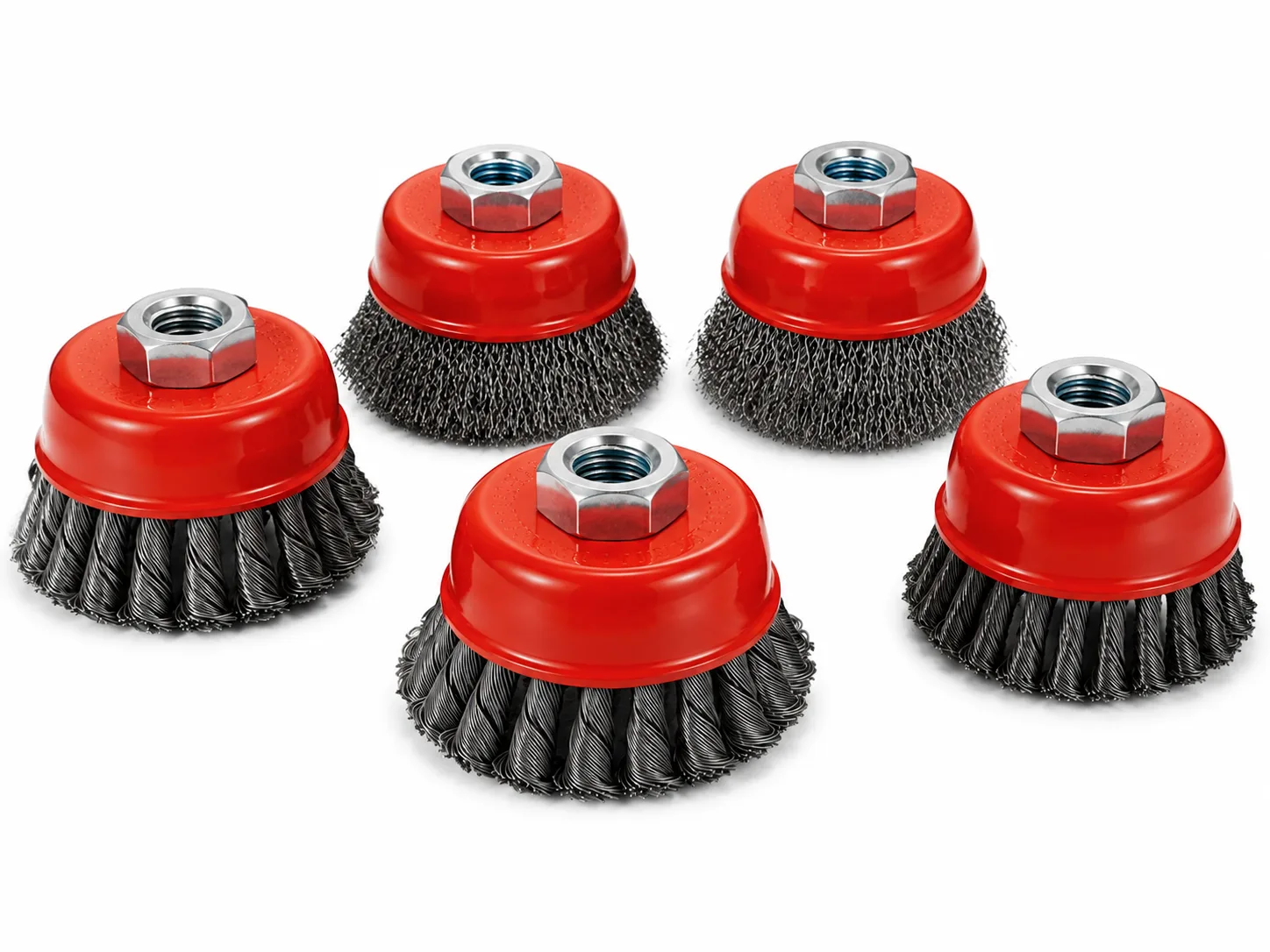
Wire Cup Brushes — Broad Face Contact

Wire cup brushes place the working wire around a cup-shaped body to create broader face contact. They are commonly selected for accessible flat or slightly contoured surfaces where the process needs wider coverage for rust, paint, scale, weld residue, or surface preparation.

Use the dedicated product page to review crimped, knotted, and twist-knot constructions together with threaded, arbor-hole, or shank-mounted configurations.

Custom Wire Cup Brushes
Wire end brushes for axial and confined-area contact

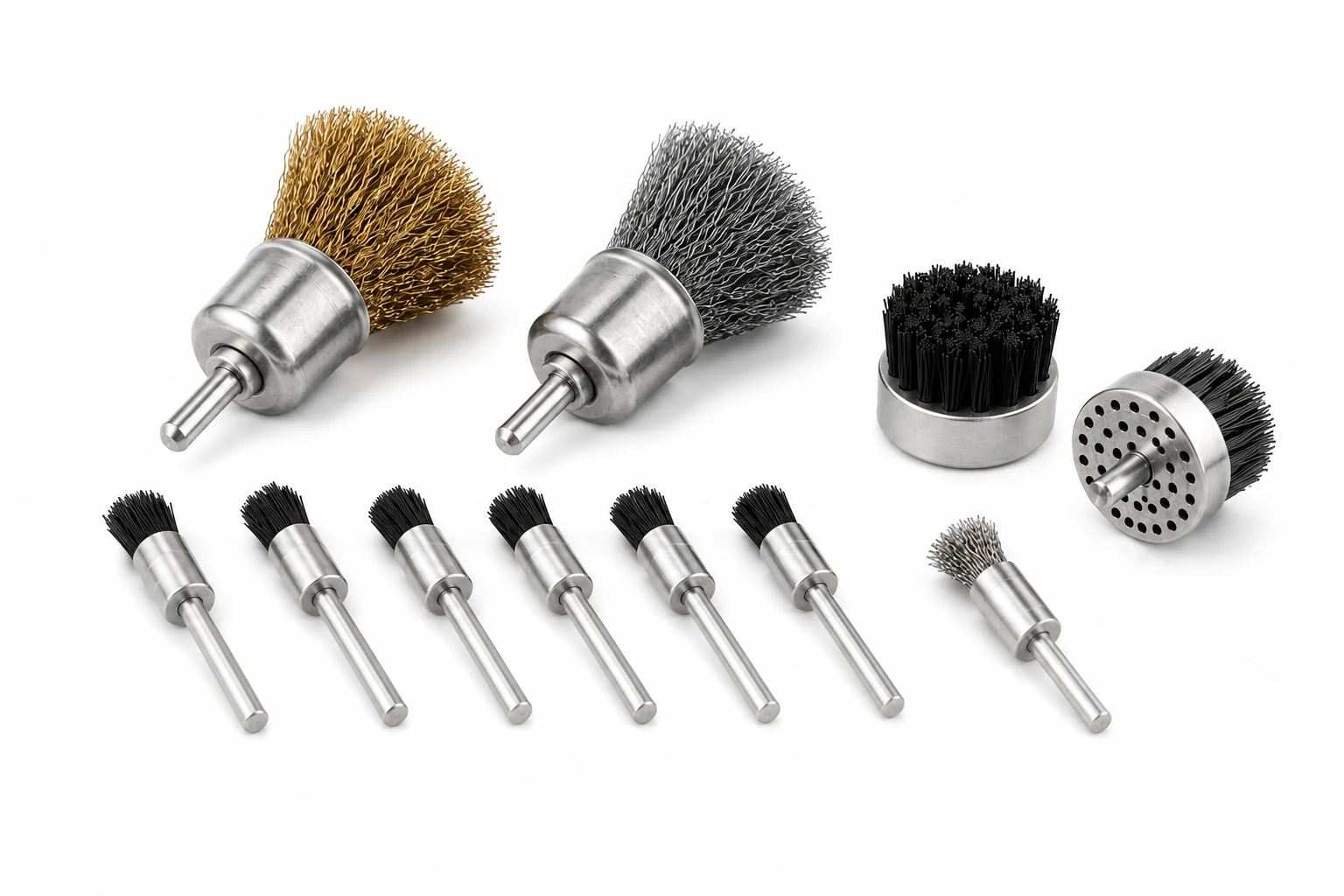
Wire End Brushes — Axial and Confined-Area Contact

Wire end brushes place the working wire along the tool axis. Their smaller, concentrated face helps reach recesses, corners, slots, mold details, and other confined features that are difficult to access with a larger wheel or cup brush.

Wire end brush options include straight, crimped, knot, and twist-knot wire. The wider End Brush family also includes nylon, abrasive filament, and natural-fiber constructions for applications where metal-wire contact is unsuitable.

Custom End Brushes
Filament Form

Wire Construction Options

Wire form should not be selected by aggressiveness alone. Workpiece material, permitted surface change, wire diameter, trim length, brush density, contact pressure, and operating speed all affect the result.

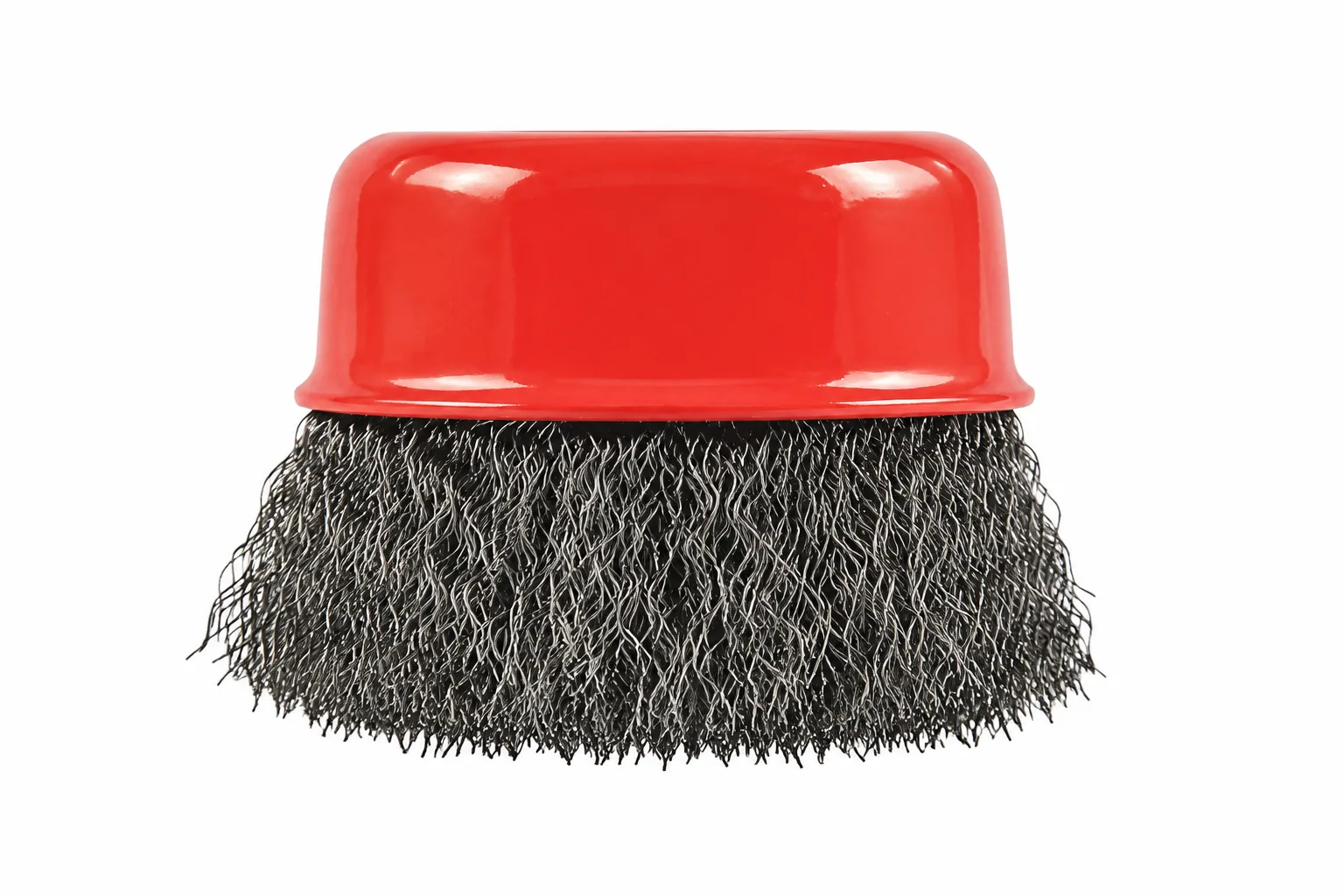
Crimped wire cup brush construction with flexible waved filaments

Crimped wire

Crimped wire uses separate waved filaments that flex independently during contact. It generally provides a more flexible, less concentrated brushing action for light-to-medium cleaning, rust or coating removal, and surface preparation.

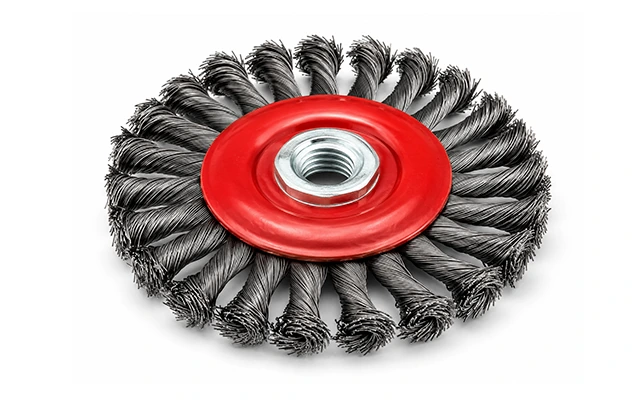
Knotted wire wheel brush construction for concentrated cleaning

Knotted and twist-knot wire

Knotted or twist-knot construction twists groups of wire into bundles that limit filament spread and concentrate the brushing action. It is generally selected for heavier rust, scale, weld residue, or stubborn coatings.

Straight stainless steel wire end brush with shank mounting

Straight wire

Straight wire consists of individual uncrimped filaments rather than waved filaments or twisted bundles. It provides direct individual-tip contact where straight wire is required. Its actual aggressiveness still depends on the brush shape, wire diameter, trim, density, operating speed, and required surface result.

Workpiece Compatibility

Wire Materials We Offer

Carbon steel wire

Stainless steel wire

Brass and brass coated steel wire

Buyer Questions

Industrial Wire Brush FAQ

Key details for selecting a construction and preparing an OEM or replacement quotation.

Can you review an existing wire brush when the original drawing is unavailable?

An existing brush, clear photos, and measured dimensions can be used to begin the review. The critical brush dimensions, wire specification, mounting interface, maximum machine RPM, and quantity still need to be confirmed before the final construction is approved.

Why must the machine RPM be provided before quotation?

Brush diameter and operating speed determine the peripheral speed at the wire tips. Provide the machine type and maximum operating or no-load RPM so the brush construction, mounting, clearance, balance, and operating-speed compatibility can be reviewed together. Final use remains subject to the confirmed maximum speed documented for the approved finished brush; never operate the brush above that value.

What determines how aggressive a wire brush will be?

Wire form, wire diameter, trim length, brush density, brush diameter, face width, operating speed, and contact pressure all affect brushing action. Knotted wire is not automatically the correct choice for every heavy process, so provide the deposit, workpiece material, and required surface result with the drawing.

How should a wire brush be specified for stainless steel workpieces?

Specify stainless steel wire where ferrous contamination or after-rust must be avoided, and confirm the required wire grade. Brushes used on stainless steel should not previously have contacted carbon steel and should be stored away from carbon-steel tools and dust.

Are solid brass and brass-coated steel wire interchangeable?

No. Solid brass is brass throughout the filament, while brass-coated steel has a steel core. Specify the exact material because their brushing behavior, corrosion characteristics, workpiece compatibility, and contamination considerations are different.

Beyond Wheel, Cup & End

Other Custom Wire-Filled Brush Formats

Wheel, cup, and wire end brushes are the main comparison on this page. Metal wire can also be specified in other Brushcustom product families when the machine geometry requires a different contact direction.

Wire strip brushes

Straight or formed linear brushes for sealing, guiding, cleaning, wiping, or static-control layouts.

View Custom Strip Brushes

Wire pipe and tube brushes

Internal brushes for cleaning, rust removal, deburring, or surface preparation inside bores, pipes, and tubes.

View Pipe & Tube Brushes

310S wire brush furnace rolls

Long rotary rolls for high-temperature furnace conveying and surface support applications.

View Brush Furnace Rolls

These formats remain separate product families. Use their dedicated pages for construction-specific details.

Drawing-Based Custom Production

Need Custom Wire Brushes Made to Your Drawing?

Send your drawing, measured sample, or marked photos for a custom wire brush review and volume quotation.

Send Your Project Details