Industrial Brush Manufacturers, Suppliers & Companies

Automotive Deburring Brushes for Parts Manufacturing

Custom deburring brushes for automotive parts manufacturing, including machined components, die castings, aluminum housings, and internal features where edge condition, cleanliness, and repeatable fit matter.

Automotive Manufacturing

Built for Automotive Parts Manufacturing

Brushcustom supports custom brush projects for Tier suppliers, machining and die-casting operations, and automotive equipment builders. The aim is not simply to remove a sharp edge. The brush must achieve the required result without leaving loose debris, changing a sealing surface, damaging a coating, or creating a replacement part that does not fit the machine.

For a production or replacement project, the alloy, burr condition, required edge result, contact zone, machine interface, speed, and changeover requirement should be reviewed together. Once the build is approved, the same geometry, fill, and mounting details can be held for repeat supply.

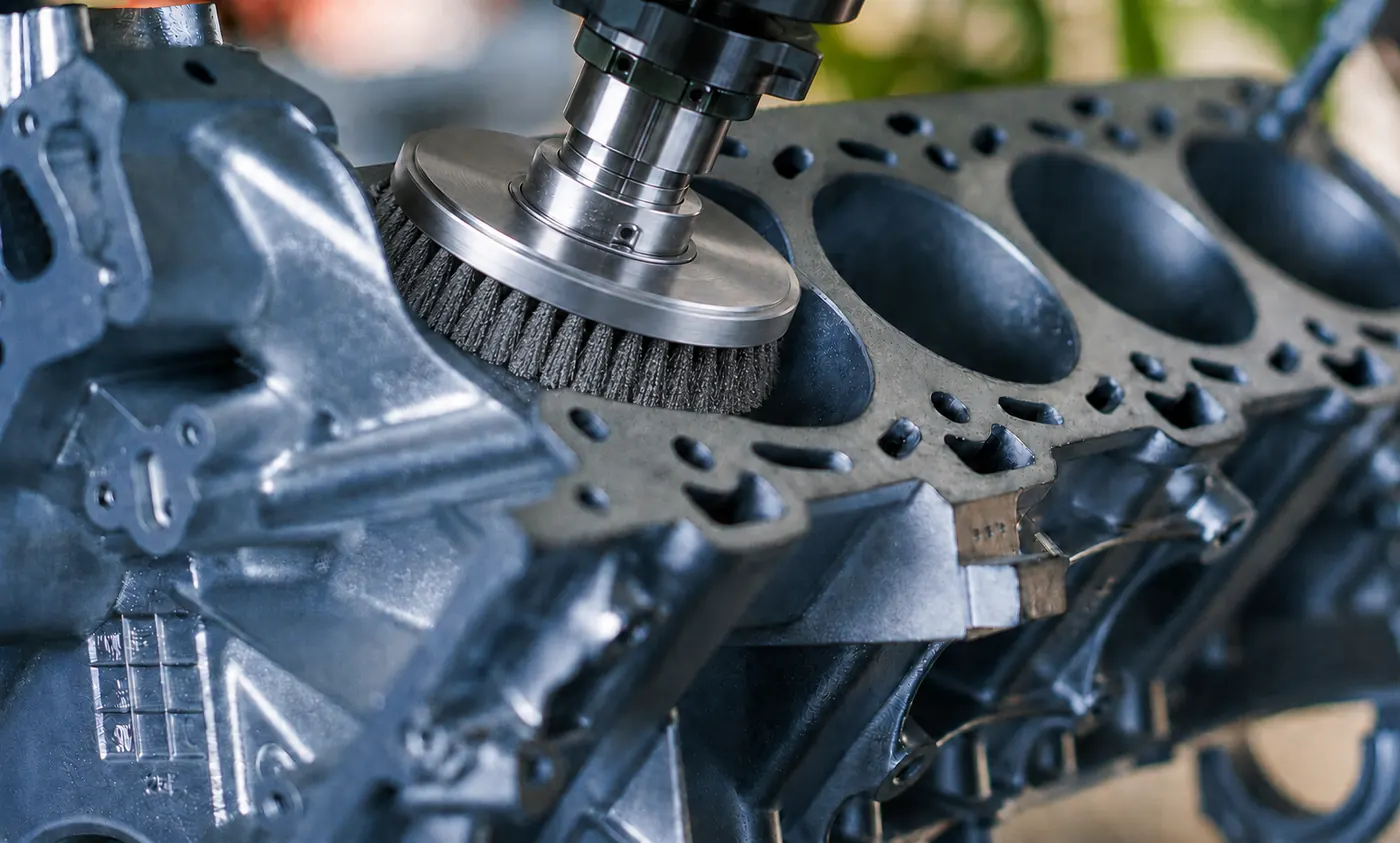
Automotive machined component with deburring brush used in parts manufacturing
Automotive Brush Applications

Where Automotive Brushes Are Used

01

Machined, Stamped, and Die-Cast Component Deburring

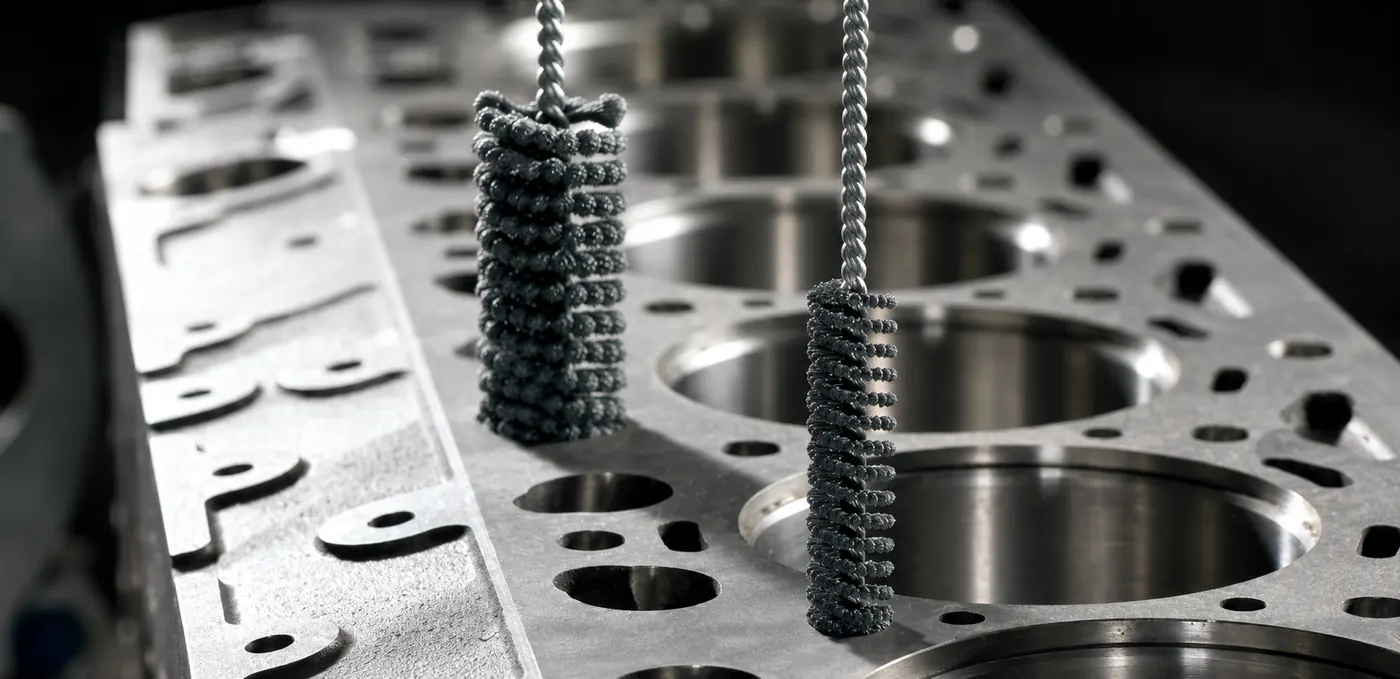
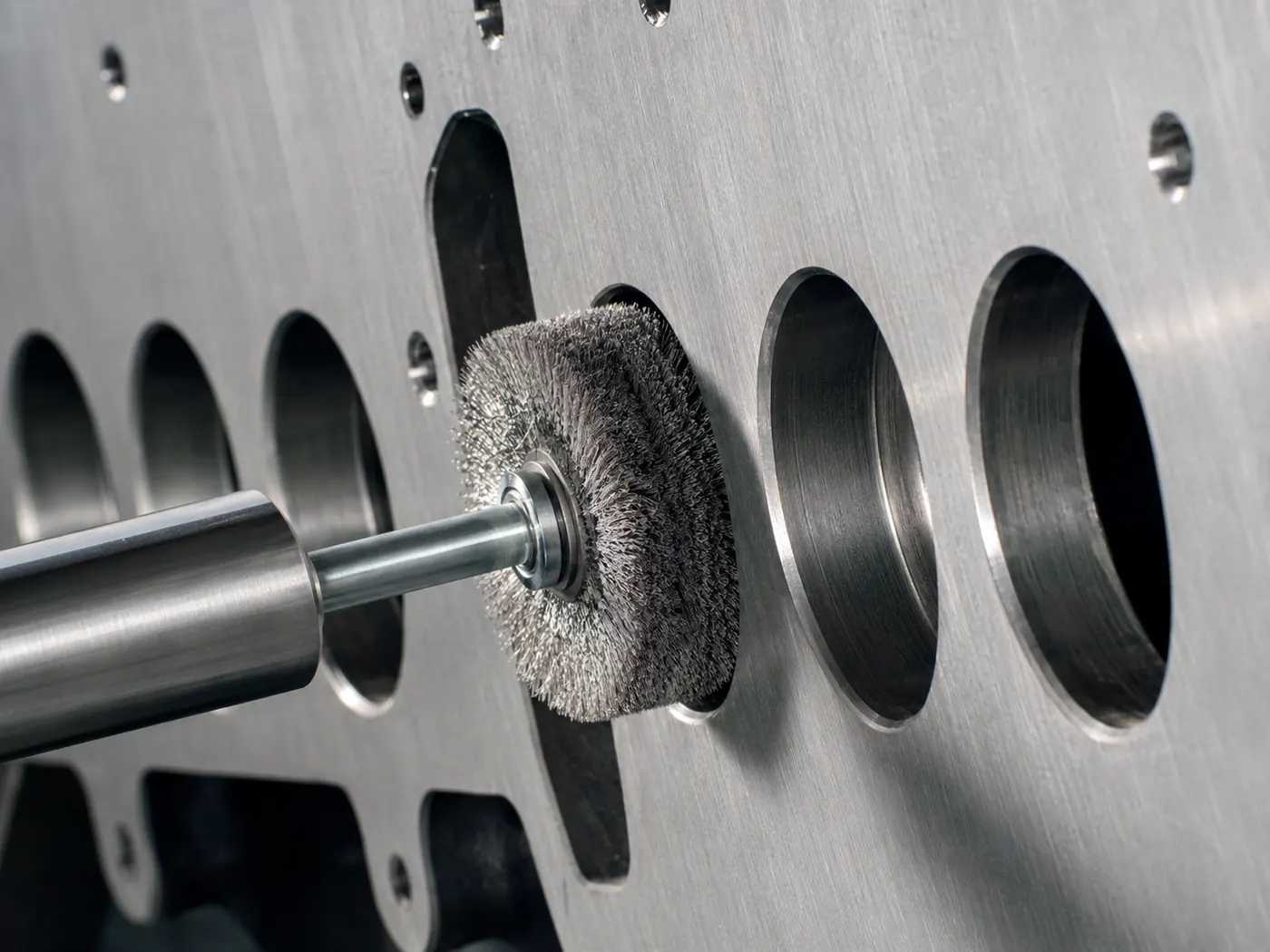
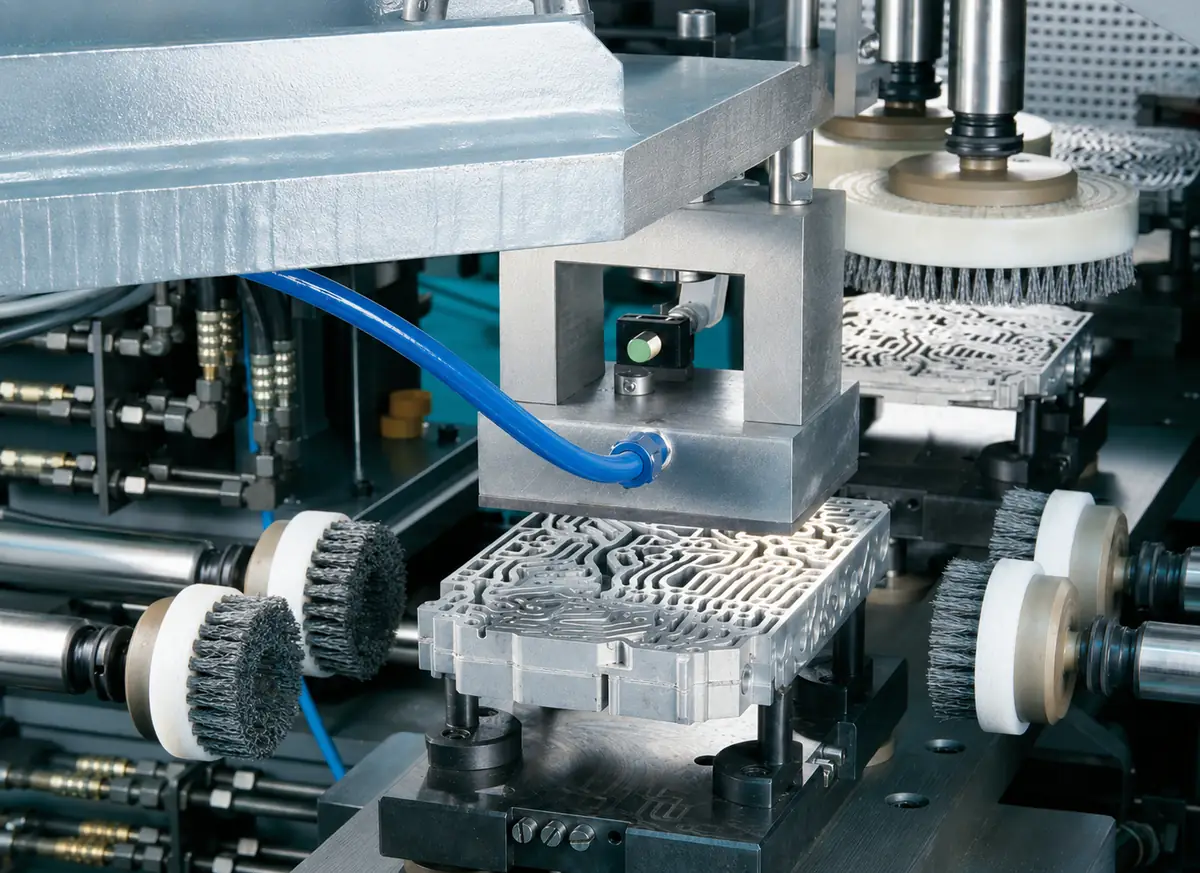
Disc brushes, wheel brushes, and abrasive nylon brush tools may be used after machining, drilling, stamping, or die casting to remove light burrs, break sharp edges, and condition specified surfaces. Typical projects include powertrain housings, transmission components, brake parts, chassis components, and aluminum castings.

Brush aggressiveness must match the drawing and process requirement. A brush that is too hard or too aggressive can change a critical edge, mark a sealing face, or create inconsistent results as it wears. Material, grit or filament direction, trim, density, RPM, and contact pressure should be locked around the required result.

02

Cross-Holes, Bores, and Fluid-Carrying Features

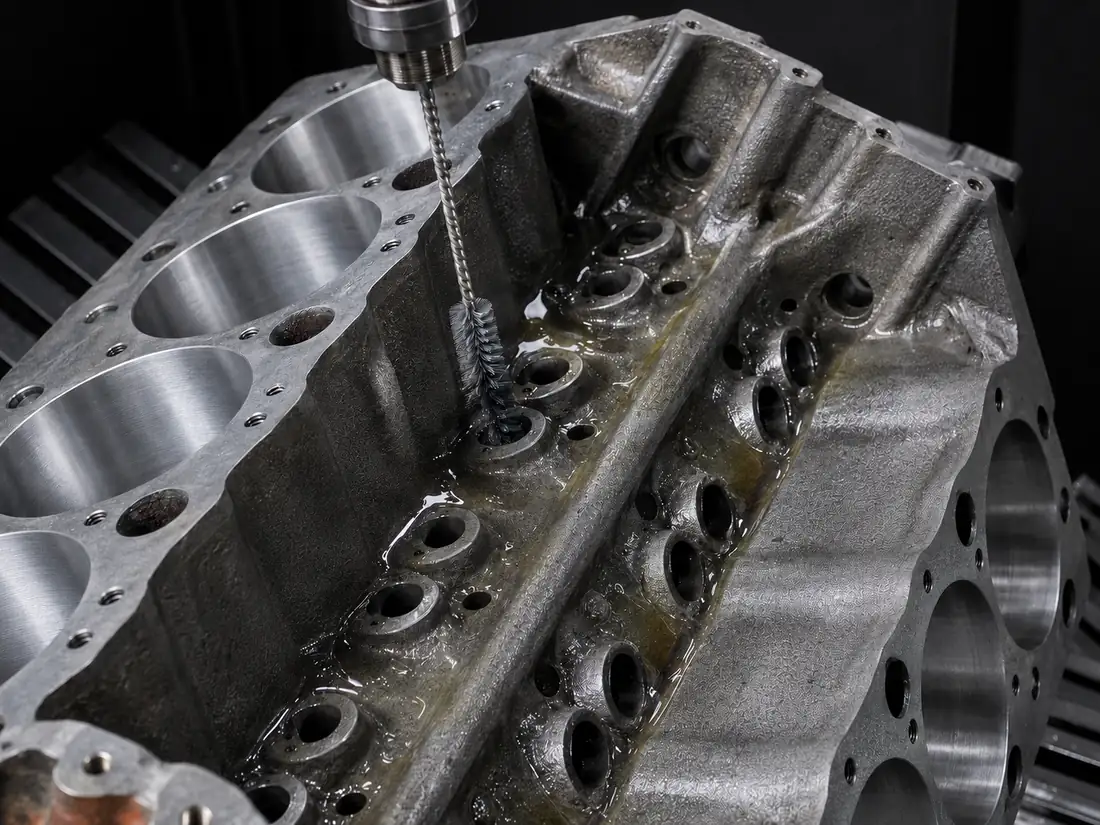
Small burrs left in cross-drilled holes, bores, slots, valve bodies, or fluid passages can affect assembly, sealing, flow, and component cleanliness. Custom internal brushes, end brushes, and pipe-brush formats may be reviewed for these difficult-to-reach features where the working diameter, usable length, stem or shank interface, filament or abrasive direction, and contact zone must match the part.

The objective is controlled removal of the intended burr or residue without enlarging a finished diameter, damaging a sealing land, or leaving brush debris in the component. The part drawing, process step, cleaning method, and inspection requirement should define the final brush configuration.

03

Aluminum Housings and EV Component Finishing

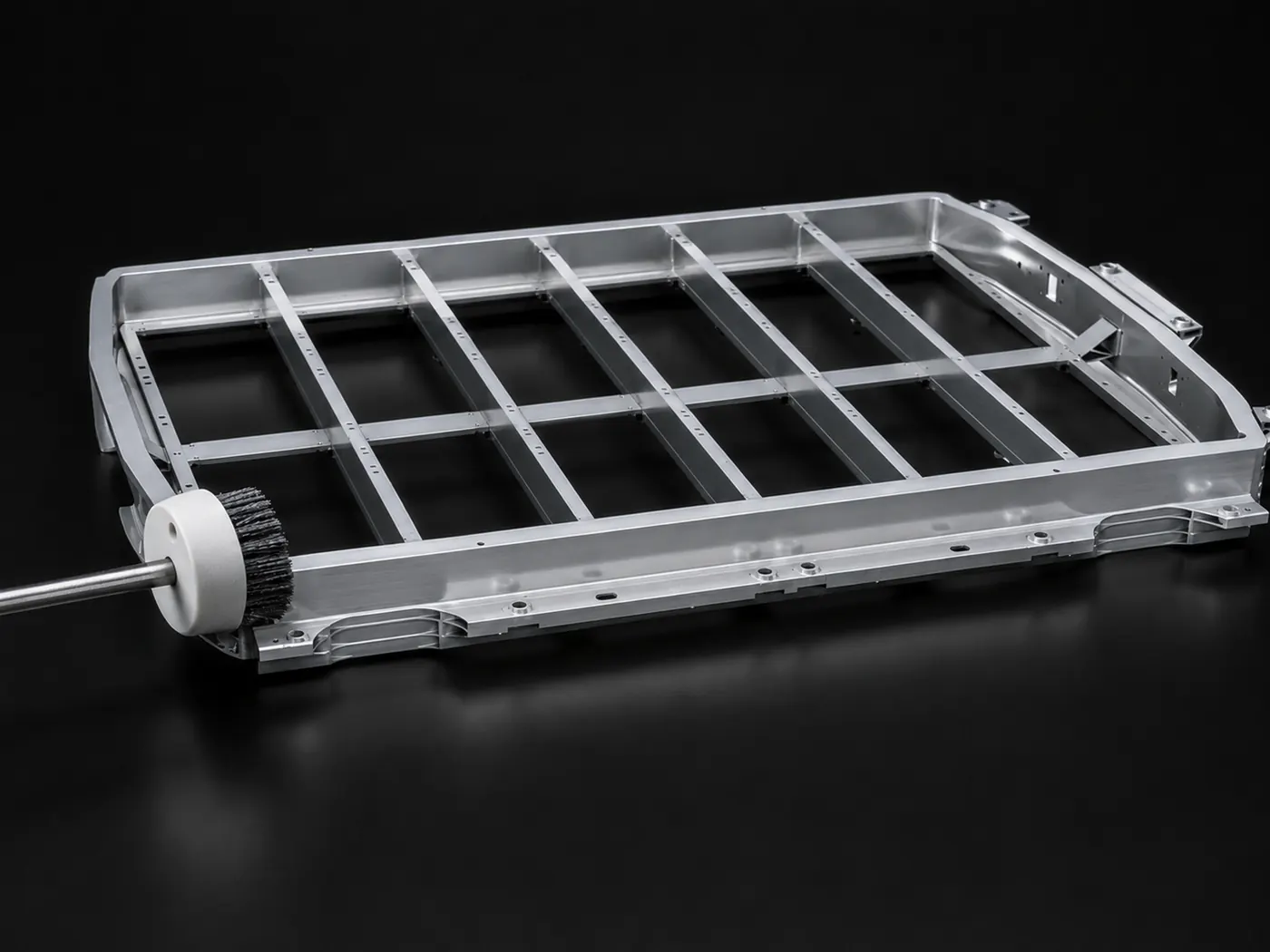
Aluminum motor housings, end covers, inverter housings, cooling plates, battery enclosures, and other EV-related parts can require controlled deburring or surface conditioning after machining and casting. In these applications, the brush must be matched to the approved alloy, coating condition, and contamination limit; ferrous wire is not a default choice for aluminum or other contamination-sensitive parts.

EV component language should stay focused on industrial part finishing and equipment requirements, not consumer battery accessories. For critical cooling channels, sealing features, or electrical areas, the customer's process specification determines the permitted material, cleanliness requirement, and validation method.

Other automotive production-line applications may be reviewed for the controlled removal of loose chips or dust, non-marring part guiding and support, and strip-brush sealing or dust control at equipment openings, maintenance doors, cable pass-throughs, and line enclosures. These configurations must follow the customer's equipment design and approved process requirements.

Process and Quality Review

Material, Process, and Quality Requirements

01

Match the Brush to the Part Material

Aluminum, steel, cast iron, coated parts, copper-bearing components, and engineering plastics do not share one default brush construction. Abrasive nylon, ceramic filament, stainless wire, or other approved materials may be reviewed according to the part material and required surface result. Carbon steel wire should not be assumed acceptable for aluminum or contamination-sensitive work.

02

Define the Finishing Window

Confirm the burr location, permitted edge break, surface condition, contact zone, rotation direction, RPM, feed, pressure, and replacement point. These inputs determine brush diameter, working face, trim, density, filament or abrasive direction, and whether balance review is needed for a rotating brush.

03

Control Debris and Repeatability

For powertrain, braking, thermal-management, and other cleanliness-sensitive components, brush wear and loose material must be controlled within the customer's process. A change in filament, density, trim, or mounting detail can change the result, so approved replacement brushes should be held to the agreed part number and drawing revision.

04

Follow Customer Quality Flow-Down

Automotive customers may require a drawing revision, first sample, dimensional record, material declaration, PPAP-level documentation, or lot traceability. Confirm the requested documents and acceptance criteria at RFQ stage. Do not claim IATF 16949 certification unless it has been verified for the actual supply route.

RFQ Specification Guide

Engineering Information Required for Review

A reliable quote depends on confirming the part, burr condition, machine interface, finishing requirement, and quality documentation before production.

Request a Quote
01

Part and Process

Provide the part number, alloy or material, manufacturing operation, burr location, target edge or surface result, and the actual contact zone. State whether the task is external deburring, internal-feature deburring, cleaning, or an approved replacement project.

02

Brush and Machine Interface

Share the required brush format, outside diameter, working face width, trim, filament or abrasive direction if known, stem, arbor, bore, shaft, flange, or other mounting detail. For machine-driven brushes, include spindle or robot interface, maximum RPM, rotation direction, available space, and any balance requirement.

03

Quality and Supply Requirement

Send the applicable drawing revision, sample or marked photo, acceptance criteria, first-sample or PPAP requirement, annual quantity, packaging requirement, and requested delivery date. For a replacement brush, use the original drawing or a measured reference sample to confirm interchangeability before release.

Automotive Brush RFQ

Need a Deburring Brush Matched to Your Automotive Part?

Send your part drawing, material, burr location, process step, and machine interface. We will review brush format, material direction, finishing conditions, and repeat-supply requirements before quoting.

Request a Quote