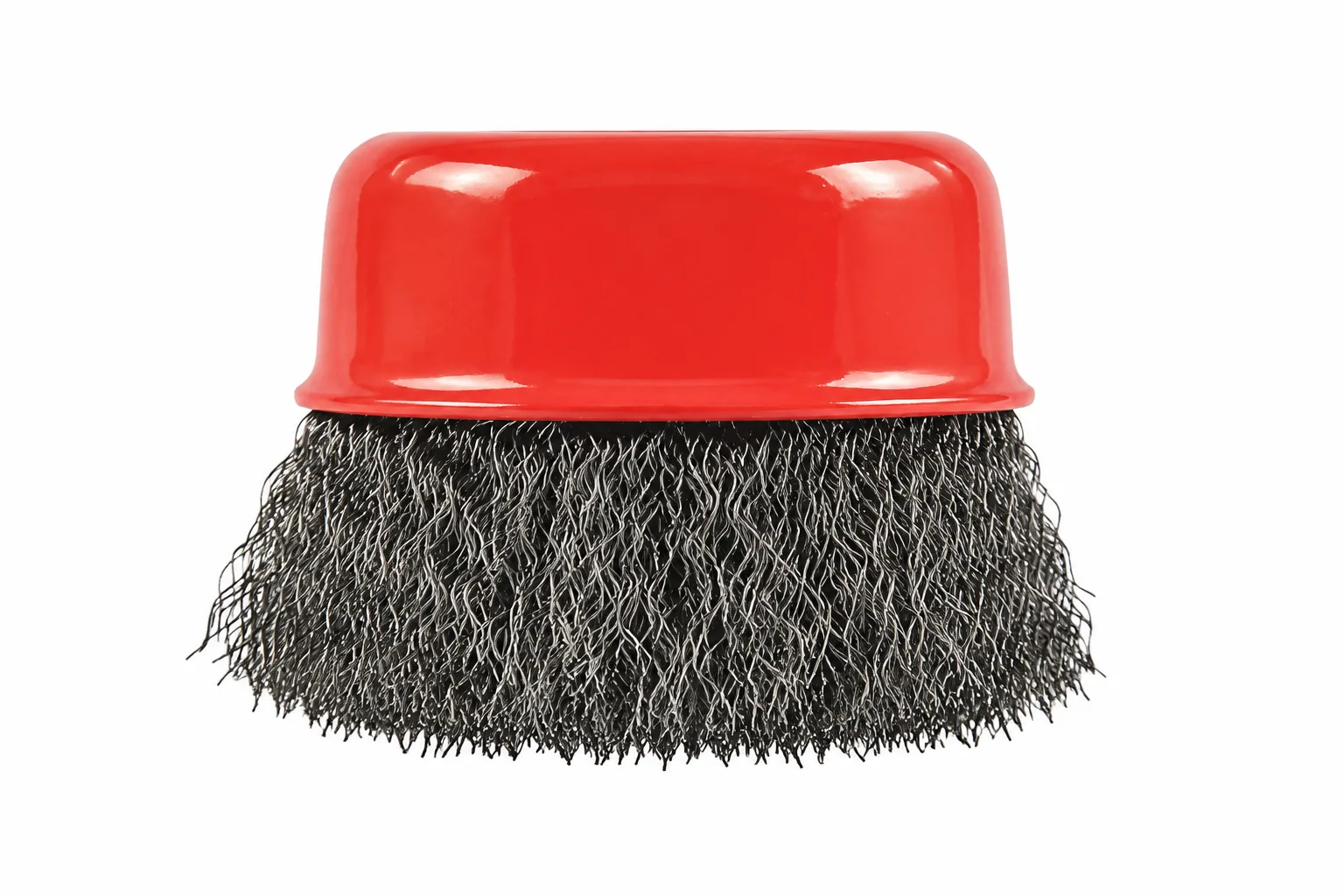
Crimped wire cup brushes
Flexible wire contact for general cleaning, light-to-moderate rust removal, paint stripping, and surface preparation.

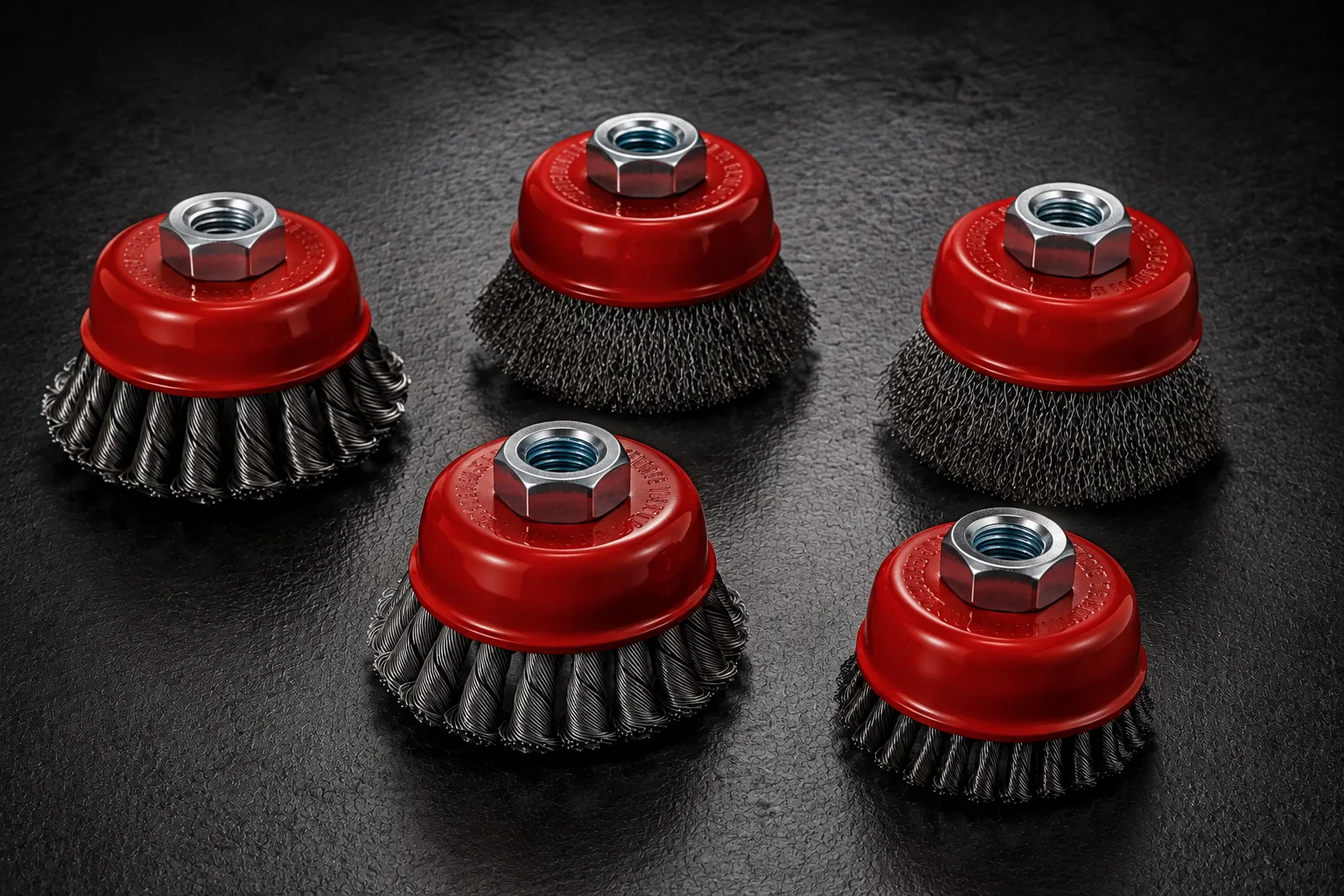
Custom wire cup brushes for rust, paint, scale, weld residue, deburring, and metal surface preparation. Built to the required diameter, wire construction, material, mounting interface, and operating speed.
Request a QuoteA wire cup brush is a rotary power brush with metal wire arranged around a cup-shaped body. Its broad working face contacts flat or slightly contoured metal surfaces for cleaning, rust or scale removal, and surface preparation.
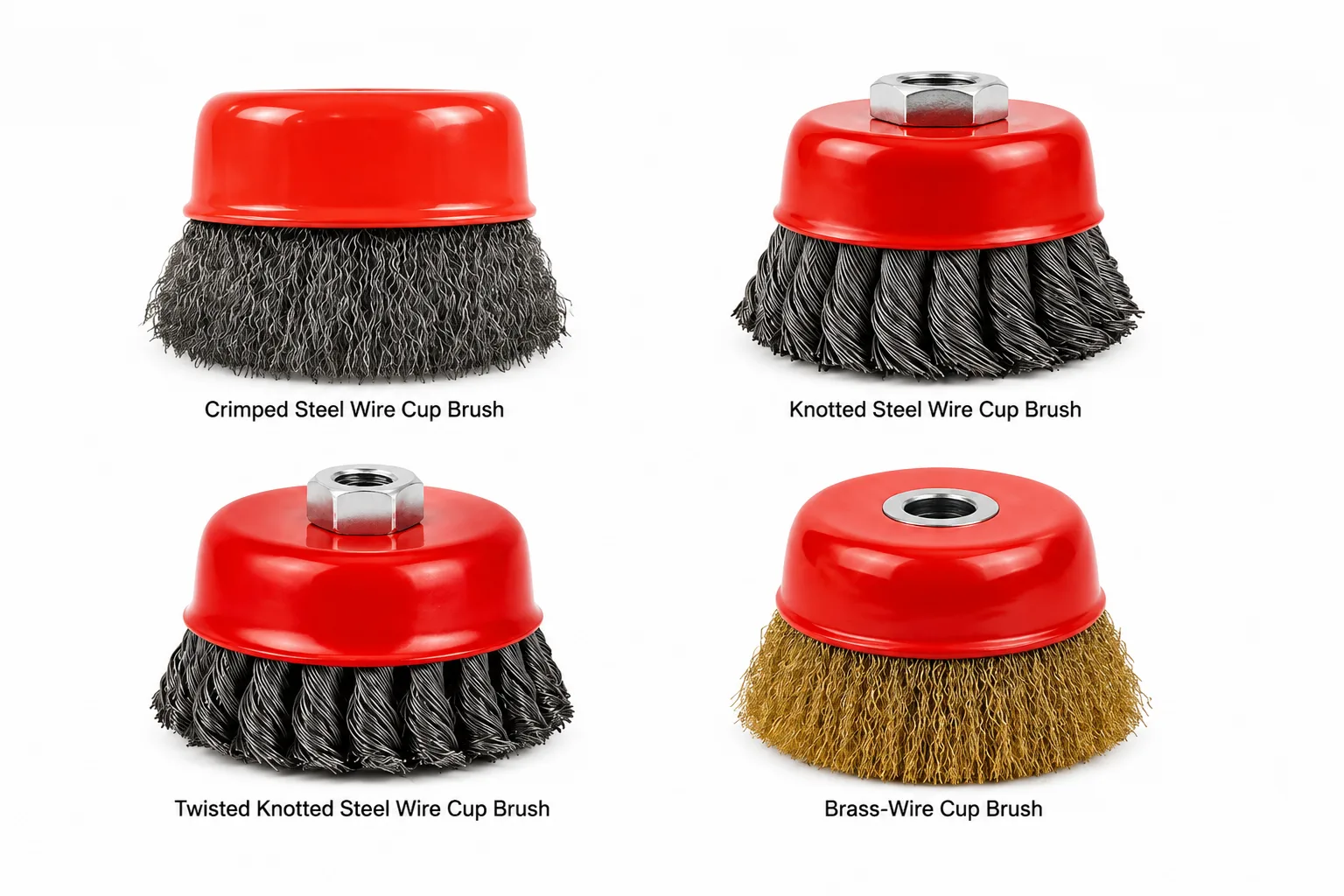
Choose the wire construction according to the required contact flexibility, cleaning aggression, and surface condition.
Flexible wire contact for general cleaning, light-to-moderate rust removal, paint stripping, and surface preparation.
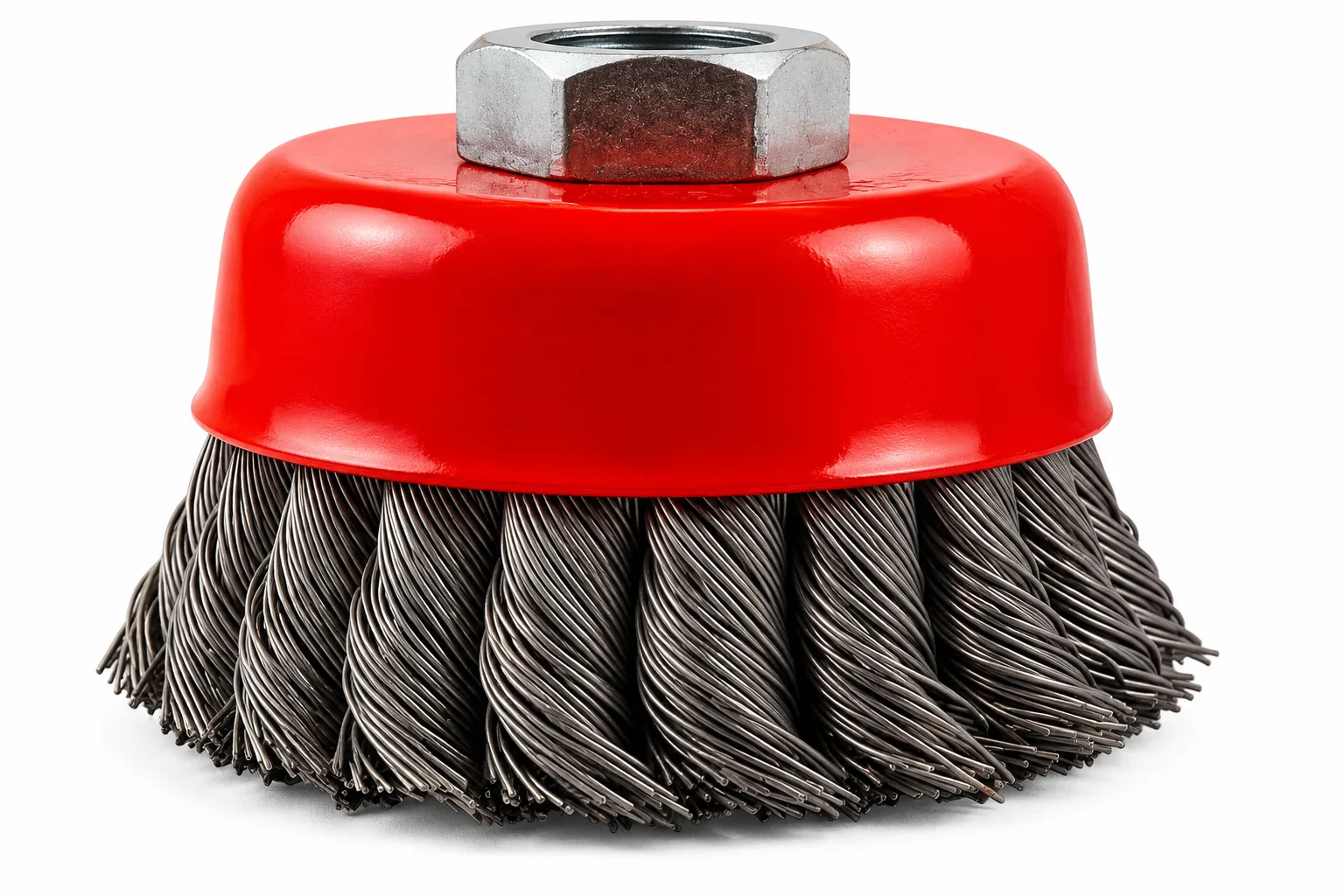
Stronger brushing action for heavier rust, scale, weld residue, slag, and stubborn coatings.
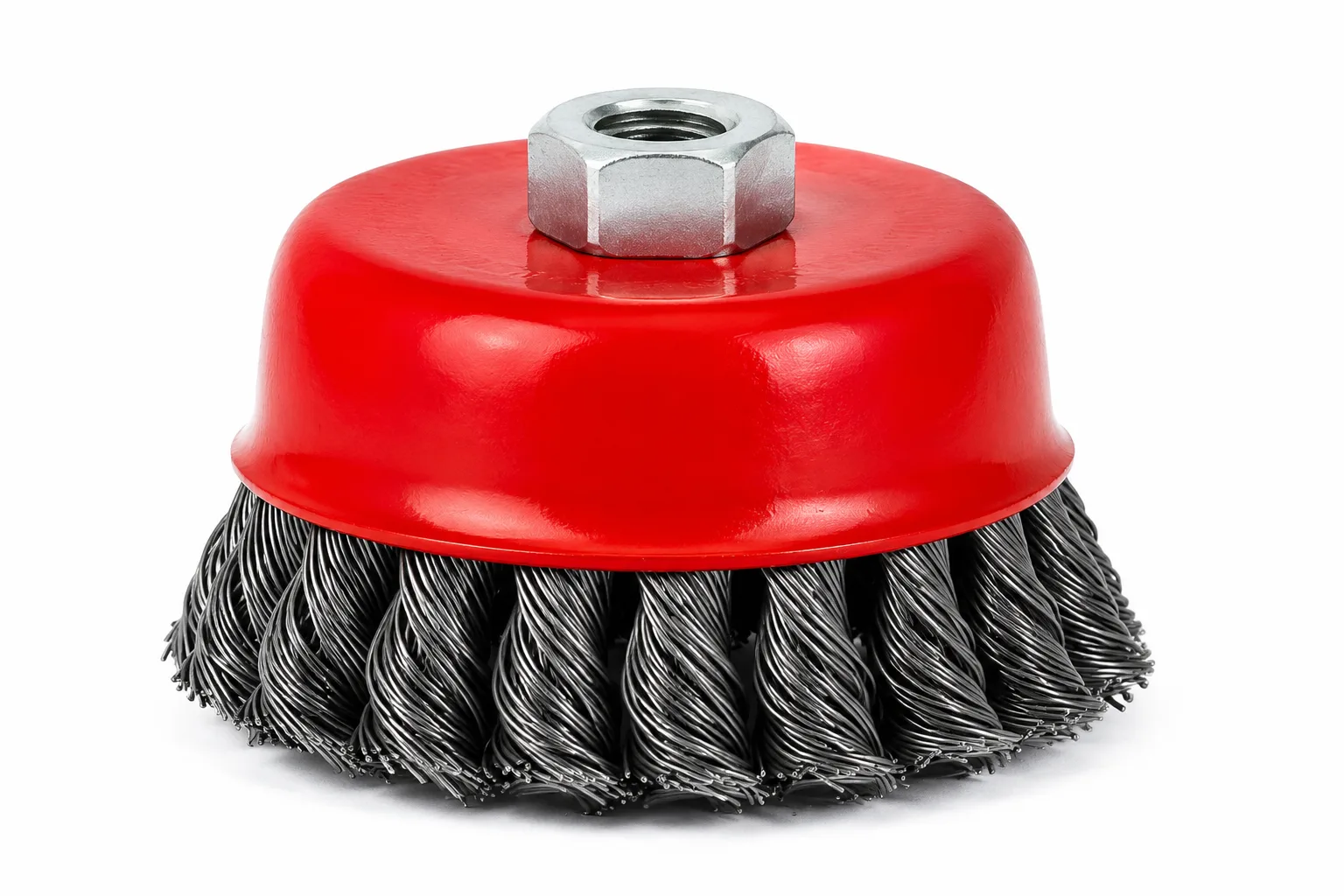
Bundled steel wire for aggressive cleaning across a wider contact area. Confirm the wire diameter, knot construction, knot count, trim, and operating speed.
The mounting interface must match the tool spindle, guard clearance, and required operating speed before production.
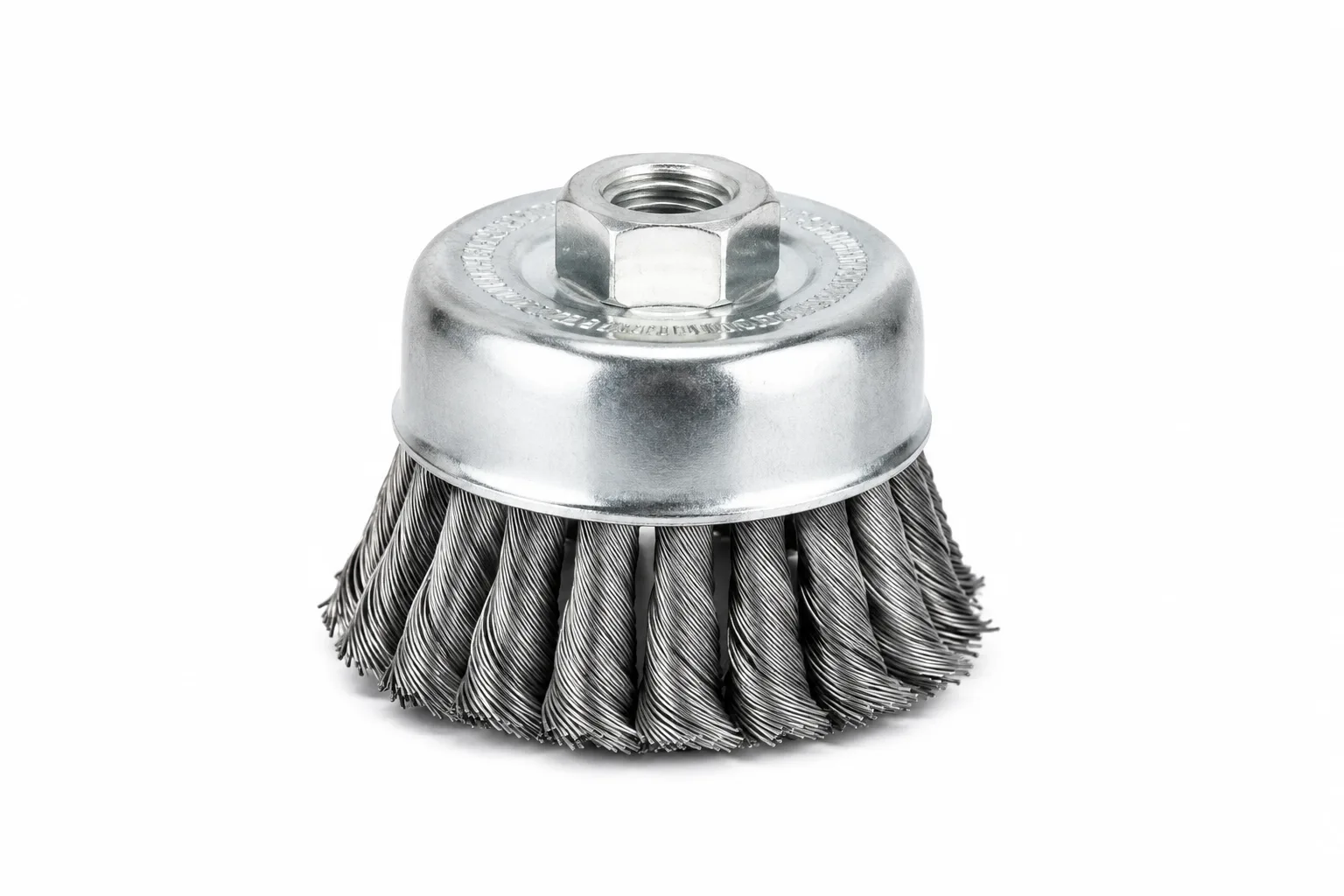
Threaded and arbor-hole designs are commonly used with angle grinders and other powered equipment. Mark the thread diameter, pitch, direction, or arbor-hole dimensions on the drawing and confirm the tool spindle and required RPM.
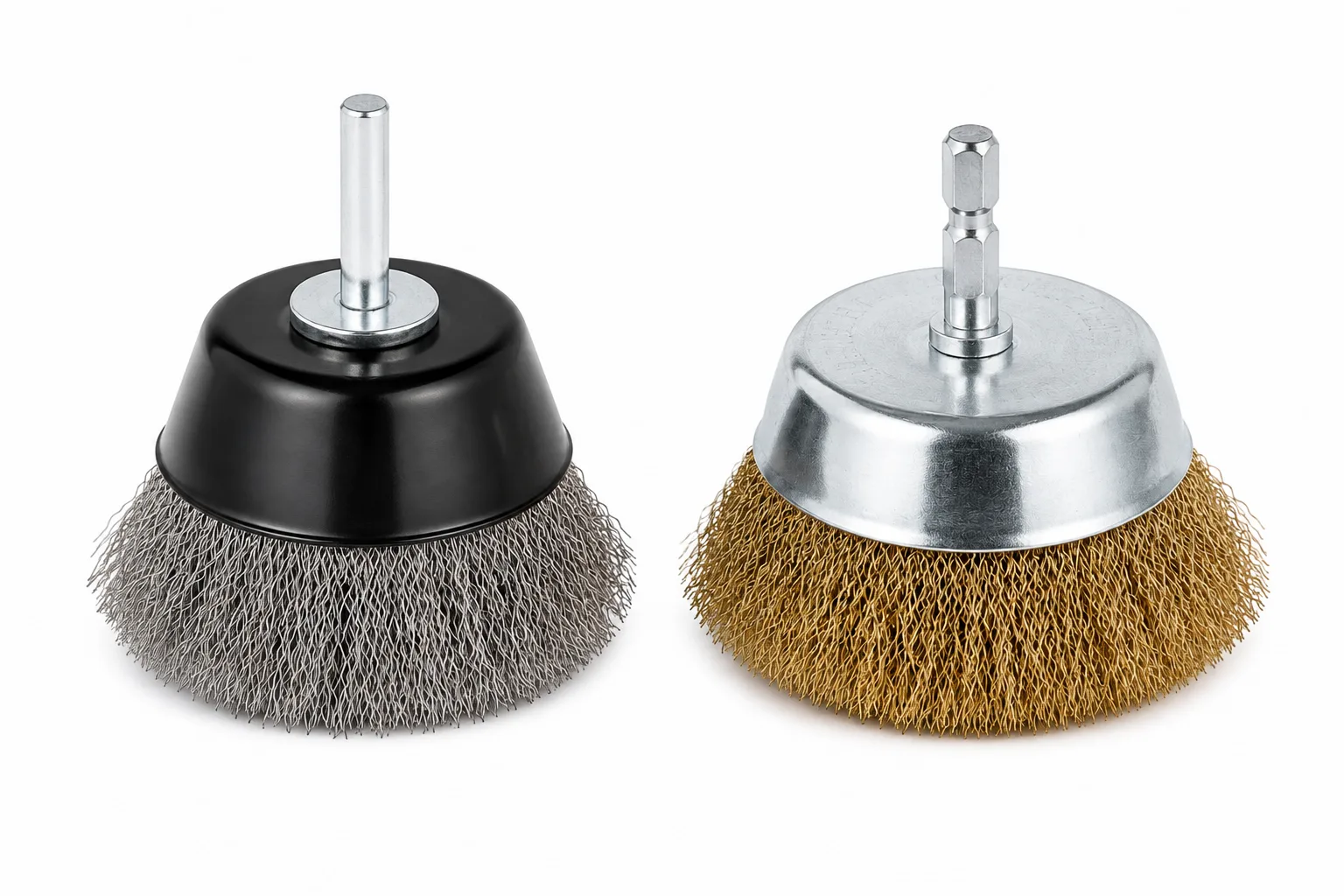
Shank-mounted cup brushes are used with compatible chucks or collets on portable tools and machinery. Compact formats can be reviewed for smaller parts and limited working areas; confirm the shank diameter, shank length, brush diameter, and required RPM.
Wire cup brushes provide broad rotary contact for cleaning, coating removal, weld preparation, and accessible metal surface finishing.
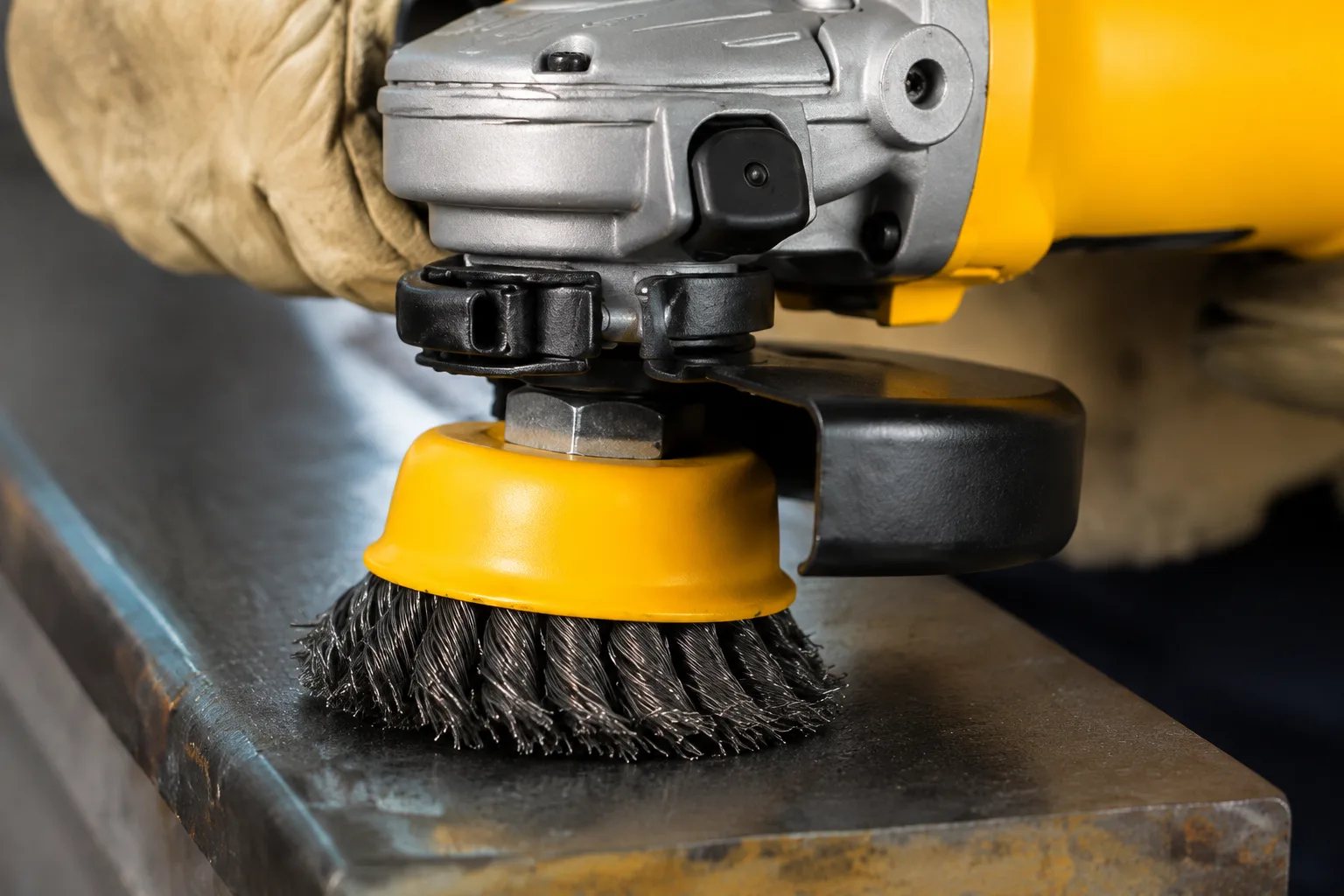
Remove corrosion, mill scale, and heavier surface buildup from suitable metal parts and fabrications.
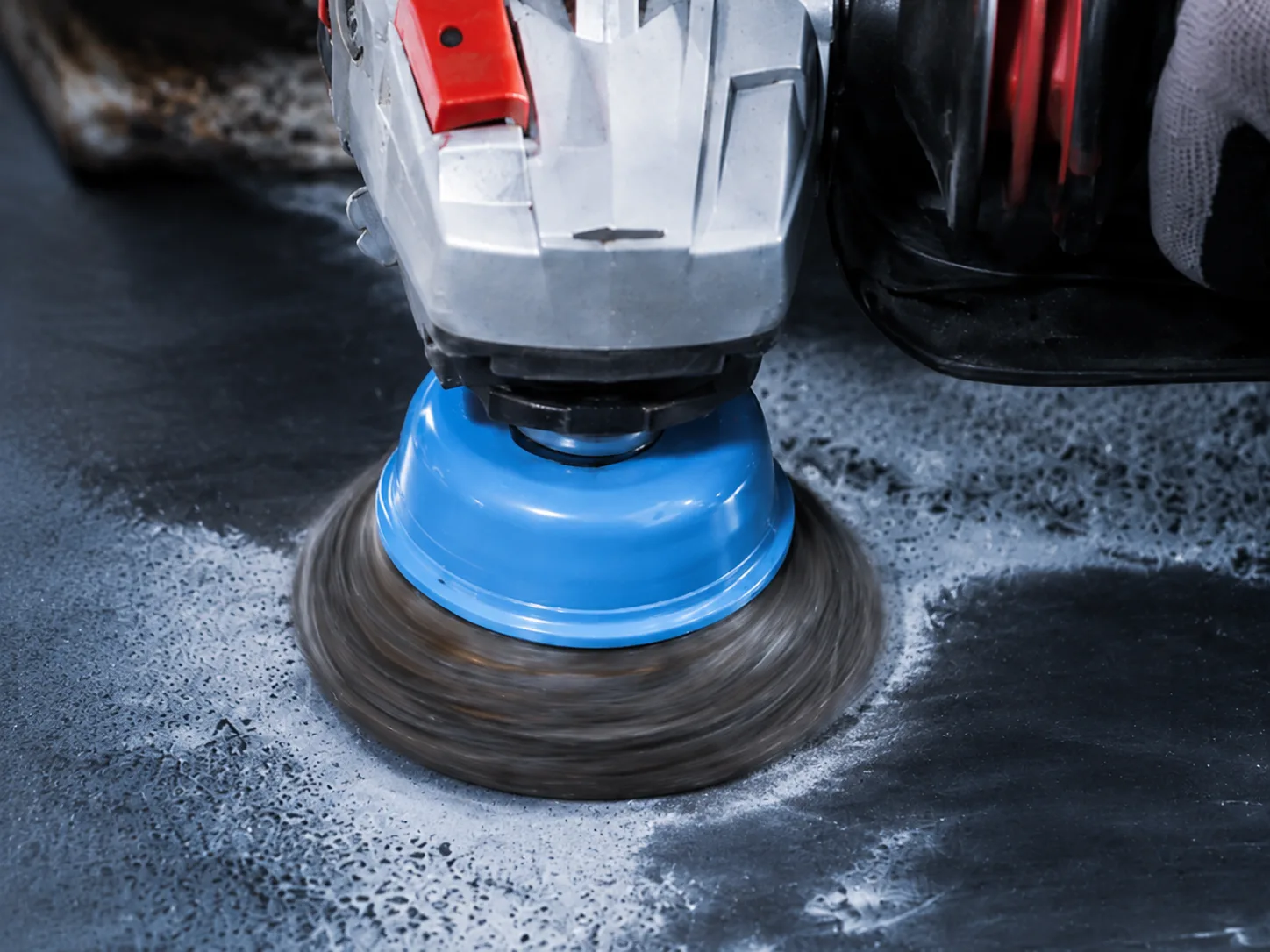
Strip paint, primer, coating residue, and aged surface layers before repair, welding, inspection, or recoating.
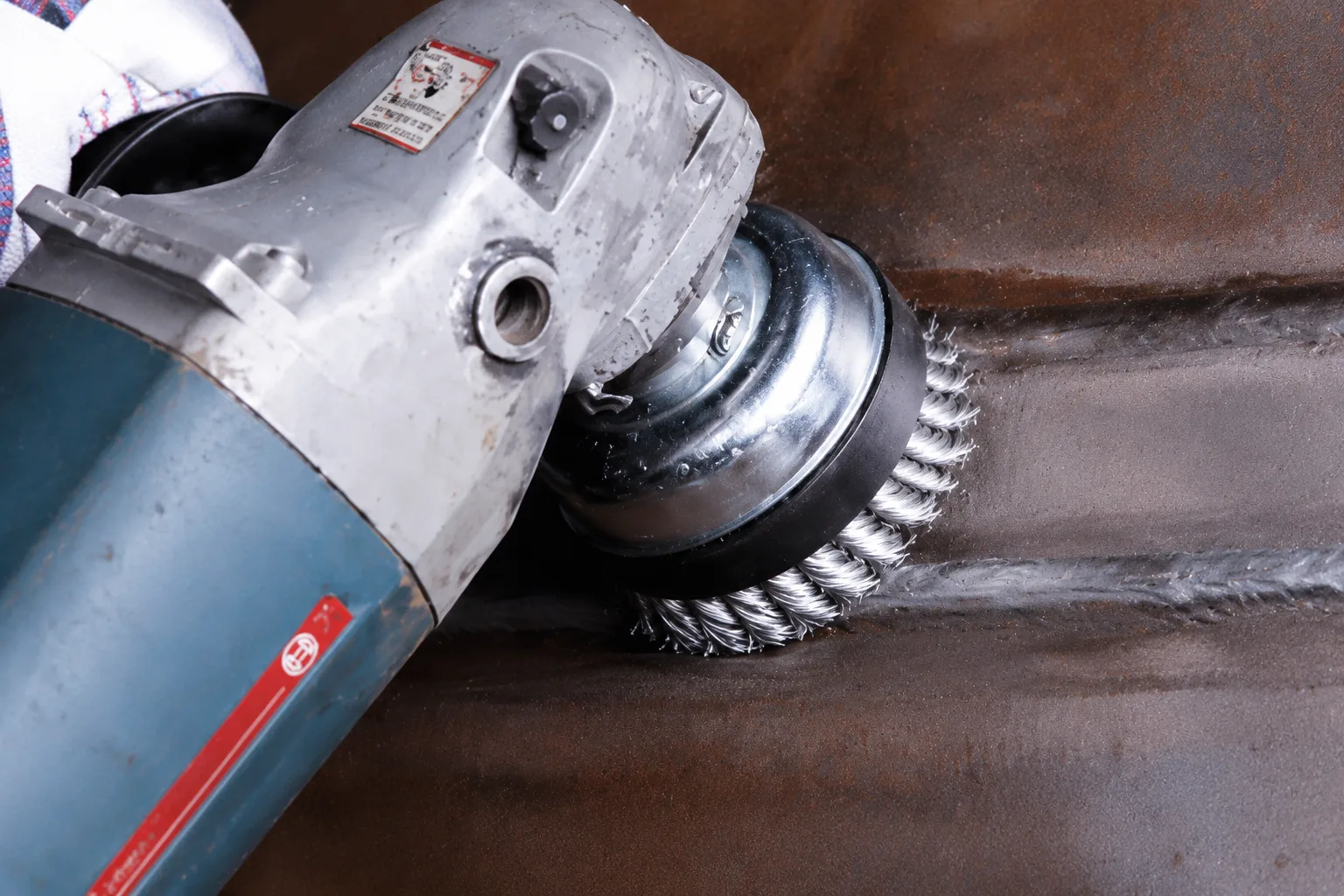
Clean slag, spatter, oxidation, discoloration, and residue around accessible weld zones.
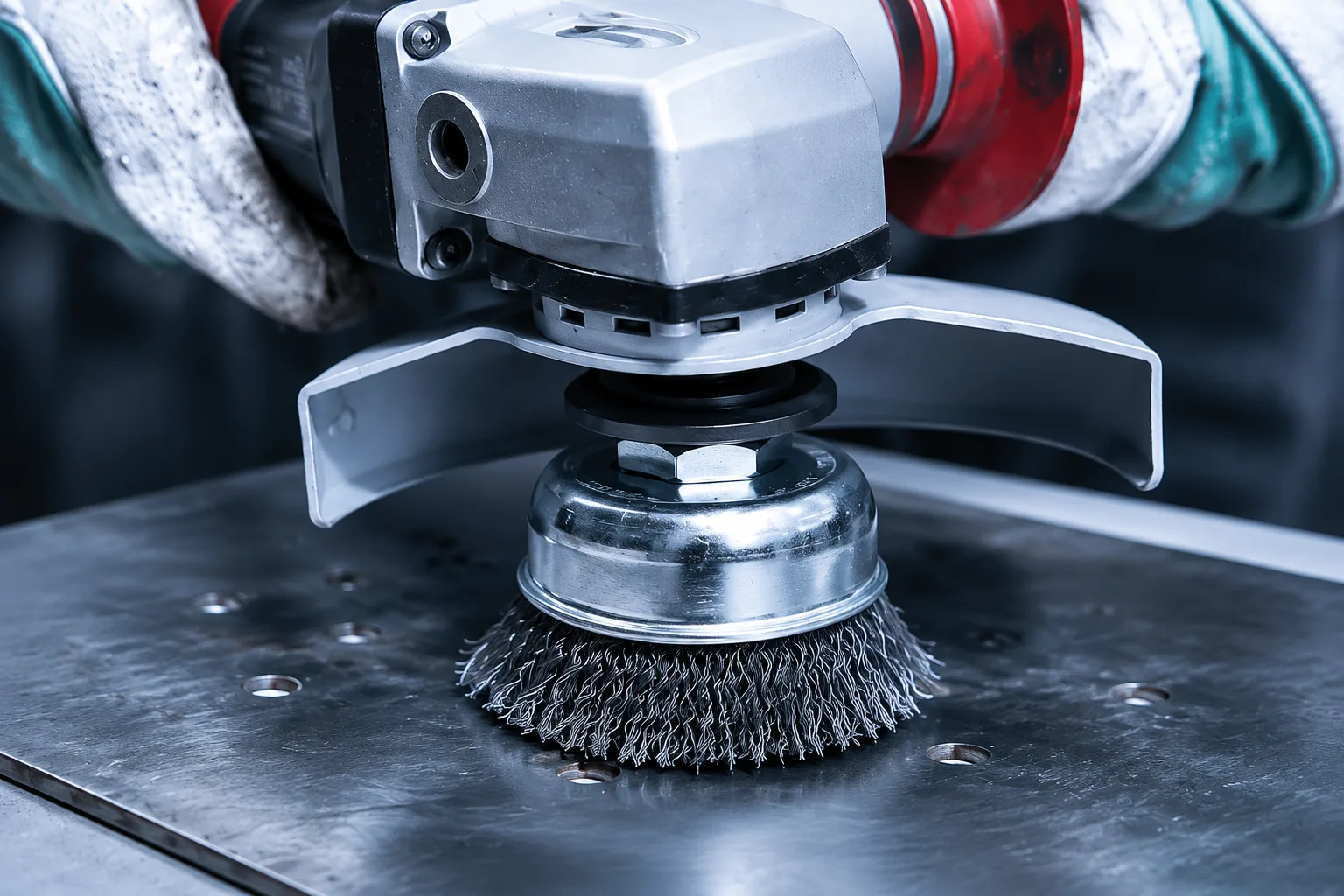
Prepare metal before coating or further finishing, and remove light burrs or flash from accessible surfaces and edges.
Customizable steel wire and brush diameter: Choose carbon steel or stainless steel wire. Brush diameter can be customized from 50 mm to 150 mm.
Commonly selected for rust, scale, paint, weld residue, and general heavy-duty cleaning on compatible ferrous workpieces.
Used where corrosion resistance or contamination control is important. Confirm the wire grade and workpiece material before production.
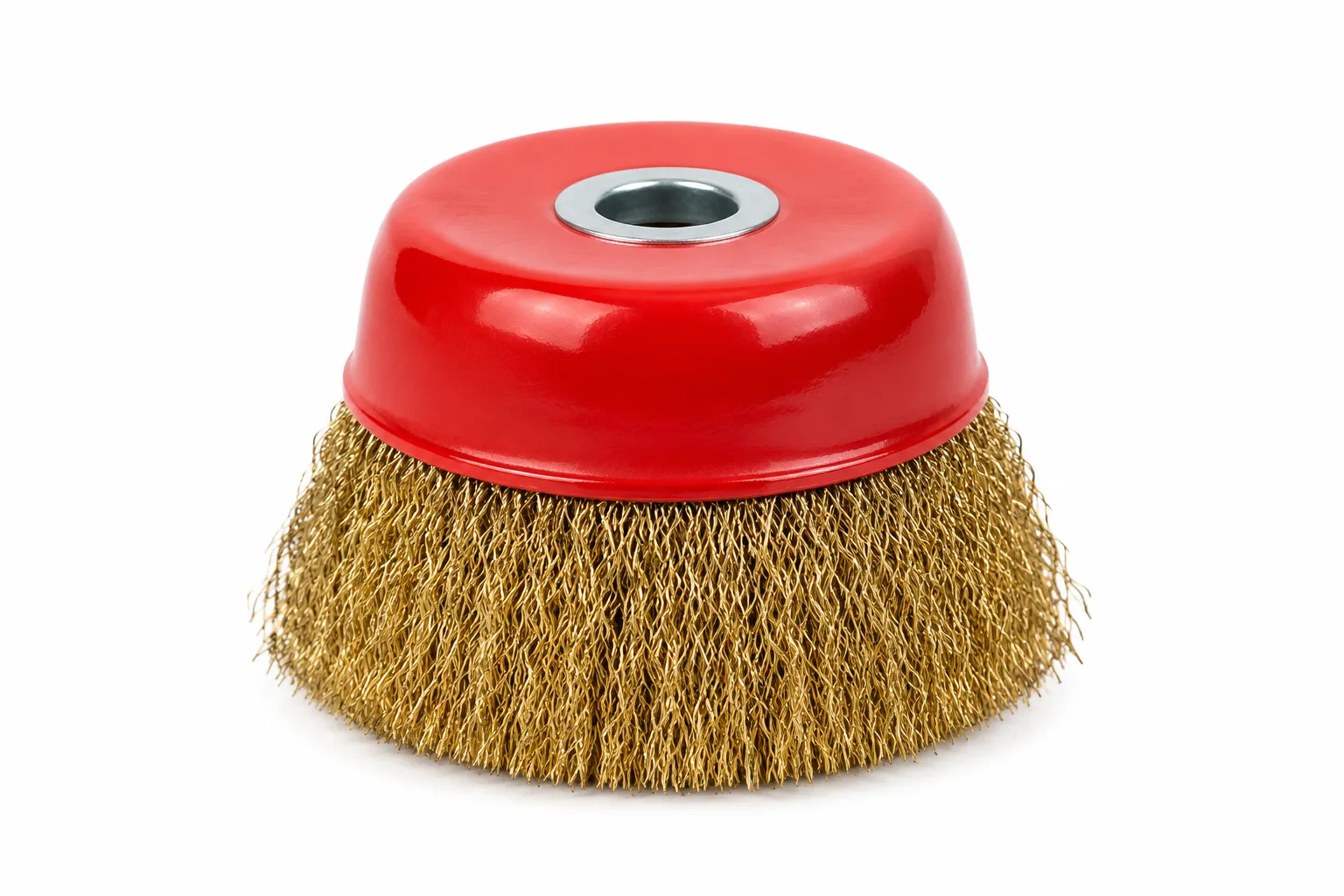
Solid brass and brass-coated steel are different materials. Identify the exact wire requirement on the drawing so availability and suitability can be reviewed.
A clearly marked drawing is enough to begin production review. Show:
Finished brush diameter and overall height, including any required tolerances.
Trim or working wire length at the cup face.
Thread, arbor, bore, shank, or other mounting interface detail.
Wire material, wire diameter, and crimped or knotted construction.
Knot count or bundle arrangement, where applicable.
Required operating and maximum RPM.
Add the application and order quantity when sending the drawing.
Wire cup brushes are used for rust, scale, paint, coating residue, weld cleaning, deburring, and metal surface preparation.
A wire cup brush provides broader face contact on flat or slightly contoured surfaces. A wire wheel brush provides more concentrated edge contact for seams, grooves, edges, and narrow paths.
Crimped wire is more flexible and less aggressive. Knotted or twisted wire is more rigid and is normally selected for heavier deposits and stronger cleaning.
Yes, when the mounting interface, brush dimensions, guard clearance, and confirmed RPM rating match the specific angle grinder.
Carbon steel is commonly used for general cleaning on suitable ferrous workpieces. Stainless steel is selected where corrosion resistance or contamination control is important.
Mark the brush diameter, overall height, trim length, mounting detail, wire material, wire diameter, wire construction, knot arrangement if applicable, and required RPM.
Custom production from your drawing. Large-volume production is supported for OEM and replacement projects. Confirm wire type, mounting, and maximum RPM before production.