Industrial Brush Manufacturers, Suppliers & Companies

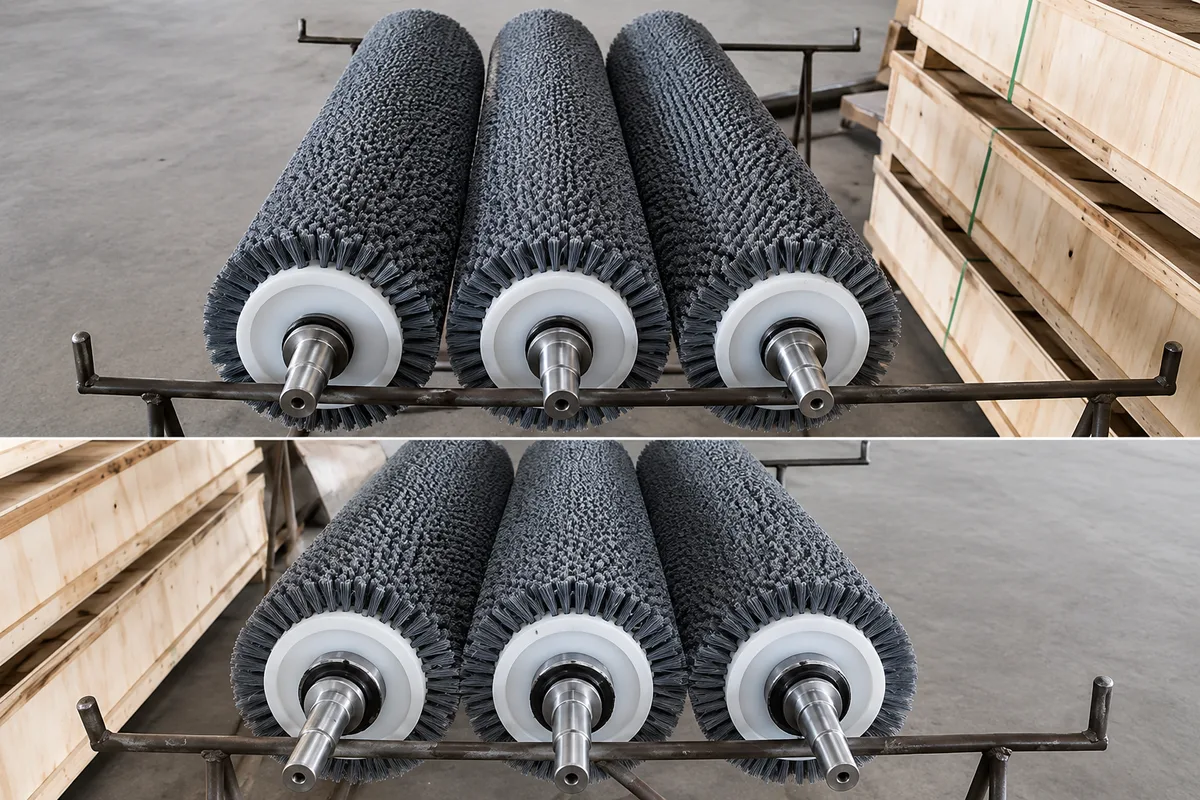
Custom Woodworking Machine Brushes

Drawing-based roller, disc, and strip brushes for wood texturing, brush sanding, and panel-cleaning positions in woodworking equipment.

Send Your Drawing
Woodworking Brush Applications

Common Woodworking Brush Applications

Woodworking brushes are used in furniture, cabinetry, flooring, doors, mouldings, panel, and timber-processing lines to prepare wood and engineered panels for finishing. Custom brush components are reviewed for solid wood, veneer, plywood, MDF, HDF, chipboard, and similar materials according to the machine position and required surface result.

The brush material, density, face profile, trim, core or backing, shaft or holder interface, and operating conditions are confirmed for the actual machine and surface. Steel wire, abrasive nylon, nylon, and natural-fibre brushes do not produce the same result and are not interchangeable.

  1. Surface texturing and grain enhancementSteel wire or abrasive nylon roller brushes create controlled grain definition on selected boards, flooring, cladding, and components.
  2. Antique, distressed, and weathered finishesBrushing produces selected rustic or reclaimed-wood effects before staining or finishing.
  3. White-wood sanding and loose-fibre removalAbrasive nylon brushes refine surfaces after machining or belt sanding and remove loose fibres.
  4. Fine sanding, denibbing, and sealer scuffingAbrasive brush components prepare flat, profiled, or moulded parts between finishing stages.
  5. Woodworking sanding disc brushesTampico fiber mixed with sandpaper supports polishing, light deburring, cleaning, and aging effects on wood surfaces. Common reference diameters are 150, 180, and 200 mm; diameter and mounting-hole layout can be made to the machine drawing.
  6. Profile sanding and edge roundingRoller or wheel brush constructions follow selected mouldings, doors, frames, and other shaped components.
  7. Panel cleaning and dedusting before finishingNylon, Tampico, or other suitable brush fills remove dust and loose particles before coating or staining.
  8. Cleaning before gluing, veneering, and laminationAntistatic nylon roller brushes or strip brushes clean defined panel-processing positions before bonding.
  9. Selected stain wiping and levelingNatural-fibre or other suitable brush fills can be reviewed for specified stain-control positions.
Brush Selection

Choose a Woodworking Brush by Surface Result

Start with the finish you need, then match the brush to the wood, machine position, and approved sample.

Pronounced grain or distressed texture

Start with a carbon-steel wire roller on suitable solid wood to expose the grain. For quotation, use 0.15–0.25 mm for a lighter texture, 0.25–0.35 mm for standard grain, and 0.35–0.45 mm for harder wood or stronger distressing. Carbon steel, brass-coated carbon steel, and 304 stainless steel are available in these common diameters. Follow with an abrasive nylon roller when raised fibers need smoothing.

Lighter texturing or white-wood sanding

Start with an abrasive nylon roller. For quotation, use 0.25–0.50 mm for light denibbing, 0.60–1.00 mm for general sanding and raised-fiber smoothing, and 1.20–2.00 mm for stronger fiber removal or surface action. Available filament diameters are 0.25, 0.30, 0.40, 0.50, 0.60, 0.80, 1.00, 1.20, 1.60, and 2.00 mm. Grit choices on our roller-brush range include #80, #120, #180, #240, and #320, depending on the abrasive system.

Profile sanding or finish preparation

For mouldings and shaped parts, review a flexible abrasive construction or a Tampico-and-abrasive-paper disc brush. Reference disc diameters are 150, 180, and 200 mm; the abrasive grade and mounting pattern follow the machine and finish requirement.

Panel dust removal before coating or bonding

Choose a non-abrasive nylon or Tampico fill for loose dust and fiber removal. Specify an anti-static grade only where the equipment process calls for one.

Wire diameter, abrasive mineral and grit standard, brush trim, contact, and operating speed change the result. For tannin-rich wood or delicate veneer and coated surfaces, use a representative sample before selecting wire contact.

OEM and Replacement Supply

Built for OEM and Replacement Projects

We manufacture custom woodworking machine brushes from an approved drawing or measured sample for OEM, replacement, and volume orders. Roller, disc, and strip brushes can be supplied with the required face, core or backing, filament, mounting detail, and brush construction.

A clear drawing is enough to start. Please include the machine position, workpiece material, finished dimensions, shaft or mounting detail, operating conditions, and quantity.

Request a Quote
Woodworking Brush Review

FAQ

Can you reproduce an existing woodworking machine brush?

Yes. Send the approved drawing or a clearly measured sample with the machine position. We review the core or backing, brush material, finished dimensions, shaft or holder interface, and required quantity before quotation.

Is the steel wire for wood texturing stainless steel?

Not necessarily. For a first quotation, use carbon-steel wire at 0.25–0.35 mm for standard grain, or 0.35–0.45 mm for harder wood and stronger distressing. Use 0.15–0.25 mm when a lighter texture is required. Brass-coated carbon steel and 304 stainless-steel wire are also available in the common 0.15, 0.25, 0.35, and 0.45 mm diameters; the final grade and diameter should be approved against the wood sample and finish.

Can the same brush be used for sanding and panel cleaning?

Do not assume so. Brush sanding normally needs abrasive contact, while panel cleaning needs controlled dust removal. The filament, density, trim, construction, and contact force are usually different.

Woodworking Machine Brush RFQ

Need Custom Woodworking Machine Brushes?

Send your drawing or sample with the machine position, workpiece material, finished dimensions, shaft or mounting detail, operating conditions, and order quantity. We will review the brush construction before quotation.

Send Your Drawing