A potato peeling brush roller must remove enough skin for the next processing step while limiting unnecessary flesh loss. Filament stiffness matters, but so do the arrangement of the rollers, the way potatoes tumble through the machine, and the time they spend in contact with the brush bed.
For an OEM design or a replacement order, start with the peeling duty and the machine drawing. Then specify the nylon grade, filament diameter, exposed height, fill density, finished profile, and mounting dimensions as one assembly. A roller with the correct outside diameter can still behave differently if its filament construction or position in the bed changes.
Define the peeling duty first
Potato peeling equipment may use abrasive-coated rollers, nylon brush rollers, or a combination of both. Abrasive surfaces remove skin through a more aggressive contact action. Nylon brushes provide a flexible working surface and may be used for light peeling or for removing skin loosened by an upstream process. A brush used after steam treatment has a different job from one expected to peel fresh, untreated potatoes.
Separate these duties before selecting a roller:
- Light peeling: Remove the required amount of skin from fresh potatoes while controlling damage to the flesh.
- Deskinning: Remove skin that has already been loosened, for example by steam treatment.
- Combined processing: Use brushes and abrasive rollers in the positions specified by the machine design.
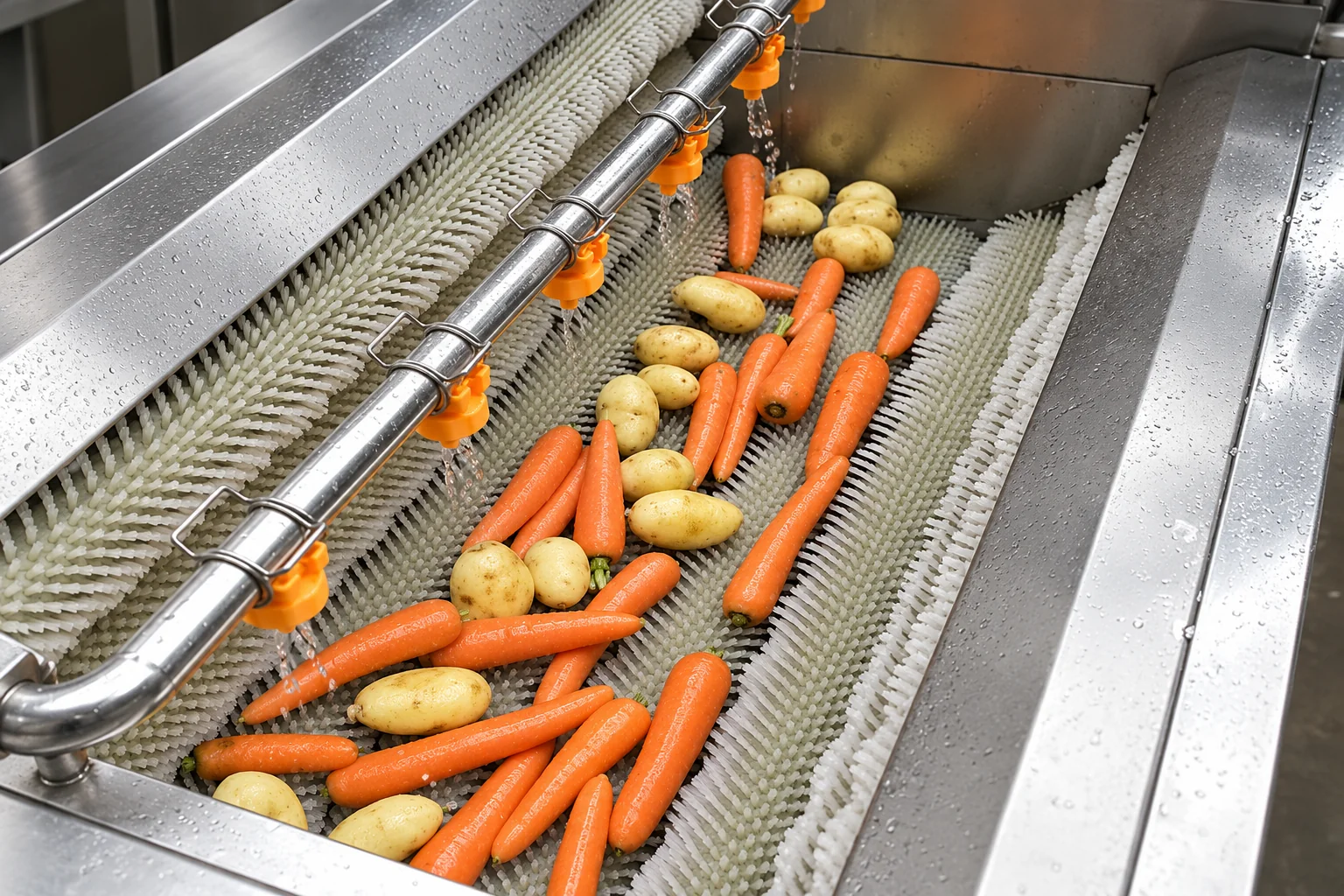
Washing is a separate specification. A brush intended to remove soil should not be assumed suitable for deliberate skin removal, even if both operations use rotating rollers.
Select nylon grade, diameter and fill as a set
Brushcustom has manufactured potato peeling cylinder brushes with PA6, PA610 and PA612 nylon filaments. These are material options, not interchangeable grades with identical wet performance. The actual formulation, filament dimensions and operating conditions must be considered together.
PA6 is a practical choice when its wet operating behaviour and service life meet the process requirement. It absorbs more moisture than longer-chain nylons, so its stiffness can change during prolonged wet use. If an existing PA6 roller has performed well, there is no reason to change grade simply because another nylon absorbs less water.
PA610 and PA612 are options when more consistent stiffness under wet operation is important. Their lower moisture uptake relative to PA6 can be useful in machines with continuous water exposure. Neither grade guarantees longer roller life: abrasion, bending fatigue, cleaning chemistry, filament dimensions and the particular formulation still matter.
In Brushcustom’s potato peeling projects, filament diameters of 0.5 mm and above are commonly specified. This describes our manufacturing experience, not a minimum for every peeler. For the same material and exposed height, a larger diameter generally produces a stiffer filament. It may increase peeling action, but it can also increase surface damage or flesh loss if contact becomes too aggressive.
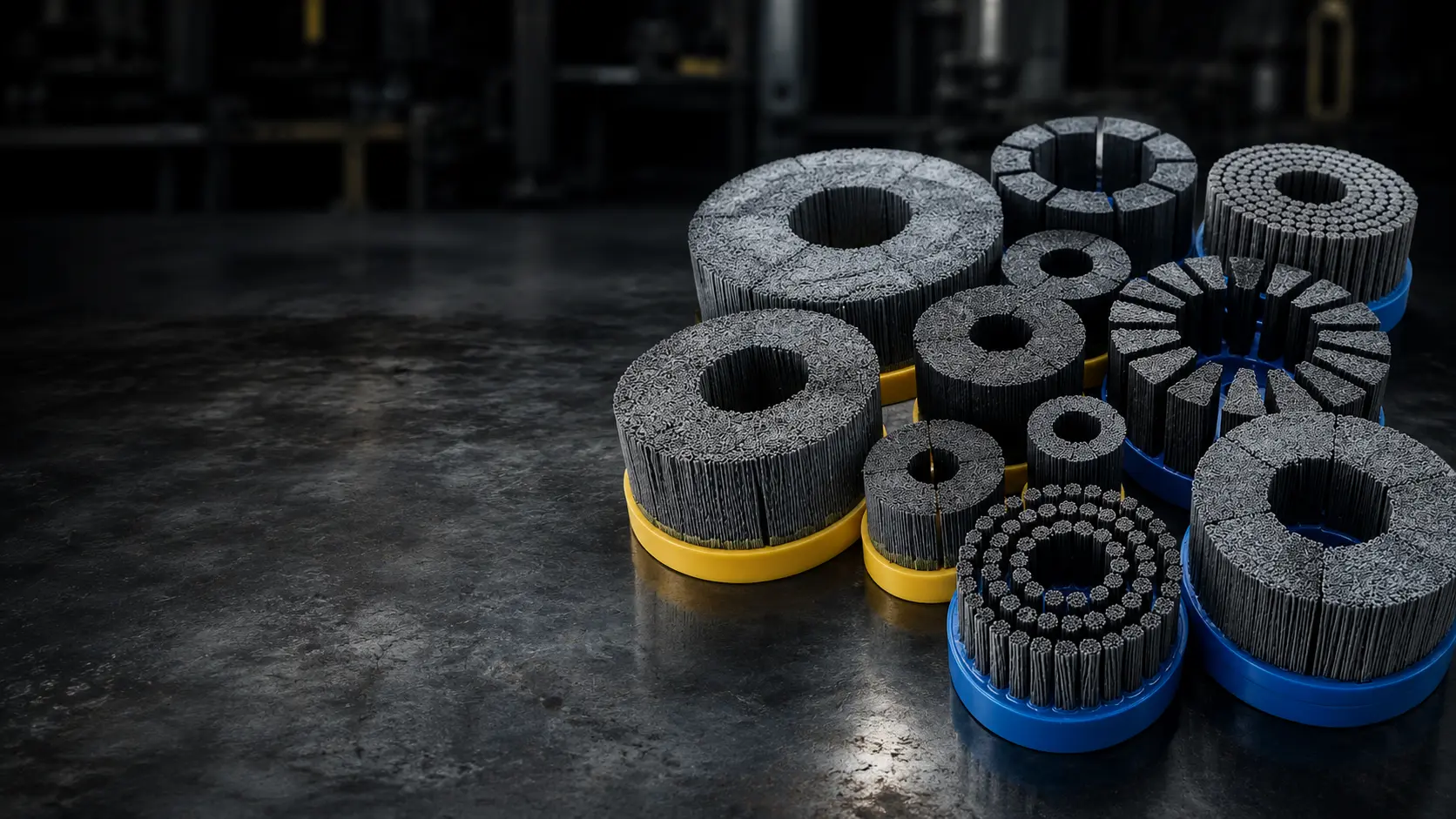
Exposed filament height affects deflection as well. Shorter filaments tend to be stiffer; longer ones can flex more. Fill density changes how contact is distributed across the potato surface. These choices should be reviewed together with the roller’s finished outside diameter, tuft arrangement and position in the machine. Changing only the diameter can alter the result even when the roller still fits its mounting space.
Review the complete roller bed
In a continuous peeler, several parallel rollers may form a trough that supports and turns the potatoes. Some machines use an auger to move the product toward the outlet. Roller speed, rotation direction, surface profile and the arrangement of brush and abrasive sections influence how often each part of a potato meets the working surfaces. The layout belongs to the specific machine; there is no universal roller sequence.
If potatoes move through the bed without turning adequately, one area may be overworked while another retains skin. A stiffer replacement brush will not necessarily correct that movement problem. Check the position and role of each roller, its direction of rotation, and the condition of neighbouring rollers before changing the filament specification.
Residence time also matters. Longer exposure can remove more skin, but may remove more usable potato as well. Roller speed and the product feed rate should be reviewed with the machine settings and a representative potato batch. Judge the result by remaining skin, flesh loss and throughput together, rather than by peeling intensity alone.
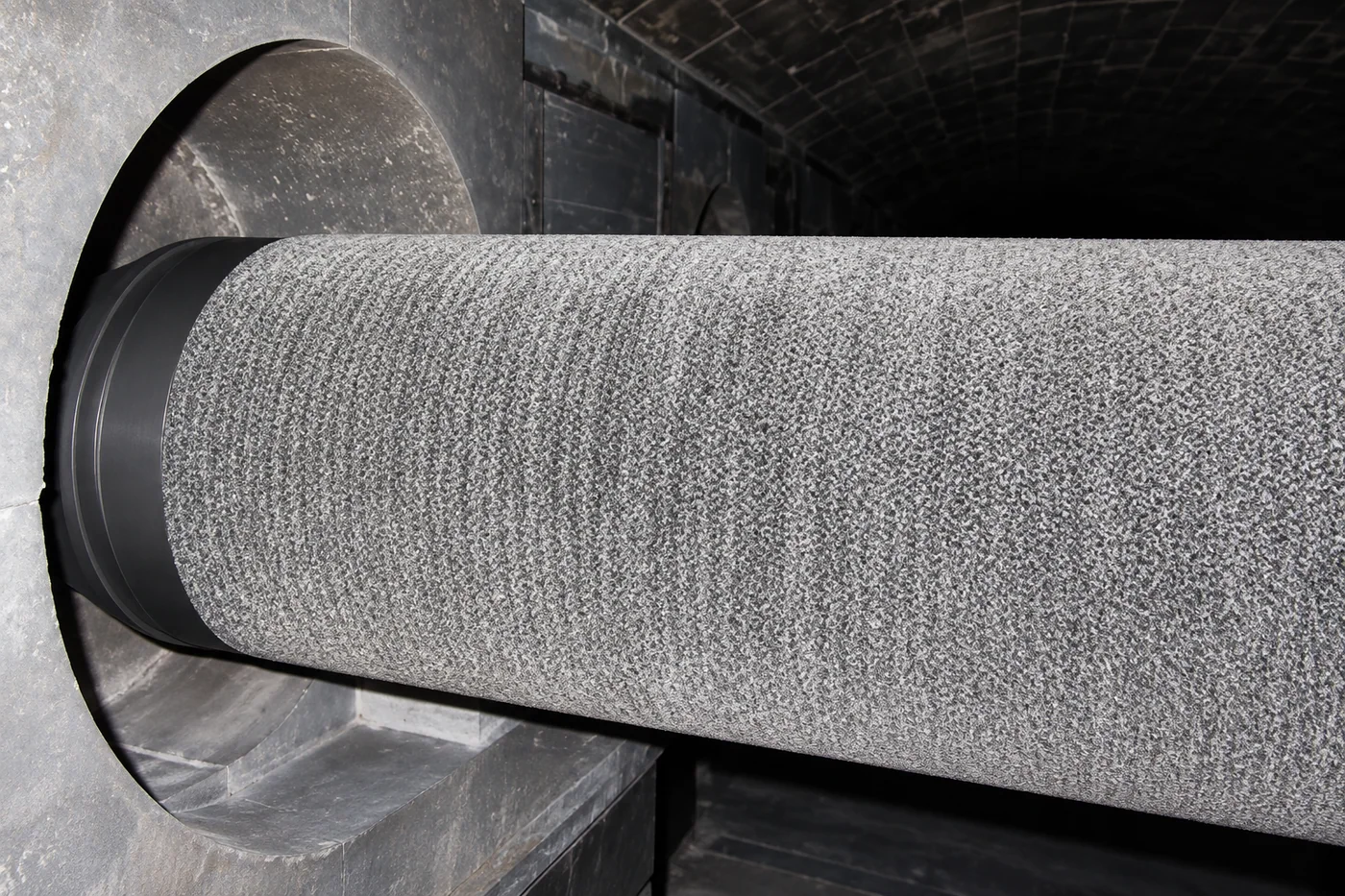
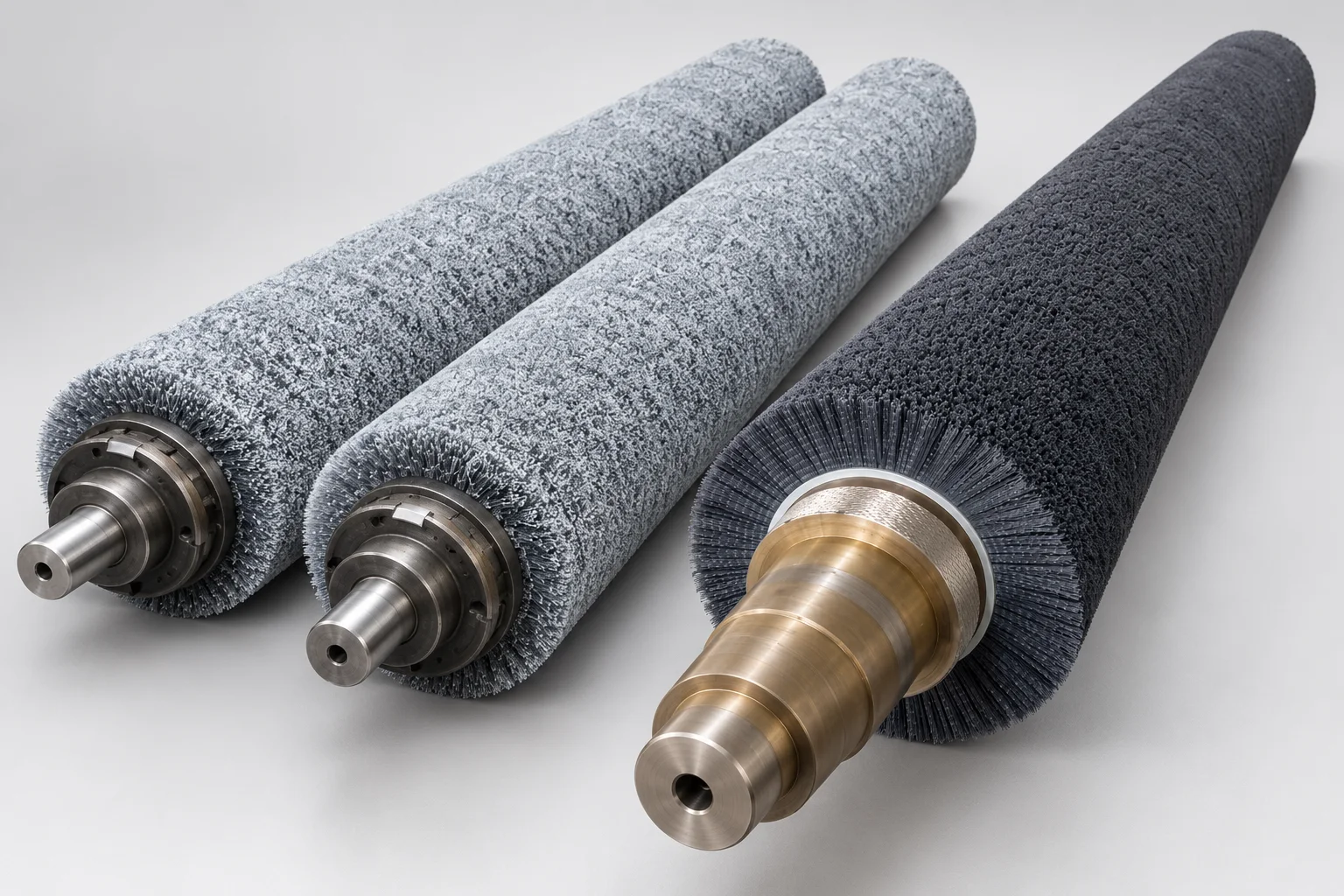
The finished brush profile must also match its intended function. Some rollers have a uniform cylindrical surface; others have a specified wavy, grooved or patterned filament profile to influence contact and product movement. The finished outer contour is distinct from the underlying brush construction. When replacing a roller, reproduce the approved profile unless the OEM has evaluated a change.
Diagnose the result before changing the brush
Too much skin remains. Inspect for permanently bent, worn or missing filaments; check product tumbling, roller rotation, feed rate and residence time. A thicker filament may help only when the existing contact action is genuinely insufficient and the machine is otherwise operating as intended.
Too much flesh is lost. Review whether the working surface or residence time is too aggressive. Compare skin removal and usable yield using similar potato batches before selecting a stiffer or softer brush.
Peeling is uneven. Look for uneven roller wear, poor tumbling, unsuitable roller spacing, or a profile that no longer matches the neighbouring rollers. Potato size, variety, maturity and storage condition can also change the result, so a single batch is a weak basis for a permanent specification change.
Reduced peeling performance is not always brush wear. Check water delivery, product loading, peel or starch accumulation, and the condition of the full roller bed before ordering replacements.
Replace worn rollers to the approved dimensions
Permanently bent or flattened filaments, missing tufts, uneven wear and a need for longer processing time under comparable conditions are reasons to inspect the rollers. Compare the used roller with the OEM drawing or an approved new sample. A worn brush may have a smaller outside diameter than it had when new, so copying the worn dimension can produce an undersized replacement.
Confirm the assembly type as well as the brush face: a sleeve brush needs the correct bore and core fit, while a complete shafted roller needs the correct journals, drive end and bearing interfaces. Record working length, original finished outside diameter, core or shaft material, filament specification, tuft pattern and surface profile. For a mixed roller bed, identify the exact position of each replacement.
If the previous design delivered acceptable peeling and service life, matching its approved specification is the safest starting point. If it failed early, investigate the cause before reproducing it.
Check food contact and cleanability
PA6, PA610 and PA612 are polymer names; they do not establish that a particular filament formulation or completed roller meets the plant’s food-contact requirements. Confirm the required documentation for the actual materials and market. The core, attachment method and finished assembly should also be compatible with the equipment’s cleaning procedure.
During maintenance, inspect for loose filaments, damaged tuft anchoring and residues trapped in the brush face. These conditions can affect both peeling consistency and the plant’s foreign-body and hygiene controls.
What to send with a replacement RFQ
Send the machine drawing or a measured sample, the peeling duty and operating conditions, the approved filament and roller dimensions, photographs of the worn brush, and the quantity and position of each replacement roller.
Brushcustom manufactures custom potato peeling cylinder brushes to approved drawings, including PA6, PA610 and PA612 filament options for OEM and replacement projects. Explore our food-processing roller brush applications for the relevant brush constructions and quotation route.