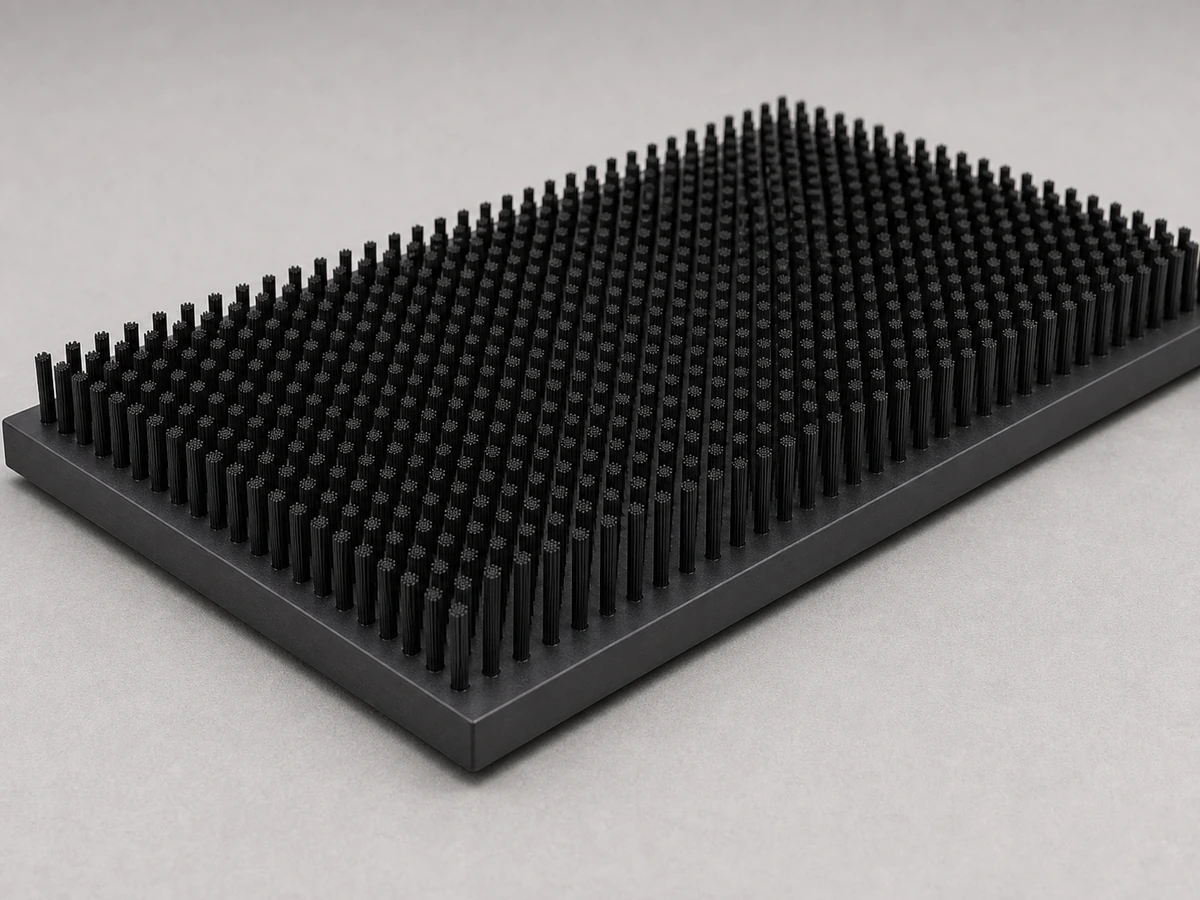
Flat panel brushes
Used where the process needs fixed surface contact across a flat area for wiping, guiding, cleaning, or product support.
Custom panel brushes for fixed mounting, wiping, guiding, sealing support, and light cleaning on industrial equipment. Built to your required base size, mounting pattern, trim height, fill density, and service condition for OEM and replacement work.
Request a QuoteA panel brush is a fixed-mounted brush built on a flat base, plate, or panel. Its filaments contact products or surfaces for support, guiding, wiping, dust control, or light cleaning without the brush itself rotating.
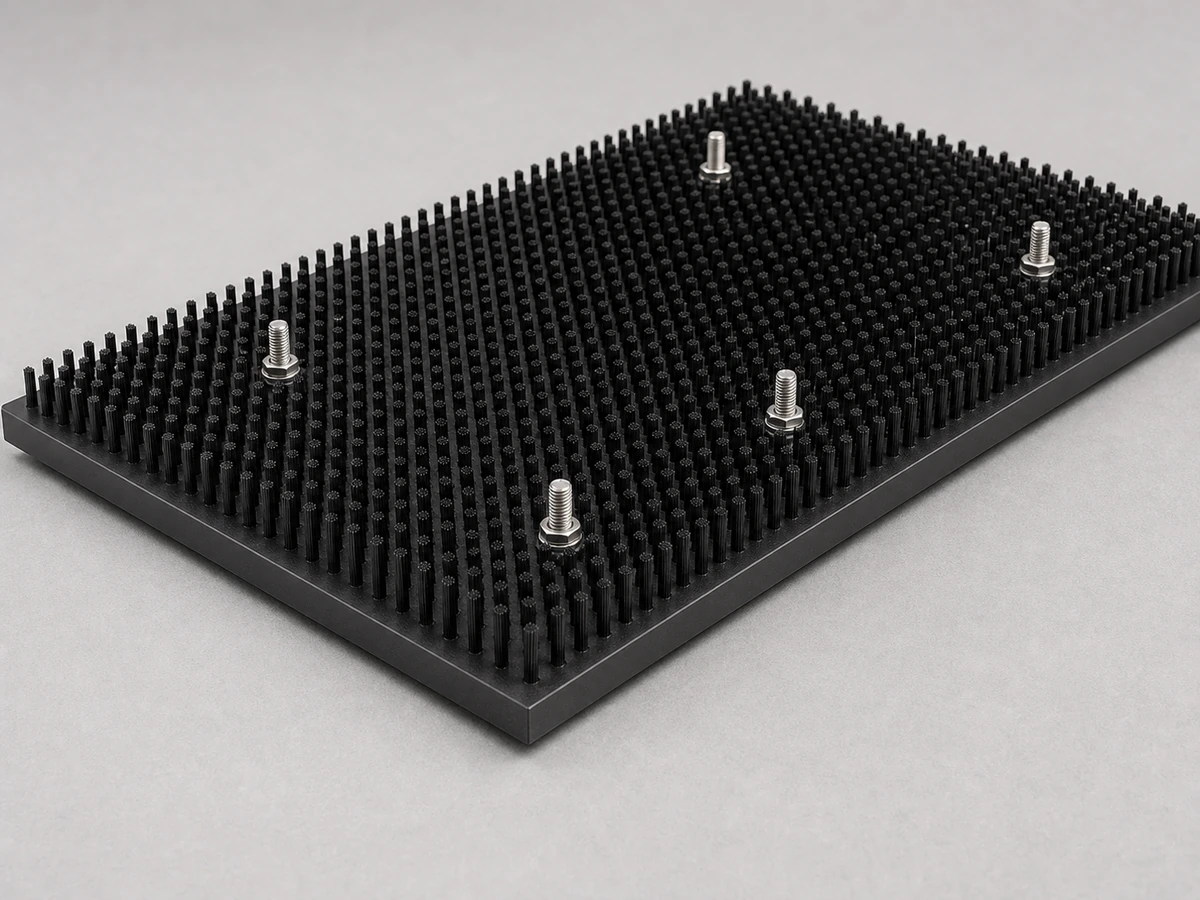
Custom panel brushes are usually grouped by contact shape, coverage pattern, and machine function rather than by one universal stock format. These are the common configurations buyers most often review first.
Used where the process needs fixed surface contact across a flat area for wiping, guiding, cleaning, or product support.
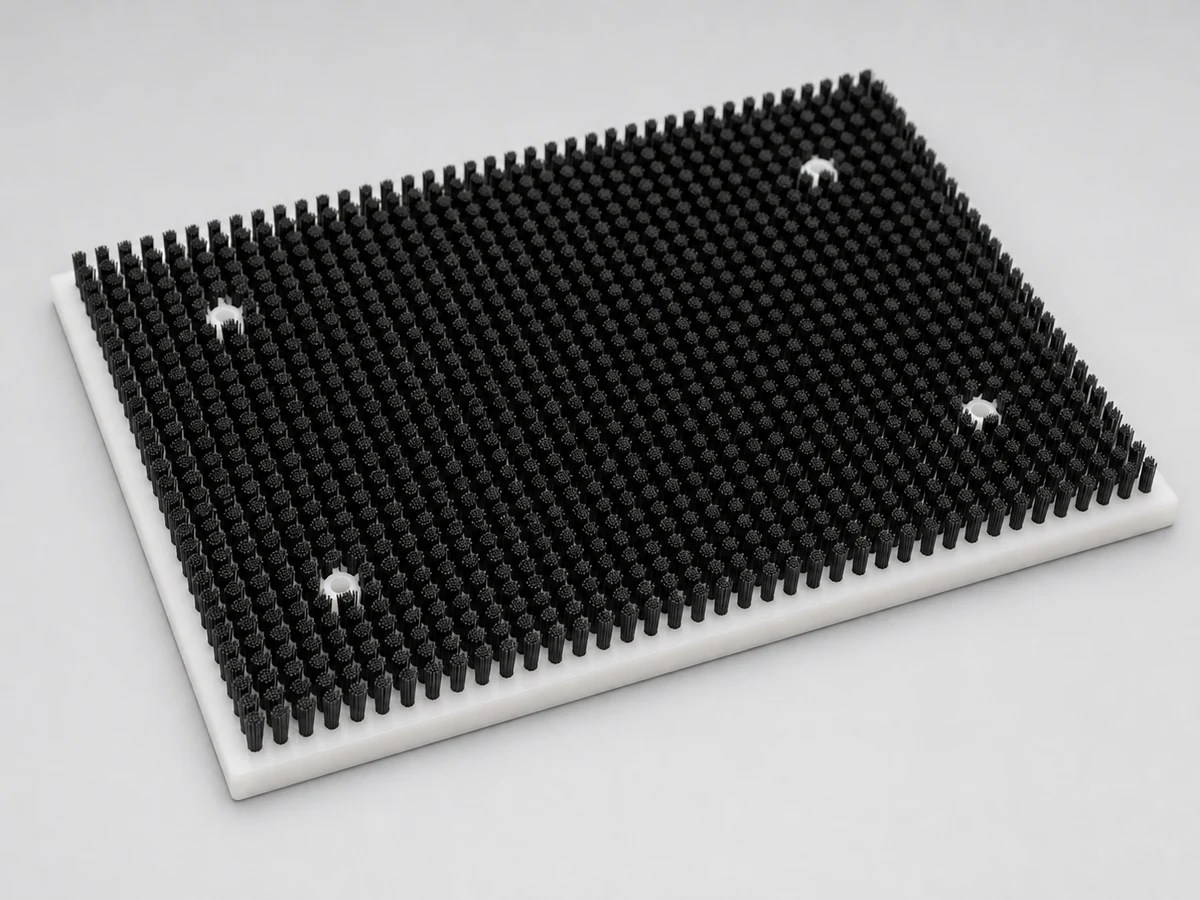
Used where the process needs broader contact coverage, higher brush density, or more stable wiping and guiding across the working width.
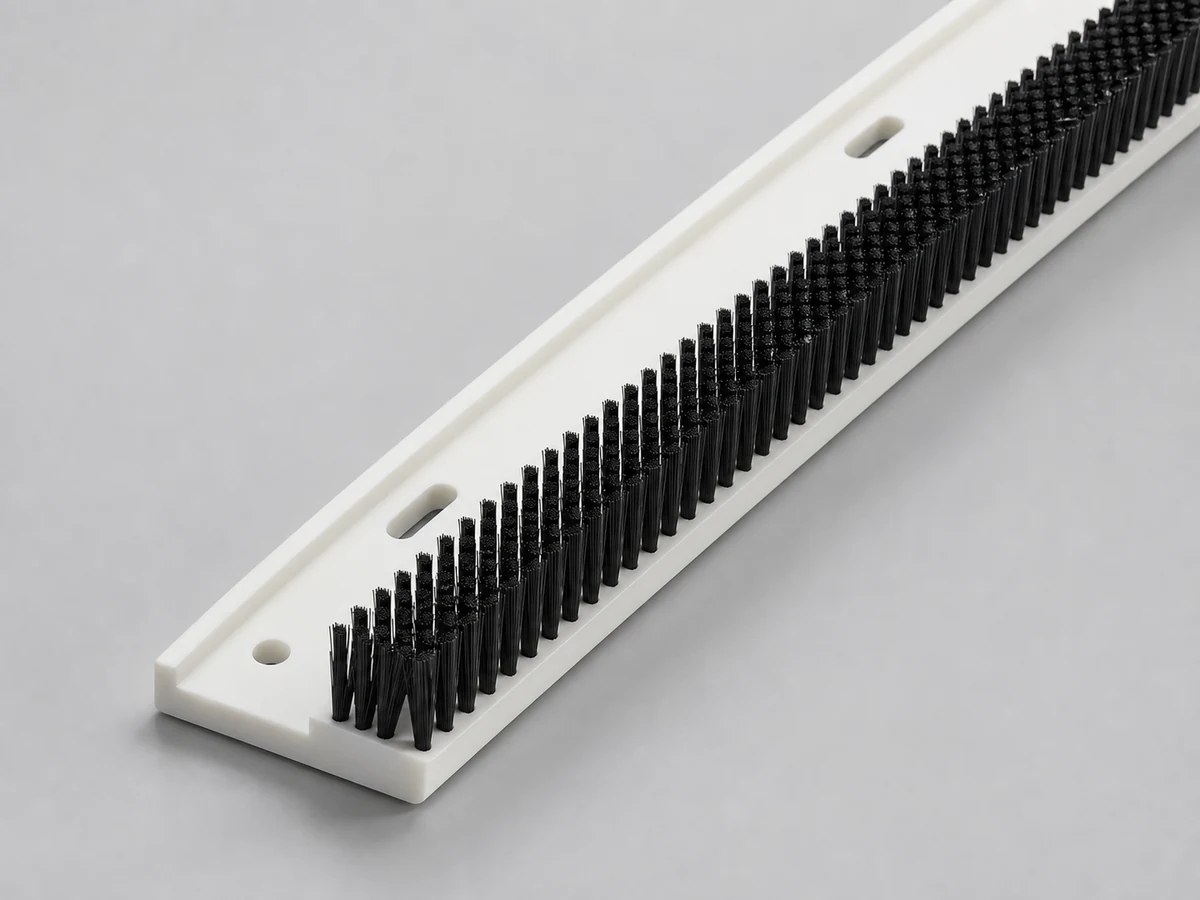
Used where the brush supports dust control, edge shielding, light sealing, or product guidance along a fixed machine path.
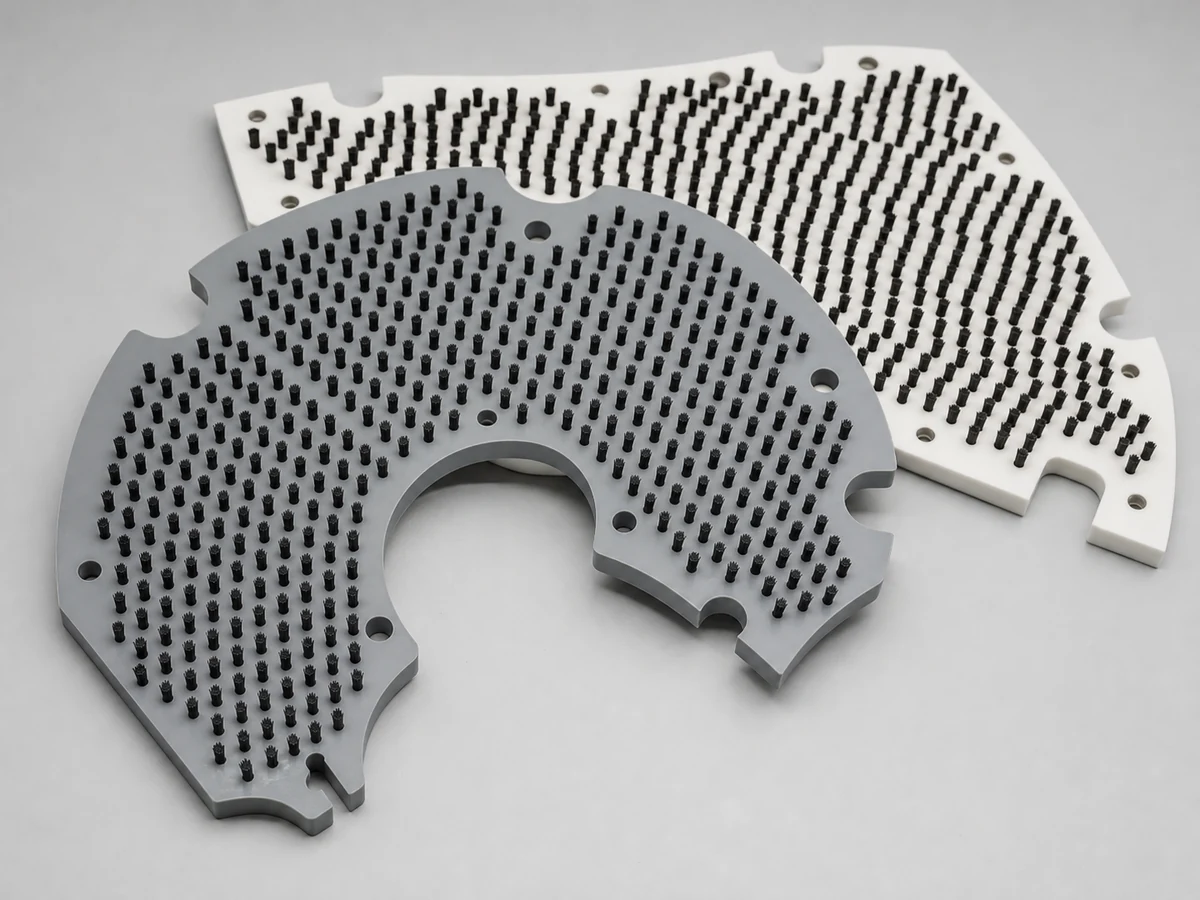
Used where the brush must follow a specific machine edge, product path, opening, or custom contact geometry.
Panel brushes are commonly specified where the brush stays fixed while the product, belt, panel, or moving part passes against it. They are usually considered when the machine needs broader mounted contact, controlled brush pressure, or a custom fixed brush shape instead of rotating brush action.
Common where a fixed brush helps wipe loose material, reduce dust carryover, or keep contact points cleaner along equipment paths and transfer zones.
Common where the brush helps guide, separate, steady, or lightly restrain products during conveying or handling.
Common where the process needs a mounted brush to support edge shielding, light sealing support, or controlled contact along a gap or machine edge.
Common where a fixed brush removes light residue or supports simple cleaning without adding a rotating brush assembly.
Common on OEM and replacement equipment where the mounted brush must match a specific panel size, fastening pattern, contact area, and service condition.
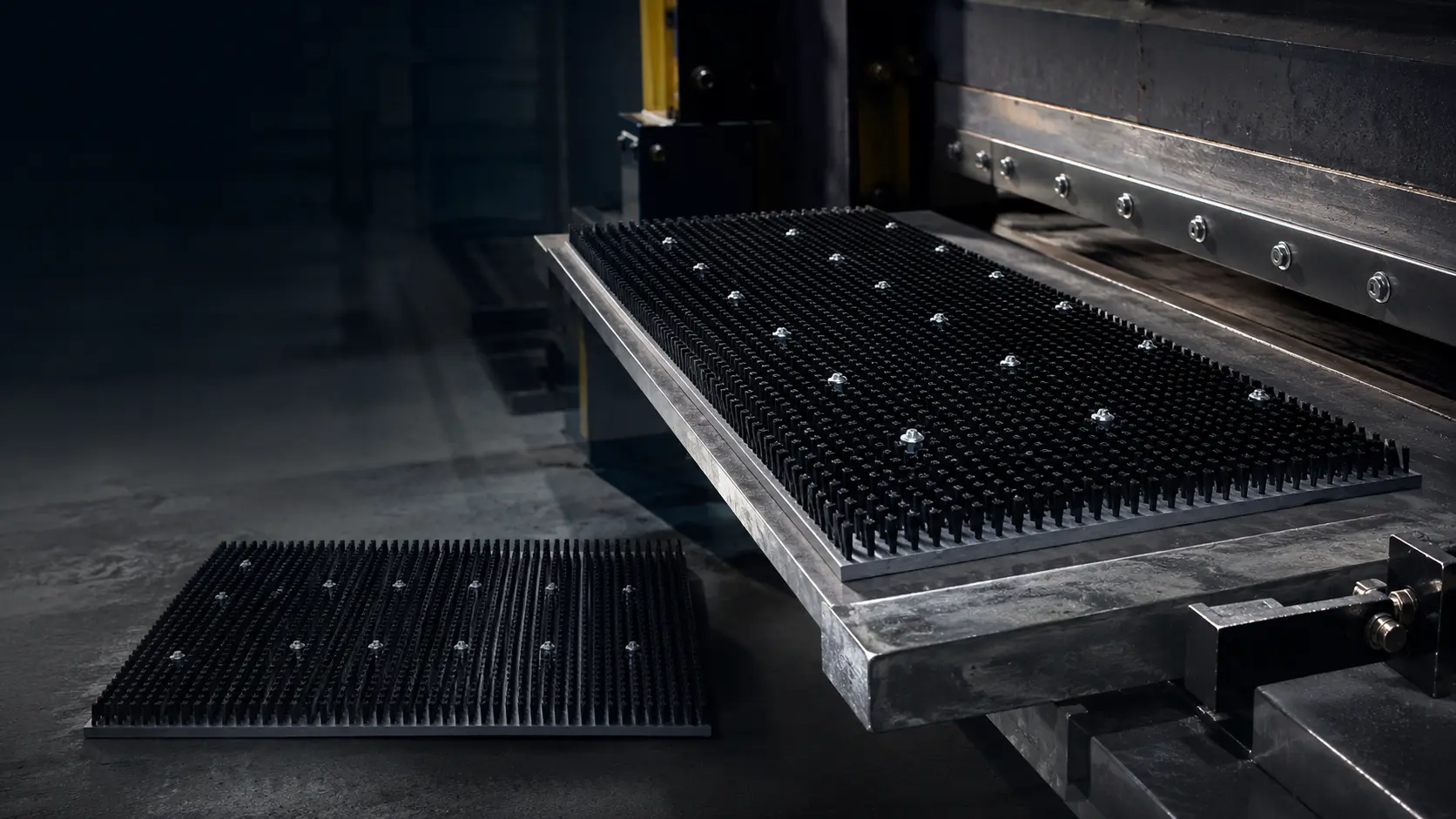
Panel brush tables support aluminum and other scratch-sensitive sheet during press-brake handling. The bristle field reduces sliding resistance, limits hard metal-to-metal contact, and helps reduce surface marking while the sheet is positioned or bent.
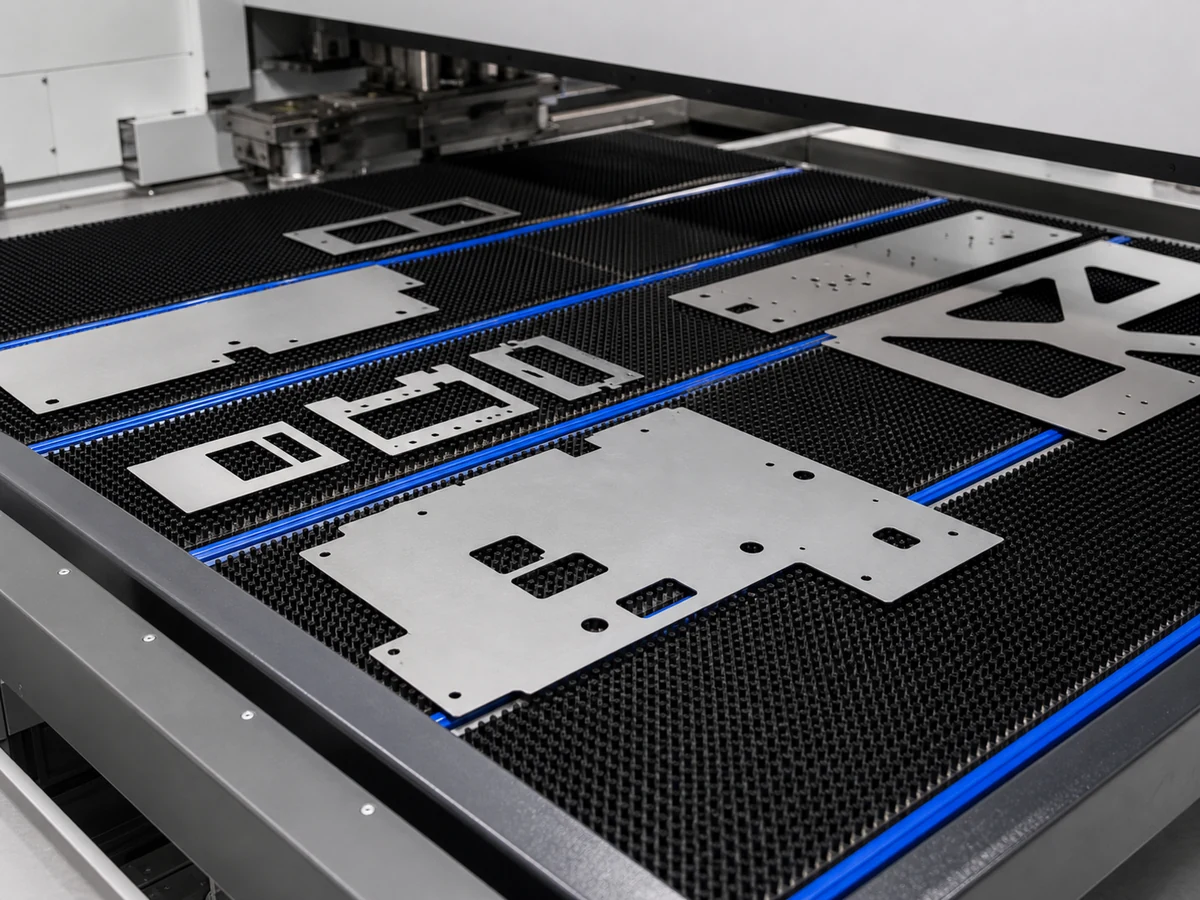
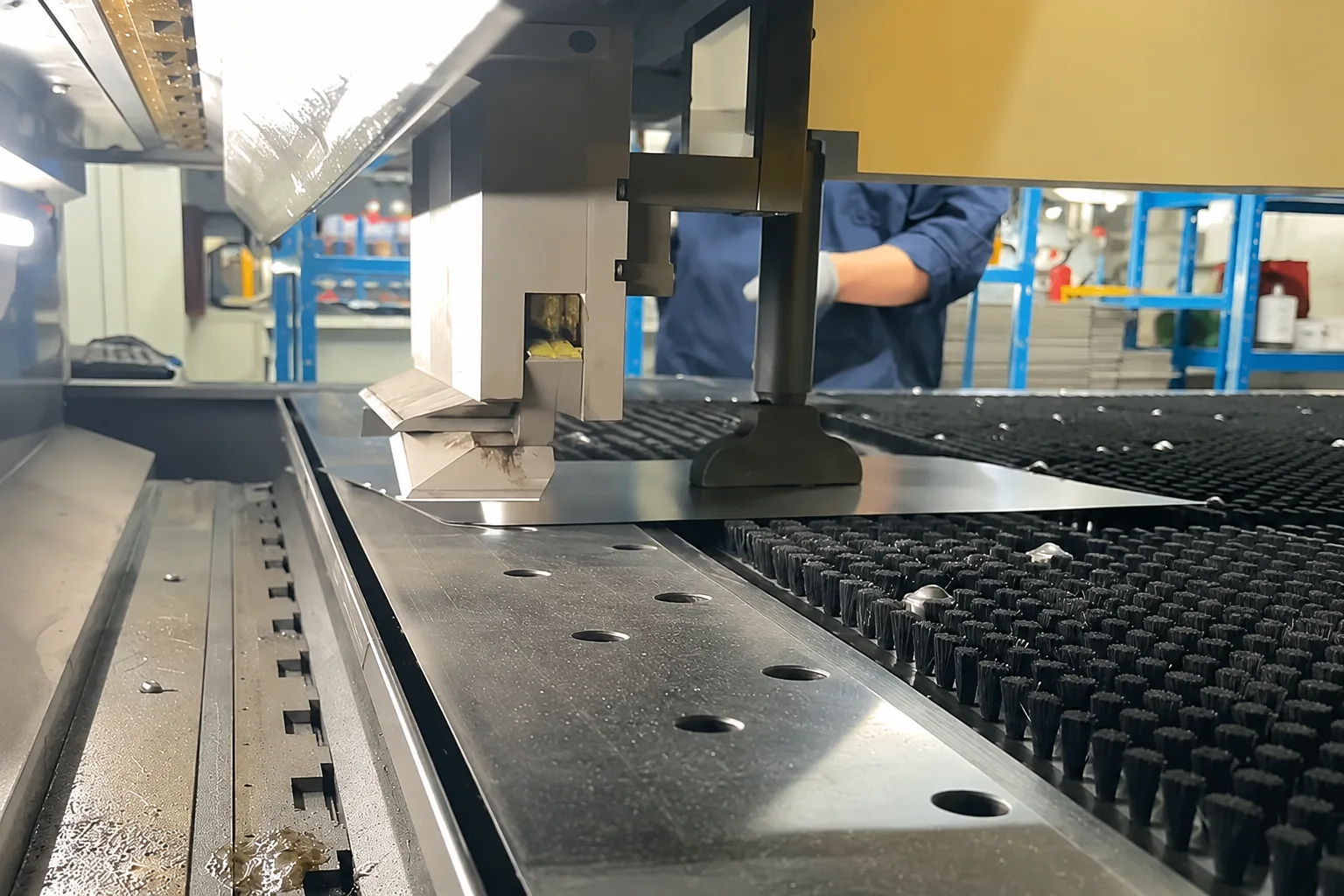
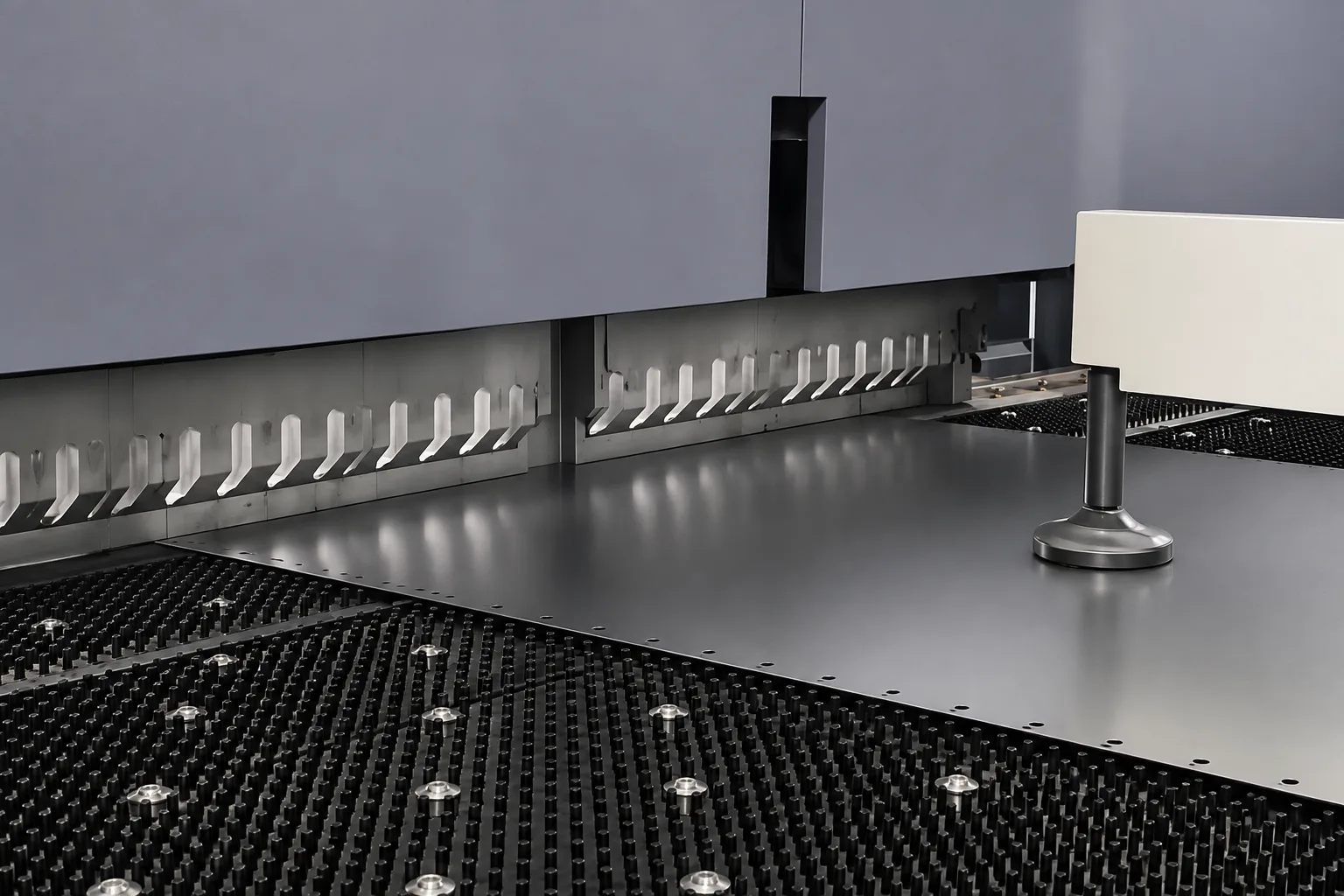
Panel-brush performance is not determined by brush fill alone. Base construction, mounting method, fill layout, and contact area all affect coverage, stability, durability, and replacement fit.
Customized to the machine or installation area.
Round or slotted holes as required.
Adjustable to the mounting layout.
For flush mounting.
Bolt, screw, or custom fixing options.
Uniform contact across the width.
Follows steps or offsets.
Matches angled surfaces.
Follows curved or complex geometry.
Contact profiles can be customized to the workpiece shape.
Light contact with low resistance.
Balanced contact and flexibility.
Greater coverage and firmer contact.
Bristles only in selected areas.
Maximum surface coverage.
Row count, spacing, and fill area can be customized.
Panel-brush fill selection should be based on contact task, surface sensitivity, moisture level, service environment, and the level of brushing action required at the contact point.
Used for general wiping, guiding, sealing support, and controlled contact where the process needs more flexibility and lower surface risk.
Used where the mounted brush needs more controlled surface action or light conditioning than a standard synthetic fill can provide.
Used where the process needs a more aggressive cleaning effect and the machine and work surface can accept stronger brushing action.
Used where the process requires a specific chemical resistance, temperature range, compliance condition, or brushing behavior that standard fills do not cover.
Panel brushes are usually built to machine and mounting dimensions rather than chosen from one universal stock size. If a full drawing is not available, the dimensions below are normally enough to begin technical review and reduce wrong-fit replacements.
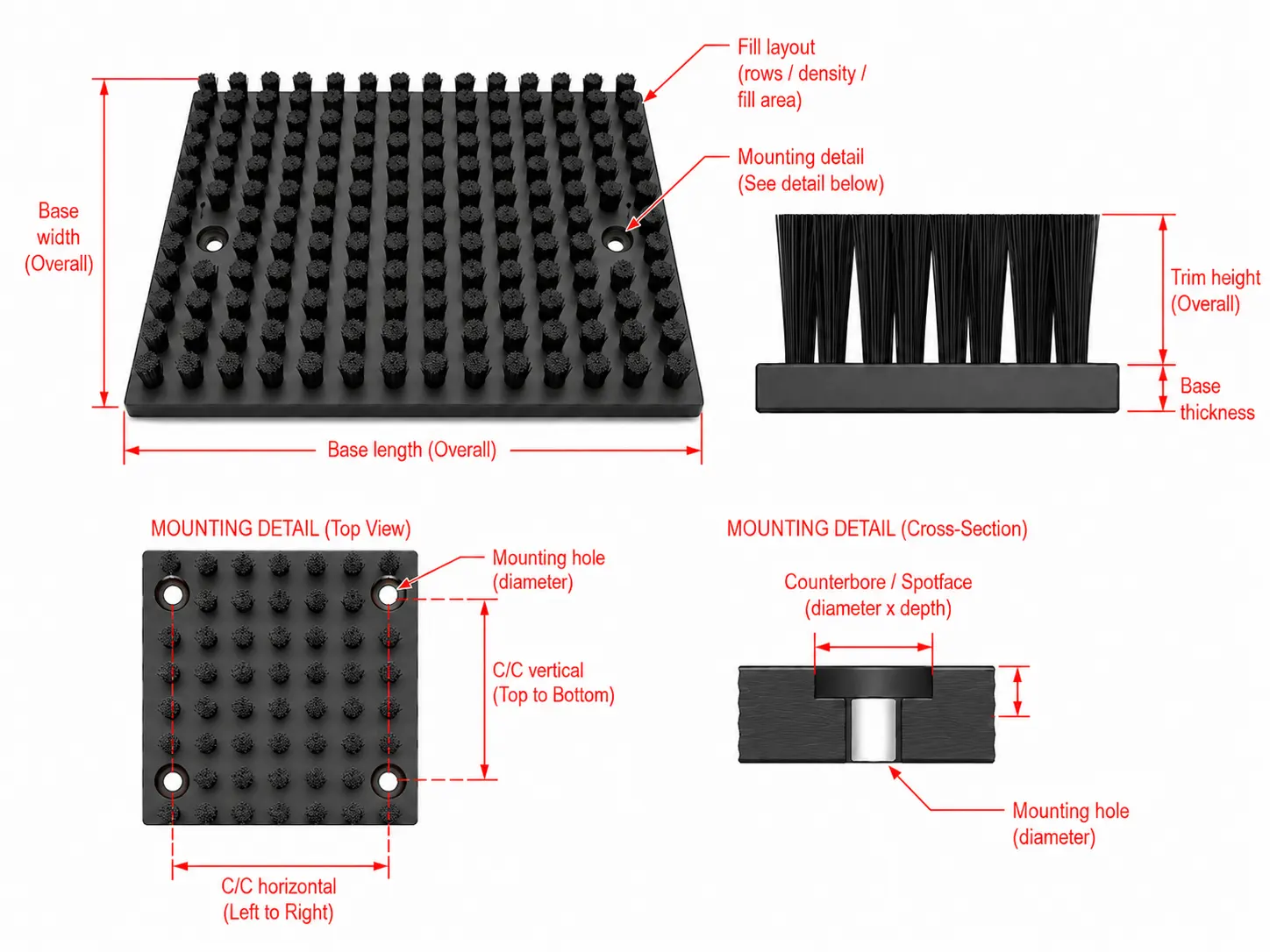
Provide the base length, width, and thickness; hole or slot layout; trim height; fill area and density; filament material and diameter if known; contact task; operating environment; quantity; and any critical tolerances. A dimensioned drawing, marked photo, or physical sample helps confirm the mounting interface and replacement fit.
Longer or finer filaments provide softer, more flexible contact and follow surface variation more easily. Shorter, thicker, or denser fills provide firmer support and greater resistance to deflection. Trim height, filament diameter, and density should be selected together for the required load and contact behavior.
Panel brushes can reduce hard point contact when supporting sheet metal, glass, or finished panels, but no construction is universally non-marking. Filament material, contact pressure, trapped chips or abrasive contamination, workpiece finish, and movement direction all affect marking risk. Test the selected construction with a representative finished part before volume use.
As an industry reference, published panel-brush designs range from approximately 35 kg/m² for light-duty brush tiles to 2,000 kg/m² for purpose-designed heavy-duty brush plates. Brushcustom can manufacture different filament diameters, trim heights, tuft densities, and panel layouts across this application range. The final working load depends on the effective support area, load distribution, filament construction, panel spacing, and whether the load is stationary or moving. The approved load should therefore be confirmed from the final drawing and a representative load test.
Use a panel brush when the application needs a wider base, custom hole pattern, shaped fill area, or broad fixed support and contact surface. Use a strip brush when a narrow continuous line of sealing, guiding, wiping, or edge contact fits the equipment more efficiently.
Custom production from your drawing. Large-volume production is supported for OEM and replacement projects.