Custom Forklift Wheel Cleaning Mats
Modular steel-frame brush mats for dry mechanical cleaning of forklift, pallet-truck, cart, and AGV wheels at factory entrances and controlled-area transitions.
Custom module size, cleaning-field layout, brush construction, and mounting details are manufactured to the approved drawing for OEM and project-volume supply.
Send Your LayoutDrive-Over Brush Field
What Is a Forklift Wheel Cleaning Mat?
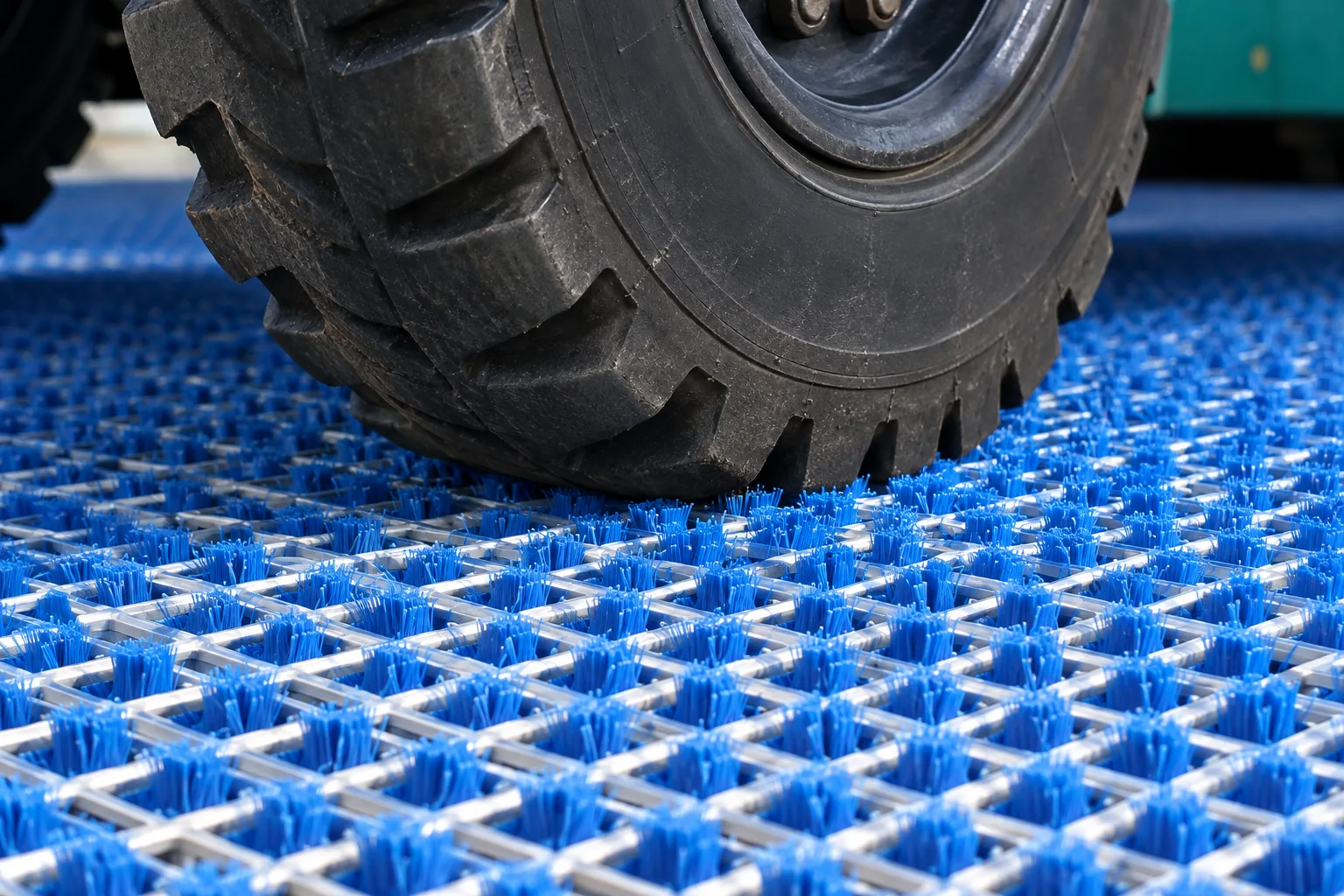
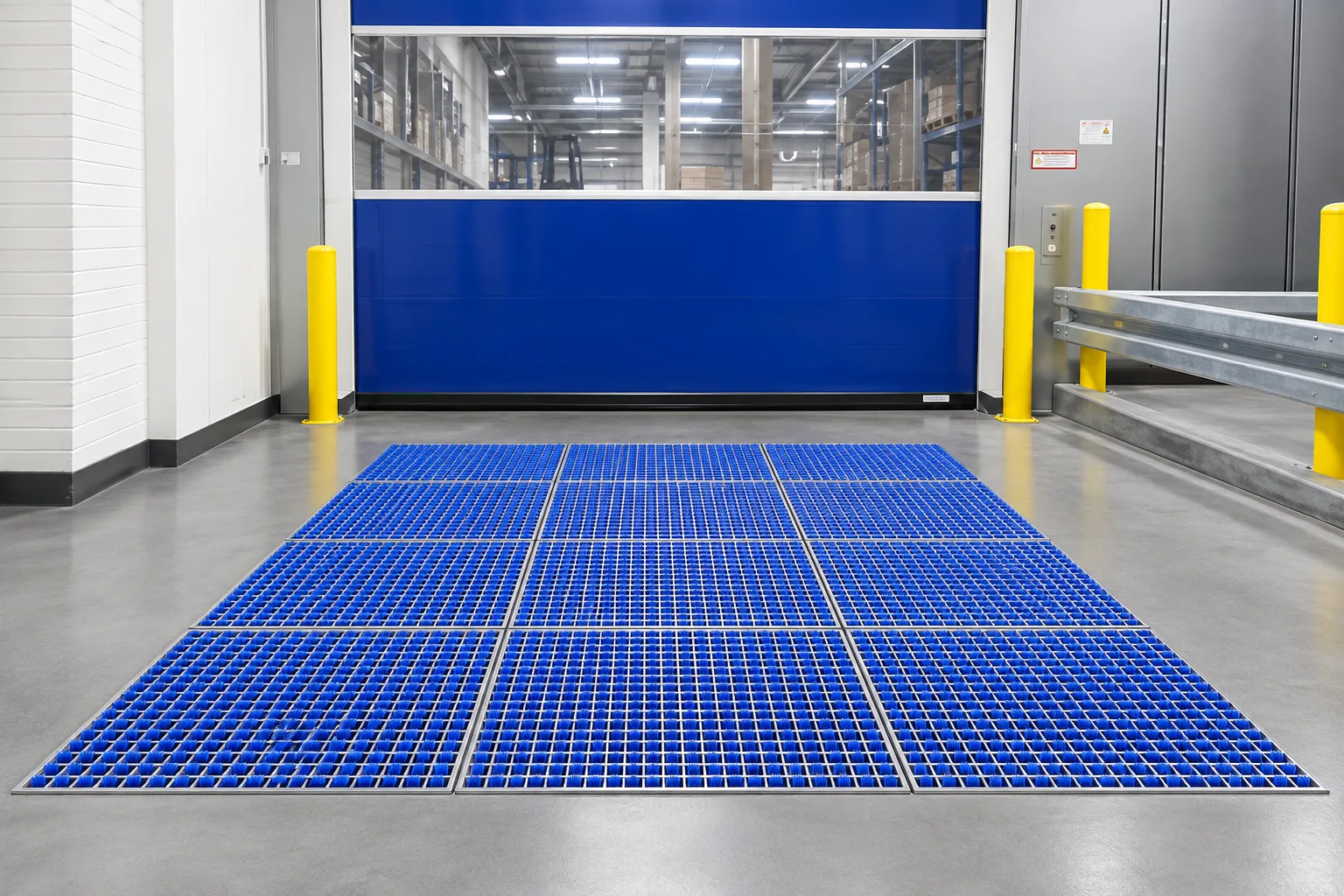
A forklift wheel cleaning mat is a drive-over brush field made from a load-supporting steel frame and angled strip or lath brushes. As wheels pass over the mat, the bristles contact the tire tread and loosen carried-in dry dirt without a powered brush drive.
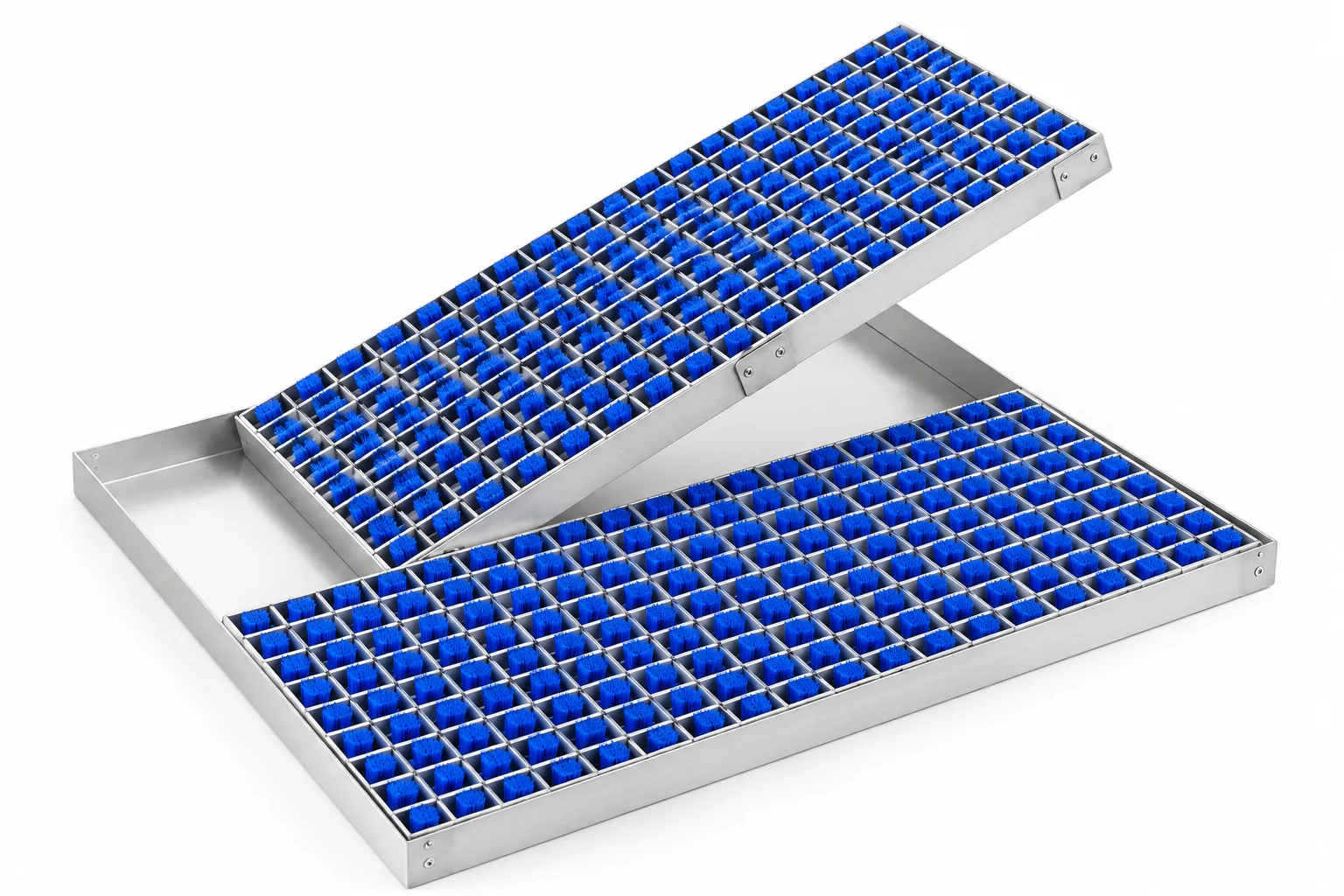
Several modules can be connected to cover the required vehicle path. The completed field can be designed for surface installation or recessed installation, subject to the approved floor and frame design.
Custom Module Supply
Custom Modules and Construction Options
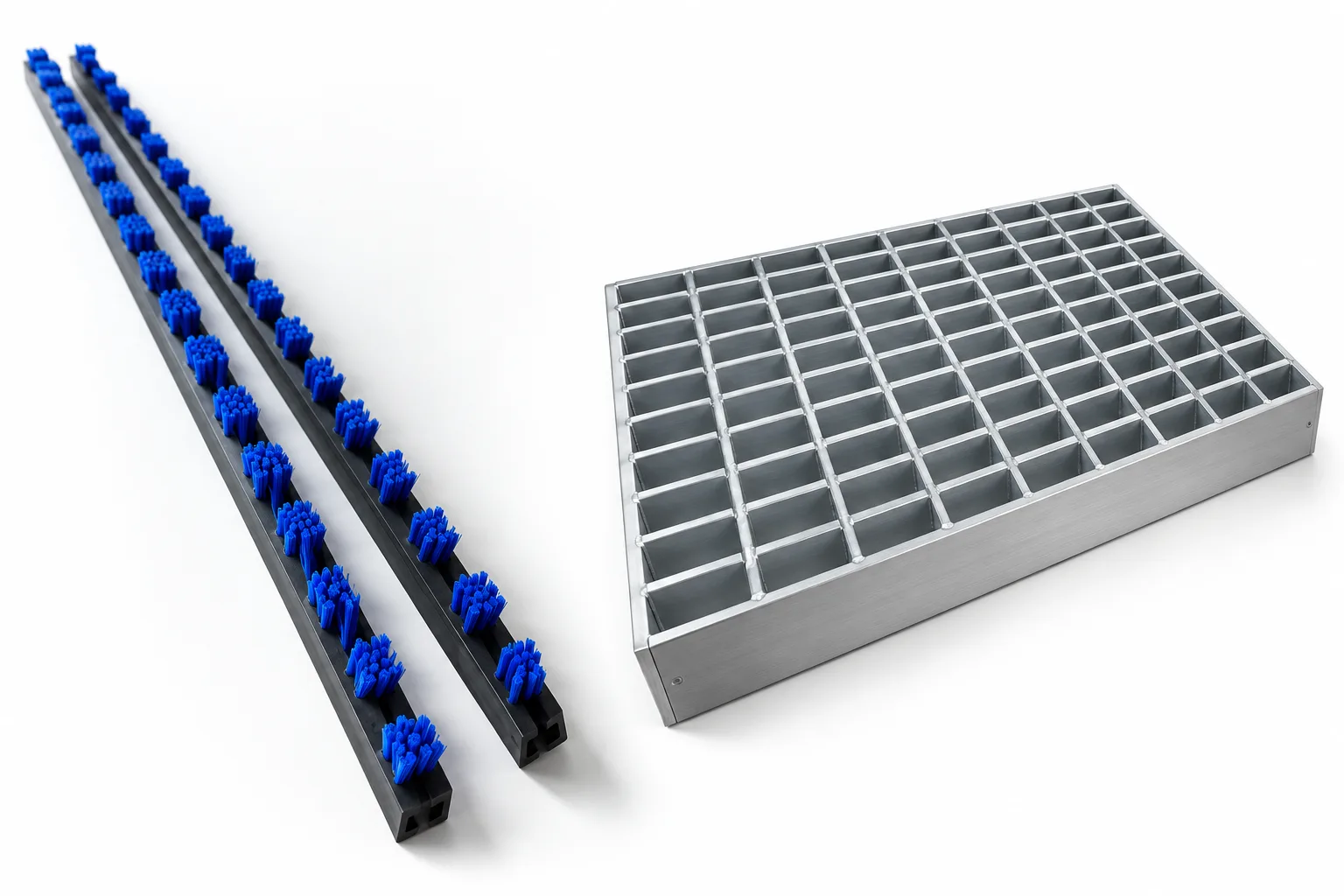
We manufacture complete brush-mat modules and replacement brush components to an approved module or site-layout drawing.
- Steel-frame modules with angled strip or lath brushes
- 718 × 980 mm reference modules or custom length and width
- Multi-module fields for surface-mounted or recessed layouts
- PA / nylon, PP, PBT, or another approved synthetic filament
- Custom trim, filament diameter, density, angle, and color
- Joining, mounting, edge-frame, ramp, or recess details shown on the drawing
- Replacement brush components from an approved drawing or sample
- Batch marking and export packing requirements
The 718 × 980 mm size is a reference construction, not a fixed limit. Final dimensions, materials, frame support, and load capacity apply only to the approved project design.
Industrial Transitions
Applications and Traffic Types
Typical Installation Areas
- Factory entrances between outdoor and indoor traffic routes
- Warehouse-to-production transitions
- Loading and material-handling routes
- Controlled-cleanliness production entrances
Traffic Types to Confirm
- Forklifts, tugger trains, and powered pallet trucks
- Industrial carts, trolleys, hand trucks, and castors
- AGVs and AMRs after wheel, support-spacing, guidance, and sensor review
- Personnel after walking-surface, opening, footwear, slip, and accessibility review
The standard scope is dry mechanical dirt reduction. Food, pharmaceutical, ESD, hazardous-area, wet, or disinfectant projects require separate material, hygiene, grounding, drainage, and site-approval review.
Cleaning-Field Layout
Size and Install the Cleaning Field
One module is not automatically long enough for every vehicle. The field should allow the largest tire to make multiple rotations while travelling straight across the brushes.
Final length and width depend on tire circumference, wheel track, lateral movement, route, available space, brush construction, contamination, and the customer’s cleaning target.
Installation Options
Surface-Mounted
Requires an approved ramp, edge protection, anchoring, and enough transition space.
Recessed
Requires confirmed pit dimensions, floor support, levelness, debris access, and lifting access for maintenance.
Civil work and floor loading must be approved by the site engineer. Turning, hard braking, or strong acceleration on the brush field should not be assumed acceptable unless included in the approved design.
Purchasing Questions
FAQ
How do we determine the required cleaning-field size?
Provide the largest tire diameter or circumference, wheel track, expected lateral movement, travel direction, available floor space, brush construction, contamination, and cleaning target. The field should allow multiple tire rotations, but final length and width must be reviewed for the actual route and approved design.
Which wheel and load data are required for engineering review?
For every vehicle, provide wheel or castor diameter and width, tire material and tread, wheel count, track width, wheelbase, maximum operating weight, maximum axle or per-wheel load, and daily pass frequency. List every traffic type because the smallest castor may control support spacing while the heaviest vehicle controls the structural requirement.
Should the cleaning field be surface-mounted or recessed?
A surface-mounted field needs an approved ramp, edge protection, anchoring, and transition space. A recessed field creates a flush route but requires confirmed pit dimensions, floor support, levelness, debris access, and lifting access. Civil work and floor loading remain subject to site approval.
How are collected dirt and worn brush strips handled?
The design should provide access to the debris collection space and a safe method for lifting removable sections. Individual brush strips can be replaced when their base profile and retention method match the frame. Inspection and cleaning frequency depend on traffic, contamination, and moisture rather than a universal interval.
Can the system be used for wet cleaning or controlled environments?
The standard configuration is for dry mechanical cleaning. Wet, disinfectant, food, pharmaceutical, ESD, or hazardous-area use requires a separate review of liquids, chemicals, compatible materials, tray and drainage, grounding or bonding, documentation, and site approvals. No controlled-environment performance should be assumed from the standard brush mat.
Drawing-Based Production
Need a Custom Forklift Wheel Cleaning Mat?
Send the available information below with the required quantity. These details are enough to begin the cleaning-field and module review; additional engineering data can be confirmed later if needed.
Details to Start a Quote
- Vehicle types using the cleaning field
- Largest and smallest wheel or castor diameter and width
- Maximum loaded vehicle weight or axle load, if known
- Available installation length and route or doorway width
- Dirt to be removed and whether the area is normally dry or wet
- Surface-mounted or recessed installation, if already decided