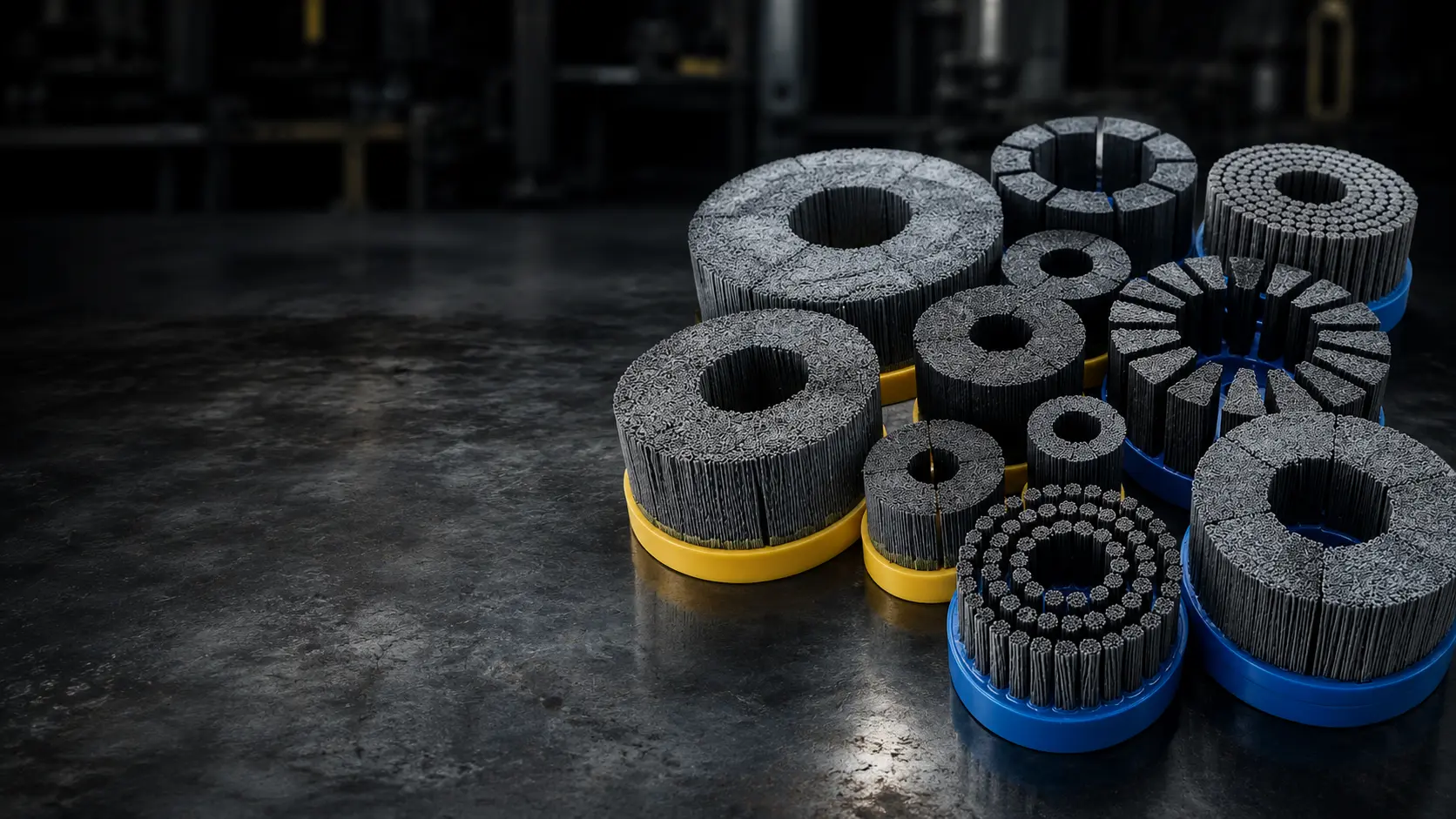
An abrasive disc brush can remove light burrs and break sharp edges on sheet metal parts when its working face can reach the edge. The right specification depends on the burr, the required edge condition, and how the part is presented to the brush. Grit alone cannot predict the result: filament construction, contact, speed, feed, and tool path also affect removal and finish.
Start with the burr and the required edge
Inspect actual parts from the cutting or forming process before selecting a brush. Laser-cut edges can range from clean to having localized dross, depending on cutting conditions. Punching and stamping can leave a burr on the exit side. Record which side carries the burr, where it occurs, and whether it is a small projection or a thick, firmly attached feature.
Light burrs and exposed sharp edges are reasonable candidates for disc brushing. Heavy dross or firmly attached burrs may need another removal operation first. Increasing brush engagement to compensate can accelerate wear or change the edge more than the drawing allows.
Define the finished condition as well. Deburring removes an unwanted projection; edge rounding deliberately creates a smoother transition between adjacent surfaces. A burr-free part does not necessarily meet a specified radius. Identify the edges to be processed, any acceptable surface marks, and the inspection method before setting the process. If the drawing calls for a measurable radius, check it with an appropriate measurement method rather than relying on appearance alone.
Select grit with the filament construction
Brushcustom supplies abrasive disc brushes in 80, 120, 180, and 320 grit. Within a comparable brush construction, the lower numbers provide coarser abrasive action, while the higher numbers are generally considered for lighter finishing. These grades are selection options, not fixed assignments to a particular burr size or edge radius. The starting burr and required finish should drive the trial; a fine abrasive cannot be assumed to remove a substantial burr simply by increasing pressure or dwell time.
Disc brushes may use abrasive-filled synthetic filaments with grains such as silicon carbide or aluminum oxide. Grit designation is only part of the specification: filament diameter, exposed trim length, abrasive loading, and face density also influence stiffness and the way the brush contacts an edge. Two brushes marked with the same grit can therefore behave differently. Compare candidate constructions on the same workpiece and against the same finish criteria.
Set contact, speed, and feed together
The rotating filament tips need enough engagement to reach the burr. Too little contact leaves edges unfinished; excessive engagement can bend the filaments, raise friction and heat, and shorten brush life. A shorter or stiffer filament generally resists deflection more than a longer, more flexible one, so contact depth should be established for the selected brush rather than copied from another model.
Rotational speed and feed rate also affect the time and intensity of contact. Slower feed usually increases dwell at a given edge, but it can also increase material removal or marking. At the same RPM, a larger brush has a higher peripheral speed. Use the operating limits supplied for the actual brush, then adjust speed, feed, and engagement in controlled trials. The highest permitted RPM is a safety limit, not a target process setting.
Tool path matters as much as the settings. Check that the working face crosses every required edge and that the direction of approach removes the burr instead of folding it over. A brush presented to the top face of a part will not automatically reach a burr on the underside. The process may need the part turned over, a second brush position, or another tool for edges inside narrow slots and deep recesses.
Check machine fit and validate the finished part
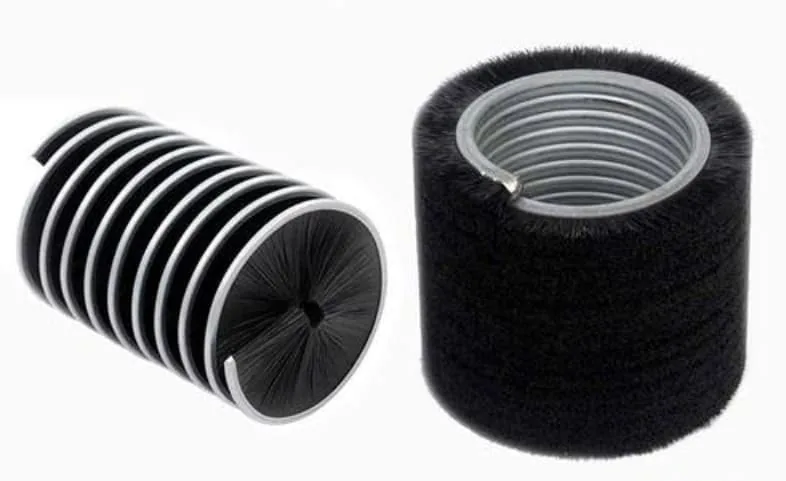
For an automated station, specify the brush outside diameter, working-face width or pattern, mounting interface, available clearance, and access for replacement. Dense and segmented faces present different contact patterns; choose the pattern through a part trial rather than assuming either one will cover every edge. A mechanically compatible replacement also needs a process check if its grit, filament stiffness, or face layout changes.
Run a representative sample through the proposed setup. Inspect the worst burr locations, both sides where required, surface marking, and any specified edge radius. Repeat the check after reasonable brush wear or adjustment so the accepted result is not based only on a new brush. If a single pass cannot meet the edge requirement without excessive marking or wear, revise the process sequence or tool choice.
Information to send for a custom disc brush
For a new installation or replacement, provide:
- The sheet metal material, part drawing, and photographs or samples showing the burr-bearing edges.
- The required outcome: burr removal, edge break, or a specified radius, plus the inspection criteria.
- Brush envelope, mounting details, available speed range, feed arrangement, and which faces the tool can access.
- Current brush details and trial results, if a replacement is being specified.
Brushcustom offers custom disc brushes with abrasive-filament options and can review the brush construction against a machine drawing and target finish. For related applications, see industrial brushes for metal processing. Send the part and equipment details through the RFQ form to discuss a suitable construction and sample evaluation.