Abrasive brushes are used when a surface needs more than ordinary wiping but less than heavy grinding. In industrial production, they are commonly reviewed for light deburring, edge radiusing, surface conditioning, rust or oxide removal, bore finishing, and preparation before coating, bonding, inspection, or assembly.
The right abrasive brush is not chosen by name alone. Buyers usually need to match the brush form, abrasive grain, filament diameter, trim length, density, speed, pressure, mounting detail, and workpiece material to the actual process. A brush that works well on one part can be too aggressive, too soft, or too difficult to mount on another machine.
What Is an Abrasive Brush?
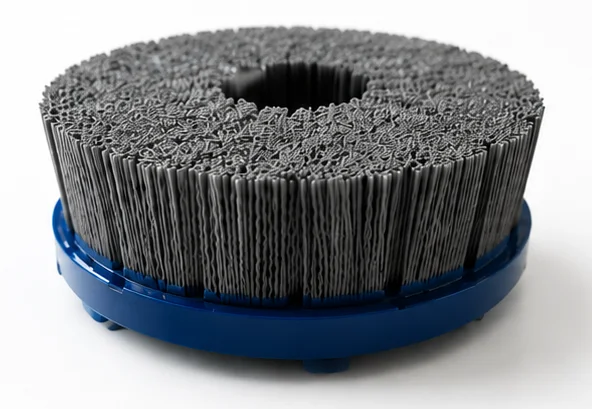
An abrasive brush is a brush designed to remove, blend, or condition material through controlled brushing contact. Some abrasive brushes use metal wire for stronger mechanical cleaning. Others use nylon or other synthetic filaments that contain abrasive grain such as silicon carbide (SiC), aluminum oxide, or ceramic abrasive grain. Non-woven abrasive materials and specialty abrasive filaments may also be reviewed for specific finishing work.
In custom brush projects, the important question is not only whether the brush is abrasive. The buying decision depends on what the brush must remove, what finish is acceptable, how the brush will contact the part, and how the brush will be mounted or driven.
Common Abrasive Brush Applications
Abrasive brushes are often used where the part geometry or production process makes rigid grinding, sanding, or manual scraping difficult to control. They can conform to edges, corners, profiles, bores, and uneven surfaces while still providing a repeatable cutting or cleaning action.
Deburring and Edge Radiusing
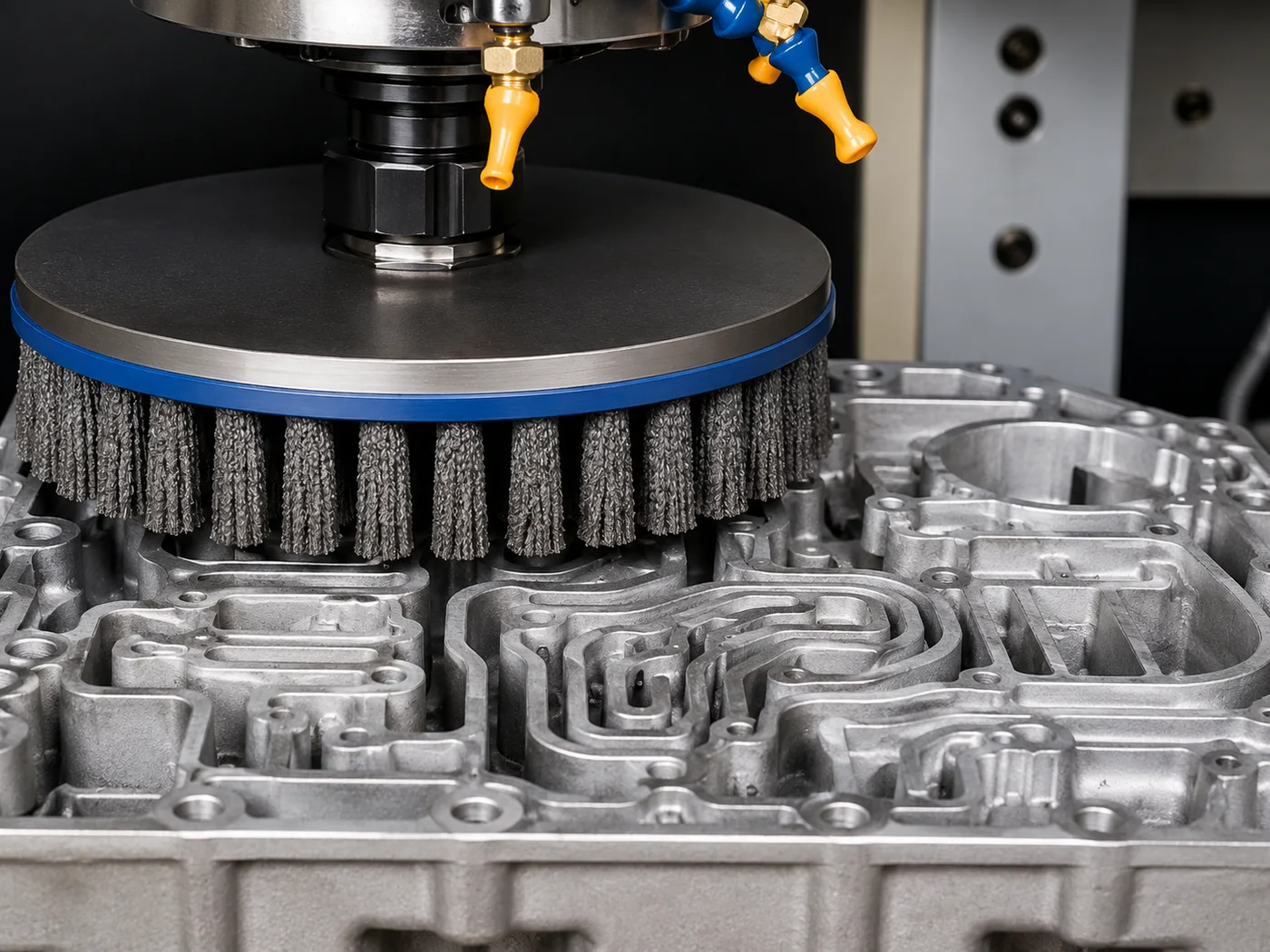
Abrasive brushes can remove light burrs and blend sharp edges after machining, drilling, stamping, cutting, or punching. The final result depends on burr size, brush contact angle, abrasive grit, filament stiffness, RPM, pressure, and dwell time. For face-contact work, buyers often review custom disc brushes. For internal cross-holes and bores, buyers may review pipe and tube brushes.
Surface Conditioning and Finish Blending
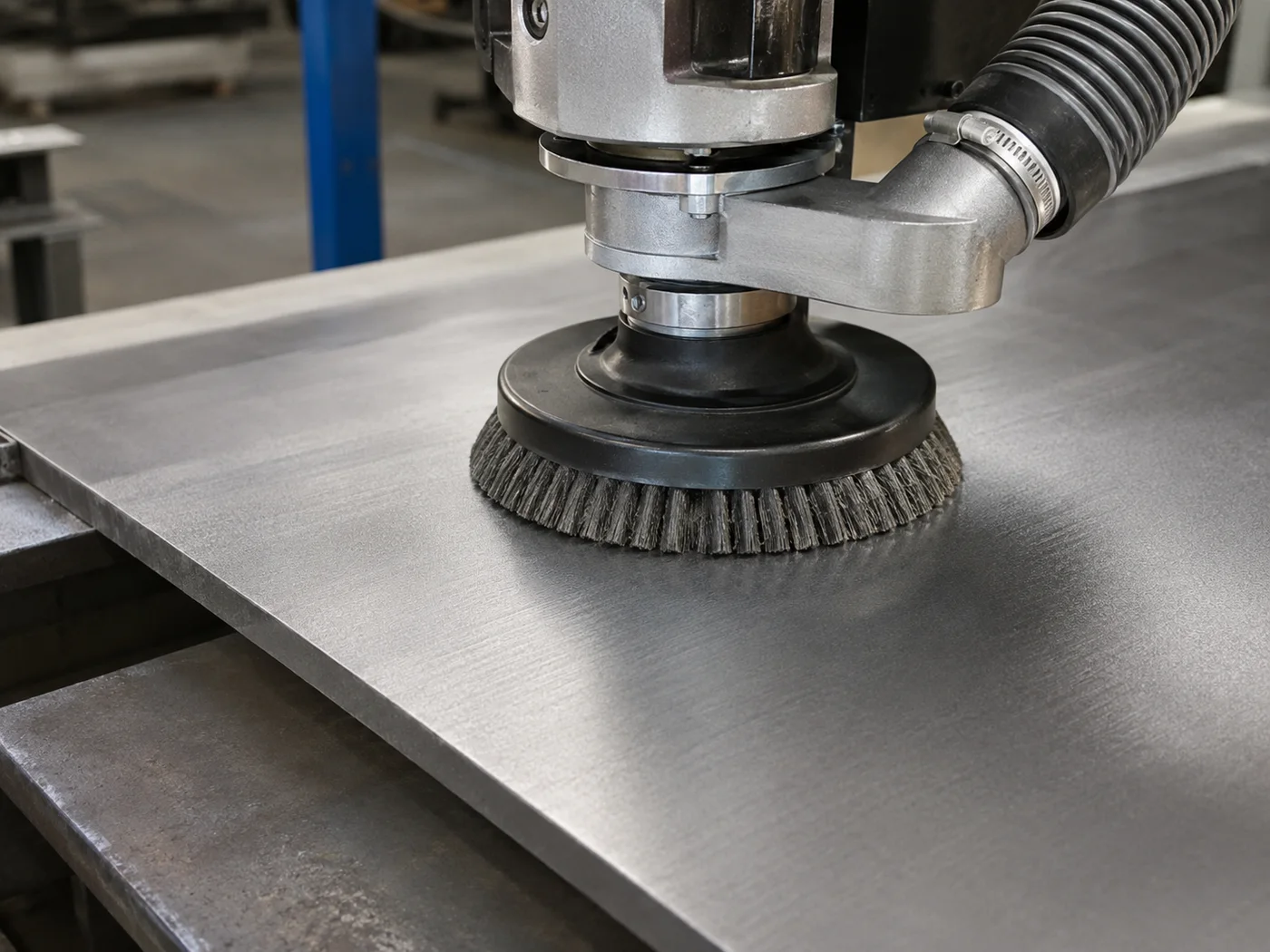
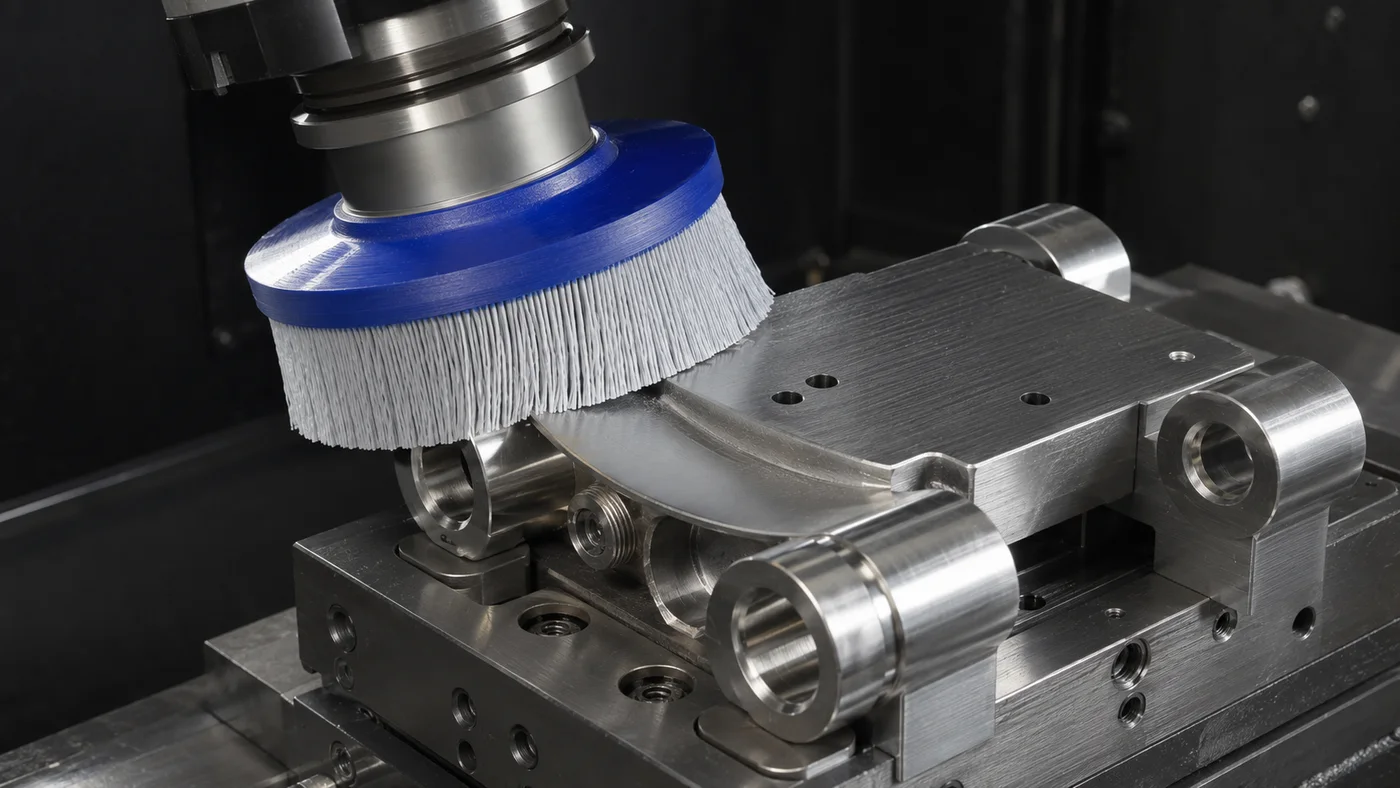
Abrasive nylon, non-woven abrasive, and wire brush constructions may be used to create a more consistent surface before coating, bonding, welding, inspection, or assembly. The brush should be tested on the actual part because surface texture, edge condition, and finish change are affected by both the brush and the operating method.
Rust, Oxide, Paint, and Scale Removal
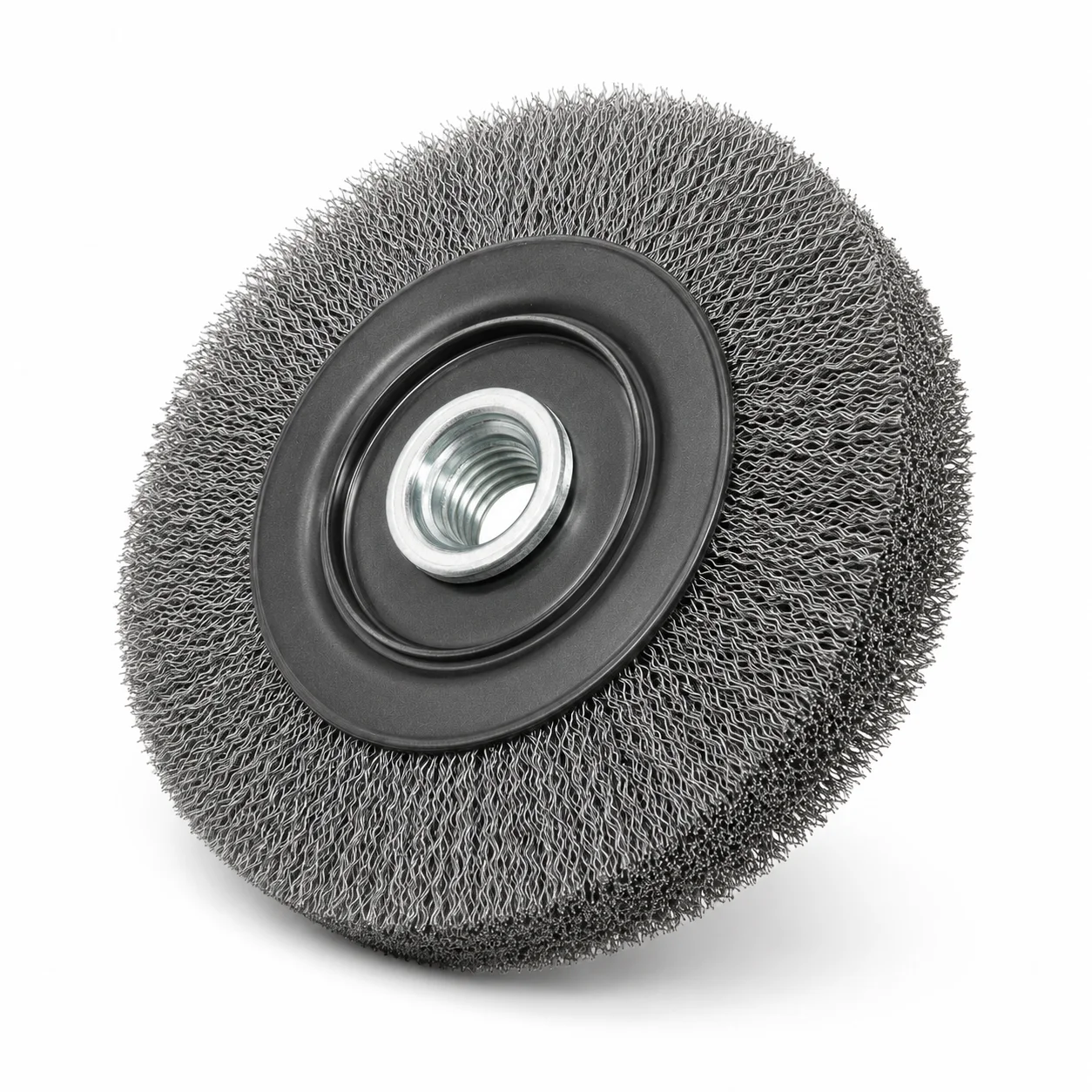
Wire brushes and some abrasive brush wheels are reviewed for stronger cleaning on compatible metal surfaces, including rust, oxide, paint residue, weld discoloration, and light scale. For aggressive rotary edge or surface cleaning, see custom wire wheel brushes.
Bore, Tube, and Internal Surface Finishing
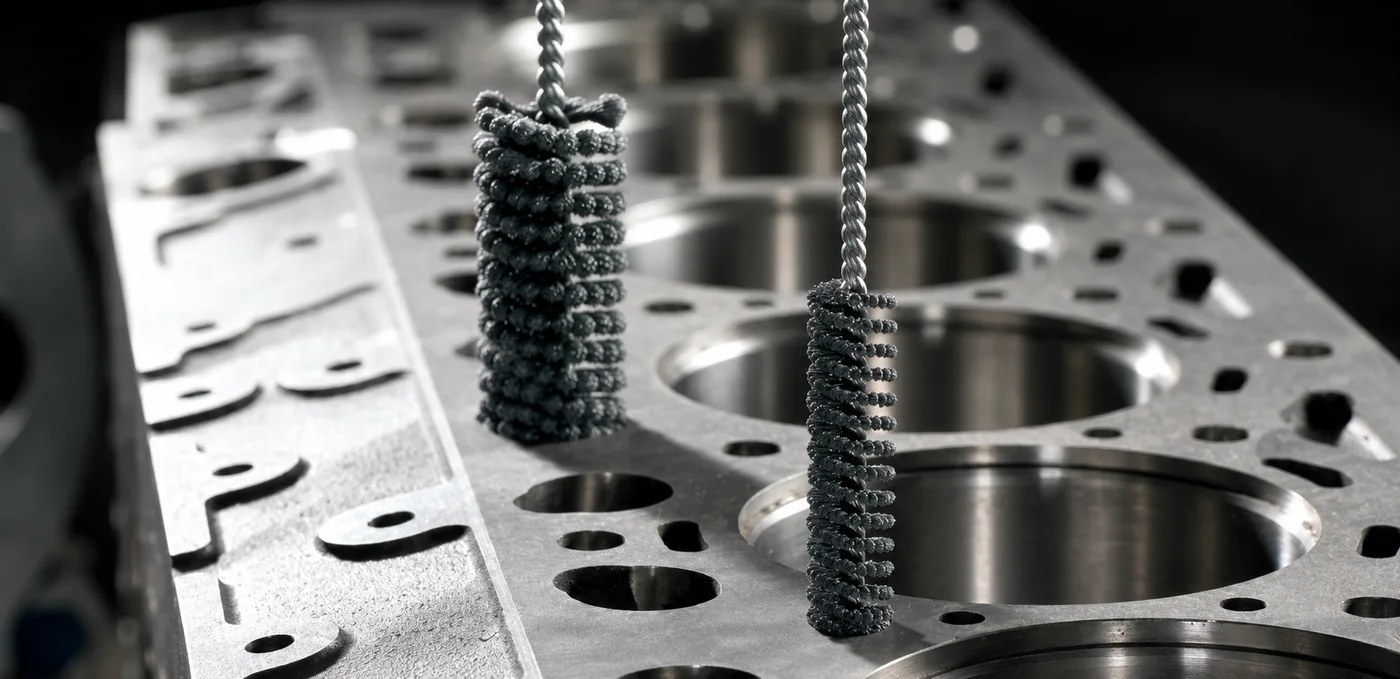
Abrasive tube brushes and honing-style brushes may be used for internal deburring, edge blending, or surface conditioning inside tubes, ports, manifolds, hydraulic passages, and cross-holes. These are different from ordinary cleaning brushes because the abrasive action can change the internal surface. Define the burr condition, bore diameter, depth, finish target, and inspection method before release.
Abrasive Brush Forms Buyers Commonly Review
The same abrasive material can perform differently depending on the brush form. Start with the contact method, then choose the material and grit. Brushcustom can review abrasive disc brushes, tube brushes, ball-type honing brushes, abrasive-filament cylinder brushes, non-woven abrasive roller brushes, spiral brushes, and wire wheel brushes for custom industrial projects.
| Brush Direction | Common Use | Related Brushcustom Page |
|---|---|---|
| Abrasive disc brushes | Face-contact deburring, edge rounding, and controlled surface conditioning on flat or shaped parts. | Custom Disc Brushes |
| Wire wheel brushes | Stronger edge-contact cleaning, weld cleaning, scale removal, rust removal, and metal surface preparation. | Custom Wire Wheel Brushes |
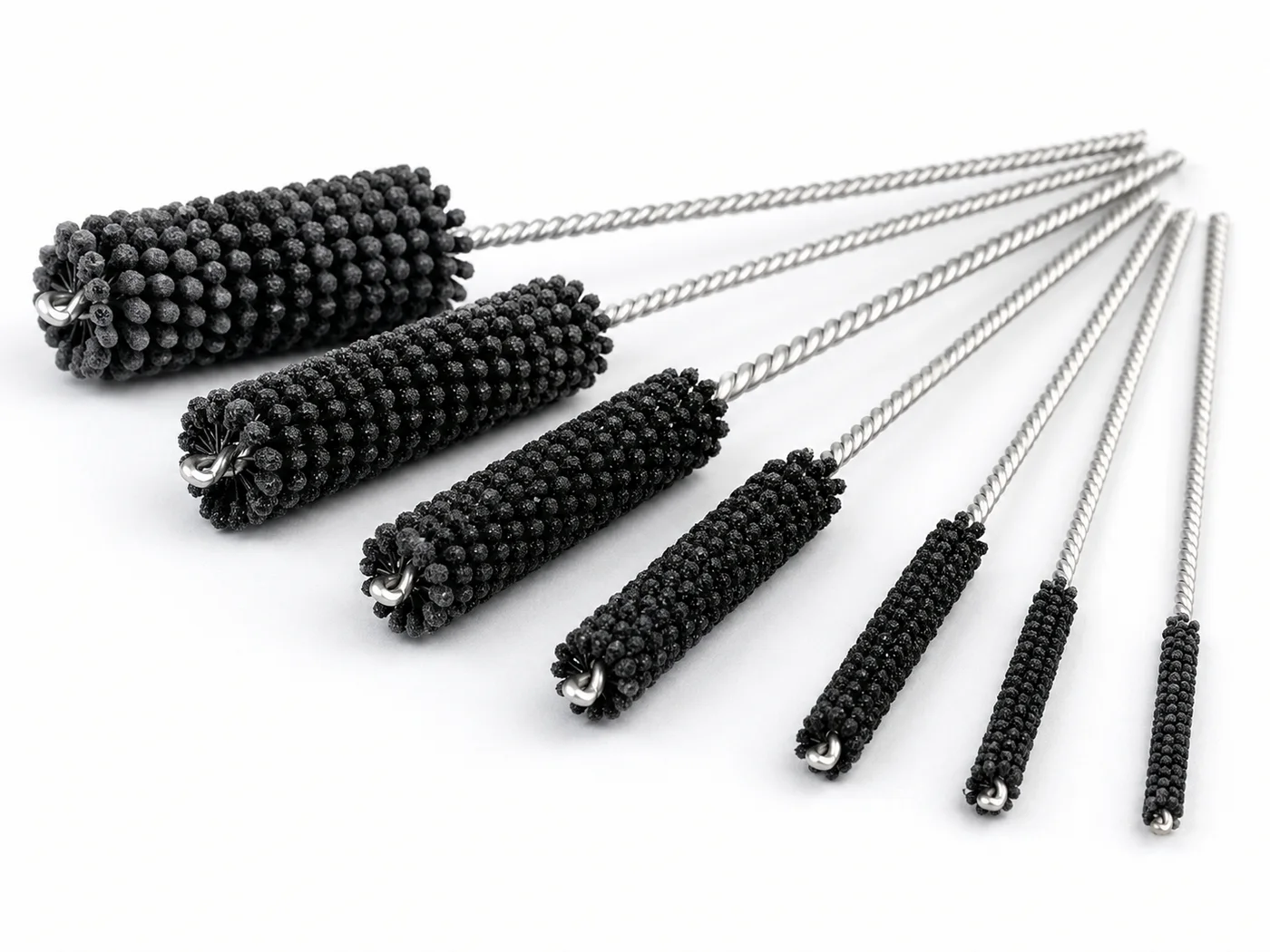
| Abrasive tube brushes | Internal tube cleaning, deburring, and surface contact where a cylindrical brush must fit the opening. | Pipe and Tube Brushes |
| Ball-type honing brushes | Flexible bore finishing, cross-hole deburring, plateau honing, and controlled internal edge blending. | Custom Honing Brushes |
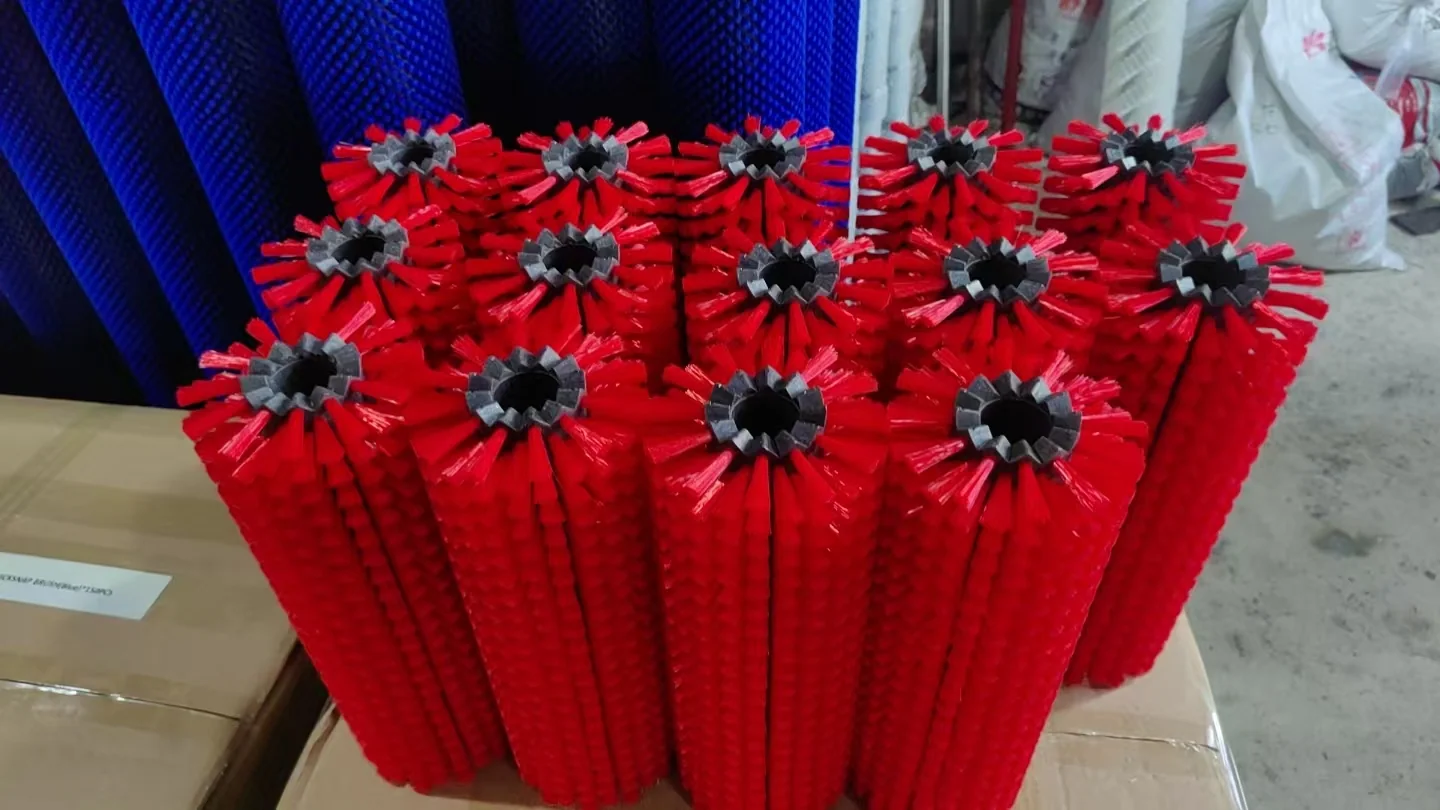
| Abrasive-filament cylinder brushes | Wide surface conditioning, conveyor cleaning, sheet or panel contact, and repeatable rotary brushing across a working width. | Custom Cylinder Brushes |
| Non-woven abrasive roller brushes | Cleaning, oxide removal, light deburring, blending, and consistent surface conditioning across sheet, strip, or component surfaces. | Non-Woven Abrasive Roller Brushes |
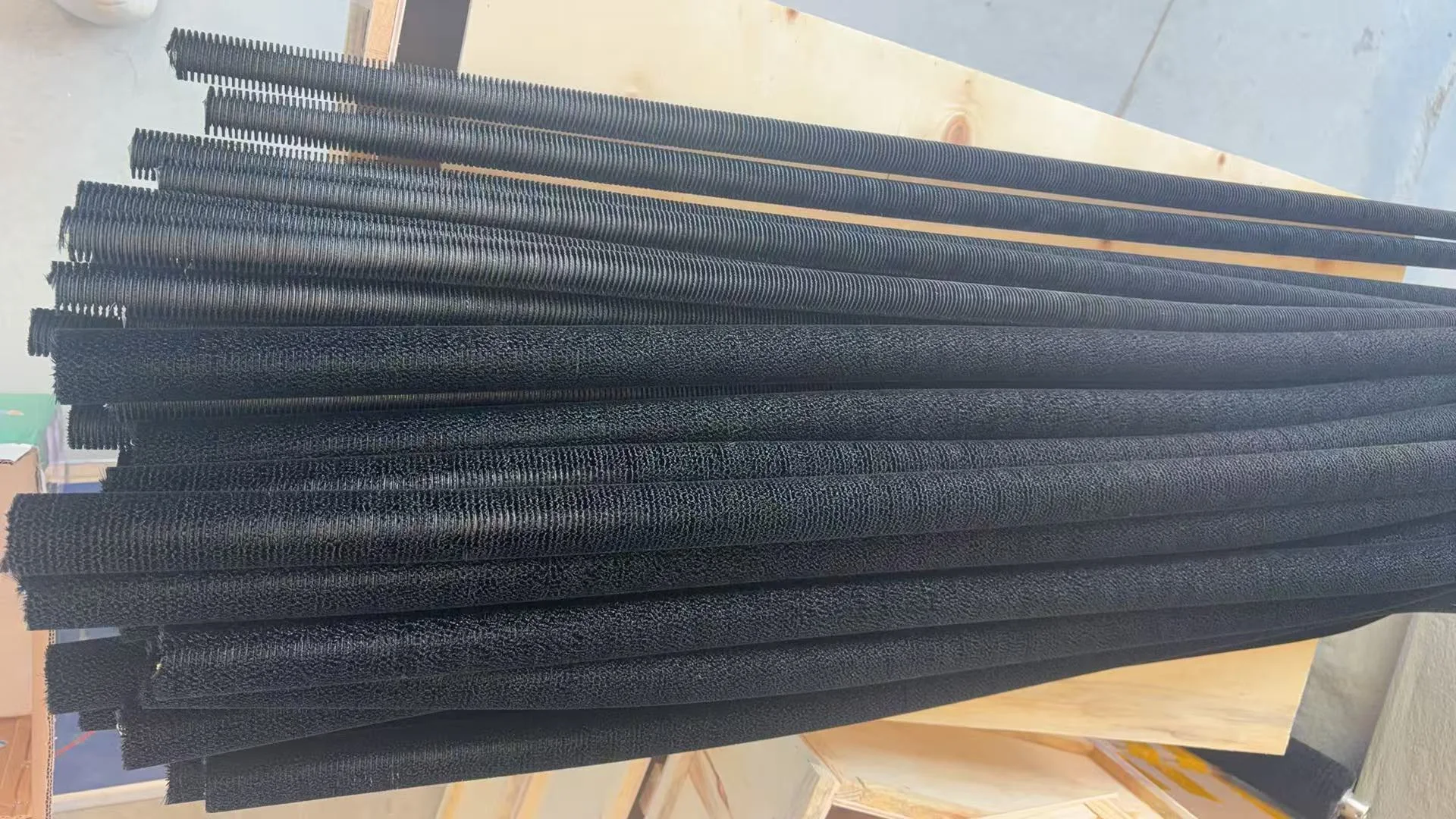
| Spiral or coil abrasive brushes | Continuous brushing contact around a shaft or roller where the process needs helical contact or wider machine coverage. | Coil and Spiral Brushes |
Non-woven abrasive roller brushes are a separate construction from abrasive-filament cylinder brushes. Their bonded non-woven working surface is reviewed for the required cleaning, blending, finishing, or light-deburring result, while an abrasive-filament cylinder brush uses individual filled filaments and a different contact pattern.
Abrasive Grain and Filament Selection
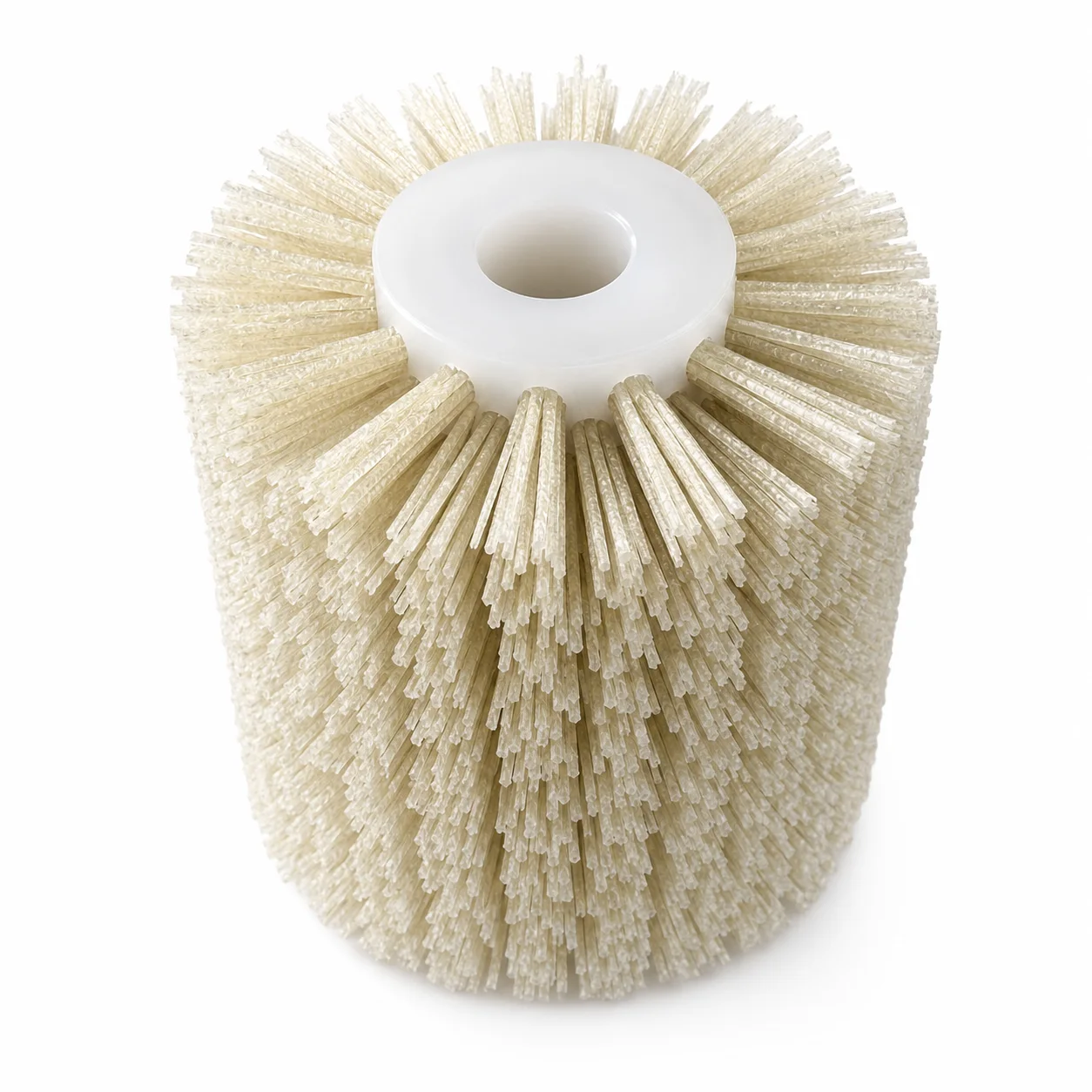
Abrasive brush performance is strongly affected by the abrasive grain, grit size, filament diameter, and filament base material. For the current Brushcustom supply scope, practical abrasive-grain discussions should focus on silicon carbide (SiC), aluminum oxide, and ceramic abrasive filament.
| Abrasive Direction | Typical Review Use | Selection Note |
|---|---|---|
| Silicon carbide (SiC) abrasive filament | Controlled deburring, surface conditioning, edge blending, and finishing on many metal or non-metal surfaces. | Often reviewed where a sharp cutting action is needed; grit and filament size must match the finish target. |
| Aluminum oxide abrasive filament | General deburring and surface preparation, especially where a tough abrasive grain is preferred. | Useful as a comparison option against silicon carbide; actual behavior depends on grade and supplier specification. |
| Ceramic abrasive filament | Higher-duty finishing or deburring where longer abrasive life or stronger cutting may be required. | Should be reviewed by sample testing because it can be too aggressive for some surfaces. |
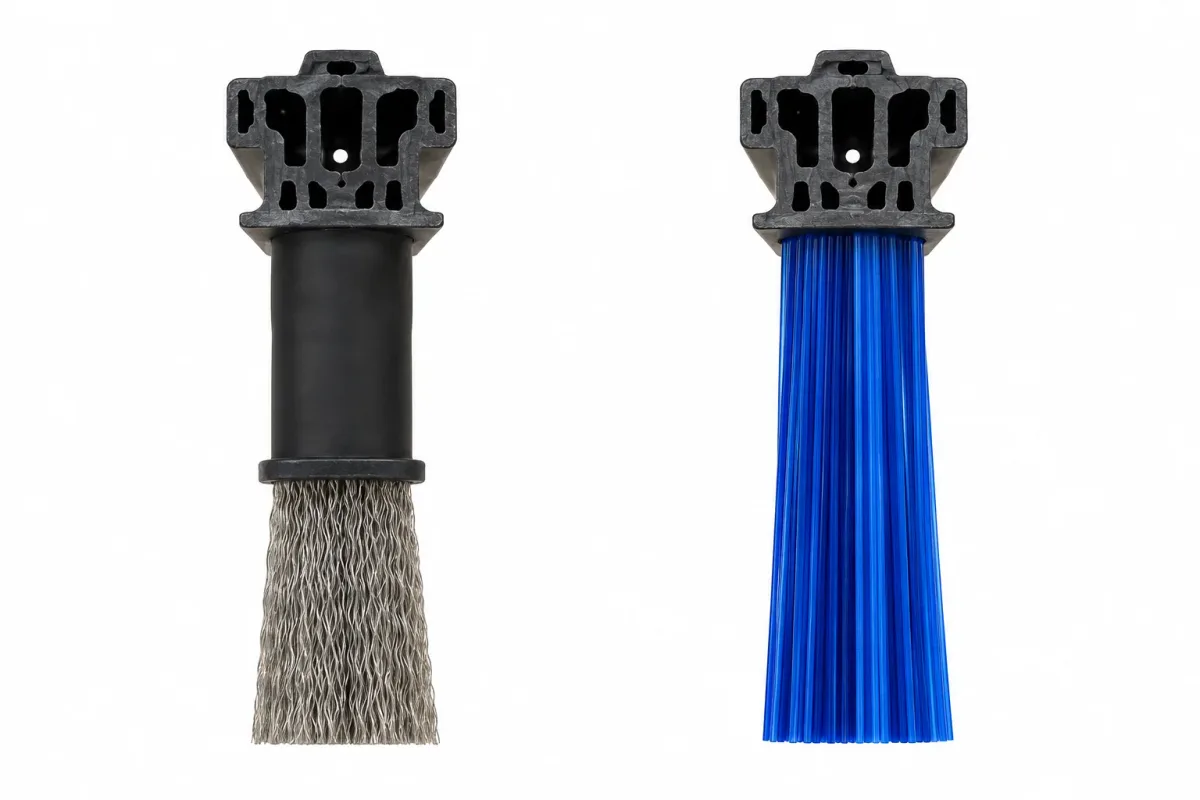
| Metal wire | Rust, weld, paint, oxide, scale, and stronger mechanical cleaning on compatible metal surfaces. | Wire type, wire form, RPM, and surface compatibility are more important than calling it an abrasive filament. |
What Buyers Should Confirm Before Ordering
Abrasive brushes are process-sensitive. To review a custom brush, the supplier needs enough information to understand how the brush will contact the part and what result is acceptable.
- Workpiece material: carbon steel, stainless steel, aluminum, brass, copper, plastic, composite, coated surface, or another material.
- Task: deburring, edge radiusing, surface conditioning, oxide removal, rust removal, bore finishing, weld cleaning, or cleaning before coating.
- Surface condition: burr size, oxide level, coating residue, scale, contamination, or required finish change.
- Brush form: disc, wheel, tube, roller, spiral, strip, or custom mounted assembly.
- Abrasive direction: silicon carbide (SiC), aluminum oxide, ceramic abrasive filament, wire material, or non-woven abrasive direction.
- Operating method: hand tool, drill, spindle, robot, conveyor line, automated fixture, or OEM machine.
- Speed and pressure: RPM, direction of rotation, contact pressure, dwell time, and whether coolant or cleaning media is used.
- Mounting detail: arbor, bore, shaft, thread, hub, adapter, stem, core, or machine interface.
- Quality target: edge radius, surface roughness, visual finish, cleanliness target, inspection method, and acceptable sample result.
Common Mistakes When Selecting Abrasive Brushes
Choosing Only by Brush Appearance
Two brushes can look similar but behave differently if the abrasive grain, grit size, filament diameter, density, trim length, or wire form is different. Buyers should compare the process requirement first, not only the product photo.
Using Too Aggressive a Brush
A brush that removes burrs quickly may also round an edge too far, mark a surface, alter a finish, or embed contamination. Test the brush on the actual material before production release.
Ignoring Speed and Mounting
Powered abrasive brushes must be reviewed for safe speed, balance, stem strength, arbor fit, rotation direction, and machine guards. A brush designed for manual use may not be suitable for powered or automated operation.
Mixing Materials Without Contamination Control
Using the same brush on different metals can transfer particles and create contamination risk. Separate brush selection may be needed for stainless steel, aluminum, carbon steel, titanium, brass, or customer-controlled materials.
Industries That Use Abrasive Brushes
Abrasive brushes are used across metalworking and production environments where repeatable finishing, cleaning, or edge treatment is required. Brushcustom mainly reviews these applications in the context of custom industrial brush manufacturing, not consumer tool retail.
- Automotive: machined and cast component deburring, bore finishing, weld cleaning, surface preparation, and EV component finishing. See Automotive.
- Aerospace: approved deburring, edge blending, internal passage work, and controlled surface preparation. See Aerospace.
- Conveyor systems and OEM equipment: machine-mounted abrasive rollers, cleaning brushes, and custom assemblies where contact and repeatability matter. See Conveyor Systems & OEM.
- General metalworking: rust removal, weld cleaning, burr removal, edge blending, and preparation before coating or inspection.
When to Request a Custom Abrasive Brush
A standard abrasive brush may be enough for simple maintenance work. A custom brush should be reviewed when the brush must fit a machine, reach a bore, match a production speed, hold a specific diameter, meet a finish target, or repeat the same result across many parts.
For a custom abrasive brush review, send the part material, drawing or photo, burr or surface condition, required finish, brush contact area, machine speed, mounting detail, and expected quantity. Brushcustom can review the appropriate brush form, abrasive direction, and sample path through the RFQ form.
FAQs About Abrasive Brushes
Are abrasive brushes the same as wire brushes?
Not always. Wire brushes use metal wire for mechanical cleaning and surface preparation. Abrasive nylon brushes use synthetic filaments that contain abrasive grain. Both can be used for abrasive work, but their surface effect, flexibility, and material compatibility are different.
What is the difference between silicon carbide and aluminum oxide abrasive filaments?
Both are common abrasive directions. Silicon carbide is often reviewed where a sharper cutting action is needed, while aluminum oxide is often reviewed as a tough general-purpose abrasive direction. The final choice should be based on the workpiece, finish target, grit, filament diameter, and sample test result.
Can abrasive brushes be used for internal bores?
Yes, abrasive tube brushes or honing-style brushes may be reviewed for internal bore finishing, cross-hole deburring, and passage edge blending. The bore diameter, depth, burr condition, speed, and inspection method should be defined first.
Will abrasive brushes damage the workpiece?
They can if the brush is too aggressive or used incorrectly. Surface risk depends on abrasive grain, grit size, filament diameter, pressure, RPM, dwell time, contamination, and workpiece material. Test the brush on the actual part before production release.
What information is needed for a custom abrasive brush quote?
Provide the part material, surface or burr condition, target finish, brush form, working diameter or width, mounting detail, operating speed, quantity, and any drawing, photo, or sample brush. These details help the supplier review whether a disc, wheel, tube, roller, spiral, or other custom brush direction is appropriate.