Industrial Brush Manufacturers, Suppliers & Companies

Conveyor Brushes for OEM Systems

Custom conveyor brushes for cleaning, guiding, sealing, and product handling in OEM equipment and replacement installations. Built around belt width, mounting interface, process conditions, and repeat supply requirements.

Conveyor Equipment

Built for Conveyor Equipment

Conveyor brushes are not selected by brush shape alone. A brush used to clear carryback, guide a product, close a gap, or support a packaging line must fit the belt or product, the available mounting space, and the way the line runs.

For machine builders, integrators, and maintenance teams, the practical goal is stable line performance with a brush assembly that installs correctly and can be replaced without redesigning the surrounding equipment. That is why the brush form, interface, filament, working dimensions, and service conditions should be reviewed together.

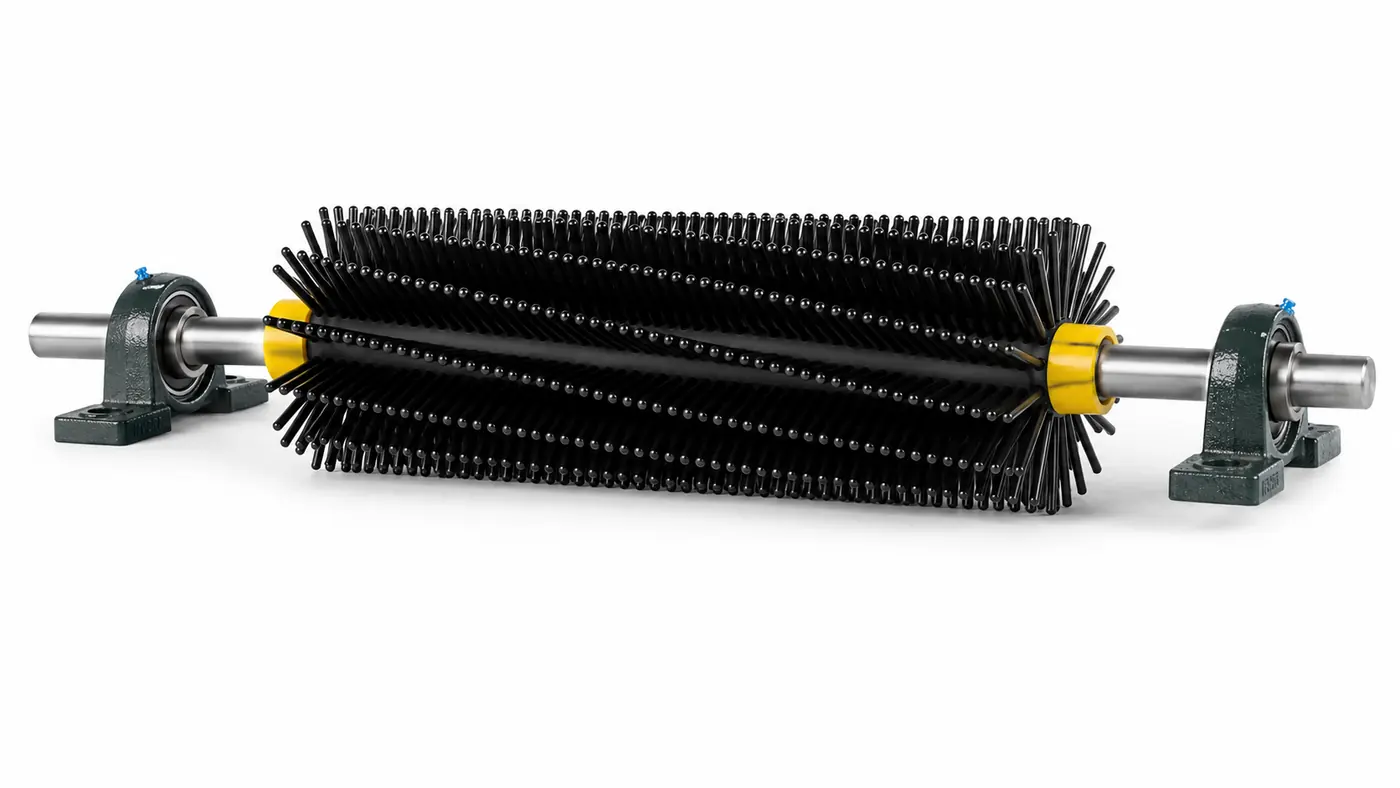
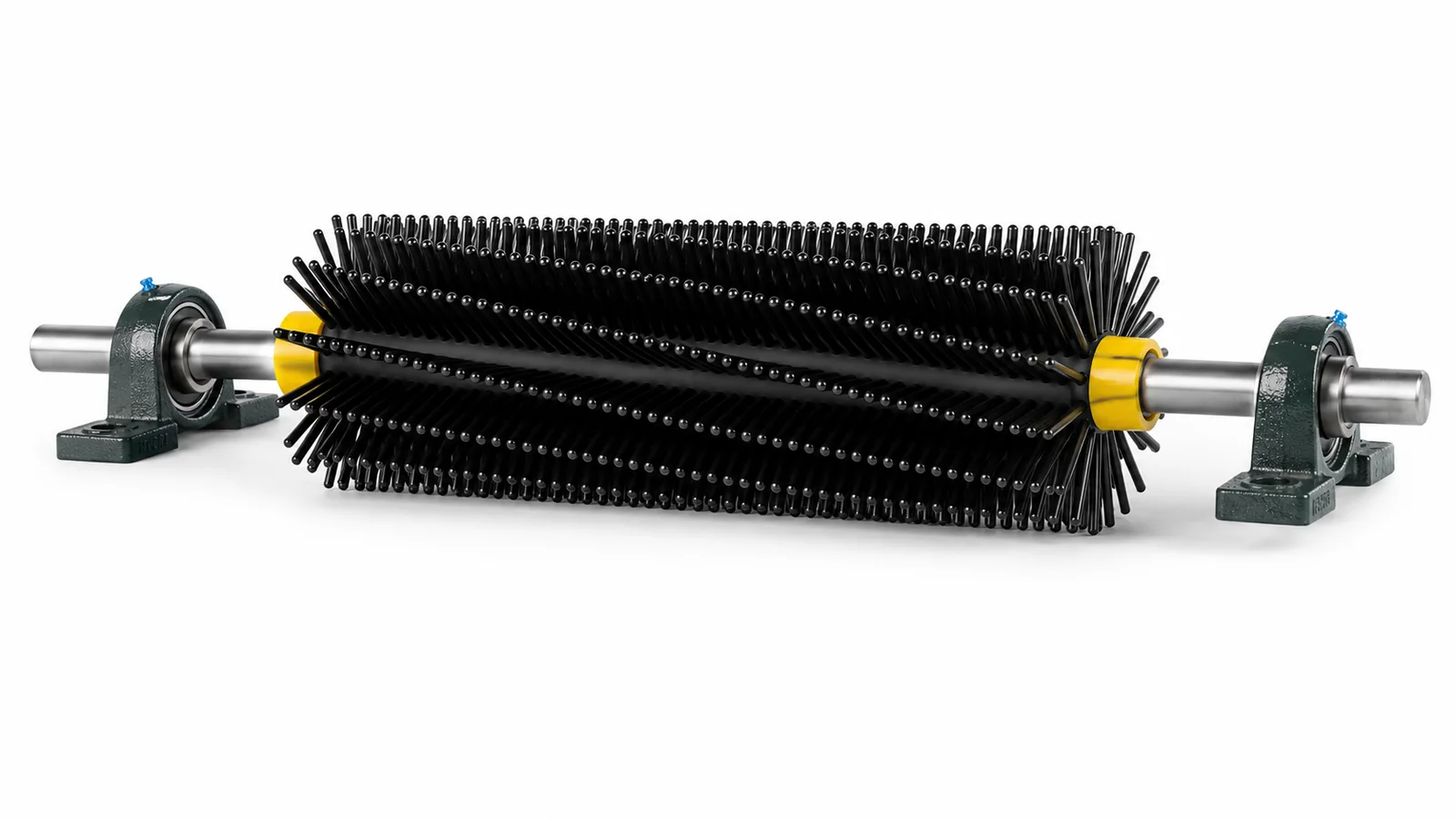
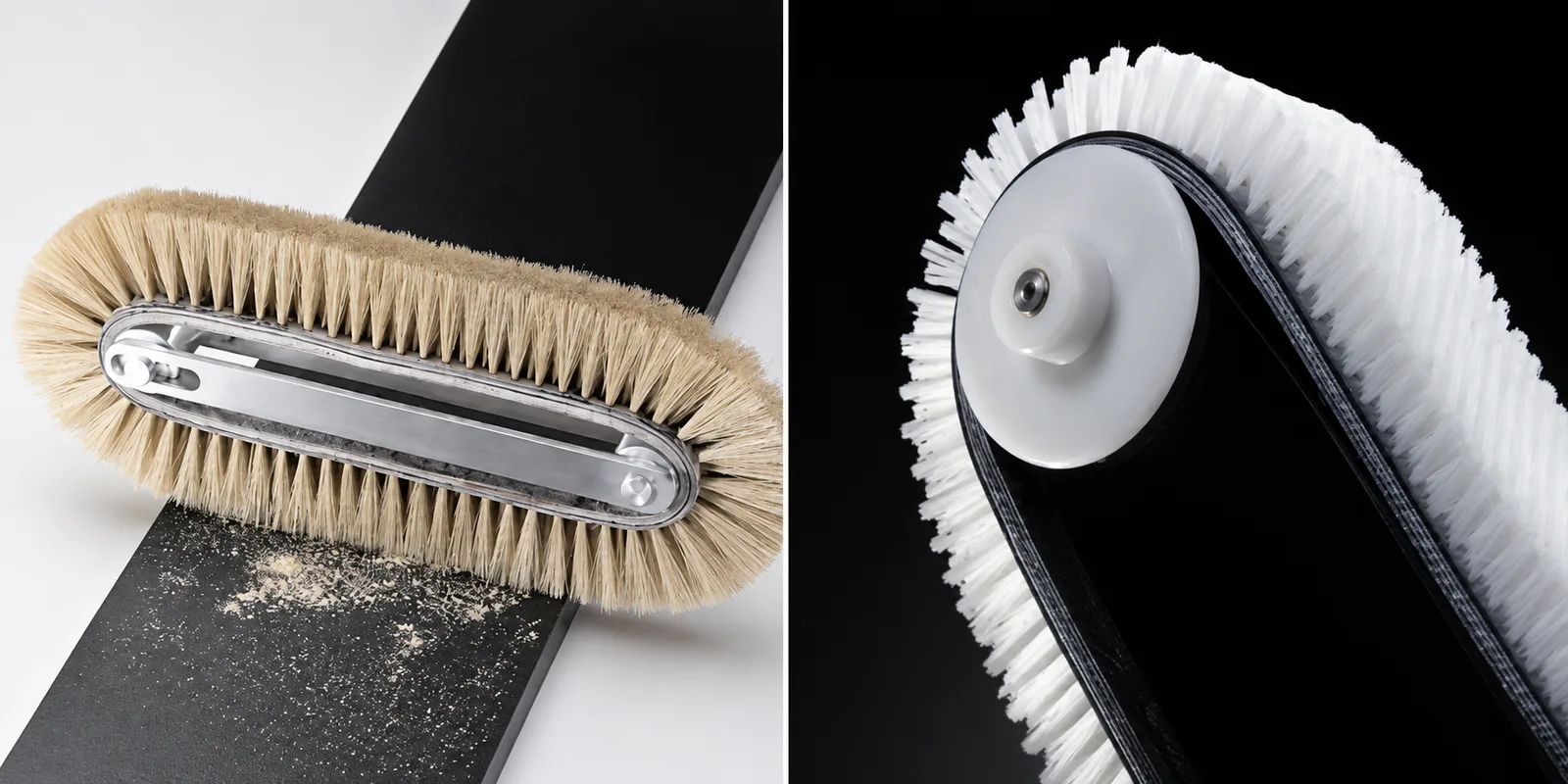
Conveyor brush roller with shaft bearings and mounted brush assembly
Core Conveyor Brush Functions

Three Conveyor Brush Functions

01

Conveying and Product Control

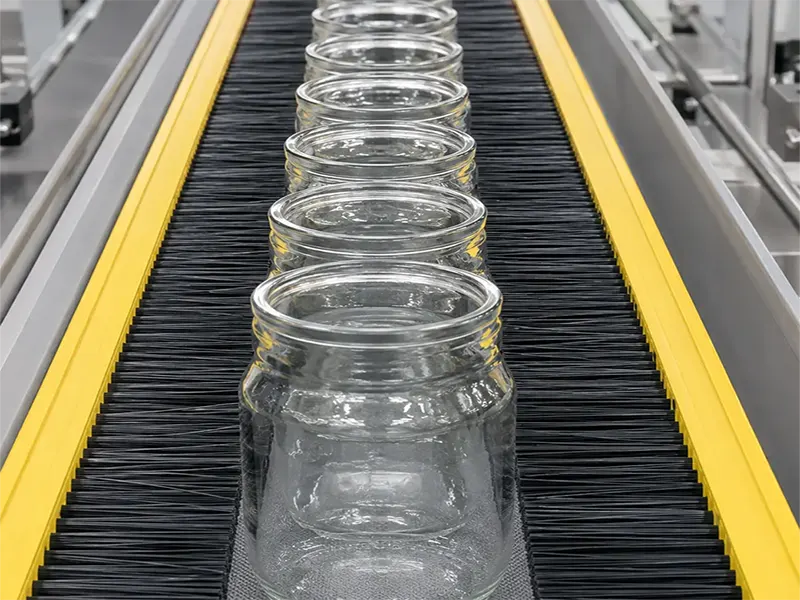
Brushes can guide, stabilize, separate, lightly hold, or position products through sorting, grading, handling, and assembly equipment. Directional bristle tips can reduce resistance in the intended travel direction while providing more resistance against reverse movement. Trim, density, and contact force should control the product without marking, jamming, or damaging it.

Typical tasks

Guiding · Side control · Hold-down · Separation · Singulation · Product presentation for grading · Low-friction sliding contact

02

Belt Cleaning and Dust Control

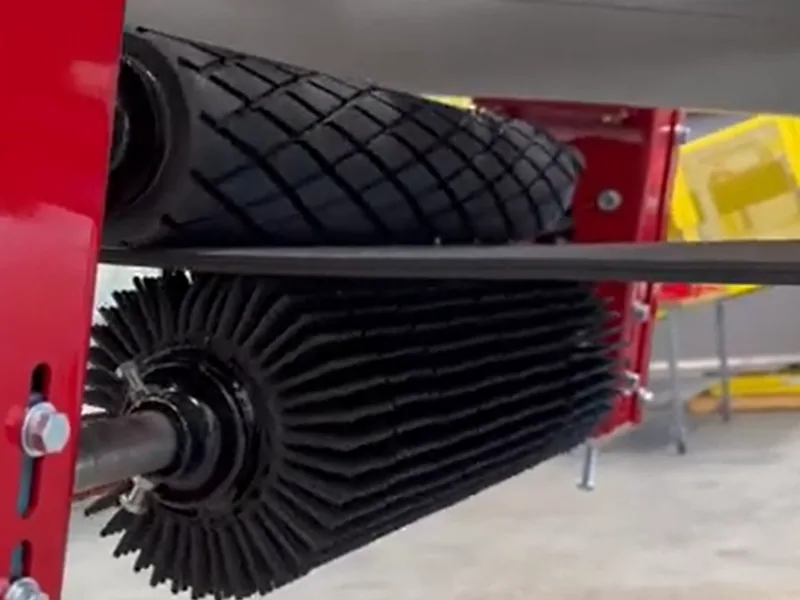
Conveyor cleaning brushes are used in brush-based cleaning modules and selected secondary or downstream cleaning positions to remove loose material, dust, or residual carryback from the belt. Strip brushes may also be fitted along guards, transfer points, enclosures, and openings to reduce dust escape, edge spillage, or gaps around moving belt surfaces.

Typical tasks

Carryback removal · Belt wiping · Loose-debris cleaning · Dust containment · Edge sealing · Transfer-point control

03

Packaging and Line Automation

Brush assemblies can feed, separate, orient, or place solid products into the next machine position, such as a packaging cavity, carton, tray, or assembly fixture. This is useful where the line needs flexible contact instead of product-specific hard tooling. Brush geometry, trim, spacing, cleanability, and replacement method should be reviewed around the product shape and machine cycle.

Typical tasks

Product feeding · Orienting · Separation · Cavity loading · Carton or tray transfer · Placement into assembly fixtures

Engineering Review

Design Around the Line, Not the Brush Photo

01

Define the Brush Job

Confirm whether the brush is cleaning a belt, controlling carryback, guiding product, sealing an opening, wiping a surface, or supporting product movement. A brush that works for light product guidance may be unsuitable for abrasive belt cleaning.

02

Match the Belt or Product Contact

Rubber, urethane, wire-mesh, rough-top, and other conveyor surfaces require different contact behavior. Product sensitivity, moisture, dust, material abrasiveness, and any washdown chemicals also influence filament and trim selection.

03

Confirm the Mounting and Replacement Interface

Shaft diameter, bore, keyway, hub, holder, channel size, bracket, hole pattern, rotation direction, and installation clearance can determine whether a brush fits the machine. For a replacement project, a drawing, measured sample, or the original brush and holder is more reliable than a photo alone.

04

Plan for Line Duty and Service

RPM, line speed, run time, operating temperature, cleaning method, and expected replacement interval affect brush wear and running stability. Longer or faster rotating roller brushes may also need a balance review before release.

OEM and Replacement Supply

OEM and Replacement Supply

For a new OEM project, the usual path is drawing review, sample or first article, fit and line trial, then an approved part number for repeat production. For integrators, the brush may also need to arrive with the wider equipment package or initial spare-parts kit before factory acceptance and commissioning.

For replacement supply, the priority is interchangeability. A clear part number, confirmed dimensions, documented material direction, and a retained reference sample reduce the risk of a later brush not fitting the original line. Material or construction changes should be reviewed before repeat production rather than assumed from a previous photo.

RFQ Specification Guide

Information Needed for a Conveyor Brush Quote

The fastest way to quote a conveyor brush correctly is to review both the machine interface and the brush function on the line.

Request a Quote
01

Equipment and Brush Function

Tell us the equipment type and whether the brush is for belt cleaning, carryback control, guiding, sealing, wiping, or product handling.

02

Dimensions and Interface

Provide belt width or product width, brush outside diameter, working face width, overall length, shaft or bore detail, holder or channel reference, mounting geometry, and available installation space.

03

Material and Operating Conditions

Share the belt or product material, handled material, moisture level, dust or abrasion level, temperature, chemical exposure, line speed, RPM, and duty cycle where available.

04

Replacement or OEM Reference

For replacement work, send a drawing, part number, measured sample, or marked photos. For new OEM work, PDF, DWG, or STEP drawings plus expected annual quantity and validation needs provide the clearest starting point.

Conveyor Brush RFQ

Need a Conveyor Brush Matched to Your Line?

Send your drawing, sample, belt details, or machine information. We can review brush form, mounting, contact conditions, and repeat-supply requirements before quoting.

Request a Quote