Silicon Carbide (SiC)
Grit 36 to 1000 for aggressive deburring, oxide or residue removal, and surface conditioning.
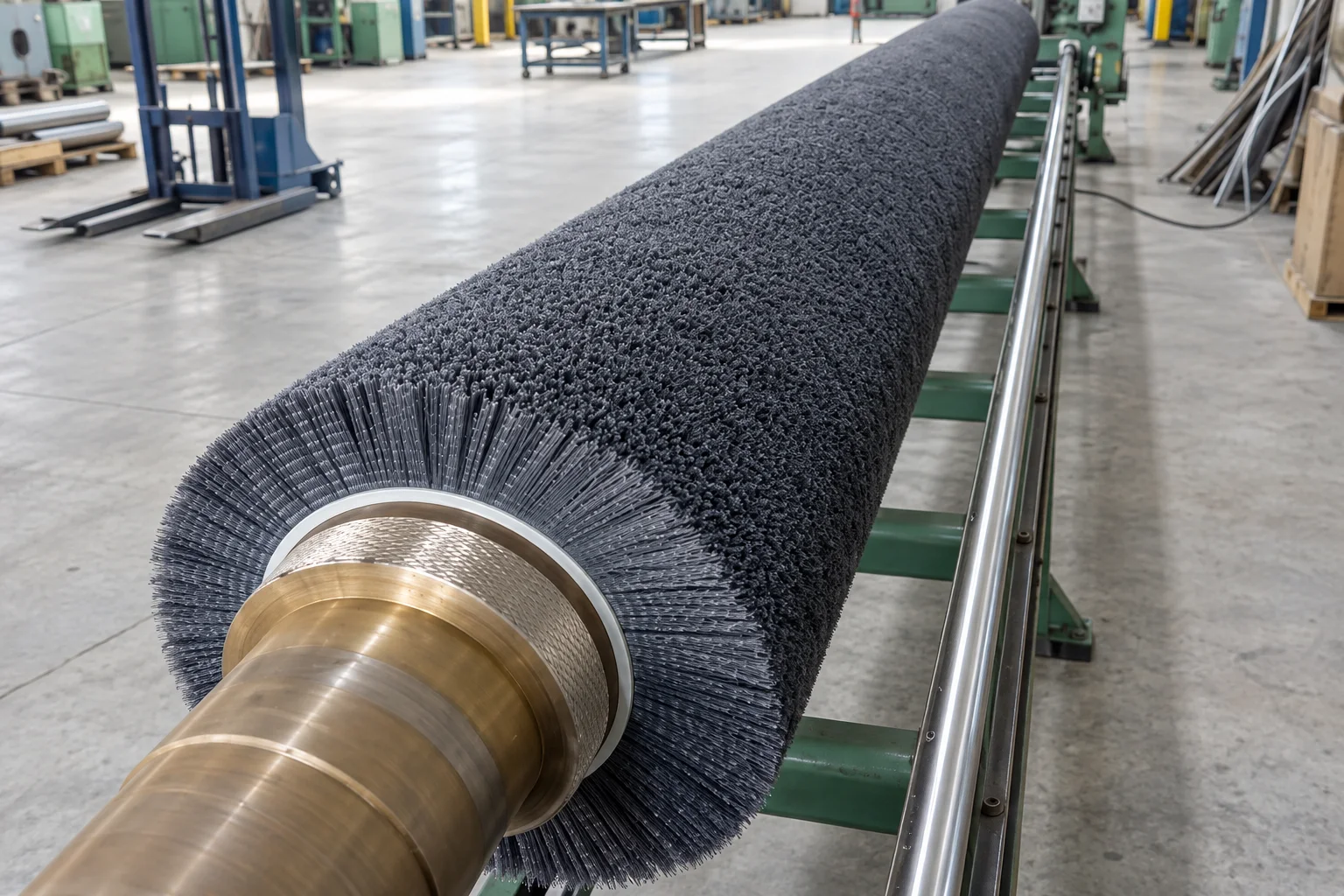
Custom abrasive brush rolls made with silicon carbide, aluminum oxide, ceramic or diamond abrasive filament for industrial cleaning, deburring and surface treatment.
We manufacture custom abrasive filament brush rollers up to 600 mm in outside diameter and 6 m in overall shaft length, with single- or double-steel-band winding for OEM and replacement supply.
Send Your Roller DrawingAn abrasive filament brush roller uses flexible nylon filaments containing abrasive grain throughout the filament. As the filament wears, new abrasive is exposed, maintaining a controlled brushing action for cleaning, oxide removal, deburring, surface conditioning and preparation across sheet, strip, plate and other wide workpieces.
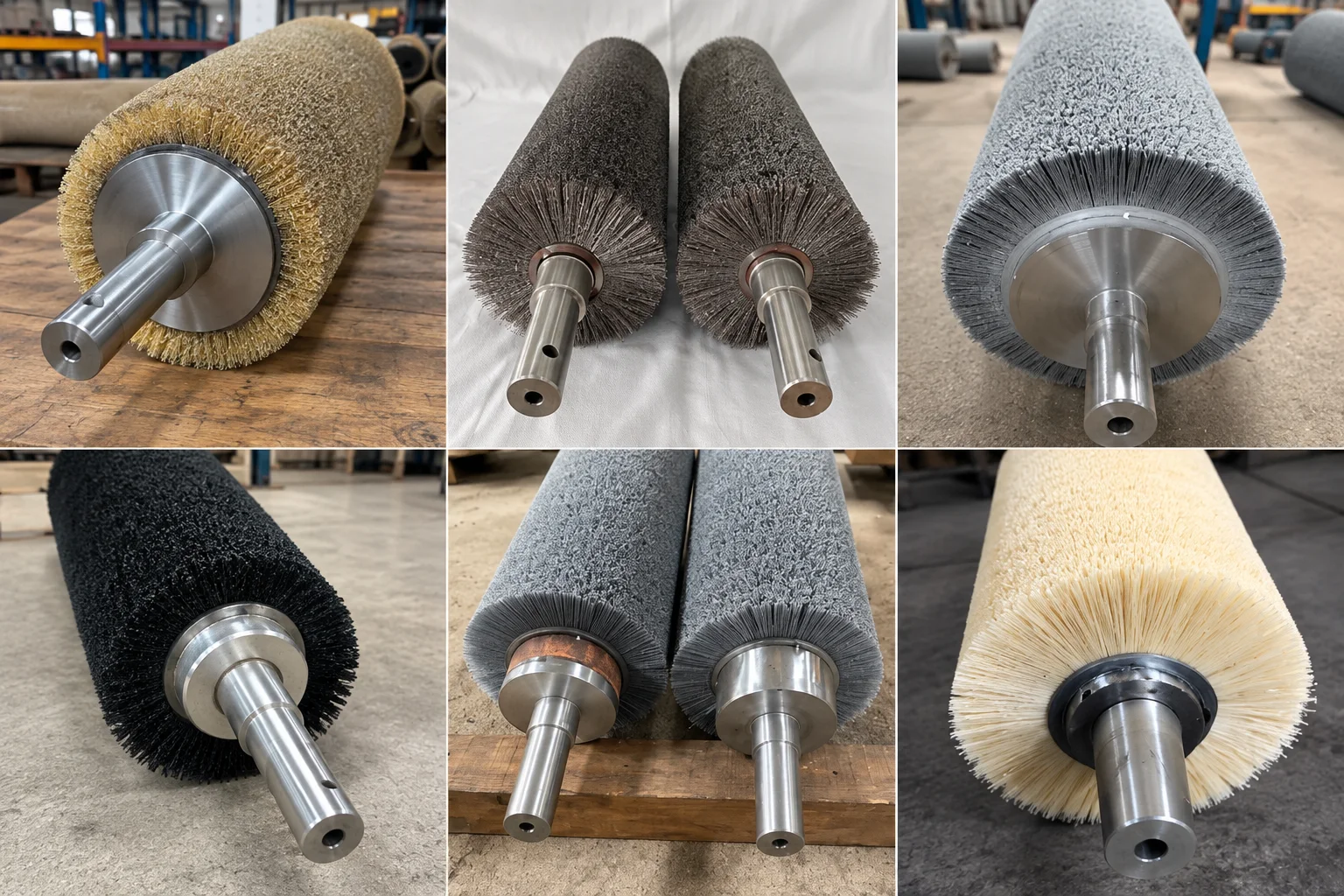
Grit 36 to 1000 for aggressive deburring, oxide or residue removal, and surface conditioning.
Grit 80 to 1000 for controlled polishing and finishing, particularly on steel and copper.
Grit 36 to 1000 for self-sharpening cutting, hard-metal deburring and controlled finishing.
Grit 35 to 3500 for carbide, hard metal, stone and granite; a specialty option rather than the standard choice for steel-strip cleaning.
Identify the existing grit designation or applicable grit standard because the same grit number is not automatically interchangeable between abrasive systems.
Review the material being brushed, the removal target and the acceptable surface change before selecting an abrasive.
| Contact surface | Typical objective | Abrasive options to review |
|---|---|---|
| Carbon & stainless steel strip | Residue removal, light oxide removal and deburring | SiC for general abrasive treatment; ceramic can be reviewed for demanding removal. Confirm the selected grade and allowable surface change. |
| Aluminum sheet & strip | Residue removal, light deburring and finishing | Compare SiC or aluminum oxide (AO) against the removal target, acceptable scratching and required finish. |
| Copper strip | Fine cleaning and surface conditioning | Review AO or fine SiC against the required surface marking limits, material removal and finish uniformity. |
| Precision or coated process rolls | Deposit removal while preserving the working surface | Review non-abrasive filaments first. Abrasive contact requires confirmation of the roll material, coating and permitted roughness change. |
| Stone & selected hard, brittle surfaces | Specialized deburring and finishing | Diamond or SiC may be suitable; confirm the specific substrate, required finish and acceptable material removal. |
Use the removal target and required finish to narrow the initial grit range. Select filament diameter and trim length together with the grit for the required brushing action.
| Processing Goal | Abrasive Options | Initial Grit Range |
|---|---|---|
| Adhered Residue Removal | SiC | 80–180 |
| Light Oxide Removal | SiC / Ceramic | 80–180 |
| Light Deburring | SiC / Ceramic | 120–320 |
| Surface Preparation | SiC / AO | 120–240 |
| Fine Surface Finishing | AO / SiC | 240–600 |
| Grit Range | Indicative Filament Diameter |
|---|---|
| 500–1000 (Very Fine) | 0.25 / 0.3 / 0.4 mm |
| 240–500 (Fine) | 0.4 / 0.5 / 0.6 mm |
| 120–320 (Medium) | 0.5 / 0.6 / 0.8 mm |
| 80–180 (Coarse) | 0.8 / 1.0 / 1.2 mm |
| 36–80 (Very Coarse) | 1.2 / 1.6 / 2.0 mm |
Indicative combinations for initial selection only. The ranges overlap; available grit and diameter pairings depend on the abrasive formulation and filament supplier.
For otherwise comparable filaments, a larger diameter or shorter trim gives firmer contact; a smaller diameter or longer trim gives more flexibility. Grit alone does not determine the filament diameter.
Final selection also accounts for roller speed, contact setting, wet or dry operation and the required surface finish.
Filament polymer and roller construction are selected for the exact line position, process chemistry, contact requirement, and wet or dry conditions.
Explore industrial brushes for metal processing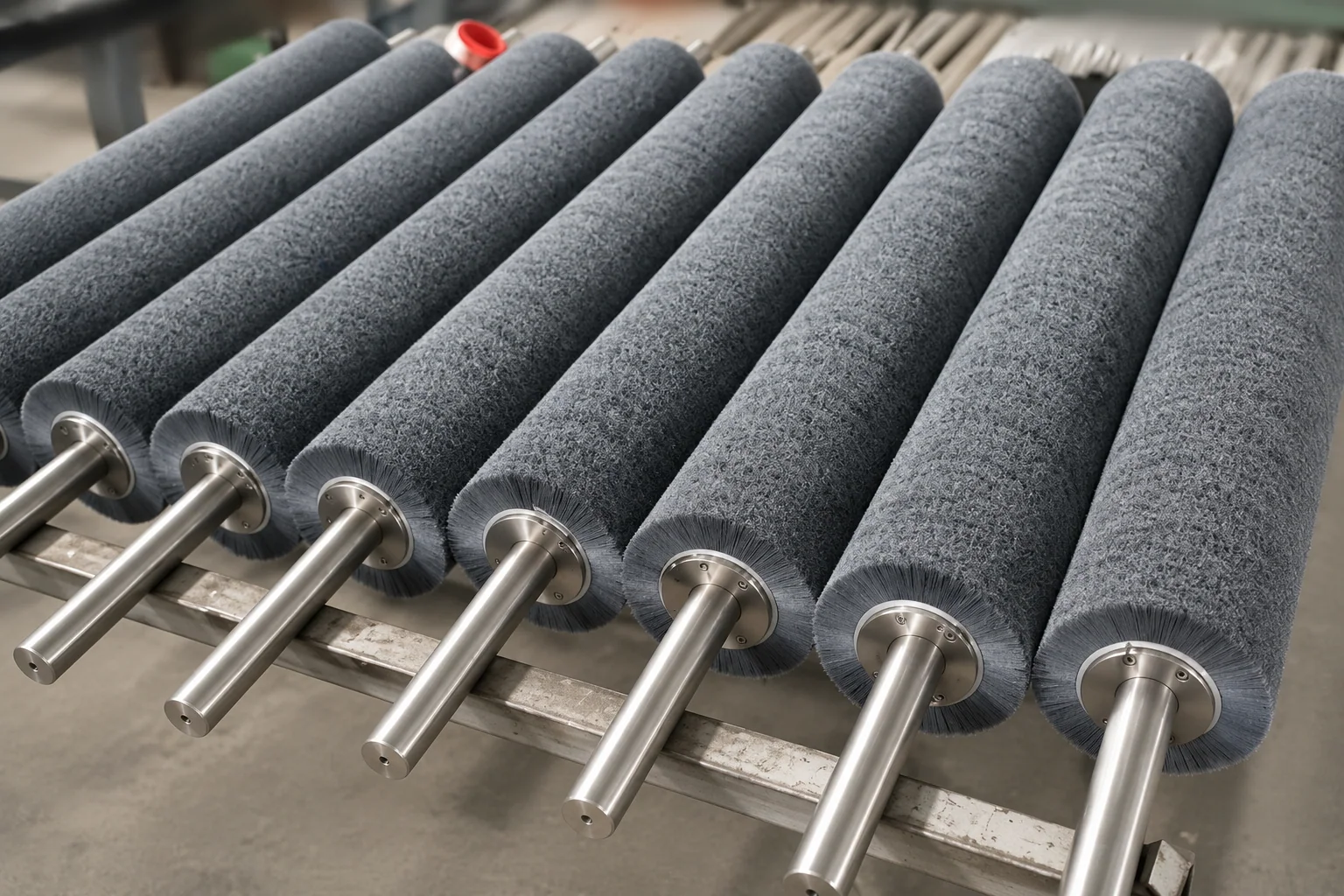
The 6 m capability refers to overall shaft length, not automatically to the working brush face. Send the complete roller or machine drawing so the brush face, shaft and core design, journals, keyways, bearing arrangement, operating speed and support arrangement can be reviewed.
Dynamic balance testing can be arranged for abrasive filament brush roller orders when it is specified in the drawing or purchase requirements. Agree the test speed, acceptance limits and reporting needs before production.
The video shows one test setup and its instrument display. The readings shown are specific to this example, not a universal acceptance limit for every roller.
A drawing is required for OEM or replacement orders. Include the following information; photos and samples may be provided as supporting references:
Feasible inspection criteria and records are agreed before production. Provide the roller drawing and use clear photos or an existing sample to help clarify the specification. Photos or samples do not replace the required drawing.
An abrasive filament roller uses individual polymer filaments containing abrasive grain. It provides flexible contact for cleaning, deburring and controlled surface treatment.
A non-woven abrasive roller brush uses bonded abrasive web or disc material for blending and controlled finishing.
A wire brush roll uses metal wire for more aggressive scale removal and wire-brushing duties. Spiral-wound brush rollers can use either wire or abrasive filament, depending on the application.
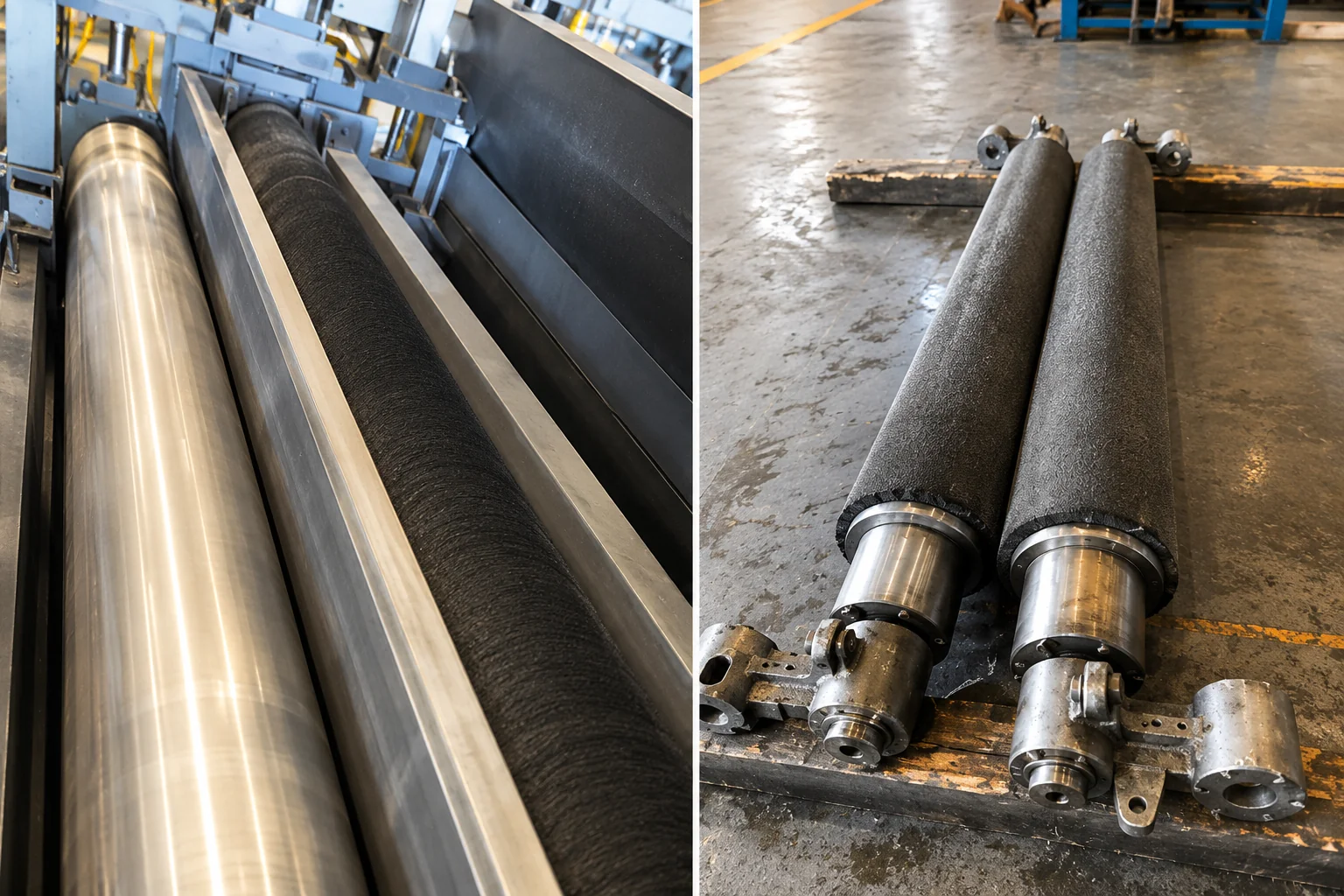
For an aluminum rolling mill in Shanghai, we measured the existing roller and reviewed its fill before recommending an SiC abrasive-filament replacement.
The customer ordered and installed 16 rollers of approximately 1.2 m each, demonstrating drawing- and sample-based replacement supply.
A drawing is required. Include the workpiece, process conditions, required surface result, operating speed, and quantity. Minimum order: 2 rollers. Production lead time: 15–20 days after order and drawing confirmation, plus shipping time.