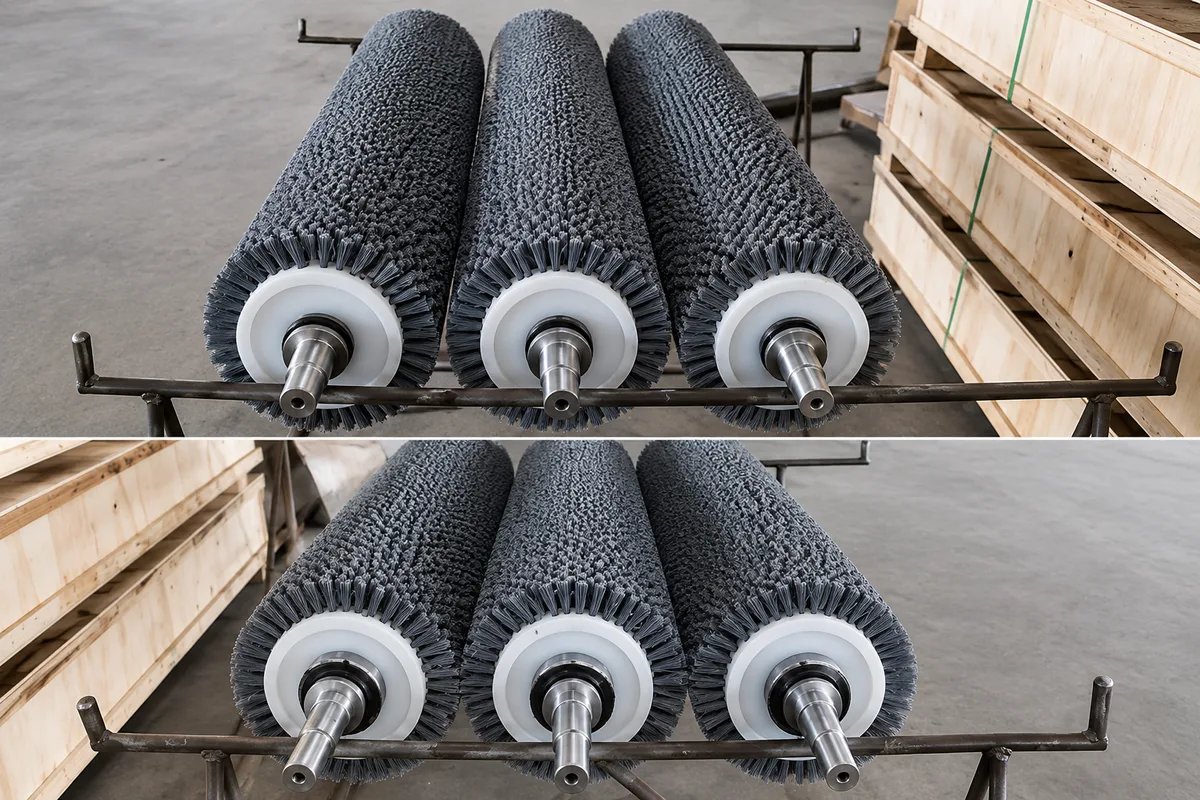
A replacement cow brush roller must match the machine’s mounting, working shape and bristle contact. Start with the machine model and a drawing or sample, then confirm the dimensions and material needed for the replacement.
This guide helps dairy-equipment OEMs, spare-parts distributors and farm maintenance teams confirm replacement fit, compare filament options and prepare an inquiry.
What Is a Cow Brush Roller?
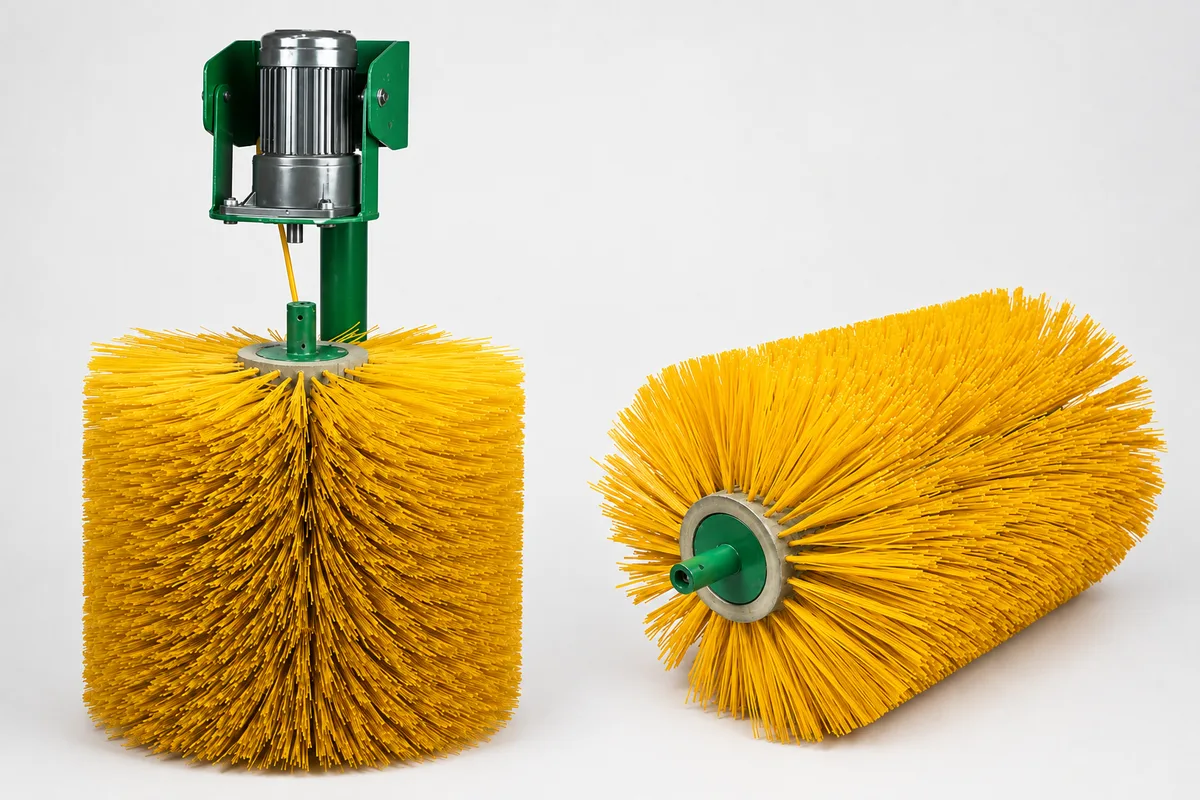
A cow brush roller is the working brush component in livestock grooming equipment. It provides a bristled surface for cattle to scratch and groom against, with a cylindrical, contoured or sectional form suited to the machine.
For available brush and equipment formats, see custom cow and livestock brushes.
Replacement Roller or Complete Cow Brush Machine?
Identify what needs replacing before comparing quotations:
- Brush roller: the brush body fitted to the existing shaft or drive interface.
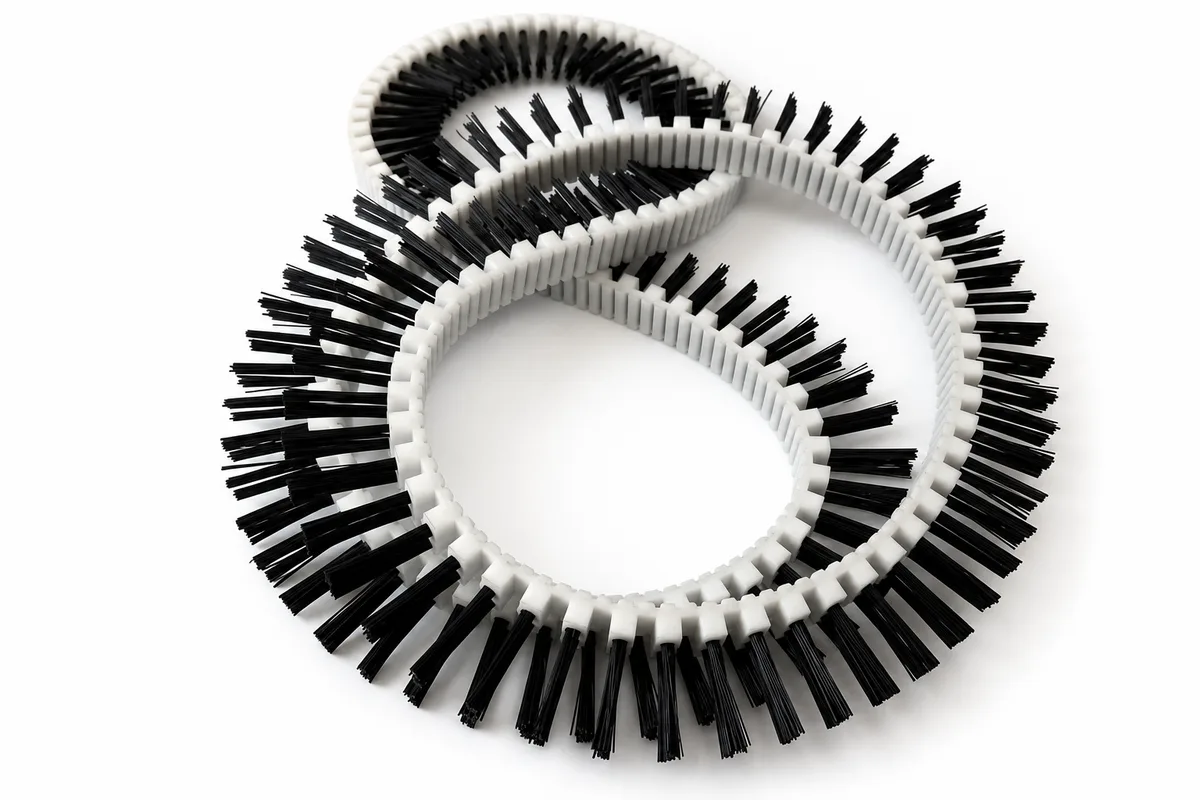
- Brush sections: individual rings or modules assembled on a retained core or shaft.
- Complete shaft assembly: the roller with machined shaft ends and the mounting parts included in the quotation.
- Complete machine: the brush with its motor, gearbox, controls and supporting structure.
Replacement cylinders are supplied separately for some systems; the DeLaval Brush Cylinder SCB is one example. That does not establish compatibility between different machines or brush cylinders.
For an assembly supplied with a shaft, include its end details in the drawing. A shaft diameter alone does not define the bearing journals, shoulders, keyways or retaining features.
Dimensions Required for a Replacement Cow Brush Roller
Begin with the machine model, original brush part number if available, and photographs of the installed roller and both ends. These show how the brush is driven, retained and positioned within the frame.
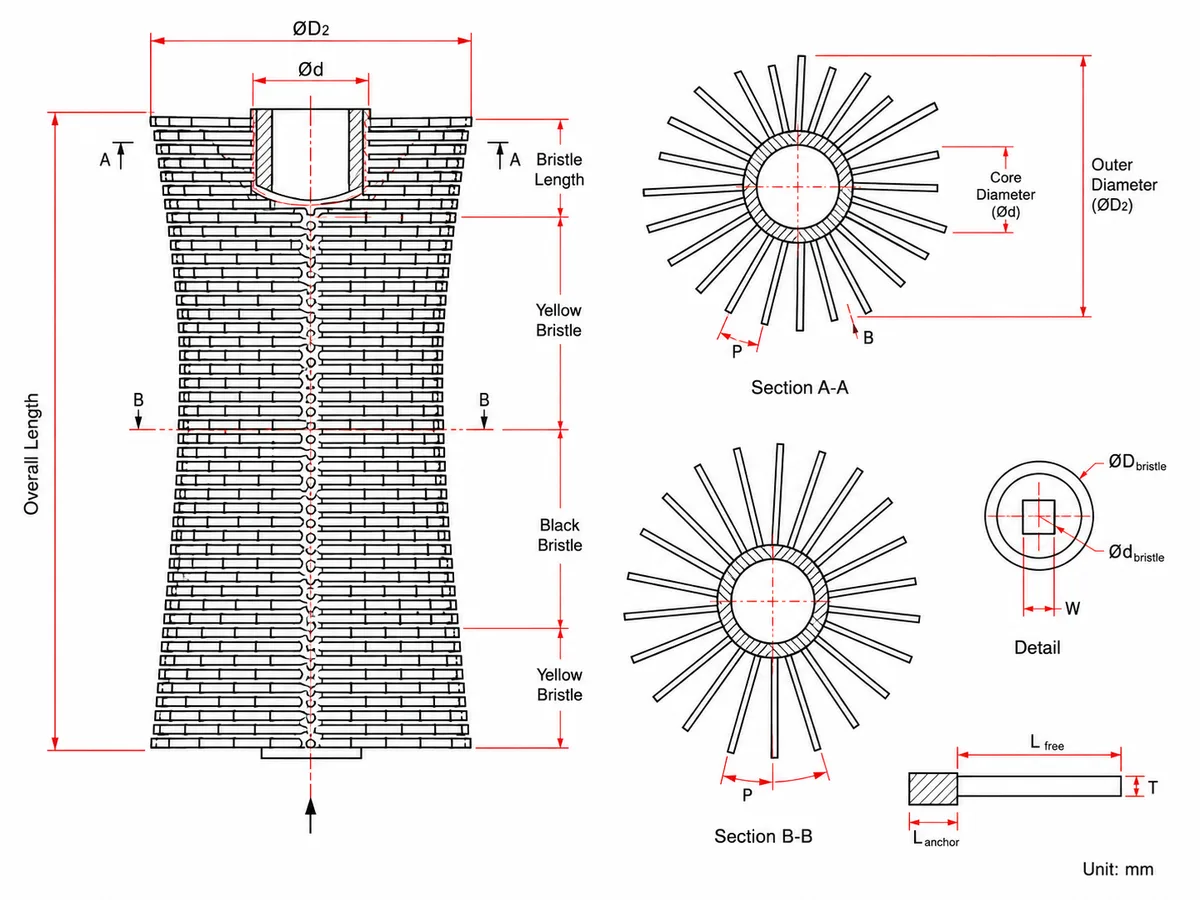
Record the replacement dimensions in four groups:
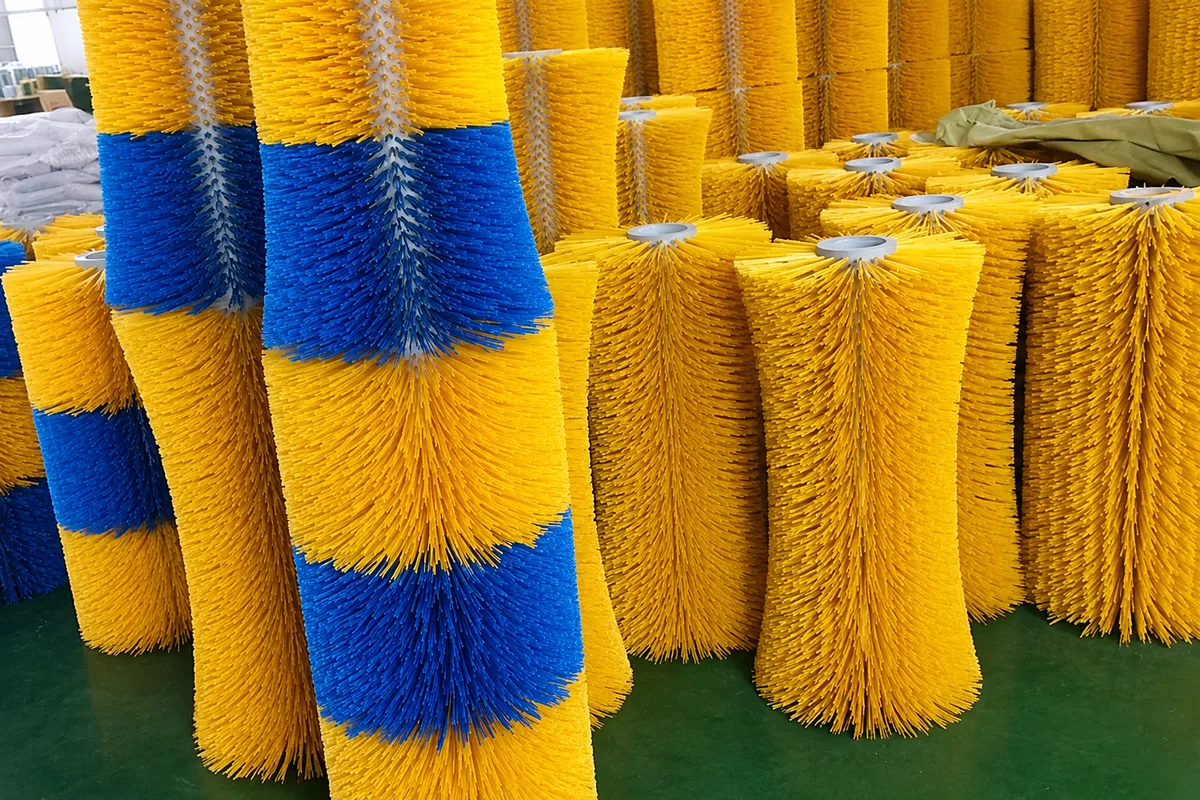
- Roller shape and outside diameter: identify a cylindrical, tapered, hourglass or eccentric profile. For a changing profile, show the diameter at several positions and any designed offset from the shaft.
- Working length and overall length: distinguish the filament-covered face from the full end-to-end length, including projections or shaft ends.
- Core and bore: show the core diameter and the size and shape of its opening. This defines the brush body and its fit on the existing support.
- Shaft ends and mounting: show the drive connection, bearing or retaining features, and any critical fits needed for the parts being supplied.
A worn diameter is not the original finished diameter. Even the least-worn part of a used roller may have lost bristle length or shape. Confirm the new working OD from the original drawing, part specification or an unworn reference where possible. If that information is unavailable, send the sample and machine-clearance details for review before fixing the production dimensions.
If You Do Not Have a Drawing
Follow the machine manufacturer’s shutdown and isolation instructions before inspecting or removing the brush. Photograph the machine label and mounting, mark the drive end and installation orientation, and take the measurements above. Keep collars and other mating parts identifiable with the sample.
A marked photograph or old roller is enough to begin review; missing dimensions can be clarified before production. The industrial brush measurement guide explains working and overall dimensions in more detail.
Choosing Filament Material and Stiffness
Nylon, PP and PBT can be used in cow-brush constructions, but the polymer name and color do not define how the finished roller will feel or perform.
- Nylon: an option for repeated flexible contact in powered rollers; match the grade and filament construction to the existing design.
- PP: an option for selected stationary, outdoor or cost-sensitive constructions, with the grade checked for the actual exposure.
- PBT: an option where specified by the original design or selected for the required wet operating conditions.
Describe the current contact feel and what needs improving. If the material is unknown, a sample is more useful than guessing the polymer from its color.
Filament diameter, trim length and density work together. Longer or finer filaments generally provide more flexible contact; shorter or thicker filaments generally feel firmer when other factors are comparable. Density changes the number of contact points and can affect drag, cleaning access and machine load.
Labels such as “soft,” “medium” and “hard” are difficult to compare between manufacturers. For repeat orders, retain the approved sample and measurable bristle construction. The filament material guide and brush density and trim guide explain these variables.
Choose the Correct Roller Profile and Pattern
- Cylindrical: a relatively consistent working diameter along the brush face.
- Hourglass or contoured: a changing diameter matched to the machine’s contact geometry.
- Eccentric: a deliberately offset geometry that creates a changing contact position during rotation.
- Sectional or wafer: separate rings arranged and retained on a core or shaft.
A designed eccentric roller must retain its specified offset. Unexpected wobble on a normally concentric roller is a different condition and needs inspection.
Straight rows, staggered tufts, spiral paths and sectional bands can produce different contact and wear patterns. Record the existing layout and reproduce it unless a change is agreed. For sectional rollers, preserve the section order and retention arrangement.
For a broader overview of roller constructions, see custom cylinder brushes.
What Does “Heavy-Duty” Mean in a Barn?
“Heavy-duty” is not a standardized cow-brush grade. Useful requirements describe how the brush is used: herd size, frequency of contact, repeated starting or reversing, and the condition of the shaft, core and retaining parts.
Harder bristles alone do not correct a weak mounting or loose core. A roller that wears quickly may need a review of its construction, alignment or operating conditions rather than simply thicker filament.
Also describe outdoor exposure, washdown and cleaning products. Moisture, dirt, loose hair and bedding affect cleaning access, while chemical contact and weather exposure influence material selection. Use the machine’s cleaning instructions and confirm compatibility with the actual cleaning agent and filament grade.
Machine Operation and Animal Contact
For a powered replacement, retain the machine’s specified operating speed, rotation and reversing behavior. Where these are unknown, provide the equipment documentation for review; bristle material alone cannot establish an operating speed.
The DeLaval SCB literature and Lely Luna product information describe stopping, overload protection or direction changes for their own systems. A replacement roller needs to work within the existing machine design.
Check that the installed brush is retained securely, clears the frame and has no exposed hard parts or damaged bristles at the contact surface. Changes in profile, stiffness or roller weight should be reviewed with the equipment designer or service team because they may alter contact and drive load. Complete-machine controls and safety functions remain part of the equipment review.
Research also shows why installation matters: mechanical brushes help cows groom otherwise difficult-to-reach areas (DeVries et al., 2007), while brush placement and the number of cows sharing a brush affect use (Foris et al., 2023). These findings do not define one roller size or stiffness for every herd.
When Should a Cow Brush Roller Be Replaced?
Follow the equipment manufacturer’s wear limits and inspect for:
- Flattened, missing or breaking bristles that no longer give consistent contact
- Reduced working diameter or exposed hard supporting parts
- Loose rings, damaged cores or worn mounting interfaces
- New vibration, abnormal noise or unstable rotation
- Contamination that the permitted cleaning process cannot remove adequately
Vibration or poor rotation can also come from the shaft, bearings or drive. Identify the cause before assuming a new brush alone will solve it.
Keep inspection and replacement records for the same machine. They provide a more useful service-life reference than a fixed interval borrowed from another model or farm.
Check a Sample Before Repeat Production
Compare the sample with the agreed drawing and bristle specification, then have it fitted and trialled according to the equipment instructions. Focus on mounting fit, retention, frame clearance, stable rotation and the intended contact result.
After the trial, record any wear, noise, vibration or change in machine load. Keep the accepted drawing revision and sample reference for repeat orders.
Dynamic-balance testing, runout checks and related reports can be reviewed where the customer drawing or operating conditions require them. Agree the inspection scope and acceptance criteria before production.
FAQs About Replacement Cow Brush Rollers
Is the machine model enough to order a replacement?
It is a useful starting reference, but model revisions or brush options may differ. Check the part reference and physical mounting before confirming fit.
Can a replacement roller be made from an old sample?
Yes. The old roller helps identify construction and mounting. Any dimensions affected by wear need to be reconstructed or confirmed as described in the measurement section above.
Can the same roller be used for calves and adult cattle?
Not automatically. Animal size, contact geometry and the equipment settings may require a different brush or installation. Follow the guidance for the intended animal group.
How long does a cow brush roller last?
There is no universal lifetime. Usage, bristle construction, cleaning and machine condition affect wear. Use the replacement signs above together with the equipment manufacturer’s guidance.
Can Brushcustom provide only the replacement roller?
Yes. We can review replacement rollers, brush sections or shaft assemblies from a drawing or sample. State which existing parts will be retained so the quotation covers the required components.
Cow Brush Roller RFQ Checklist
You can begin an inquiry with the information already available:
- Machine: model and photographs of the existing roller
- Reference: drawing, sample or main dimensions
- Bristles: known material, or a sample if the material is unknown
- Replacement need: current wear, fit or contact problem, and any desired improvement
- Quantity: the number of rollers or sets required
Detailed tolerances, operating data and inspection documents can be clarified as the project requires. Send your available information through the Brushcustom RFQ form.