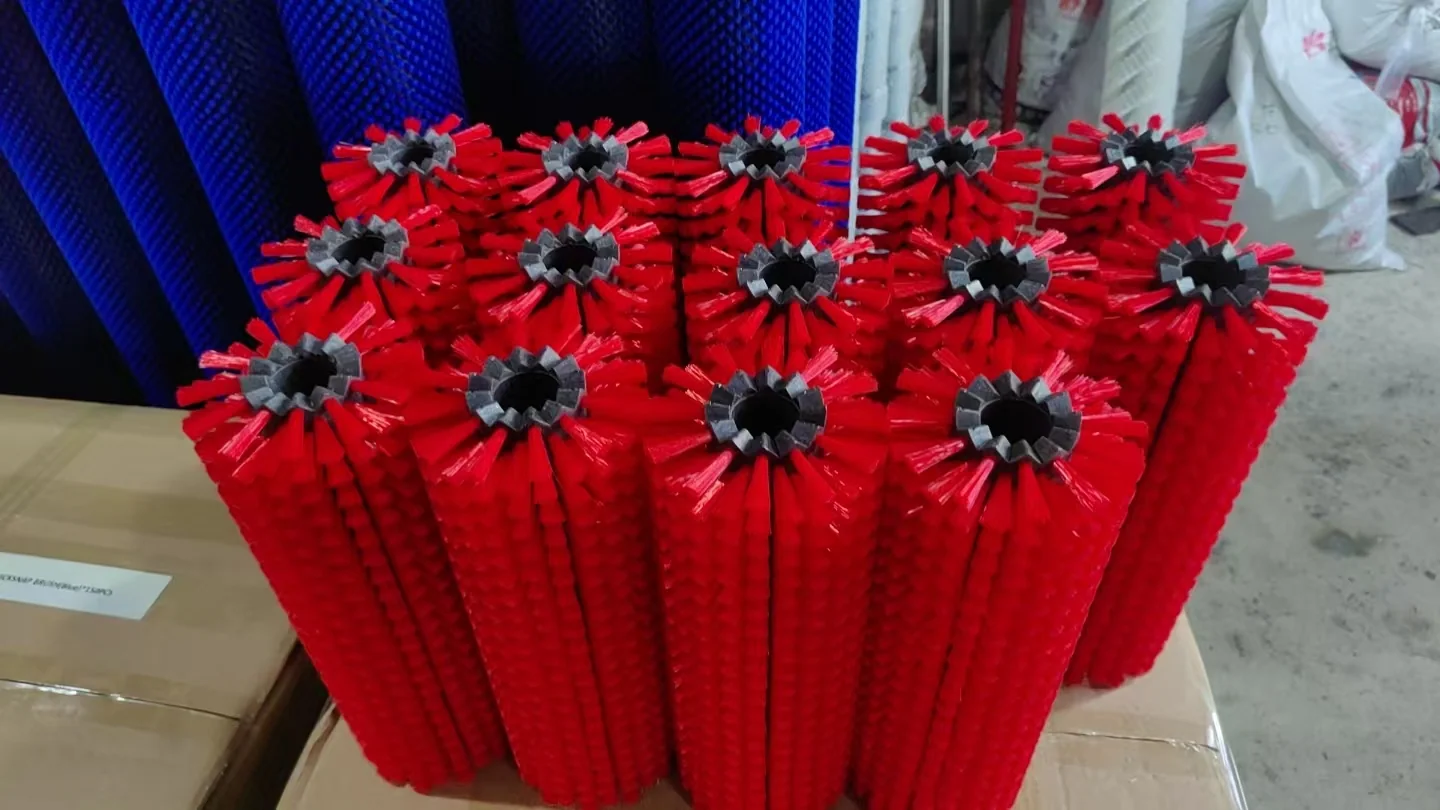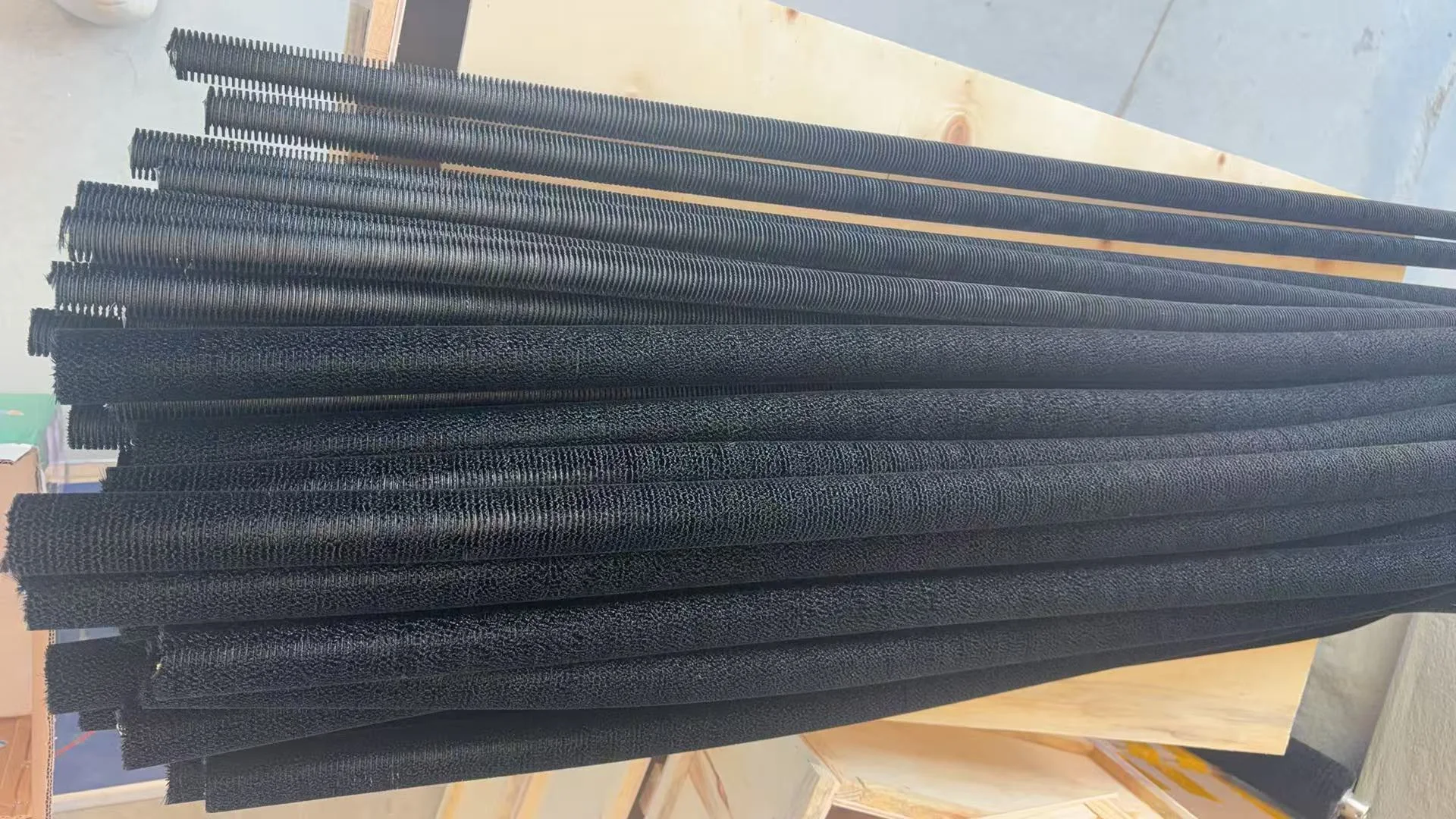
Street sweeper brushes should not be replaced on one universal hourly schedule. The correct replacement point depends on the sweeper model, brush position, minimum bristle length or working diameter, sweep pattern, surface, debris, down pressure, and whether the machine still cleans effectively.
Use the machine manufacturer's wear limit first. If that information is unavailable, inspect the main broom and side brushes for reduced contact, uneven wear, damaged fill, vibration, and declining pickup performance. This guide explains the practical checks fleet and maintenance teams can use.
Why There Is No Universal Replacement Interval
A brush used on a smooth indoor floor does not wear at the same rate as one sweeping rough asphalt, construction debris, sand, metal fragments, or airport pavement. Excessive down pressure can also shorten brush life without improving pickup.
Published equipment manuals use different service criteria. Some specify a remaining bristle length, others a minimum brush diameter or sweep-pattern width, and some instruct the operator to replace the brush when it no longer sweeps effectively. For this reason, a claim such as “replace every 100 hours” should not be applied across all street sweepers.
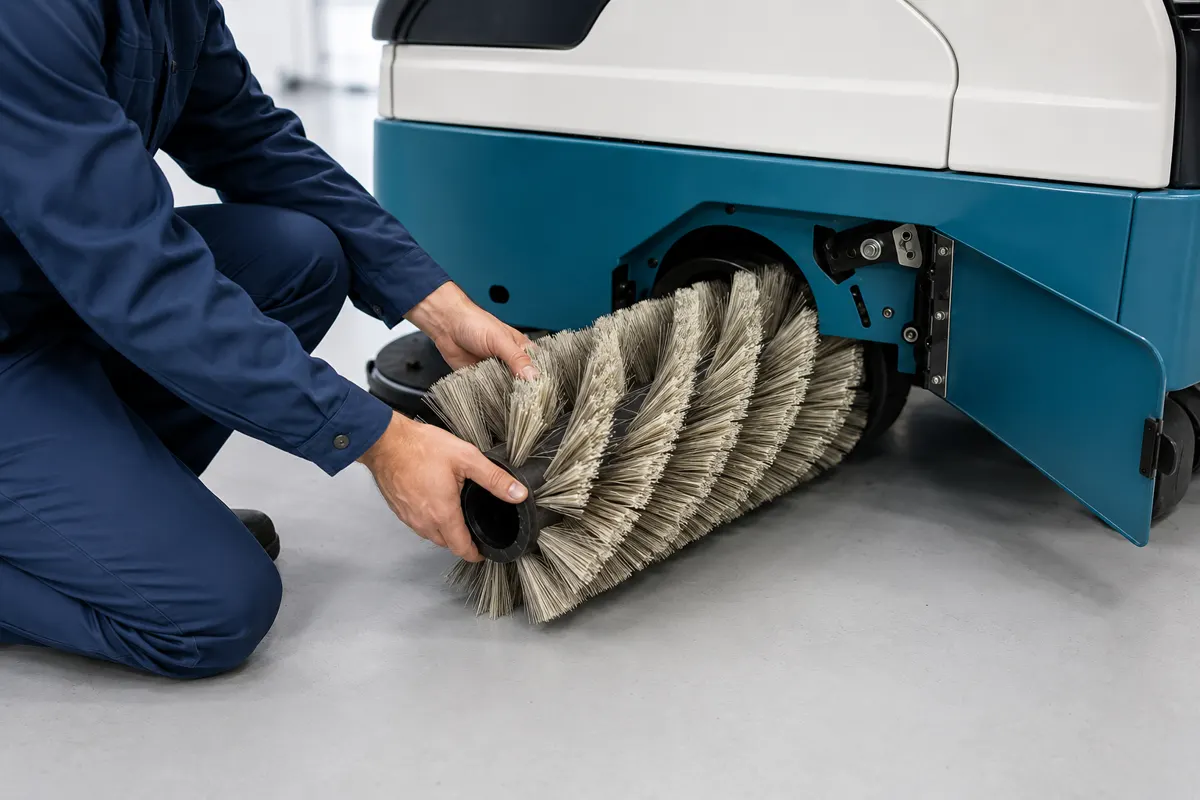
Signs a Sweeper Brush Needs Replacement
- The main broom or side brush has reached the wear limit stated in the operator manual.
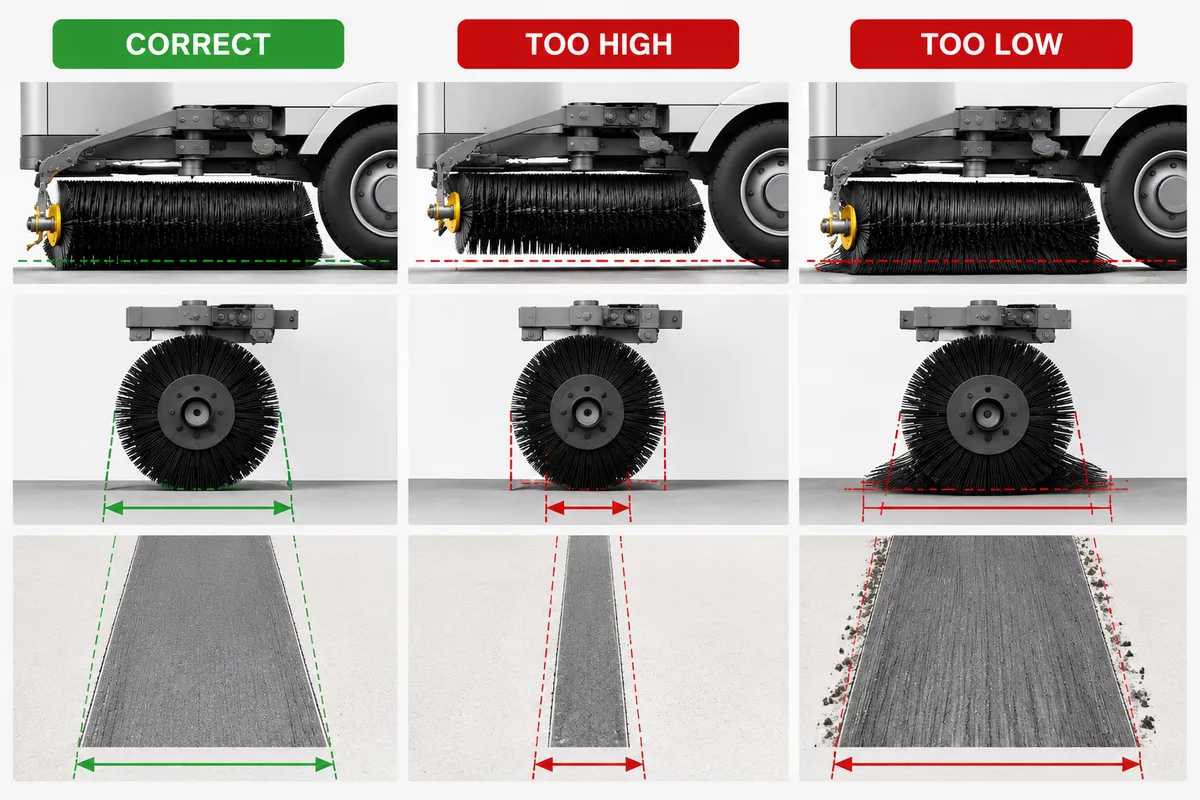
- The sweep pattern remains too narrow or uneven after correct height adjustment.
- The machine leaves debris behind or requires repeated passes at the normal travel speed.
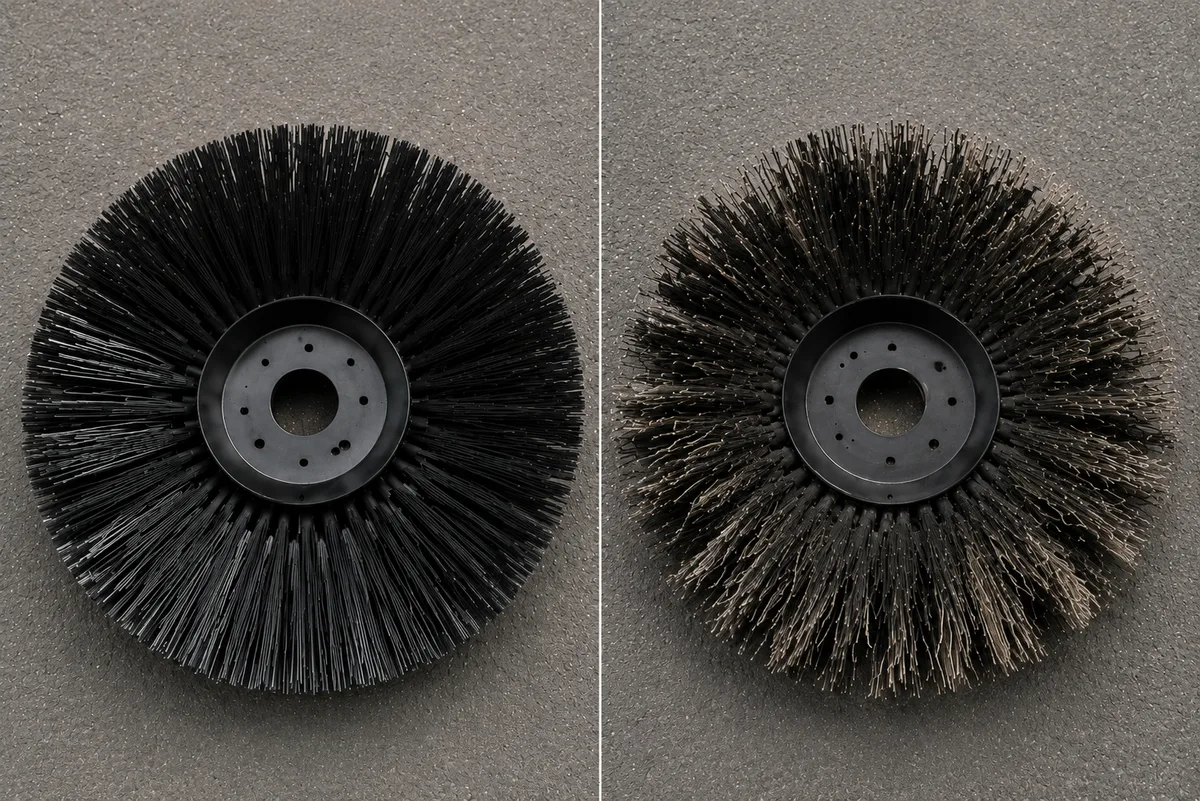
- Bristles are permanently bent, broken, missing, melted, or worn unevenly around the brush.
- The brush can no longer maintain contact without excessive down pressure.
- The machine develops unusual vibration, noise, or side pull after debris and mounting issues have been ruled out.
- The core, drive interface, hub, wafer, or mounting plate is cracked, loose, or damaged.
Main Broom and Side Brush Checks
Cylindrical Main Broom
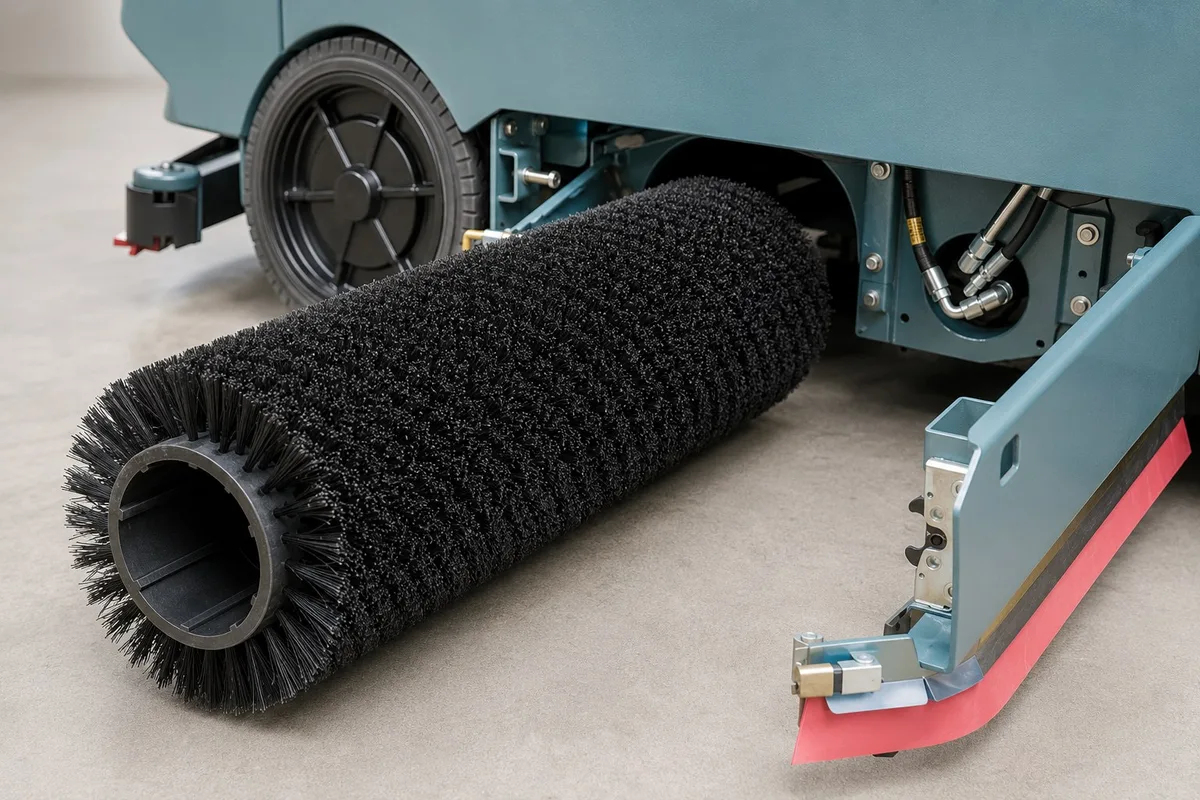
The main broom carries debris toward the hopper or pickup system. Check its finished working diameter, sweep pattern, full-width contact, fill condition, and drive interface. A worn main broom may still rotate normally but leave a narrow or inconsistent path because the bristle tips no longer reach the surface correctly.
Side or Gutter Brush
The side brush reaches curbs, edges, corners, and debris outside the main broom path. Inspect the remaining bristle length, cone shape, edge contact, mounting plate, and whether the brush still moves debris into the pickup path. Replace it when adjustment can no longer restore effective contact or when the machine manual's wear limit is reached.
Wafer and Cassette Brush Assemblies
For wafer brooms and cassette systems, check segment wear across the complete assembly. Mixed new and heavily worn wafers can change the working diameter and sweep pattern. Confirm wafer size, spacer arrangement, drive direction, and the machine manufacturer's assembly instructions before replacement.
Examples from Sweeper Manufacturer Manuals
The following figures are model-specific examples, not universal Brushcustom replacement limits. Always use the manual for the exact machine and brush configuration.
| Machine Example | Published Check or Limit | What It Shows |
|---|---|---|
| Tennant 3640E | Inspect the main brush daily, check its pattern every 50 hours, and rotate it every 50 hours. The manual gives a 9-12 mm remaining-bristle replacement range for the floor/carpet brush. | Inspection and rotation can be scheduled, while replacement is tied to measured wear. |
| Tennant 6100 | The side brush should be replaced when it no longer sweeps effectively; the manual gives 50 mm remaining bristle length as a guideline. | Cleaning result and a model-specific bristle limit are reviewed together. |
| Advance SR1005B | The main broom sweep pattern should be checked and adjusted; the manual describes a normal 2-4 cm pattern and replacement when the broom is heavily worn. | Sweep-pattern width helps identify contact and adjustment problems. |
| American-Lincoln 6150 | The manual describes a normal 1-2 inch sweep pattern and calls for main broom replacement when bristles are shorter than 2 inches. | Different machines use different dimensions and service limits. |
| Dulevo 5000 Evolution | The service manual states that the central brush should be replaced when its bristles have worn down to 40-50 mm. | The limit applies to the Dulevo 5000 configuration and should not be transferred to the Dulevo D3 or another machine. |
Keystone Replacement-Broom Reference
Keystone Plastics gives a practical replacement-broom reference based on bristle projection measured from the broom core to the outer bristle tips: replace a main broom at or below 7 inches and a gutter broom at or below 6 inches. It also recommends checking down pressure by running the broom while stationary and reviewing the resulting sweep path, with a 2-4 inch path used in its guidance.
These figures are useful for fleets using compatible Keystone-style replacement brooms, but they are not universal limits for every sweeper. Compare them with the machine model, original brush dimensions, and the equipment manufacturer's maintenance instructions before replacement. See the Keystone Plastics replacement-broom guidance.
What Makes Sweeper Brushes Wear Faster?
- Rough or abrasive surfaces: coarse concrete, asphalt, sand, and aggregate increase filament wear.
- Debris type: sharp fragments, compacted dirt, metal chips, and construction waste create different loads from light litter or dust.
- Excessive down pressure: too much contact bends the filament and increases drag without necessarily improving pickup.
- Incorrect brush material: fill that is too soft, too stiff, or poorly matched to the surface can wear quickly or clean poorly.
- Misalignment or incorrect installation: off-center mounting and uneven contact can create one-sided wear.
- Debris wrapping and buildup: string, wire, plastic film, and compacted material can distort the brush face and load the drive.
- Moisture and chemicals: wet debris, deicing chemicals, oils, and cleaning agents can affect the fill, core, and mounting components.
A Practical Inspection Routine
- Remove wrapped debris and inspect the brush before or after the shift according to the machine's maintenance schedule.
- Measure bristle length, main broom working diameter, or the wear indicator specified by the manufacturer.
- Check the sweep pattern on a suitable surface and compare it with the operator manual.
- Inspect the brush across its full width for tapering, flat spots, missing fill, cracked wafers, or damaged mounting parts.
- Confirm brush height, down pressure, rotation direction, and mounting before blaming poor pickup on brush wear alone.
- Record hours and measurements at replacement so the fleet can establish a realistic service history for each route and machine.
Choosing the Right Replacement Sweeper Brush
Replacement fit is the first requirement, but filament choice determines how the brush contacts the surface and moves debris. Confirm the machine model, brush position, pavement, debris, wet or dry duty, and permitted brush load before changing from the original fill.
Poly Filament
Polypropylene filament is a common general-purpose direction for main brooms, side brushes, tube brooms, and wafer assemblies. Its flicking action helps move dust, sand, gravel, paper litter, and light-to-medium debris toward the pickup path. PP also retains useful stiffness in damp or high-humidity sweeping conditions.
Nylon Filament
Nylon is often reviewed where longer wear life, recovery, and stable contact on rough or irregular surfaces are important. It can suit general sweeping and higher-use applications, but its stiffness, diameter, pattern, and moisture exposure should be matched to the machine and surface.
Wire Filament
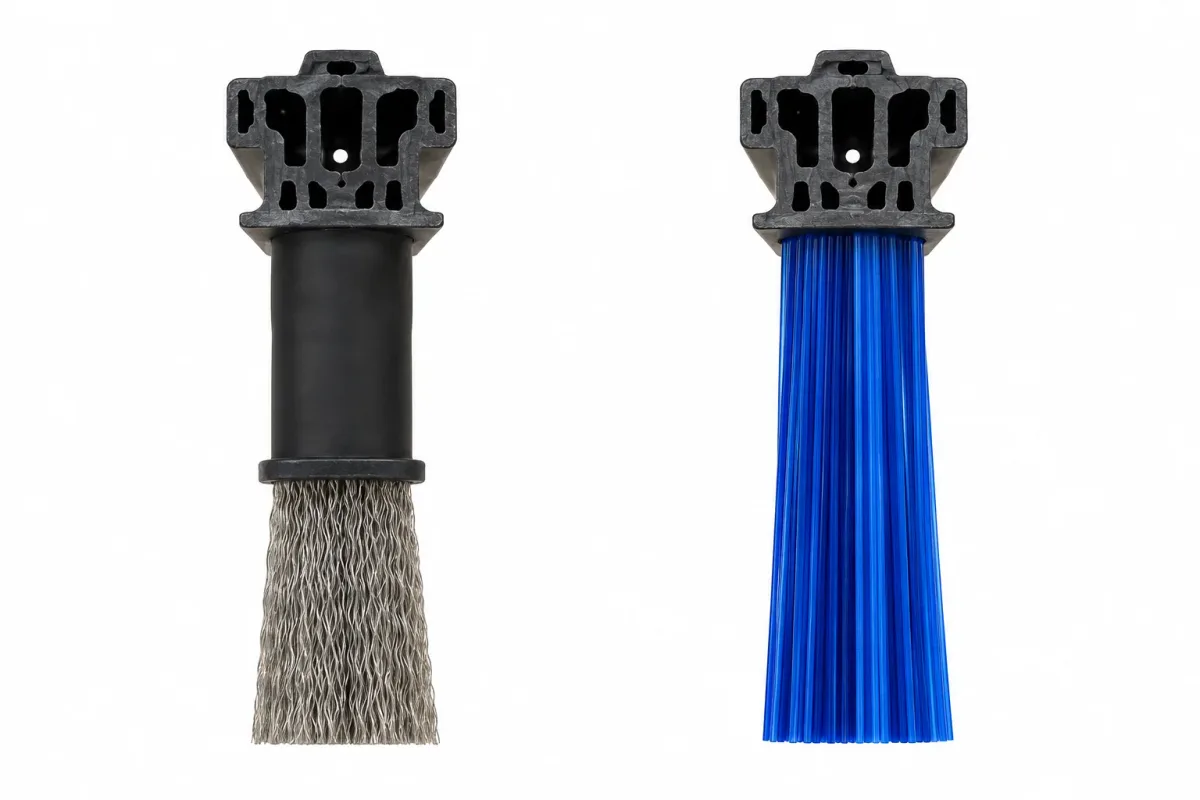
Steel wire provides stronger agitation for compacted dirt, mud, scale, and heavier curbside debris. It may be used in side brushes, gutter brooms, wafers, or main brooms approved for aggressive sweeping. Check the pavement, marking risk, machine load, and equipment manufacturer's permitted brush type before selecting wire-only fill.
Mixed Fill
Mixed fill combines PP or nylon filament with steel wire. The wire loosens compacted material while the synthetic filament flicks and carries the released debris toward the hopper. This direction is commonly reviewed for uneven paved surfaces, mixed urban road debris, and duties that need more agitation than poly alone without relying on an all-wire brush. The synthetic-to-wire ratio and row or wafer arrangement should match the machine load and cleaning requirement.
Information Needed for a Replacement Sweeper Brush
A machine brand and model are useful, but they may not identify every brush variation. For a more reliable replacement review, provide:
- Machine manufacturer, model, serial range, and original part number if available.
- Brush position: main broom, side/gutter brush, wafer assembly, cassette brush, or attachment broom.
- Overall length, working diameter, core or ring dimensions, bore, keyway, drive lug, hub, and end details.
- Filament material, wire or filament diameter, pattern, density, and color coding where relevant.
- Surface type, debris, wet or dry duty, expected service conditions, and current wear problem.
- Clear photos, a drawing, or a measured sample of the existing brush.
See custom sweeper brushes for main brooms, side brushes, wafer brushes, cassette brushes, and machine-fit replacement directions. For a replacement review, send the machine details and brush measurements through the Brushcustom RFQ form.
Frequently Asked Questions
Can I replace a street sweeper brush by operating hours alone?
Operating hours are useful for planning inspections, but they should not be the only replacement rule. Confirm the model-specific wear limit, sweep pattern, remaining bristle length or working diameter, and actual cleaning performance.
Should a main broom be replaced when the sweep pattern becomes narrow?
First check the manufacturer's adjustment procedure. If correct adjustment cannot restore the specified pattern, or the brush has reached its wear limit, replacement is normally required.
Can higher down pressure extend the life of a worn brush?
No. Increasing pressure may temporarily change contact, but it can accelerate wear, increase drag, and load the drive system. Use the machine's approved brush-height and pressure settings.
Do the main broom and side brushes need to be replaced together?
Not necessarily. They perform different functions and may wear at different rates. Inspect and replace each brush according to its own condition and the machine manual.