Two roller brushes can share the same outside diameter and working length yet differ in how their filaments are attached, how they contact the workpiece, and what can be replaced when they wear. A spiral-wound roller uses brush strip wound around a support. A tufted roller secures separate filament bundles in holes in a brush body. Neither construction is inherently the better cleaner or the longer-lasting brush; the useful choice depends on the process, machine interface, and maintenance plan.
The construction difference
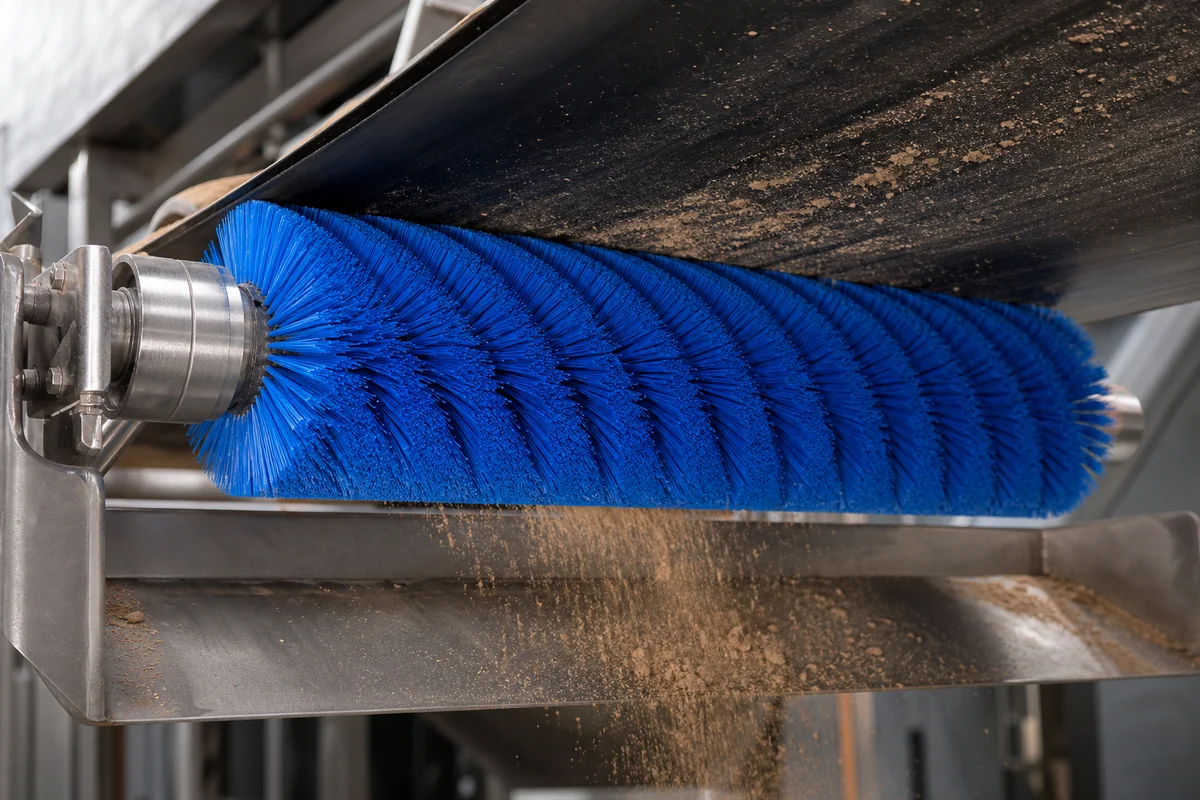
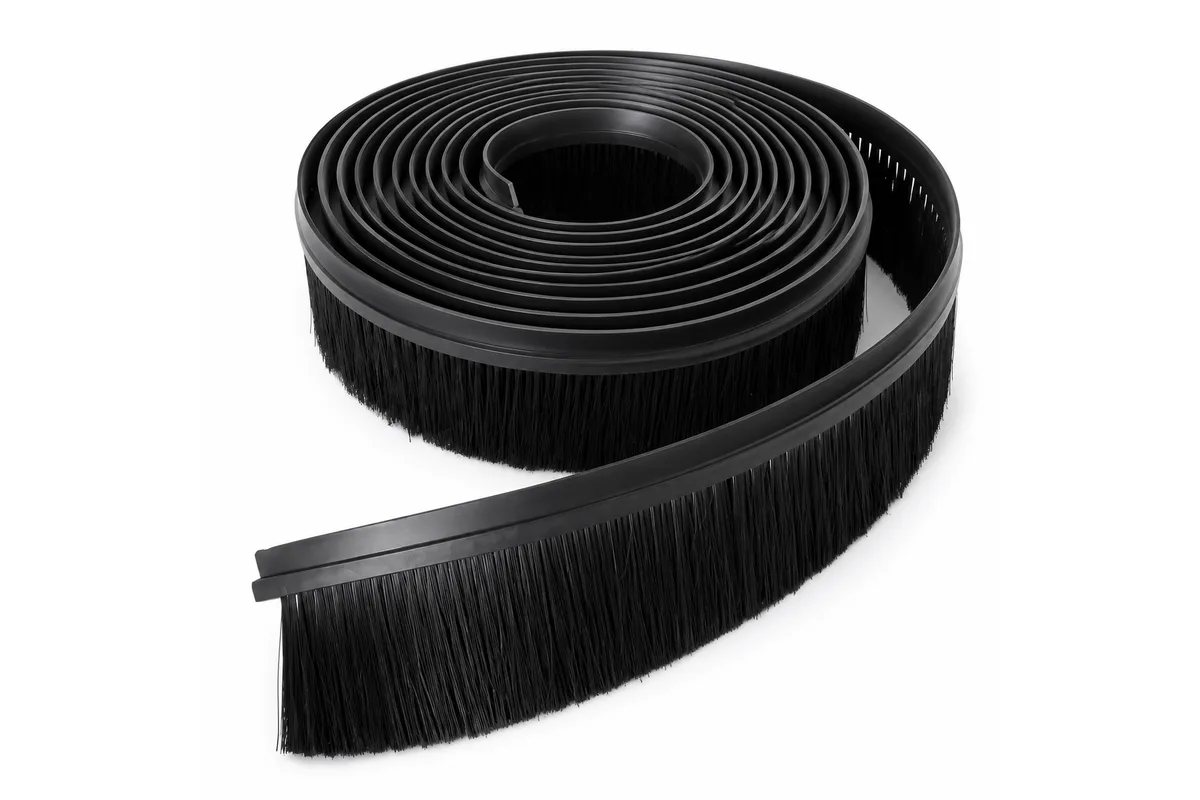
In a spiral-wound brush roller, brush strip follows a helical path around a core, tube, or other supporting structure. Metal-channel strip is one common construction. The distance between turns, or winding pitch, can be specified to leave an open working face or to create denser coverage. How the strip is secured and how the finished roller mounts to the machine depend on the design.
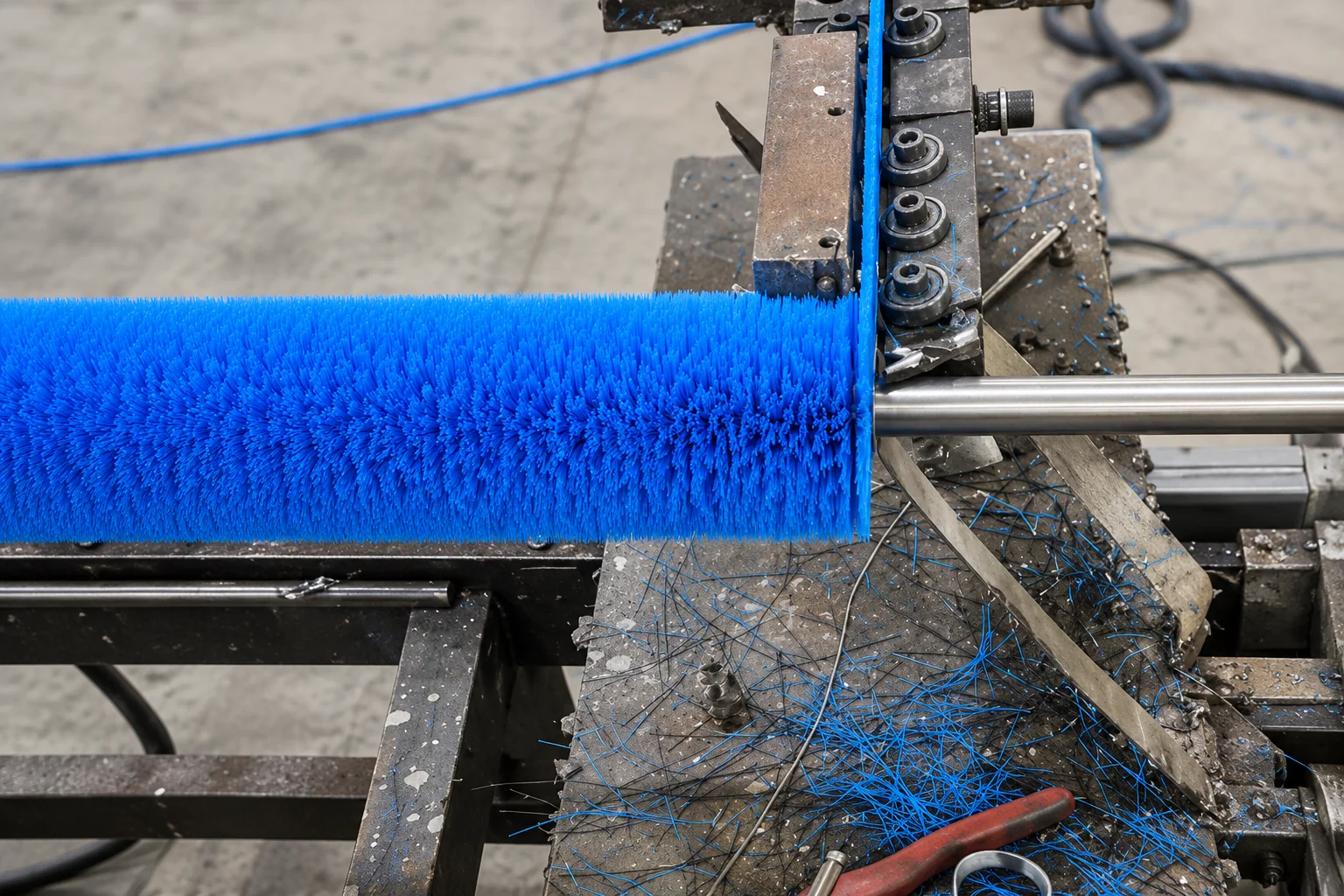
A tufted cylinder brush starts with a drilled body. Separate filament bundles are retained in the holes, commonly by staple-set or anchor-set methods. The hole positions, insertion angle, and tuft size establish the working pattern. Rows may be straight, staggered, chevron, or helical.
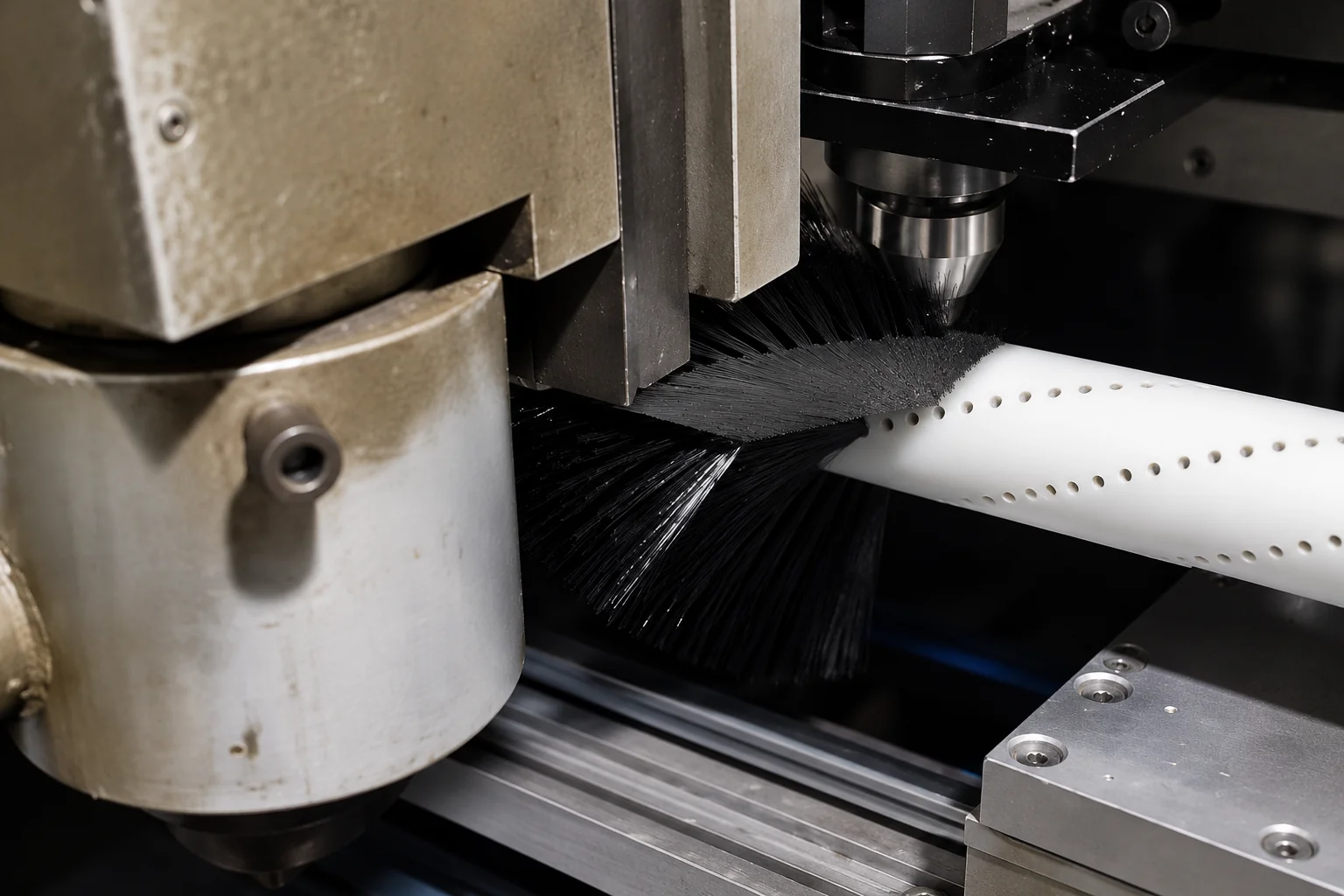
A helical tuft pattern is not a spiral-wound construction. The former describes the positions of individual tufts; the latter describes a wound strip. That distinction matters when reproducing a worn brush from a photograph or asking for a replacement based only on its visible pattern.
How the working face meets the material
Construction determines how filaments can be placed around the roller, but it does not by itself determine cleaning or finishing performance. For a spiral-wound brush, winding pitch and the fill within the strip affect contact coverage. For a tufted brush, hole spacing, tuft size, and row layout serve a similar purpose. In either type, filament material, diameter, exposed length, and installed engagement change the contact force and finished result.
Close winding may suit a process that needs dense coverage across a panel or strip. An open winding leaves space between turns for a specified contact pattern or debris movement. A tufted roller can likewise be made dense or open by changing its hole layout. A spiral-wound brush should therefore not be assumed to give more uniform contact than a tufted one with a suitable pattern.
Helical winding or tuft rows may influence where loose material moves, but the effect also depends on winding hand or row direction, rotation, workpiece travel, and the surrounding machine. The path of debris or liquid should be checked in the installed system rather than inferred from the brush’s appearance.
Operating conditions still set the limits
Neither construction has a universal advantage at high speed, under high contact load, or on delicate surfaces. Specify the workpiece, material to be removed, filament, brush diameter, engagement, RPM, and duty cycle before comparing designs. A short, stiff, densely filled brush may act more aggressively than a longer, more flexible one regardless of how the filaments are retained.
For a spiral-wound roller, review the backing, pitch, and attachment to its support. For a tufted roller, review the body material, hole layout, tuft retention, and remaining core material around the holes. On faster or longer assemblies, shaft support, vibration, and balance may also need evaluation. The permitted RPM must come from the complete brush and machine design; it cannot be inferred from the words spiral-wound or tufted.
Replacement, sections, and core reuse
Some spiral-wound rollers are built from removable brush sections on a common shaft. In an internally welded sectional design, each brush section has its own support, and several sections make up the working face. Where the shaft, retainers, and access permit it, an individual worn section may be replaced while retaining the shaft. Other spiral-wound rollers are fixed to a core and may need a complete covering or roller replacement.
For a segmented assembly, identify the brush sections and common shaft as separate parts on the drawing. Use the drawing to establish the arrangement and required measurements; do not assume that every spiral-wound roller has the same section size or removal method.
Brushcustom’s steel mill ECL replacement project provides a specific example: eight internally welded spiral brush sections were assembled on the customer’s existing shaft. It demonstrates a sectional construction and shaft reuse for that project; it does not mean every spiral brush can be serviced one section at a time.
Before replacing only one section, compare its finished working diameter with adjacent worn sections and check the assembly’s retention, alignment, and balance requirements. A new section that projects farther than its neighbors can alter contact across the working width.
In a conventional tufted roller, the bundles are secured in the drilled body. Replacing the body or complete roller is common when the filaments wear, although a removable brush body may allow the shaft to be retained. Re-tufting an existing core can also be considered if its condition and retention method permit refurbishment. Neither shaft reuse nor re-tufting should be assumed without examining the actual assembly.
Choosing a construction for an OEM or replacement project
Consider spiral winding when the machine calls for a defined wound-strip face, a specified open or close pitch, or a sectional covering that suits the shaft design. Consider tufting when a particular drilled-hole layout, localized fill, or tuft direction is needed. Either can be engineered for industrial cleaning, wiping, conveying, or surface treatment when its construction fits the process.
For an existing machine, start with the approved brush drawing or a measured sample. Changing from one construction to the other may change contact, mounting, rotating mass, and replacement procedure even if the nominal outside diameter remains the same. Test any proposed substitution in the machine before treating it as an equivalent replacement.
For a useful technical review, provide the finished outside diameter, working face length, shaft or bore dimensions, filament specification, operating speed, contact arrangement, and required replacement unit. Add winding pitch and section details for a spiral-wound roller, or the hole layout and tuft pattern for a tufted one. Brushcustom can review these details for a new brush or replacement; submit the drawing, sample information, and required quantity through the RFQ form.