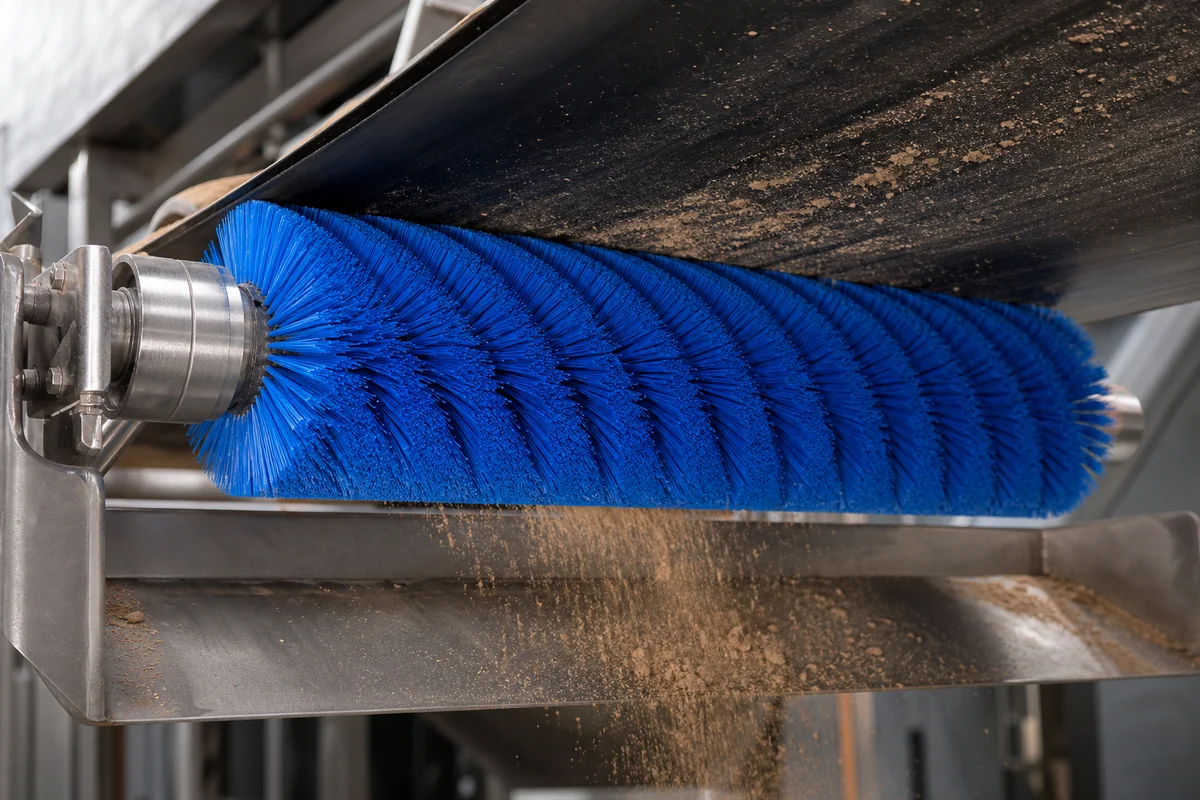
A conveyor belt cleaning brush should be selected around the belt surface and the material that remains after discharge. A fixed strip brush may provide light wiping on a suitable smooth belt. A rotary cleaner provides repeated filament contact and is often considered for chevron, cleated, ribbed, or grooved belts. Neither arrangement is a universal answer to carryback: the residue, belt construction, mounting position, and acceptable belt wear all matter.
Identify the belt surface and carryback
Start with the belt’s working surface. A smooth belt presents a relatively even contact line. Raised cleats, chevrons, ribs, and grooves create recesses that a straight wiping edge may miss. A rotary brush can reach into some of these spaces if its filament length, pattern, and installed position match the profile. Flexco’s motorized brush cleaner, for example, is specified for chevron, cleated, and raised-rib belts; its performance claims and limits apply to that cleaner, not to every rotary brush.
Next, examine what is left on the belt. Loose dry particles may be removed by light contact. Fibres can collect around a shaft or bearing area. Moist or sticky material may clog a conventional brush face, but a suitably designed rotary cleaner can also work in some such duties. If the residue smears or remains bonded to the belt, evaluate a scraper, wash system, or combined cleaning arrangement rather than increasing brush pressure without a trial.
Record the belt cover material and any surface coating. A brush that is acceptable on one rubber belt may mark or wear a different rubber, PVC, or polyurethane belt. Mechanical splices, damaged cover areas, and belt reversal also affect the cleaner design and should be identified before specifying contact.
Choose a fixed strip or rotary cleaner
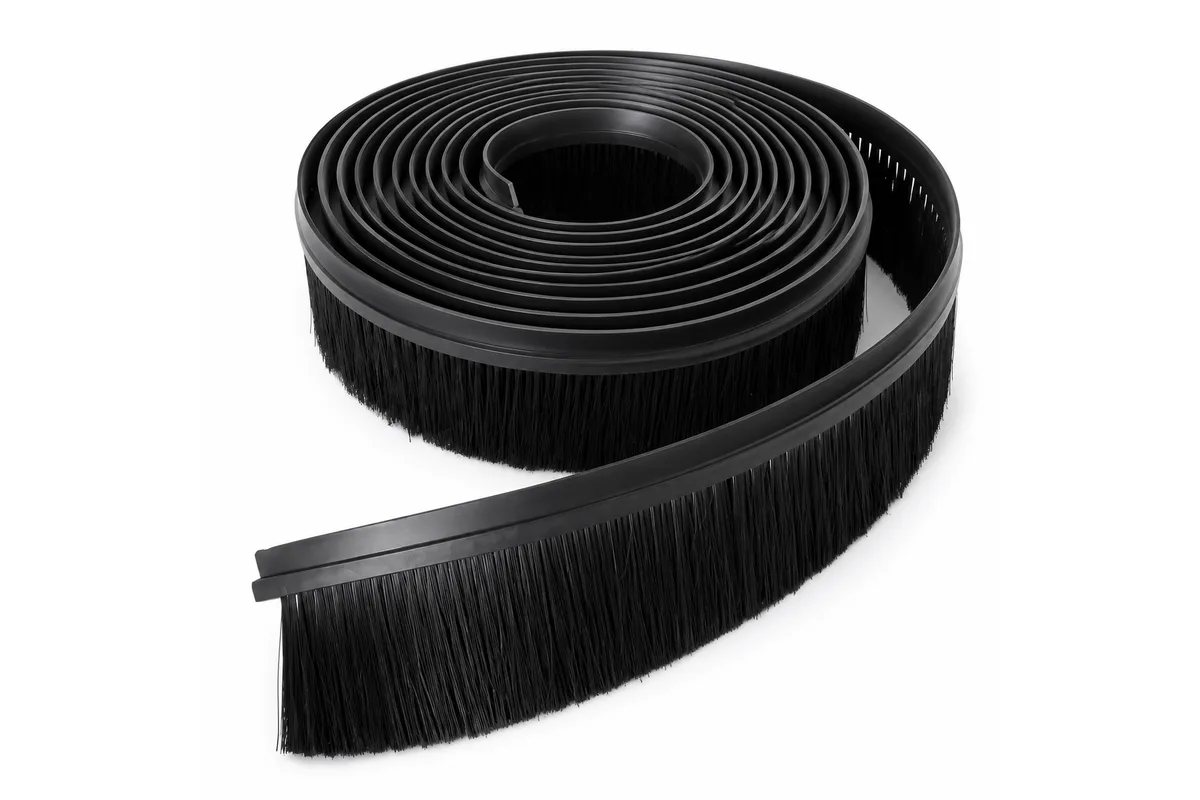
Fixed strip brush for light wiping
A stationary strip brush holds its filaments against the moving belt without a separate drive. It is a candidate for light, loose residue on a belt whose surface permits consistent contact. The holder must keep the brush aligned across the required cleaning width, and the belt needs enough support to avoid deflecting away from the filaments. Fixed brushes are unlikely to clean deep profile recesses or strongly adhered material effectively.
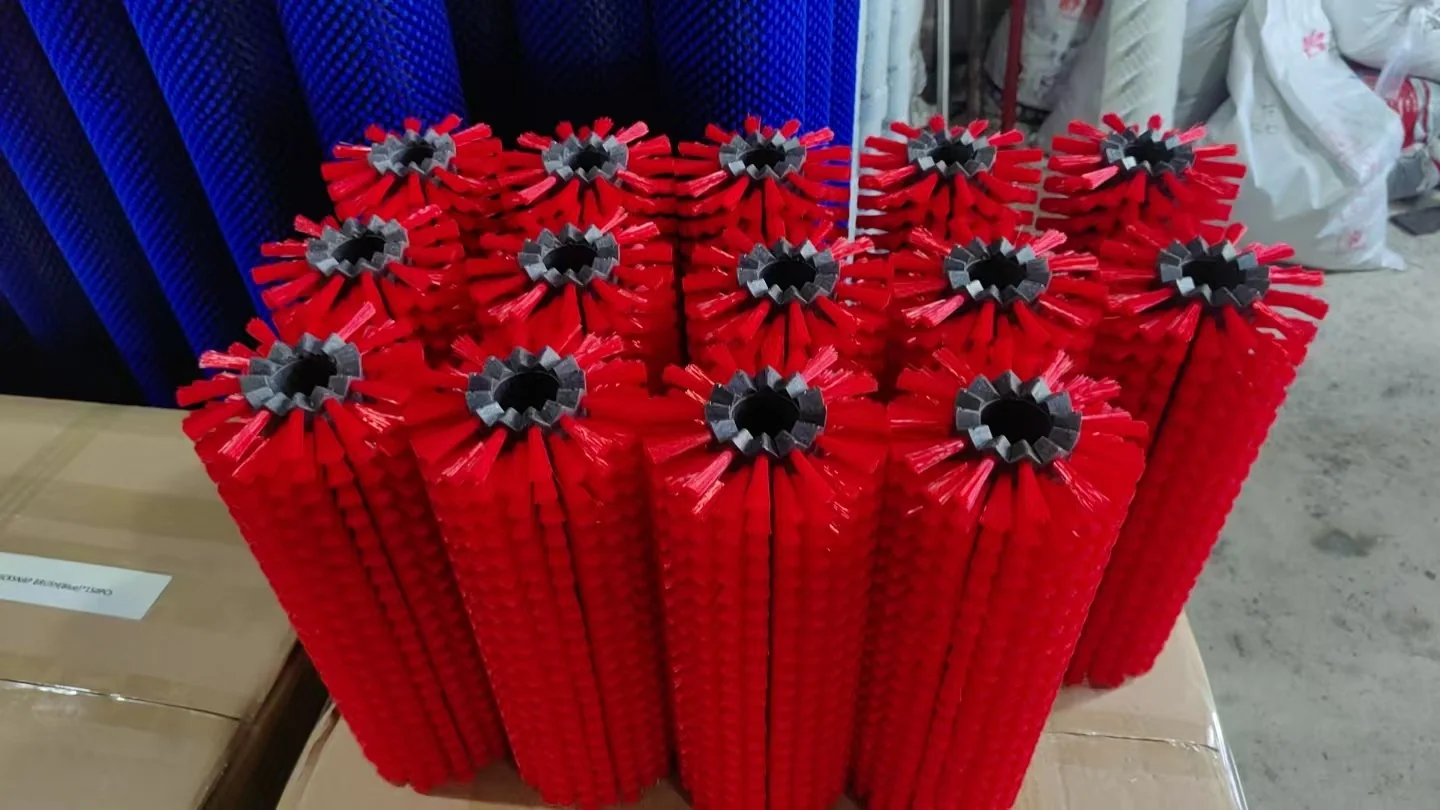
Rotary brush for repeated contact
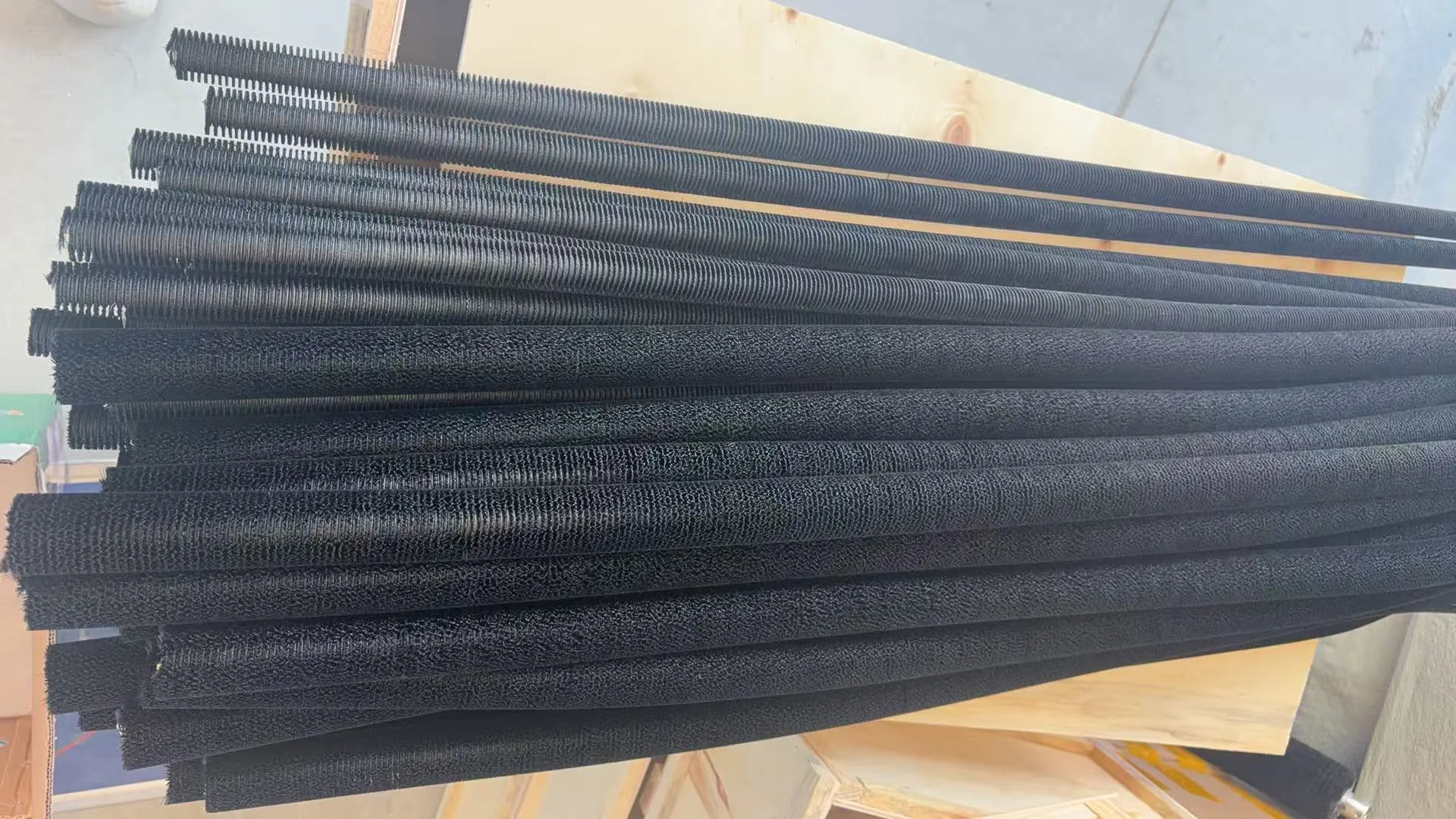
A cylinder brush has a rotating working face spanning the cleaning width. A spiral brush places filament along a helical path; its pitch and winding direction affect the contact pattern. Some rotary cleaners instead mount replaceable strip-brush segments around a shaft. Those segments rotate with the assembly, so they are not the same cleaning arrangement as a stationary strip brush.
The drive may use a motor or a conveyor-coupled mechanism, depending on the cleaner design. Rotation direction, brush speed, filament pattern, and contact allowance must be set for the actual belt and residue. Do not assume that a faster brush or greater interference will improve cleaning. A travelling belt brush is another product type: its bristle-bearing belt moves around pulleys and should not be confused with a brush used to clean the surface of a conveyor belt.
Check the installation before specifying the brush
Brush cleaners are often placed on the return side after the discharge pulley, where they can remove residual material before it reaches return rollers. The exact position must suit the conveyor layout and the route for collected debris. If brush contact changes the belt’s line of travel, local belt support may be needed. Martin Engineering’s belt-cleaner guidance explains why support and access matter at secondary cleaning positions; its dimensions and installation details should not be applied to a different cleaner without review.
Check the usable belt width, available envelope for the brush and drive, mounting interface, guarding, and access for adjustment and replacement. Leave room for removed material to fall into the intended collection area rather than onto the conveyor structure. Confirm how the cleaner passes splices and whether the belt can reverse. For an existing machine, a drawing of the installed space and clear photographs of the belt, discharge area, and current cleaner are more useful than belt width alone.
Set filament contact and verify the result
Filament material, diameter, trim length, and fill density determine how the brush deflects and recovers. Nylon and polypropylene are possible synthetic fills, but the material name alone does not establish cleaning performance or compatibility with a particular belt. Select the grade and construction against residue, moisture, chemicals, temperature, and belt-surface sensitivity.
Set contact so the brush reaches the target surface without excessive drag, belt deflection, or rapid filament wear. There is no universal interference or rotational speed for all conveyor belts. During a representative trial, inspect the residual carryback, belt surface, splice passage, brush buildup, vibration, and where the removed material goes. Recheck the contact as the filaments wear. Habasit’s conveyor-belt engineering guide discusses fixed and rotating brushes and notes that cleaning devices need regular cleaning and correct installation.
Information to send for a custom brush
For an OEM design or replacement enquiry, provide:
- Belt and residue: belt width, cover material, surface profile, splice type, belt direction and speed, and the carryback to remove.
- Cleaning position: a layout drawing showing the discharge point, belt support, available space, debris collection, and access for maintenance.
- Brush interface: fixed holder dimensions or, for a rotary assembly, the required working width, outside diameter, shaft ends, bearings, drive arrangement, and operating direction.
- Project conditions: moisture, chemicals, temperature, required quantity, drawing revision, and any restrictions on belt marking or filament shedding.
An existing brush sample helps establish its construction and mounting fit, but worn filament trim should not be treated as the original specification. If cleaning performance is uncertain, agree on a sample or operating trial before production quantities are fixed.
Brushcustom manufactures custom cylinder brushes, spiral brushes, and strip brushes to customer drawings and approved samples. For the wider range of conveyor brush applications, see Conveyor Brushes for OEM Systems. Send your belt and mounting details through the RFQ form for a manufacturing review.