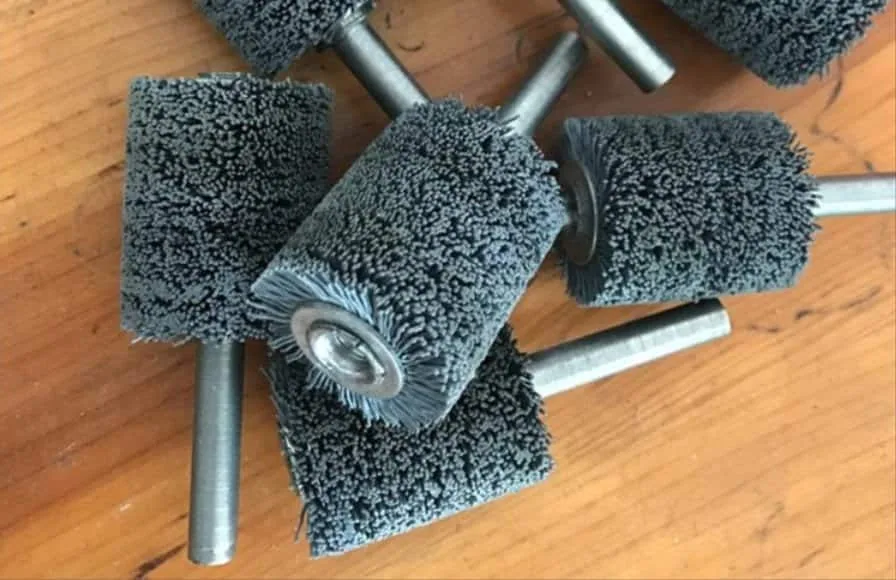
Industrial brushes are used throughout metalworking when a part needs controlled cleaning, burr removal, surface preparation, or finishing without changing the part geometry more than the process allows. In sheet metal processing, machining, welding, casting, and fabrication, the right brush direction depends on the surface condition, material, edge requirement, machine setup, and inspection method.
This educational guide explains how metalworking processes affect brush selection rather than listing every brush type in isolation. Use it to compare where wire brushes, abrasive nylon brushes, disc brushes, roller brushes, pipe brushes, and strip brushes are commonly reviewed. For custom production options organized around the application, see our industrial brushes for metal processing and surface treatment.
Where Industrial Brushes Fit in Metalworking
Metalworking brushes are usually selected for one of four jobs: removing unwanted material, preparing a surface, controlling an edge, or supporting a repeatable production process. A brush should be aggressive enough to remove rust, scale, burrs, weld residue, or loose contamination, but controlled enough to avoid rounding an edge too far, marking a finished surface, embedding contamination, or changing a critical dimension.
The same application may use different brush forms depending on the equipment. A handheld operation may use a wheel, cup, or end brush, while an automated line may use a roller brush, disc brush, abrasive filament brush, or custom-mounted assembly. For production work, brush life, RPM, balance, replacement method, and material compatibility become part of the selection.
Surface Preparation and Cleaning
Before welding, coating, bonding, painting, inspection, or assembly, metal surfaces often need loose rust, oxidation, oil residue, dust, paint, or process contamination removed. Wire brushes are usually reviewed for stronger cleaning on ferrous metals, while nylon abrasive brushes may be reviewed where the surface needs a more controlled brushing action.
Surface preparation is not only about making the part look clean. The target is a surface condition that supports the next process step. For coating or painting, the brush direction should be matched to the required surface profile. For assembly or inspection, the brush should remove loose material without leaving an aggressive scratch pattern that causes later quality issues.
Related brushes: Custom Wire Wheel Brushes, Custom Disc Brushes, and Custom Cylinder Brushes
Mill Scale, Rust, and Oxide Removal
Sheet metal processing and heavy fabrication often create oxide layers, mill scale, weld discoloration, or rust that must be removed before coating, machining, welding, or final finishing. Wire wheel brushes, cup brushes, and line-mounted roller brushes are common directions for this work, depending on whether the surface is a small edge, a weld seam, a broad sheet, or a continuous line.
For stainless steel, titanium, aluminum, or corrosion-sensitive parts, the brush wire material must be selected carefully. Carbon steel wire can leave ferrous residue, while stainless steel, brass, bronze, or titanium wire may be reviewed where contamination control matters. For elevated-temperature scale or heat-affected surfaces, see the high-temperature brush filament guide.
Deburring and Edge Blending
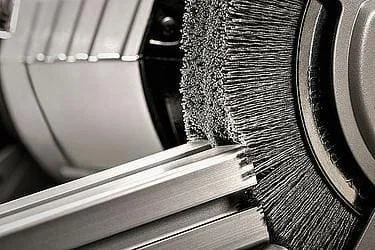
Cutting, drilling, milling, laser cutting, stamping, and punching can leave burrs or sharp edges. Industrial brushes are used to remove light burrs, blend transitions, and make edges safer for handling or assembly. The brush should remove the burr without over-rounding the feature, cutting into the base material, or leaving broken burr fragments in holes or slots.
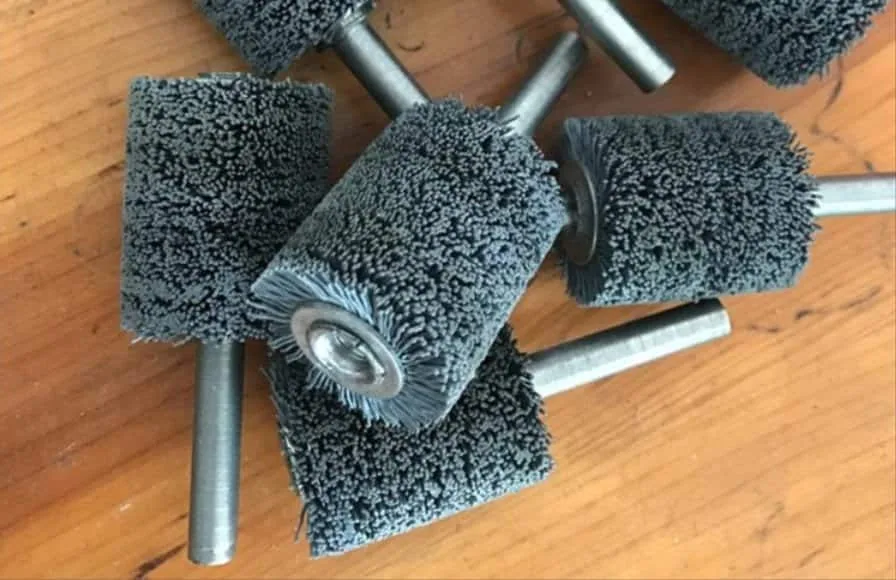
Custom disc brushes are often reviewed for face-contact deburring and edge rounding, while wire wheel brushes are reviewed for stronger edge-contact work. Abrasive nylon brushes can be useful where a flexible cutting action is needed and the finish requirement is more controlled than a plain wire brush.
Weld Cleaning and Heat-Scale Removal
After welding, parts may have heat tint, slag, spatter, oxide, or loose residue around the weld area. Wire brushes are commonly used to clean weld seams, prepare welded parts for coating, and remove loose contamination before inspection or secondary finishing. The brush form depends on access: wheel brushes for edges and seams, cup brushes for broader areas, and end brushes for corners or tighter spaces.
Weld cleaning should be matched to the base metal and the required finish. A brush that is too aggressive may mark the surface or change the weld appearance, while the wrong wire material may introduce contamination. For stainless steel or titanium work, confirm whether a matching or approved wire material is required.
Internal Bores, Cross-Holes, and Precision Passages
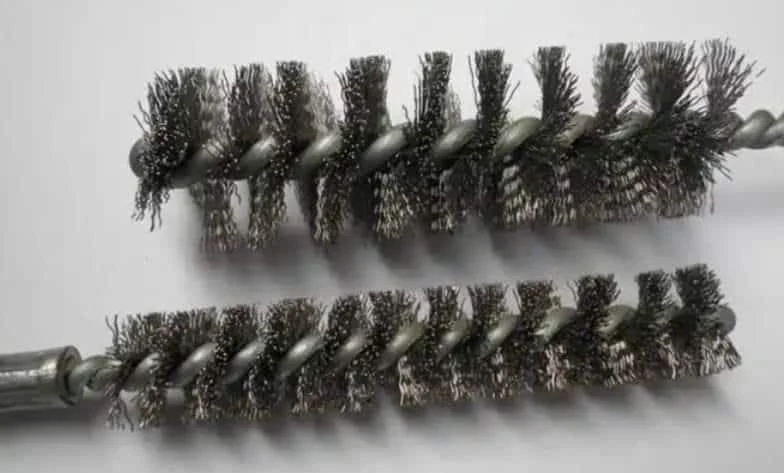
Machined parts often include bores, ports, tubes, manifolds, oil passages, hydraulic passages, and cross-holes that cannot be reached by a flat brush. Pipe and tube brushes, twisted-in-wire brushes, abrasive honing brushes, and small end brushes are reviewed for internal cleaning, light deburring, and residue removal.
For internal passages, brush diameter, abrasive type, filament stiffness, stem flexibility, overall length, and access direction matter. The brush should contact the internal surface enough to clean or deburr the part without getting stuck, breaking, or changing a controlled bore dimension.
Finishing, Polishing, and Surface Conditioning
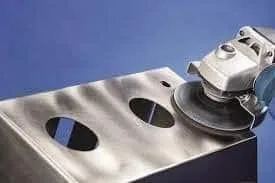
Finishing and surface conditioning applications use brush contact to create a more consistent surface before coating, inspection, bonding, or final assembly. Nylon abrasive brushes, disc brushes, and roller brushes may be reviewed where the process needs a controlled satin finish, light polishing, edge blending, or a repeatable surface effect.
The final result depends on abrasive grit, filament diameter, brush density, trim length, RPM, contact pressure, feed speed, and workpiece material. For broader finishing questions, see the industrial polishing brush guide and the nylon brush vs wire brush selection guide.
Brush Types Commonly Reviewed
| Process Need | Brush Direction | Typical Review Notes |
|---|---|---|
| Rust, scale, weld residue, and stronger cleaning | Wire wheel, cup, or end brushes | Confirm wire material, wire form, RPM, guard clearance, and surface contamination limits. |
| Controlled deburring and edge rounding | Disc brushes or abrasive nylon brushes | Confirm burr condition, edge target, abrasive level, contact pressure, and inspection method. |
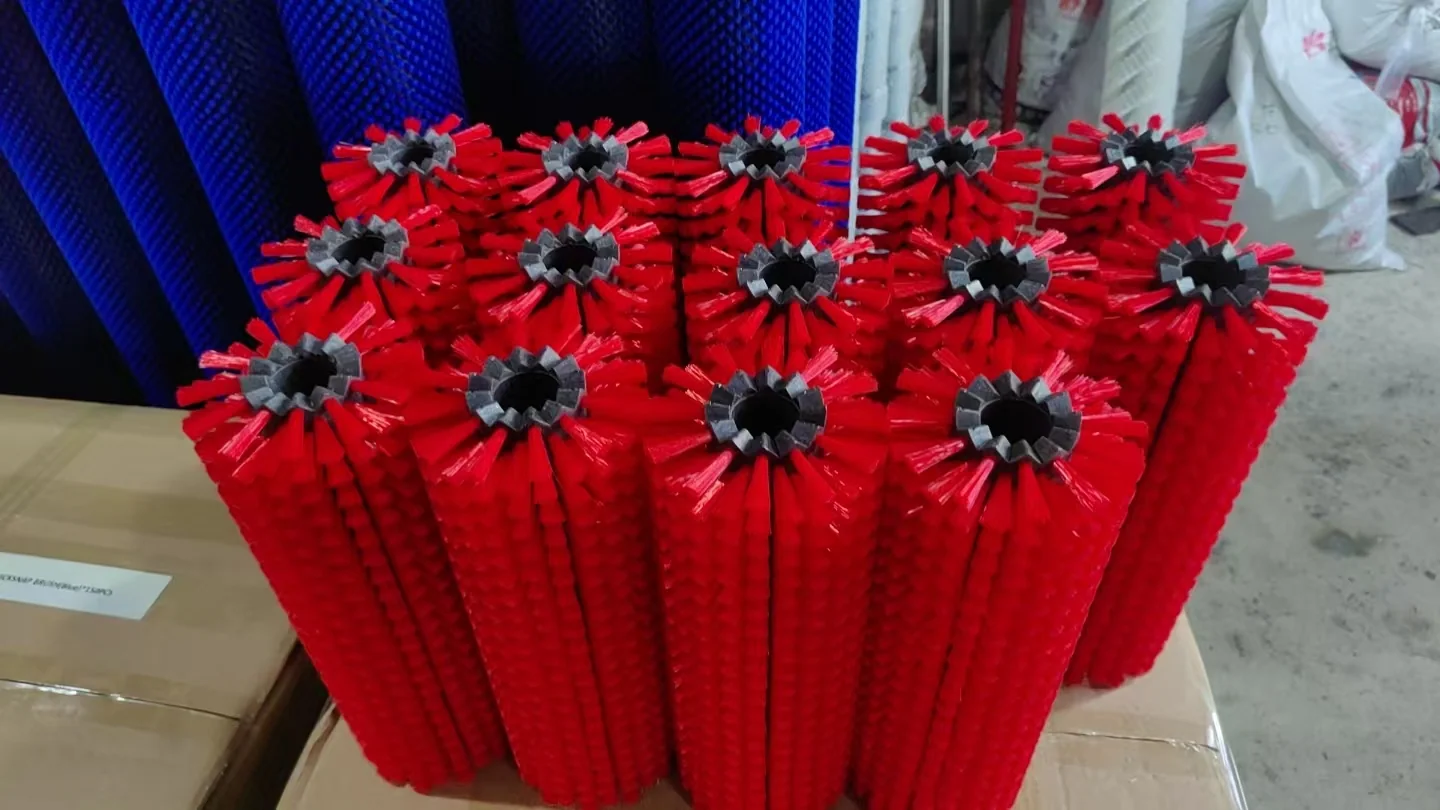
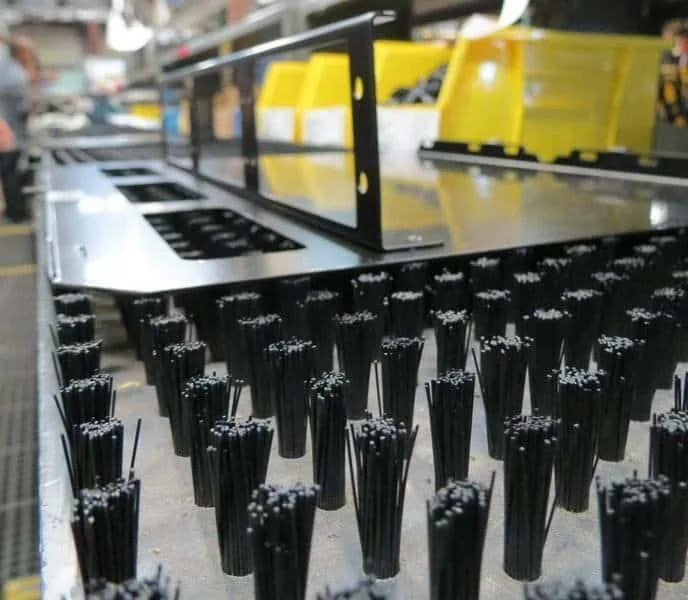
| Sheet metal processing or wide surface treatment | Cylinder / roller brushes | Confirm face length, finished OD, shaft detail, line speed, balance requirement, and replacement method. |
| Continuous strip wringing, de-oiling, oiling, and fluid control | Custom Nonwoven Mill Rolls | Confirm nonwoven working surface, finished OD, face length, shaft detail, line speed, nip pressure, process liquid, temperature, and chemical compatibility. |
| Internal bores, tubes, ports, and cross-holes | Pipe and tube brushes | Confirm ID, brush diameter, overall length, stem type, fill material, and access direction. |
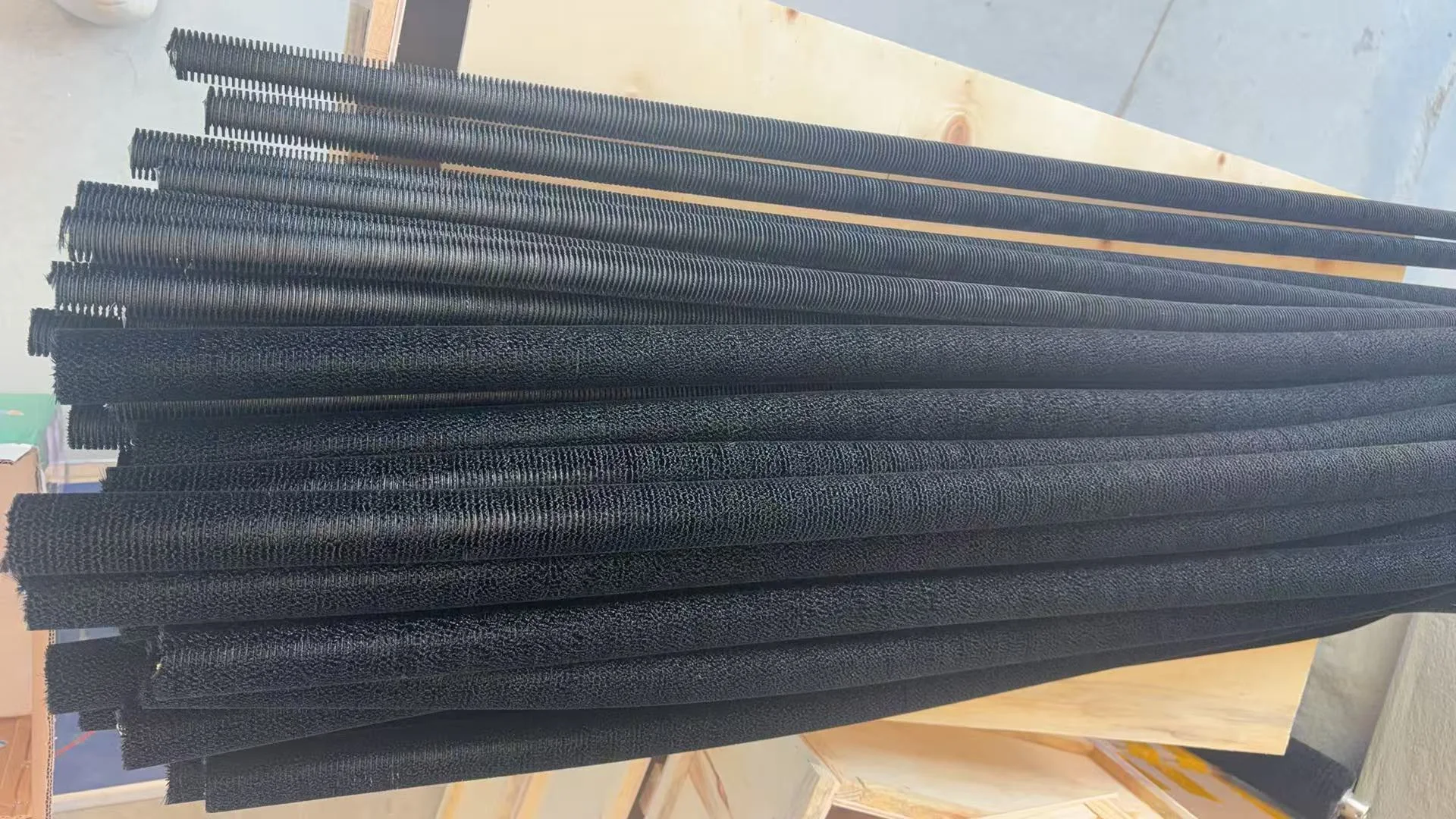
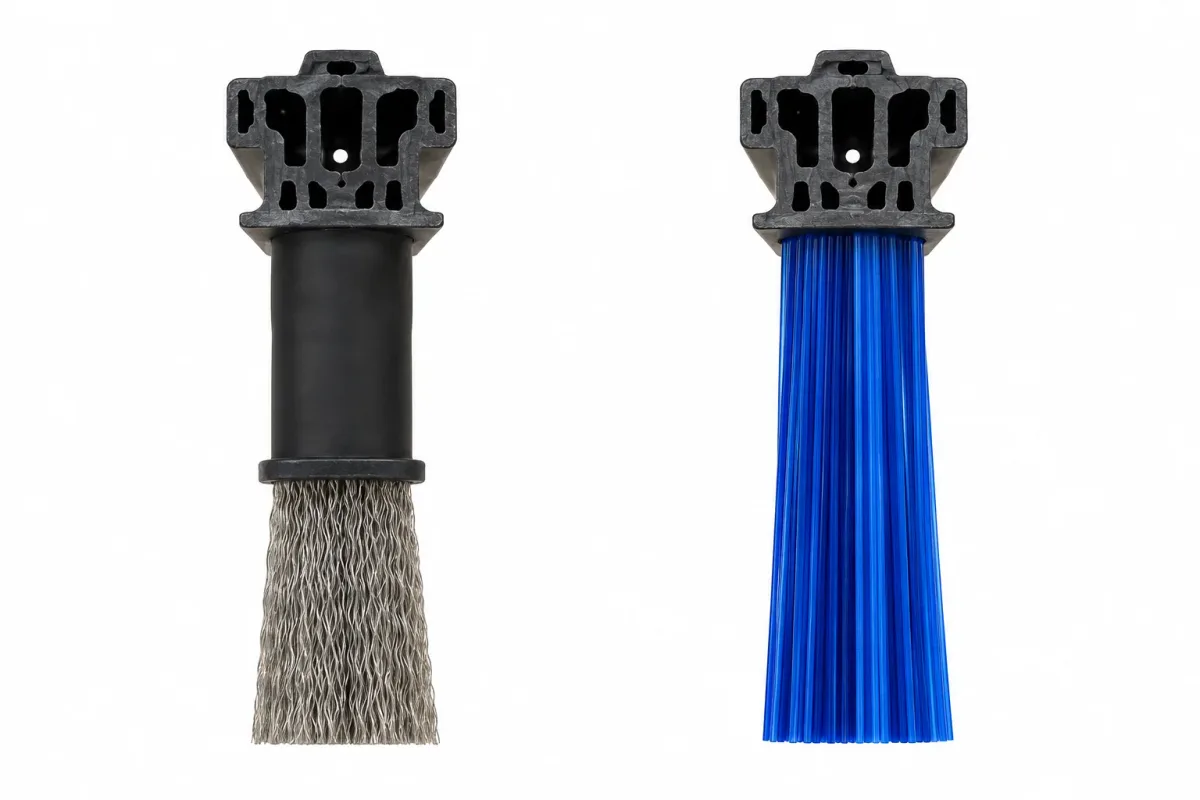
| Equipment openings, barriers, guiding, or shielding | Strip brushes | Confirm channel material, trim height, backing, mounting, gap size, and exposure conditions. |
Automotive and Aerospace Metalworking Uses
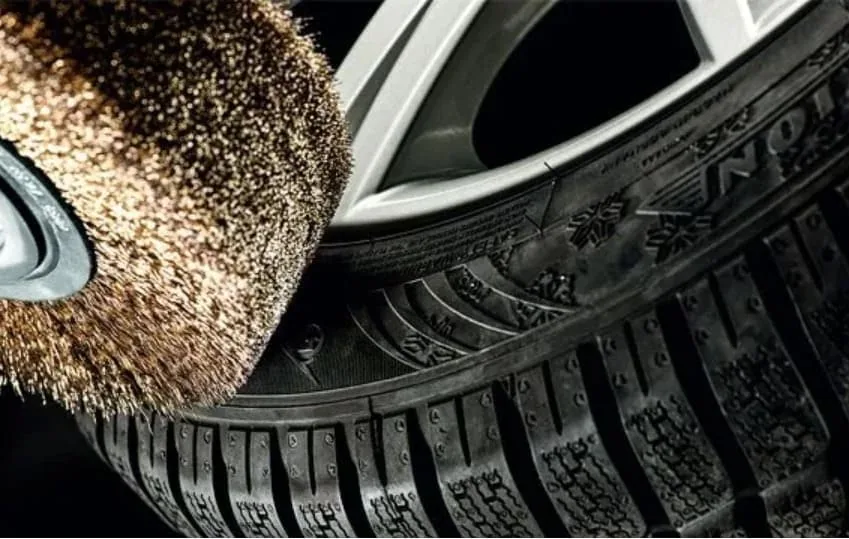
Automotive and aerospace parts often combine several brush requirements in one production route: machined component deburring, bore and passage cleaning, weld cleaning, surface preparation, and controlled finishing. Engine blocks, housings, valve bodies, transmission components, aluminum parts, and precision aerospace hardware may all require different brush materials and contact methods.
These projects should be reviewed against the approved process, not only by brush appearance. The buyer should define the workpiece material, burr size, finish target, cleanliness requirement, production speed, fixture access, and whether the brush material must avoid ferrous contamination or surface marking.
What to Confirm Before Selecting a Metalworking Brush
Before quoting or releasing a custom metalworking brush, confirm the workpiece material, part geometry, surface condition, burr or residue type, target finish, machine setup, RPM, feed speed, contact pressure, coolant or chemical exposure, temperature, and required replacement method. For rotating brushes, also confirm finished OD, face width, shaft or arbor detail, balance requirement, and guard clearance.
If the part is stainless steel, titanium, aluminum, medical, aerospace, or corrosion-sensitive, material compatibility should be reviewed before choosing carbon steel, stainless steel, brass, bronze, titanium, nylon abrasive, or ceramic fiber. The correct brush direction is the one that meets the cleaning or finishing target while staying inside the part's dimensional, surface, and contamination limits.
FAQ
What industrial brushes are used in sheet metal processing?
Sheet metal processing often uses roller brushes for wide surface cleaning, wire wheel brushes for edge and weld work, disc brushes for deburring or edge rounding, and abrasive nylon brushes for more controlled surface conditioning. The right brush depends on sheet material, thickness, scale, burr condition, line speed, and finish target.
Which brush is best for metal deburring?
There is no single best brush for every deburring process. Disc brushes are often reviewed for controlled face-contact deburring, wire wheel brushes for stronger edge-contact work, and abrasive nylon brushes where a flexible cutting action is needed. The decision should be based on burr size, material, edge target, RPM, and inspection method.
Can one brush handle cleaning, deburring, and finishing?
Sometimes one brush direction can support more than one task, but production processes usually need a defined priority. A brush selected for aggressive rust or scale removal may be too strong for final finishing, while a finishing brush may not remove heavy burrs. If multiple results are required, test the brush on the actual part before release.
When should stainless steel wire be used instead of carbon steel wire?
Stainless steel wire should be reviewed when corrosion resistance, stainless workpieces, wet exposure, or reduced ferrous contamination risk matters. Carbon steel wire may be suitable for aggressive cleaning on ferrous materials where rusting or ferrous residue is acceptable.
Which process details affect metalworking brush selection?
Selection depends on the part material, surface condition, burr or residue type, target finish, contact direction, available space, RPM or line speed, pressure, and coolant, chemical, or temperature exposure. Production equipment may also require a defined balance grade, replacement method, contamination limit, inspection method, or service-life target.