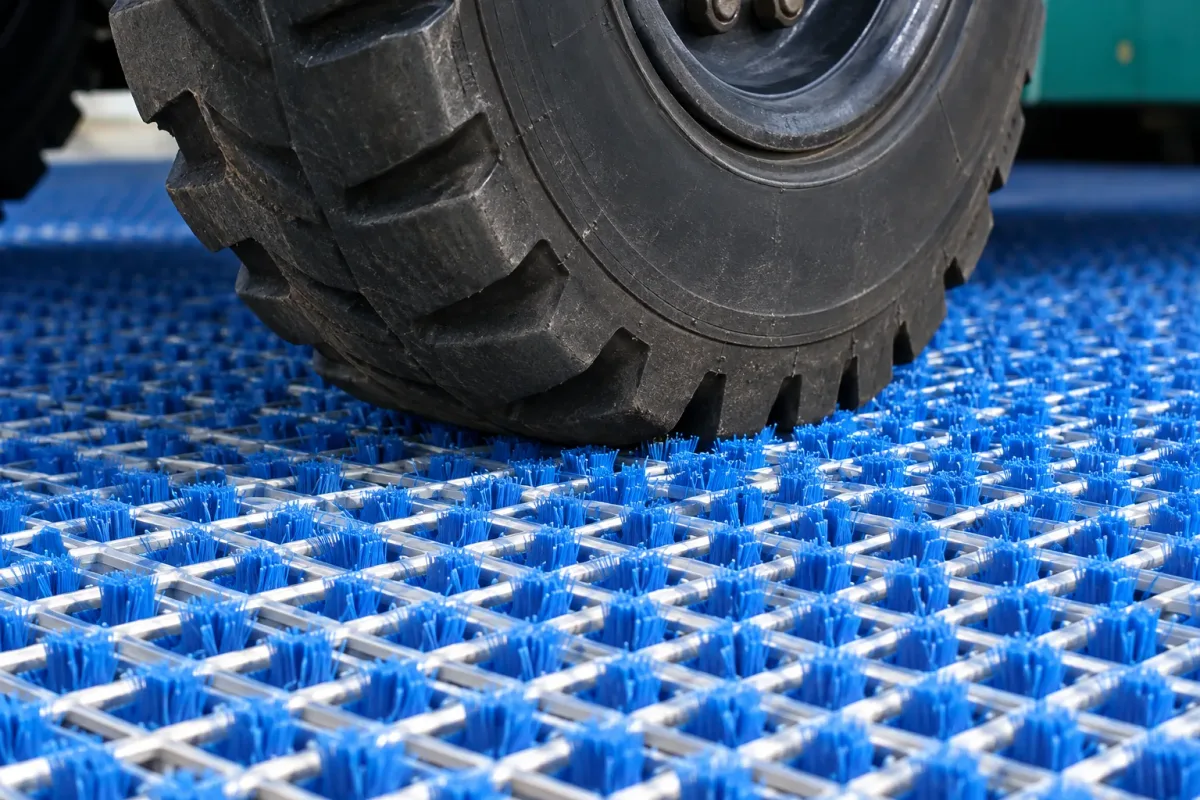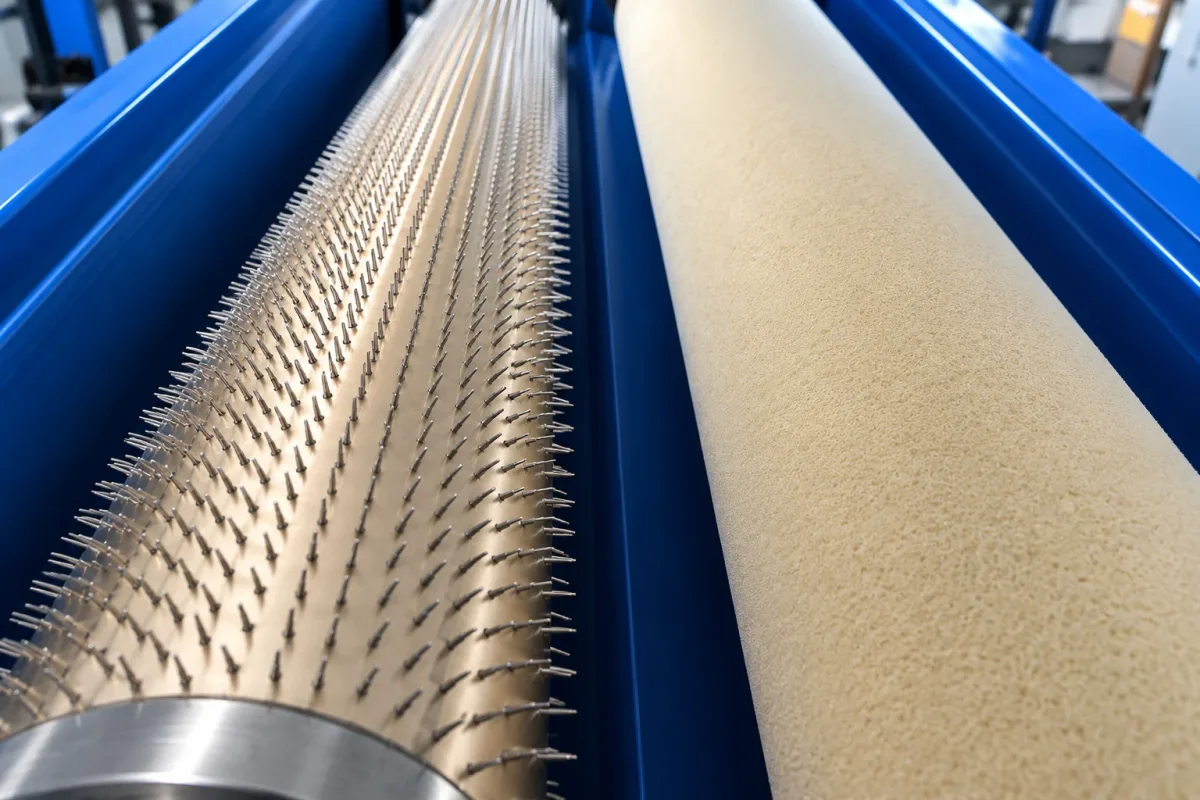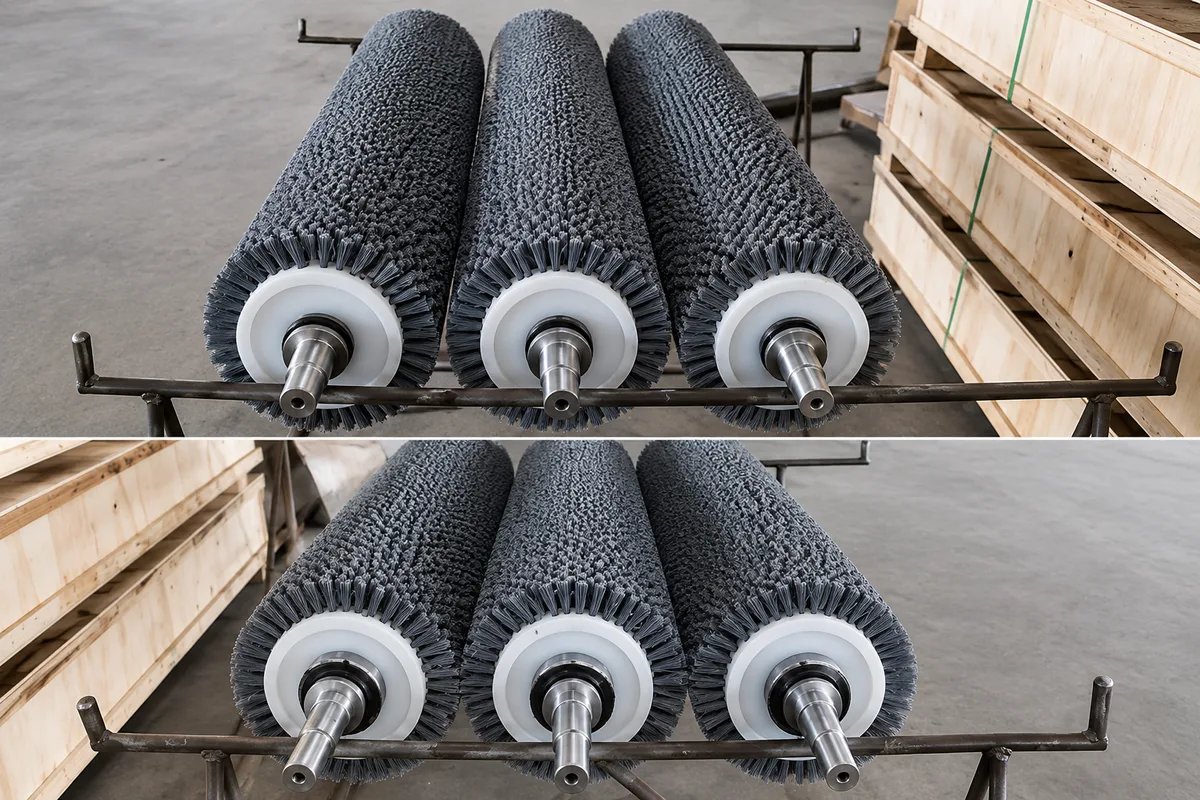
Inspect the broom if its sweep pattern becomes uneven or cassettes loosen. Replace worn or damaged cassettes according to the machine manufacturer’s limits, and correct any core or retention faults before returning the broom to service. Poor clearing alone does not establish that the cassettes need replacing. Before ordering, match the replacement to the existing core and its specified fill arrangement.
Brushcustom manufactures custom airport runway brush cassettes to customer-confirmed drawings, samples or core specifications.
What Is an Airport Runway Brush Cassette?
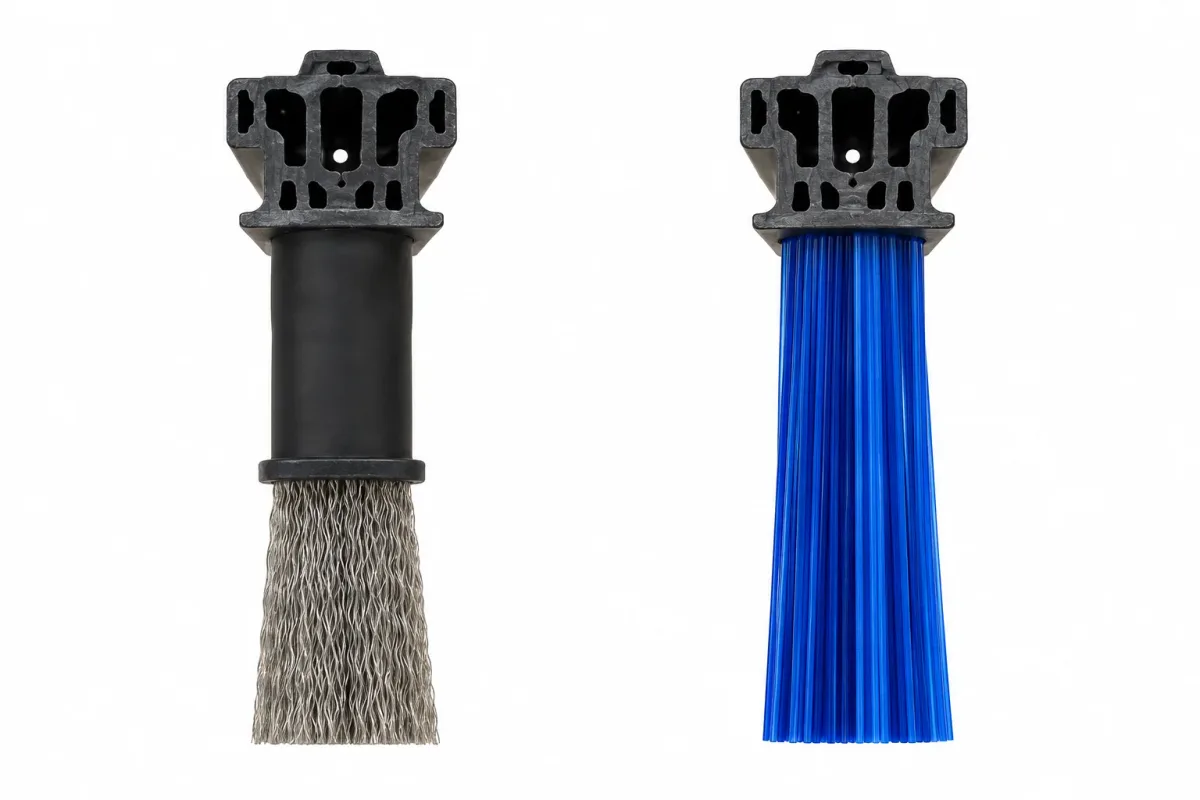
An airport runway brush cassette is a replaceable linear brush element installed in a track around a reusable rotary broom core. Multiple cassettes form the working face used by runway sweepers and snow-clearing equipment.
Cassette systems differ from wafer brooms. A cassette slides into a longitudinal track, while a wafer is a circular brush ring stacked along a shaft. Their dimensions, quantities and replacement procedures are not interchangeable.
A machine model identifies the equipment family; the installed core and cassette dimensions determine the replacement fit.
Inspect the Existing Brush Before Ordering
Inspect the complete assembly before deciding whether to replace individual cassettes or a full refill set.
| Area | What to inspect | Why it matters |
|---|---|---|
| Bristles | Remaining trim, broken or missing fill, permanent bending and uneven wear | Shows whether effective contact can still be maintained |
| Brush face | Low sections, different diameters and incomplete sweep pattern | May indicate uneven wear or mixed cassette condition |
| Cassette base | Cracks, deformation, corrosion and movement in the track | A damaged base may loosen during operation |
| Retention | Stops, locking parts, carrier rings and end restraints | Prevents cassette movement or release |
| Core tracks | Worn, bent, obstructed or damaged profiles | Determines whether the replacement can be installed and retained |
| Guides | Worn or broken guide components | Can cause poor fit and difficult replacement |
| Operation | Vibration, noise, abnormal load and inconsistent clearing | May indicate installation, core or balance problems |
| Pavement result | Snow, slush or debris left after the normal pass | Confirms whether the assembly still performs its task |
Use the wear limits and sweep-pattern procedure in the machine manual. Check the brush adjustment as well as wear: an uneven pattern alone does not identify the faulty component. The Øveraasen RS400 brush check, for example, specifies a procedure for that machine; its pattern dimensions are not universal replacement limits.
Individual Cassette or Complete Refill Set?
Replace Individual Cassettes
Individual replacement may be appropriate when damage is limited, the remaining cassettes have similar trim and stiffness, the core remains serviceable, and the machine manufacturer permits partial replacement.
After partial replacement, check that new and worn cassettes do not create large differences in working diameter or contact.
Replace a Row, Track or Core Section
Consider replacing a row, track or core section only where the equipment instructions allow it. Check the section boundary and the condition of adjacent cassettes; concentrated wear may also require adjustment or core repairs.
Replace the Complete Refill Set
Consider a complete refill when wear affects most of the broom or damage makes partial replacement unsuitable under the equipment manufacturer’s instructions. A full refill gives a more consistent starting trim than mixing new cassettes with heavily worn ones, but it will not repair a damaged core or incorrect adjustment.
If the material sequence is unknown, first establish the correct layout from the equipment documentation or manufacturer. An unknown sequence is not, by itself, a reason to replace the complete set.
Build the Replacement Cassette Specification
Use one replacement record for the dimensions, fill and set layout:
- Machine and core: make, model, revision or serial range, part reference, core dimensions, and single- or split-core construction.
- Cassette fit: length, base cross-section, retention features and required new-cassette trim. State the units, drawing revision and dimensional tolerances.
- Fill: PP or steel wire, straight or crimped construction, diameter, density or bundle requirement, and any specified wire coating.
- Arrangement: track layout, material sequence, starting position, and identical or mirrored halves where applicable.
- Quantity: individual cassettes per track, per half core and per complete refill, using the terminology in the equipment drawing.
State the intended duty and any relevant cold-weather or chemical exposure requirements alongside this record.
A dimensioned cross-section or a sample with verified original dimensions is more useful than photographs alone. Record worn trim separately from the required new trim. A distorted base or heavily worn sample cannot reliably show the original manufactured dimensions.
Keep row count, track count and individual cassette count separate. Do not convert between them without the core layout, or assume that pieces per box equal one complete refill.
Choose PP, Steel or Alternating Fill
Polypropylene Cassettes
PP is used in snow, slush, water and loose-debris sweeping configurations. Match the fill to the machine’s specified construction and operating conditions; the material name alone does not establish cold-weather suitability or sweeping performance.
Steel-Wire Cassettes
Steel wire provides more aggressive contact where the machine’s specified configuration calls for it. Do not substitute it for PP simply because it appears more durable. Broken or detached wire also requires attention as a potential FOD source.
Alternating PP and Steel Sets
Follow the equipment manufacturer’s specified sequence. “Poly/wire combination” does not describe where each material belongs, and changing the arrangement can affect contact, throwing action, wear and machine load.
Treat Bristle Retention as a FOD-Control Requirement
FAA guidance warns that bristles can detach from sweepers and become a source of foreign object debris. For dedicated FOD-removal operations, the FAA does not recommend metal-bristle or metal-spine brushes; plastic or combination brushes may be appropriate only after consulting the equipment manufacturer. It also recommends inspecting the pavement after sweeping. See FAA AC 150/5210-24A.
This does not mean wire cassettes are prohibited in every runway snow-clearing application. Manufacturer-specific winter equipment may use wire, synthetic or mixed configurations. Confirm the permitted construction for the exact machine and state whether the intended duty is winter snow or slush removal, compacted-residue removal, routine pavement sweeping or dedicated FOD removal.
Inspection should look for loose bundles, broken wire, missing filament and movement of the cassette base. If the brush loses material during operation, identify and correct the source before returning it to service.
Check the Core During Cassette Replacement
New cassettes cannot compensate for a damaged core. After removal, clean and inspect the tracks, guide profiles, carrier rings, locking parts and fasteners. Look for corrosion, deformation, impact damage, trapped material and features that could prevent the cassette from seating fully.
Use only the installation, lubrication and tightening method permitted by the equipment manufacturer. Do not apply a universal grease, torque or dimensional tolerance.
Installation and Post-Replacement Checks
Follow the equipment manufacturer’s isolation, lifting and guarding instructions. Before returning the machine to service, verify the material sequence and cassette count, confirm that every cassette is fully seated and locked, check clearance, inspect for loose fill, and complete the prescribed initial run or calibration.
The operational check should include abnormal vibration or noise, sweep-pattern consistency and a pavement inspection after the test. Some equipment procedures require the new brush to rotate above the ground before work begins so loose material can be detected and removed; use this step only where the exact machine manual requires it.
Packaging and Traceability
Label boxes so the maintenance team can identify the machine or fleet reference, drawing revision, batch, material and piece count. Mark which core half or installation position each box serves where applicable.
Separate packing for different core halves or material sequences can help avoid installation errors. Agree any inspection documents or first-article records before production; these are not included automatically with every order.
Frequently Asked Questions
Is the machine model enough to order replacement cassettes?
No. Confirm the core, cassette profile, length, track arrangement and complete-set quantity. Machine revisions can use different cores.
Can an aftermarket cassette affect the core warranty?
Check the warranty terms before ordering. The Øveraasen replacement instructions state that the brush-shaft warranty depends on using original cassettes. That condition applies to the equipment covered by those instructions, not automatically to every brand. Dimensional fit alone does not establish warranty acceptance.
Should replacement be based on operating hours?
Use any service interval specified in the machine manual. Operating hours help plan inspections, but do not override wear limits or signs of damage. Investigate vibration or poor clearing rather than assuming that a new refill will solve either problem.
Can compatibility be confirmed from photographs?
Photographs help identify the brush type and visible damage. They usually cannot establish base tolerances or new trim length. Use a dimensioned drawing, verified core specification or suitable reference sample to complete the fit review.
Need Replacement Airport Runway Brush Cassettes?
Brushcustom supplies individual airport runway brush cassettes and complete refill sets in PP, steel-wire and specified alternating configurations.
To start a replacement enquiry, send your machine details, existing part number or available drawing/sample, and required quantity. Missing dimensions and layout details can be resolved during the review.
Before production, we agree the manufacturing specification, refill quantity and packing requirements with you. This order confirmation does not replace the equipment manufacturer’s installation instructions or warranty conditions.