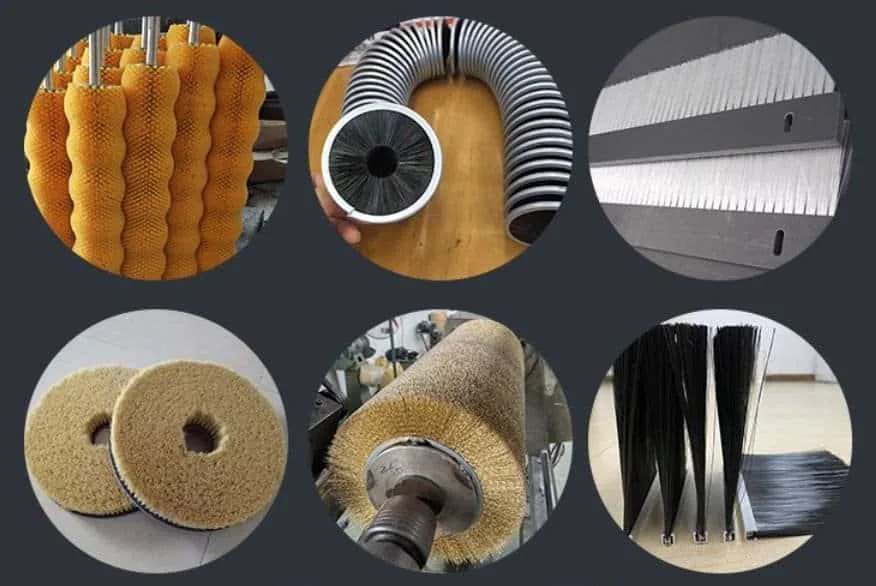
Industrial brush selection starts with the required contact direction and working area: edge contact, face contact, internal contact, linear contact, or continuous rotary contact. This guide compares the main brush forms, construction choices, and specification details used for custom machinery and replacement projects. For available product families and custom manufacturing options, browse all industrial brush and roller products; to find solutions by production sector, explore industrial brush applications by industry.
What Are Industrial Brushes?
Industrial brushes are purpose-built components for manufacturing, processing, and maintenance equipment. Their brush form, core or backing, filament, density, trim, mounting interface, and operating conditions are selected around a defined task rather than a consumer brush size.
Some constructions provide stronger surface preparation, while others provide flexible sealing, gentle product support, controlled wiping, or access inside a bore. A useful selection therefore begins with the surface to contact, the motion of the machine, the required result, and the available mounting space.
1. Wire Wheel Brushes
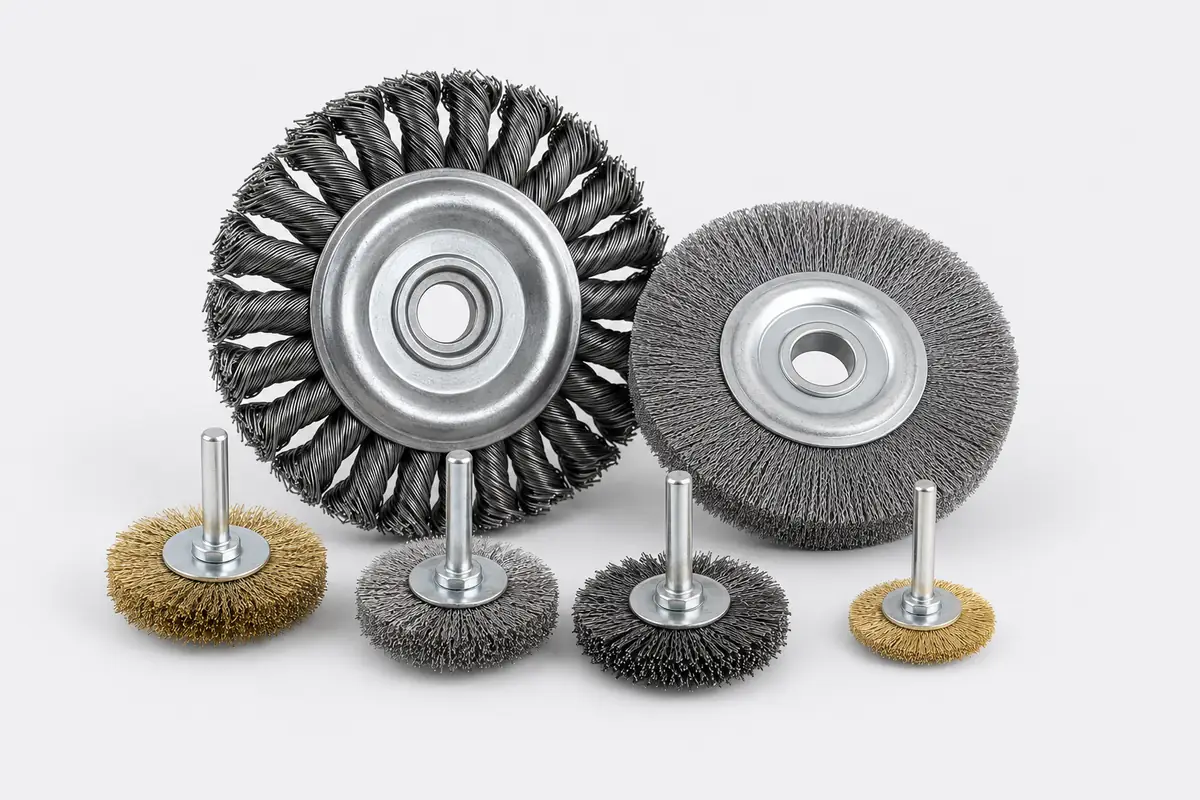
Wire wheel brushes work mainly around the outside circumference of the wheel. Their narrow edge or working face is suited to weld lines, seams, edges, grooves, and longer brushing paths where circumferential contact is required.
Common Applications:
- Deburring machined parts and components
- Removing paint, rust, and scale from metal surfaces
- Polishing and finishing metal fabrications
- Cleaning welds and preparing surfaces for coating
- Edge blending and surface preparation
Industries:
- Automotive manufacturing
- Metal fabrication and machining
- Aerospace component production
- Industrial equipment maintenance
- Shipbuilding and marine applications
Materials and Construction
For the custom wire wheel range, specify the wire material as well as the wire form, diameter, trim, density, wheel diameter, face width, mounting, and approved operating speed:
- Carbon steel wire - Provides stronger brushing action for compatible ferrous workpieces, rust and scale removal, weld cleaning, and deburring
- Stainless steel wire - May be selected when corrosion resistance or control of carbon-steel contamination is important; confirm the wire grade and workpiece compatibility
- Solid brass wire - Provides a less aggressive metal-wire option for compatible non-ferrous or surface-sensitive work; do not assume a brush is certified non-sparking without application-specific evidence
- Brass-coated steel wire - Retains a steel core and should not be treated as equivalent to solid brass or stainless steel where contamination control drives the selection
The density, trim, wire diameter, and arrangement influence brushing action and finish. Mounting options may include arbor holes, keyways, threaded interfaces, hubs, or drawing-defined adapters. To compare Wheel, Cup, and Wire End contact directions before choosing a product, see Custom Industrial Wire Brushes.
2. Cup and End Brushes
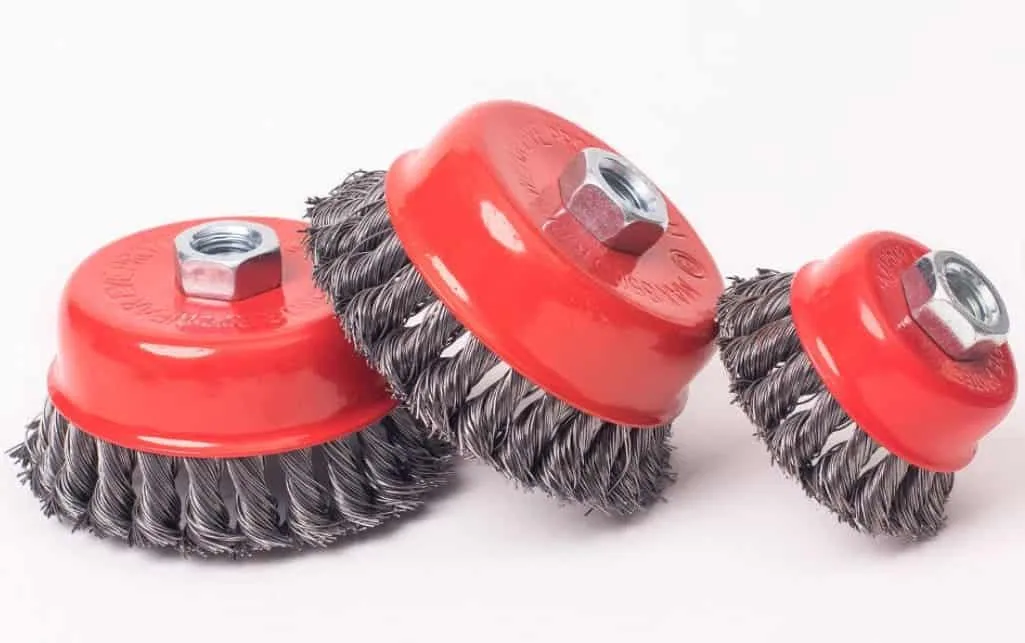
Cup and end brushes provide different contact directions. A wire cup brush presents a broader working face to an accessible surface, while an end brush works mainly from its axial face for concentrated contact in recesses and confined features.
Wire Cup Brushes
Wire cup brushes arrange the working wire around a cup-shaped body for broad face contact on accessible flat or slightly contoured surfaces. Common applications include:
- Removing rust, paint, scale, or weld residue from broader exposed surfaces
- Preparing flat or slightly contoured metal surfaces before coating or inspection
- Cleaning around accessible welds, joints, and fabricated sections
- Covering more face area than a narrow wire wheel or compact end brush
End Brushes
End brushes place the working filament along the tool axis, allowing concentrated contact in hard-to-reach areas. The End Brush family is not limited to metal wire: Brushcustom also offers nylon, abrasive filament, and natural-fiber constructions where wire contact is unsuitable. End brushes are commonly reviewed for:
- Cleaning recesses, slots, pockets, and localized internal features
- Deburring small parts with complex geometries
- Polishing intricate components and detailed work
- Accessing confined spaces inaccessible to larger brushes
Materials and Mounting Options
Wire cup brushes use metal wire in crimped, knotted, or related constructions. The broader End Brush family may use metal wire, nylon, abrasive filament, or natural fiber. Depending on the product and machine, mounting may use a thread, arbor hole, shank, hub, flange, or another drawing-defined interface; confirm the machine and maximum operating or no-load RPM before approval.
3. Disc Brushes
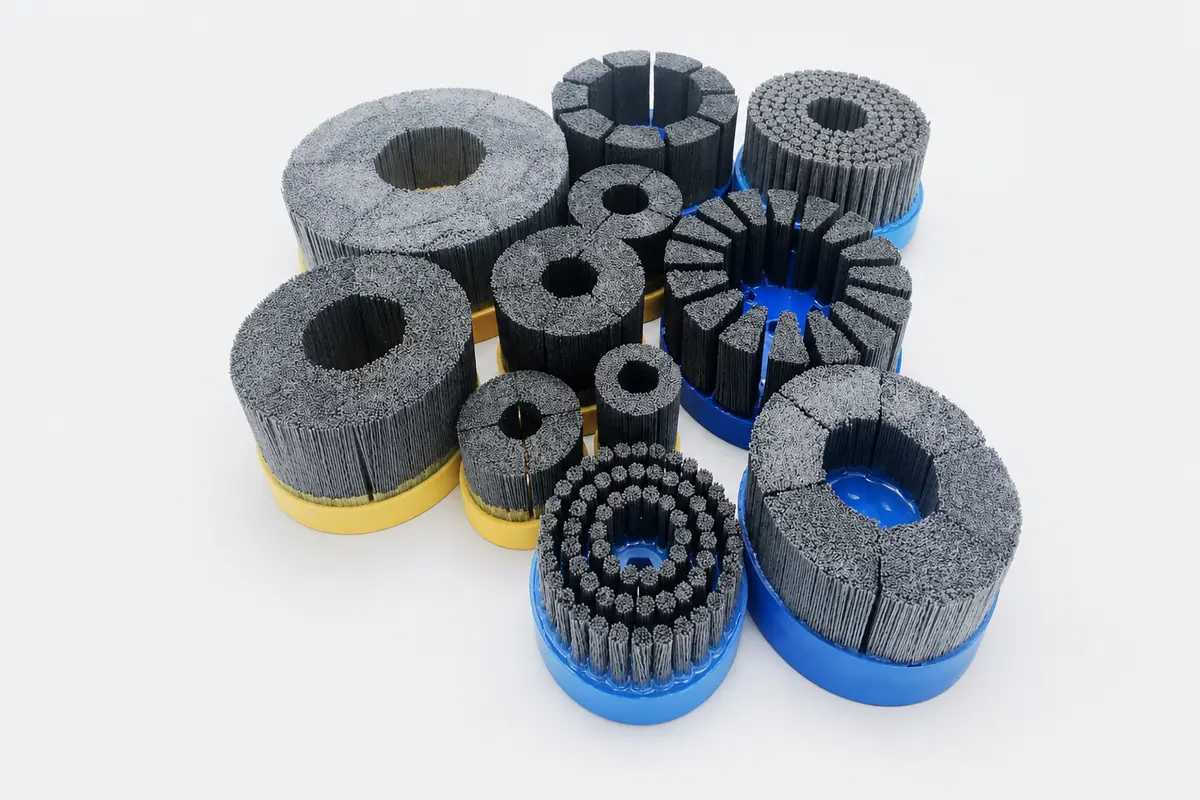
Disc brushes are circular rotary brushes that work mainly through the brush face. They are useful where the process needs controlled contact across a flat, edged, or contoured surface rather than a narrow wheel edge or a long roller face.
Common Applications:
- Deburring machined, stamped, drilled, or cut parts
- Edge rounding and light edge blending
- Surface conditioning before coating, bonding, or inspection
- Controlled finishing on flat or contoured surfaces
- Localized cleaning where face contact is preferred
Industries:
- Metal fabrication and machining
- Automotive component manufacturing
- Aerospace component production
- Tooling, fixtures, and precision parts
- General industrial finishing operations
Materials and Construction
Disc brushes can use abrasive nylon, synthetic filament, wire, or other fills depending on the surface effect required. The base, hub, arbor, or adapter must match the machine mounting and the approved operating speed.
- Abrasive nylon fill - Common for controlled deburring and surface conditioning
- Synthetic filament fill - Used where lighter cleaning or softer contact is needed
- Hub or arbor mounting - Must fit the spindle, adapter, or machine fixture
- Density and trim height - Control pressure, aggressiveness, and finish consistency
4. Cylinder / Roller Brushes
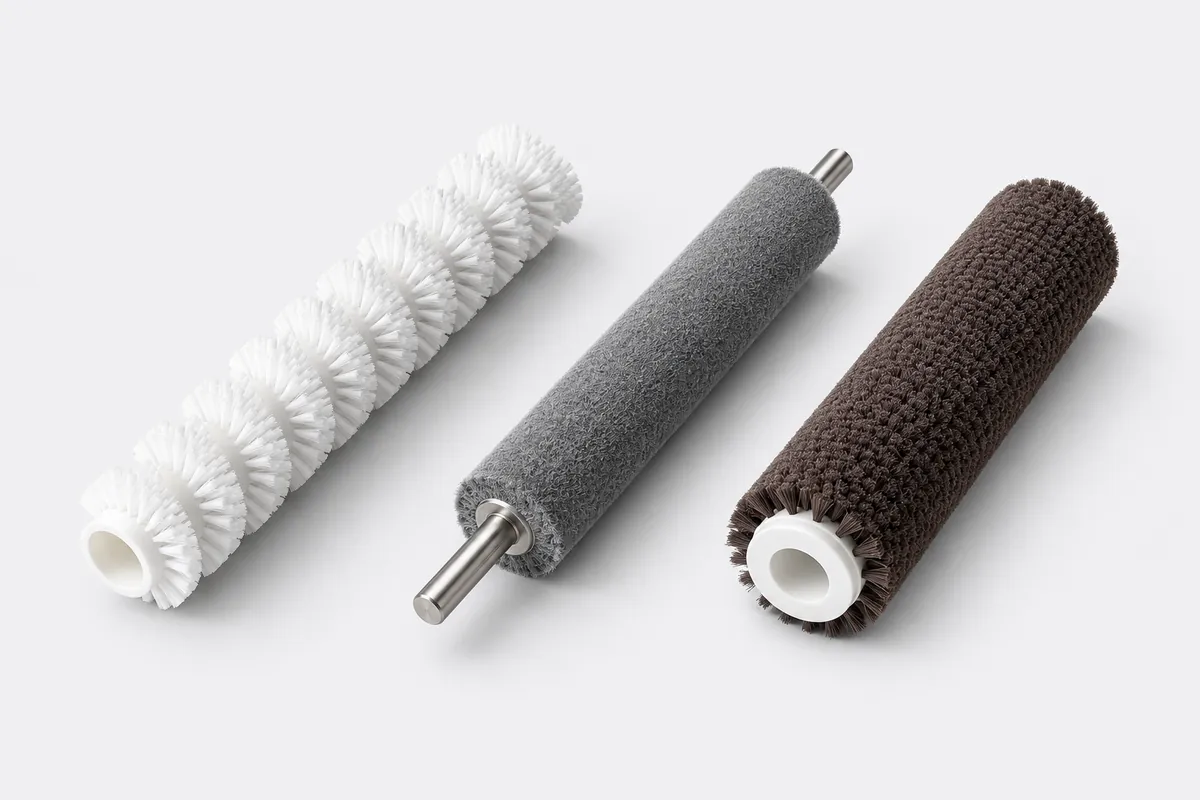
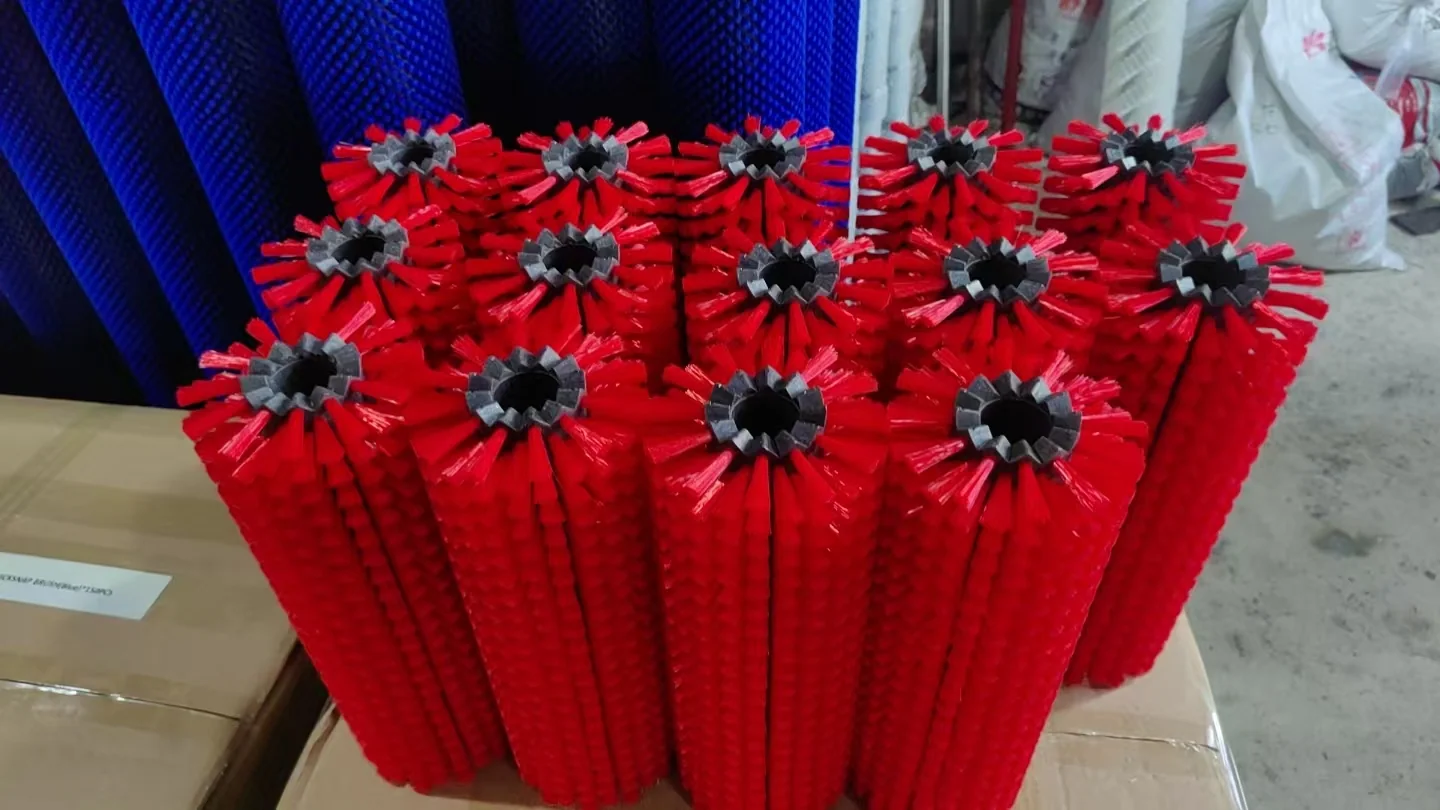
Cylinder brushes, also known as roller brushes, consist of bristles arranged around a cylindrical core. These versatile brushes are designed for continuous rotary action and are frequently used in conveyor systems, automated equipment, and processing lines.
Key Applications
Manufacturing Uses:
- Conveyor belt cleaning and maintenance
- Product transport and orientation
- Surface preparation and finishing
- Dust and debris removal from components
- Application of coatings and treatments
Processing Applications:
- Food processing (vegetable washing, de-skinning)
- Textile industry (fabric cleaning, lint removal)
- Printing operations (paper handling, ink removal)
- Pharmaceutical production (tablet de-dusting)
- Glass manufacturing (edge polishing, cleaning)
Construction and Customization
Cylinder brushes feature a central core (typically metal or plastic) with bristles secured through various methods including staple-set, channel-set, or spiral-wound configurations. The core often includes mounting provisions such as arbor holes, keyways, or shaft collars for integration with machinery.
These brushes can be highly customized with specific:
- Bristle materials (polypropylene, nylon, wire, natural fibers)
- Bristle density and pattern (full coverage or sectioned)
- Bristle length and stiffness for particular applications
- Core materials suitable for specific environments
- Diameter and length dimensions to fit exact equipment specifications
5. Coil & Spiral Brushes
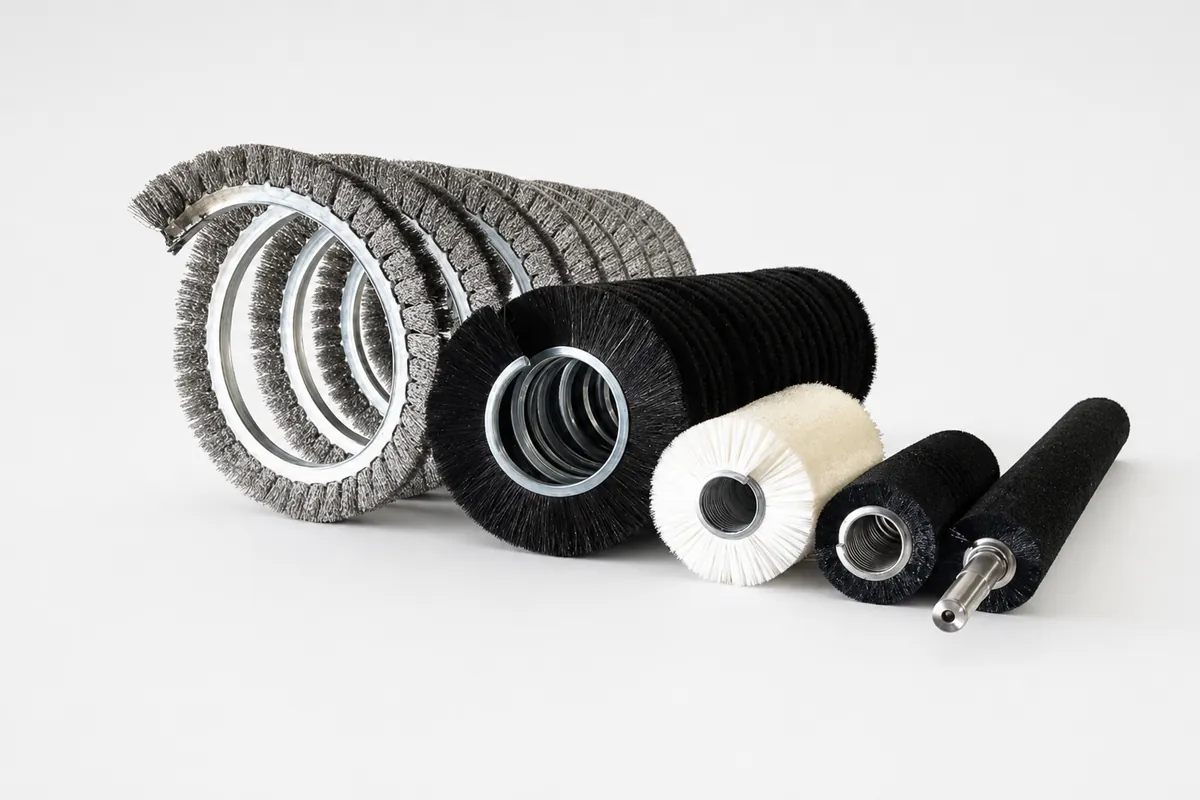
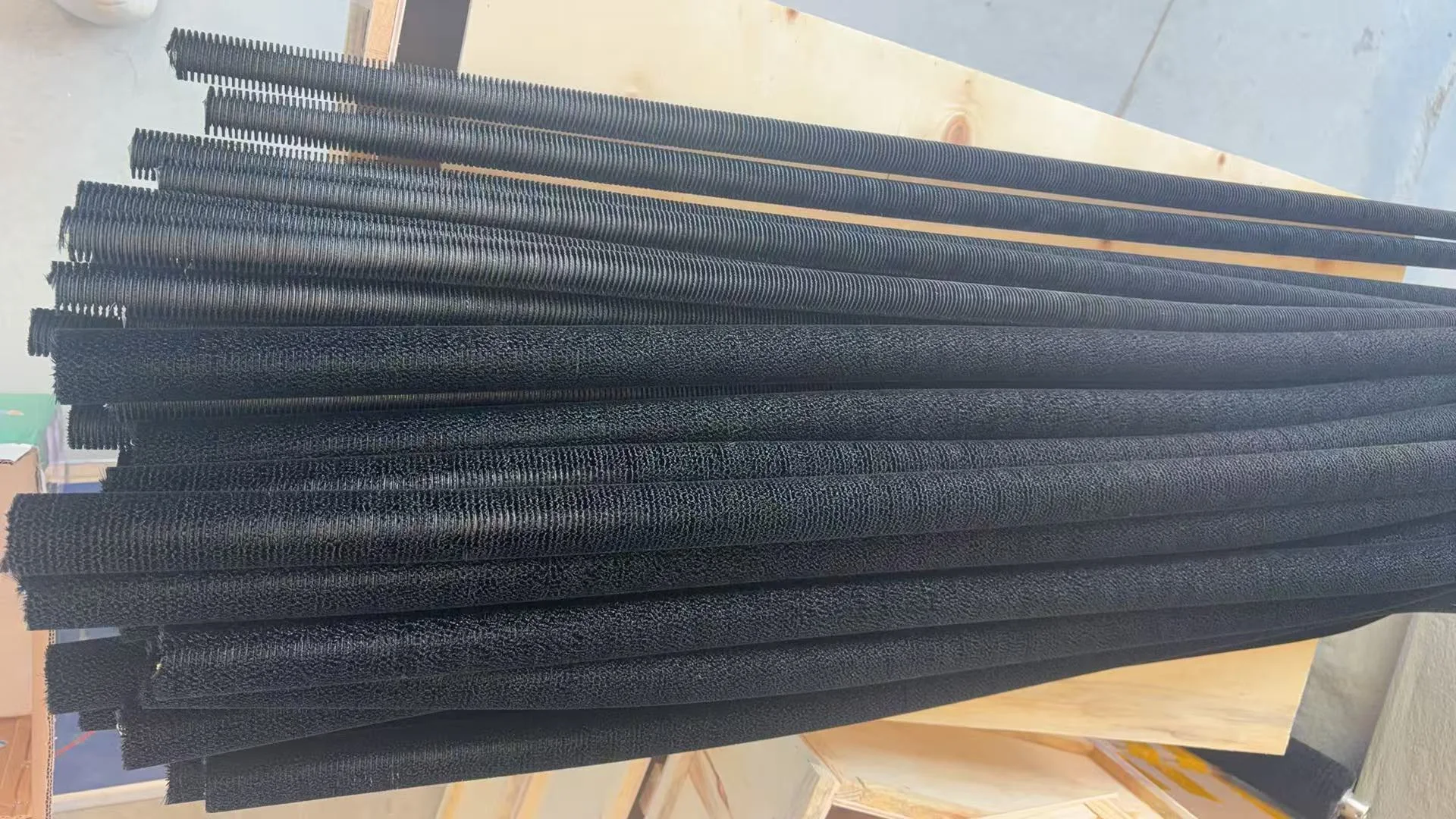
Coil and spiral brushes provide continuous brush contact around a shaft, core, or cylindrical path. They are often used where a wound brush layout gives better coverage, cleaning behavior, or replacement flexibility than a simple straight-row roller.
Common Applications:
- Conveyor cleaning and return-side brushing
- Wide contact wiping across a moving surface
- Product guiding and light product control
- Surface cleaning or debris movement along a rotating path
- OEM equipment where a replaceable coil or spiral construction is preferred
Industries:
- Conveyor systems and OEM machinery
- Food processing and packaging equipment
- Solar panel cleaning systems where spiral contact is suitable
- General industrial cleaning and wiping equipment
- Material handling and production-line support
Materials and Construction
Coil and spiral brushes may be built from wound strip brush, replaceable brush coils, or spiral brush sections. Pitch, winding direction, core detail, and fill material change how the brush contacts the surface.
- Spiral-wound construction - Provides continuous or directional contact around the core
- Nylon, PP, PBT, or wire fill - Selected by cleaning force, surface risk, and environment
- Core or shaft mounting - Determines machine fit and replacement method
- Pitch and winding direction - Affect coverage, debris movement, and brushing behavior
6. Strip Brushes
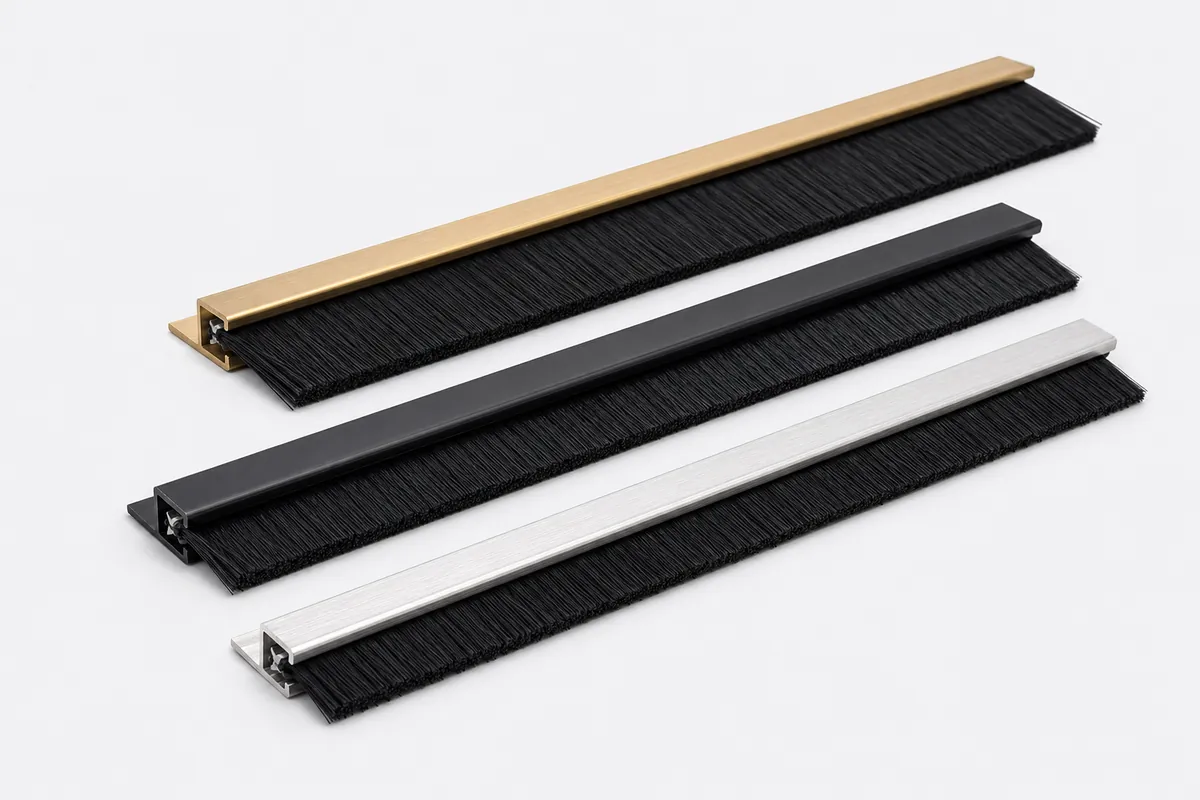
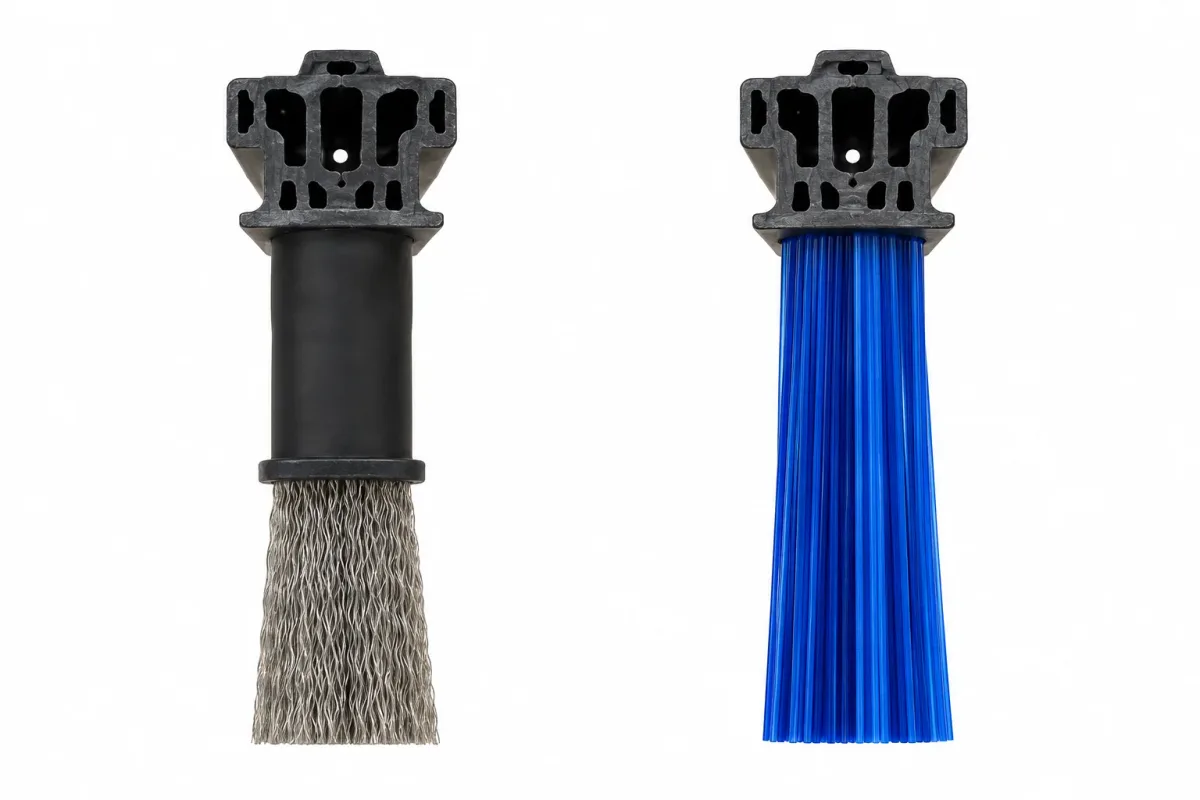
Strip brushes consist of bristles secured in a narrow channel or holder, creating a linear brushing element that can be mounted in straight runs or formed into custom shapes. Their versatile design makes them ideal for sealing, guiding, and cleaning applications across numerous industries.
Applications and Benefits
Common Uses:
- Creating dust and debris barriers around equipment
- Sealing gaps in machinery and processing lines
- Guiding products on conveyor systems
- Applying liquids or removing excess materials
- Static control and dissipation in sensitive processes
Key Advantages:
- Highly customizable length and mounting options
- Can be formed into curves, circles, or special shapes
- Easy replacement of worn sections without full system removal
- Available in FDA-compliant materials for food processing
- Effective in both static and dynamic applications
Materials and Mounting Systems
Strip brushes utilize various filament materials including nylon, polypropylene, natural fibers, and metal wires. The holding channel is typically aluminum, stainless steel, or plastic, with mounting options including:
- T-slot channels for sliding into compatible frames
- Bolt-down channels for permanent installation
- Clip-on systems for quick replacement
- Adhesive-backed channels for simple mounting
The versatility of strip brushes makes them one of the most widely used industrial brush types, with applications ranging from simple door seals to complex automated manufacturing systems.
7. Panel Brushes
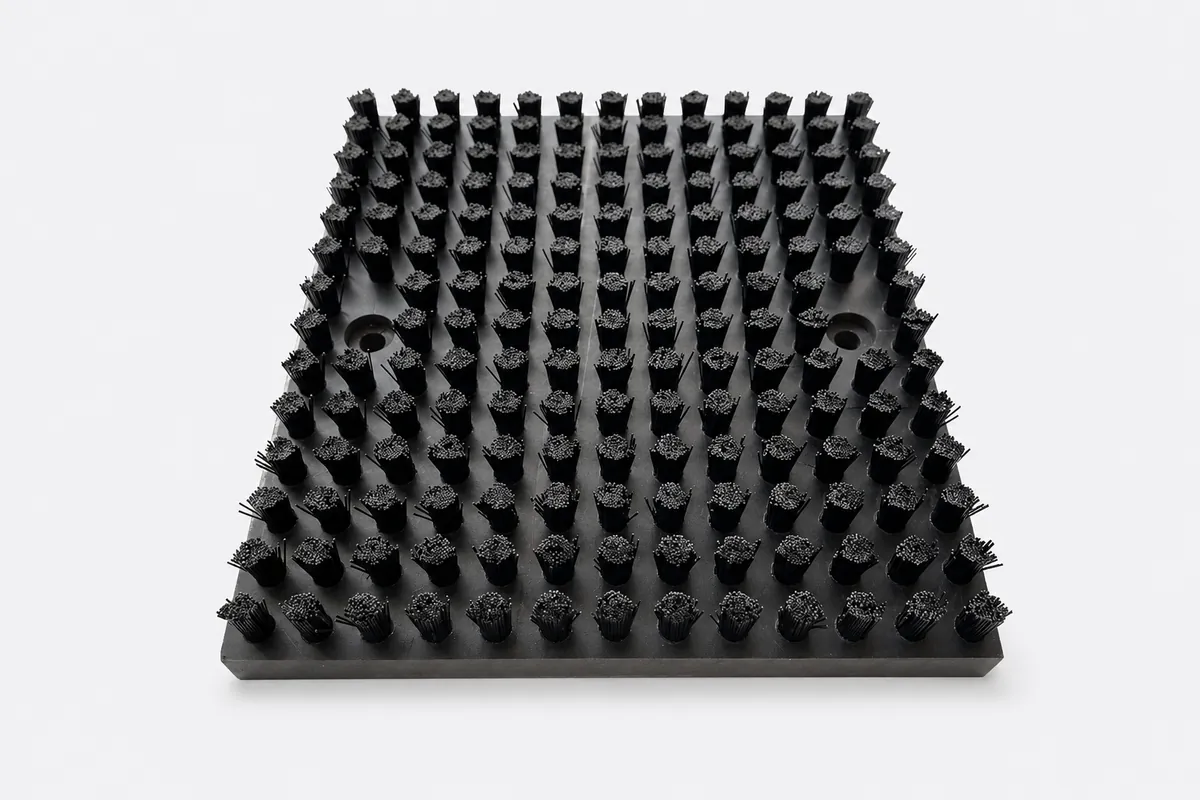
Panel brushes are flat mounted brush assemblies used where the brush needs to sit on a plate, fixture, table, or machine surface rather than rotate. They can provide fixed contact, wiping, guiding, non-marring support, or wider shielding.
Common Applications:
- Non-marring support for finished parts, panels, or sheets
- Guiding and stabilizing products during transfer
- Fixed wiping on passing surfaces
- Sealing or shielding on wider machine areas
- Brush-table or fixture contact in OEM equipment
Industries:
- Automotive and aerospace component handling
- Conveyor and packaging systems
- Electronics and precision assembly support
- Glass, panel, and sheet handling equipment
- General OEM fixtures and machine contact points
Materials and Construction
Panel brushes are built around a flat base or plate. The hole pattern, slot detail, base thickness, fill layout, and filament stiffness determine how the brush mounts and how it supports or contacts the part.
- Nylon or synthetic fill - Common for support, guiding, and non-marring contact
- Stiffer fill or wire options - Reviewed only when stronger wiping or cleaning is needed
- Custom base plate - Built around bolt holes, slots, machine geometry, or fixture position
- Single-row or multi-row layouts - Used to adjust coverage, support area, and contact density
8. Pipe & Tube Brushes
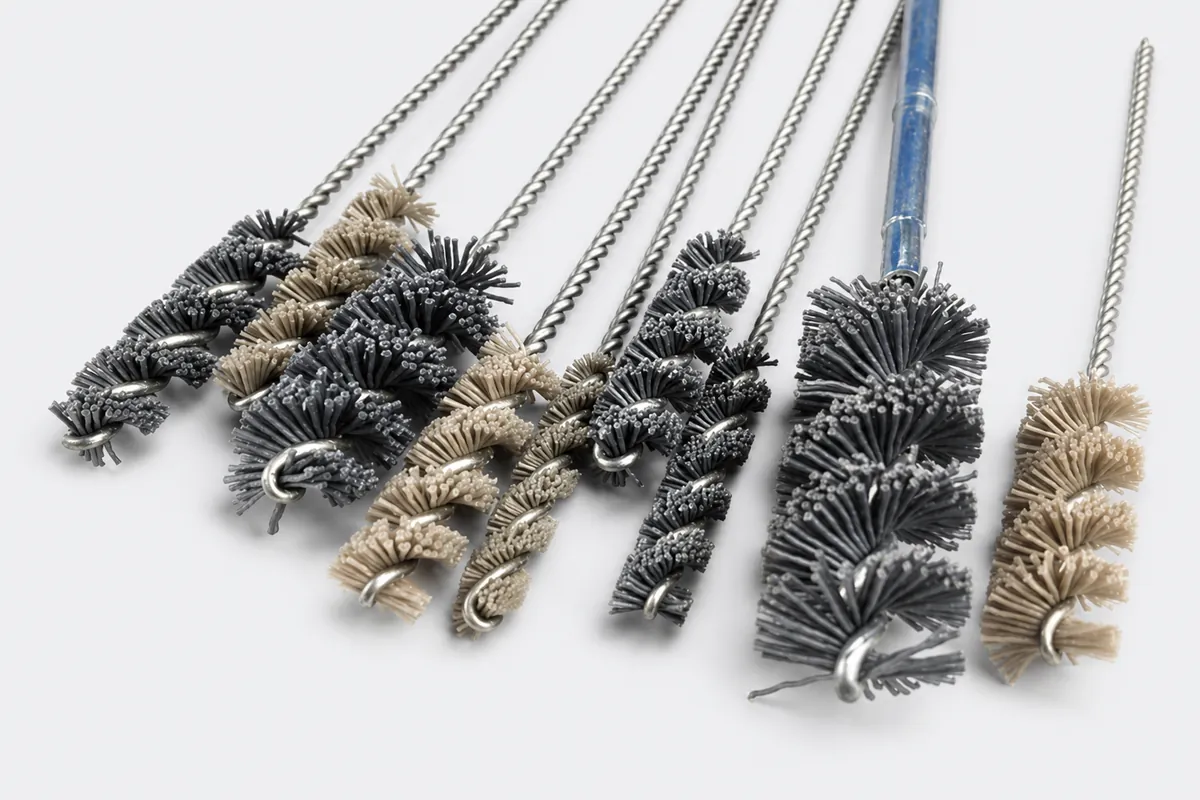
Pipe and tube brushes are specialized internal-contact brushes designed for cleaning, maintaining, and servicing tubes, pipes, bores, cylinders, and narrow passages. They are often used in preventive maintenance programs and equipment cleaning tasks where the working surface is inside the part.
Common Pipe and Tube Brush Types
Tube and Pipe Brushes:
Designed for cleaning internal surfaces of tubes, pipes, and cylinders. Features include:
- Twisted wire stems with radial bristles
- Sized to match specific tube diameters
- Available with extension handles for deep cleaning
- Bristle materials suited for specific contaminants
Power Brush Tools:
Designed for use with power tools to increase cleaning efficiency:
- Drill-mounted brushes for rotary cleaning action
- Reciprocating tool brushes for linear scrubbing
- Specialized attachments for equipment-specific cleaning
- Abrasive-impregnated versions for stubborn deposits
Applications and Industries
Pipe and tube brushes serve critical internal-cleaning and maintenance functions across numerous industries:
- Manufacturing - Cleaning machine tools, conveyors, and production equipment
- Food Processing - Sanitizing processing equipment and transfer systems
- Pharmaceutical - Cleaning validation and equipment maintenance
- Automotive - Engine component cleaning and parts preparation
- Energy - Maintaining heat exchangers, boilers, and cooling systems
The proper selection and use of pipe and tube brushes contribute significantly to equipment reliability, reduced downtime, and extended service life of industrial assets.
Common Industrial Brush Constructions
Industrial brush names often describe the form, but buyers also need to confirm how the brush is built. Staple-set rollers and panel brushes use tufts installed into a core or base. Strip-wound, coil, or spiral brush constructions use a strip brush wound around a core for dense coverage or continuous contact. Pressed or sectional wheel constructions can create high-density wheel or disc brush formats. Molded or assembled brush formats may be selected where the base geometry, mounting, or replacement method is more important than a stock brush shape.
This construction choice affects density, holding strength, replacement cost, lead time, and whether the brush can fit an existing machine. A drawing, sample, or marked photo is usually more useful than a brush name alone.
Common Application Directions
Most custom industrial brush projects fall into a few practical duties: dust sealing, product guiding, cleaning or washing, deburring and surface finishing, static-related contact, and non-marring support. The same brush family can behave differently when the filament material, trim height, density, and mounting position change.
Selecting the Right Industrial Brush
Choosing the appropriate industrial brush requires careful consideration of multiple factors to ensure optimal performance and longevity. The following selection criteria will help you identify the most suitable brush for your specific application:
Application Requirements
- Surface type and material composition
- Desired outcome (cleaning, finishing, deburring)
- Required aggressiveness or gentleness
- Speed and production rate requirements
- Wet or dry operation conditions
Environmental Factors
- Operating temperature range
- Chemical exposure considerations
- Moisture and humidity levels
- Regulatory compliance requirements
- Contamination control needs
Operational Considerations
- Mounting and installation constraints
- Power source and drive mechanism
- Maintenance accessibility
- Expected service life requirements
- Replacement and cost considerations
Filament Material Selection Guide
| Filament Material | Selection Direction | Common Uses | Confirm Before Ordering |
| Nylon | Flexible synthetic filament available in different grades, diameters, and stiffness levels | Cleaning, wiping, guiding, sealing, washing, and product contact | Nylon grade, temperature, moisture, chemicals, stiffness, and permitted surface effect |
| Polypropylene | Low-moisture-absorption synthetic filament with useful chemical resistance | Wet cleaning, washing, guiding, and compatible chemical environments | Temperature, chemical concentration, filament stiffness, hygiene requirement, and product-contact documentation |
| Carbon Steel Wire | Stronger metal-wire brushing action for compatible ferrous workpieces | Rust and scale removal, weld cleaning, deburring, and surface preparation | Workpiece compatibility, corrosion, contamination risk, wire form, and operating speed |
| Stainless Steel Wire | Corrosion-resistant wire option where carbon-steel contamination must be controlled | Compatible stainless, non-ferrous, wet, or corrosion-sensitive applications | Wire grade, workpiece material, cross-contamination controls, and operating environment |
| Natural Fibers | Fiber-dependent soft contact and liquid-carrying or polishing behavior | Dusting, polishing, coating, wiping, or delicate surface contact | Exact fiber, moisture, chemicals, temperature, wear, hygiene, and process compatibility |
| Abrasive Filament | Abrasive grain carried in a flexible synthetic filament | Controlled deburring, edge blending, cleaning, and surface conditioning | Abrasive type, grit, filament diameter, trim, speed, pressure, and target finish |
For a fuller comparison of PA6, PA66, PA612, PP, PBT, PET, abrasive filament, metal wire, natural fiber, and conductive options, see the Industrial Brush Filament Materials Guide.
Choose an Industrial Brush by Industry
Industry context helps define hygiene, temperature, contamination, documentation, surface-sensitivity, and machine-integration requirements, but it does not replace product selection. Review Industrial Brush Applications by Industry for the relevant production-sector pathways, including conveying, metal processing, food processing, solar and electronics equipment, pharmaceutical production, aerospace, and automotive work.
Maintenance and Care of Industrial Brushes
Proper maintenance extends brush life and ensures consistent performance:
- Regularly clean brushes to remove accumulated debris and contaminants
- Inspect for wear patterns and replace brushes before performance deteriorates
- Store brushes properly to prevent bristle deformation and damage
- Follow manufacturer recommendations for maximum operating speeds
- Consider brush rotation direction to optimize performance and longevity
Conclusion
Industrial brushes represent a diverse and essential category of tools that contribute significantly to manufacturing efficiency, product quality, and equipment maintenance. From aggressive deburring with wire wheel brushes to gentle cleaning with natural fiber maintenance brushes, the right brush selection can dramatically impact operational outcomes.
When selecting an industrial brush, confirm the required contact direction, working dimensions, mounting interface, filament, operating environment, speed where applicable, target result, and order quantity. Browse all custom industrial brush and roller products, or send a drawing, measured sample, or marked photo for a project-specific review.