Industrial brushes and process rollers are selected by the job they perform, not only by their shape. A production line may need to clean a surface, remove a burr, guide a product, seal an opening, control static, support a web, remove liquid, or provide repeatable contact with a part. The correct direction depends on the workpiece, machine interface, process environment, and required outcome.
For commercial solutions organized by production sector, browse industrial brush applications by industry. For belt cleaning, product conveying, guiding, support, sealing, and OEM integration, go directly to Conveyor Systems & OEM.
Common Industrial Brush Functions
- Cleaning and wiping: remove loose dust, chips, residue, process debris, or moisture from a surface or machine area.
- Deburring and surface conditioning: remove light burrs, scale, rust, weld residue, or create a controlled finish.
- Guiding, sealing, and shielding: manage a product edge, a moving interface, dust path, light path, or equipment opening.
- Transport and contact control: support, separate, rotate, feed, or position products in automated equipment.
- Fluid and water removal: control water, oil, or process liquid on continuous lines with the appropriate nonwoven or sponge roll.
From Process Need to Product Direction
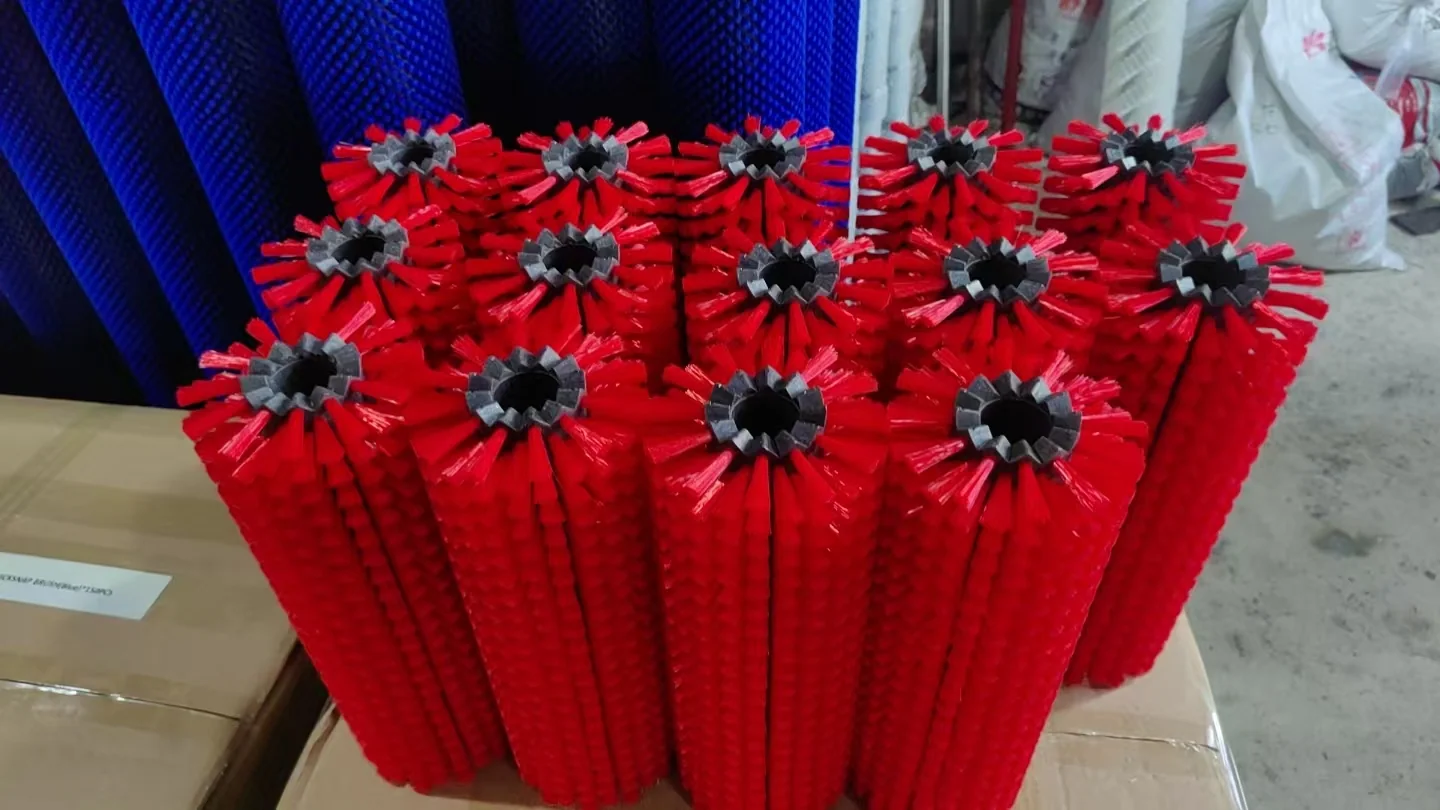
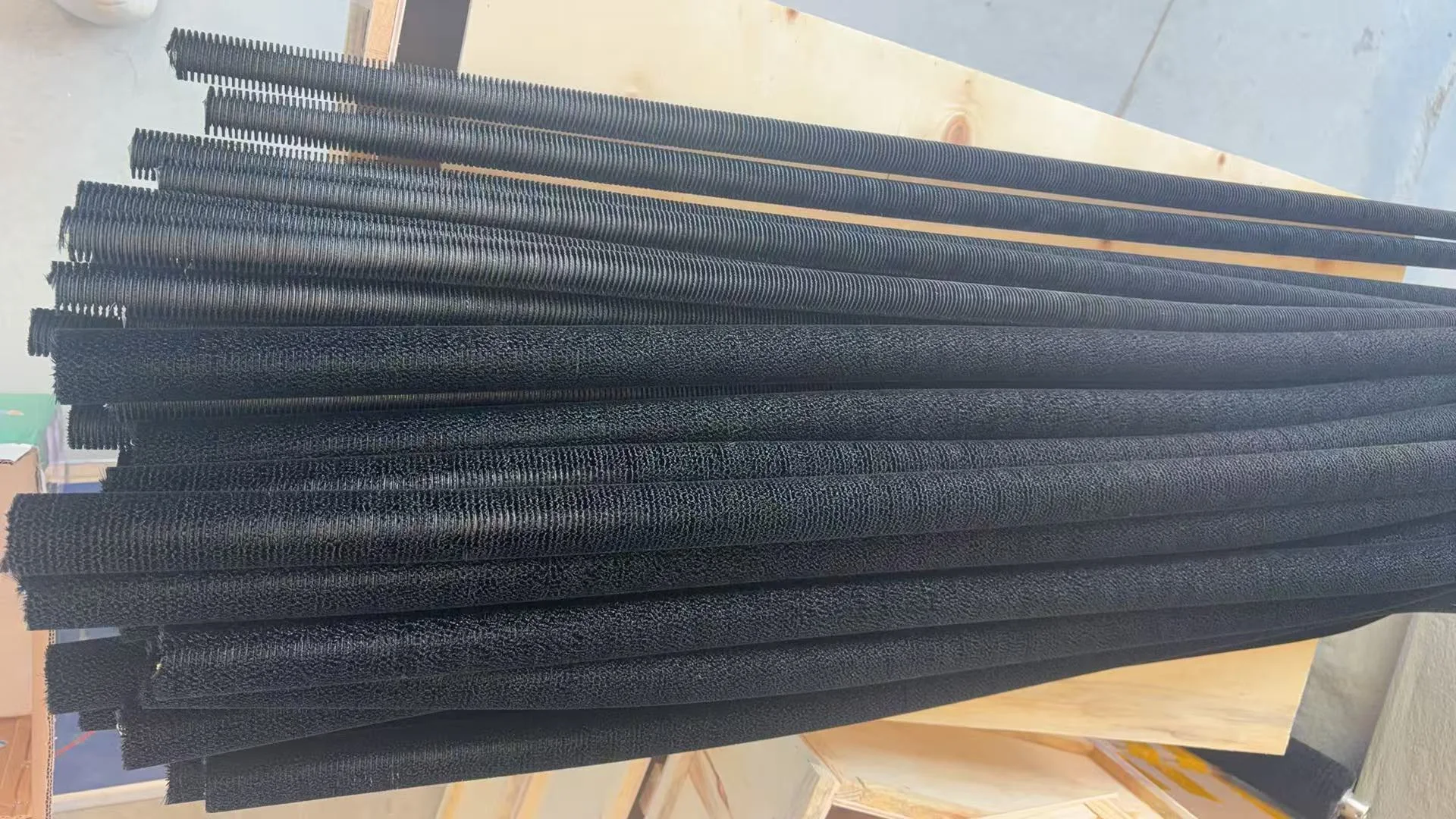
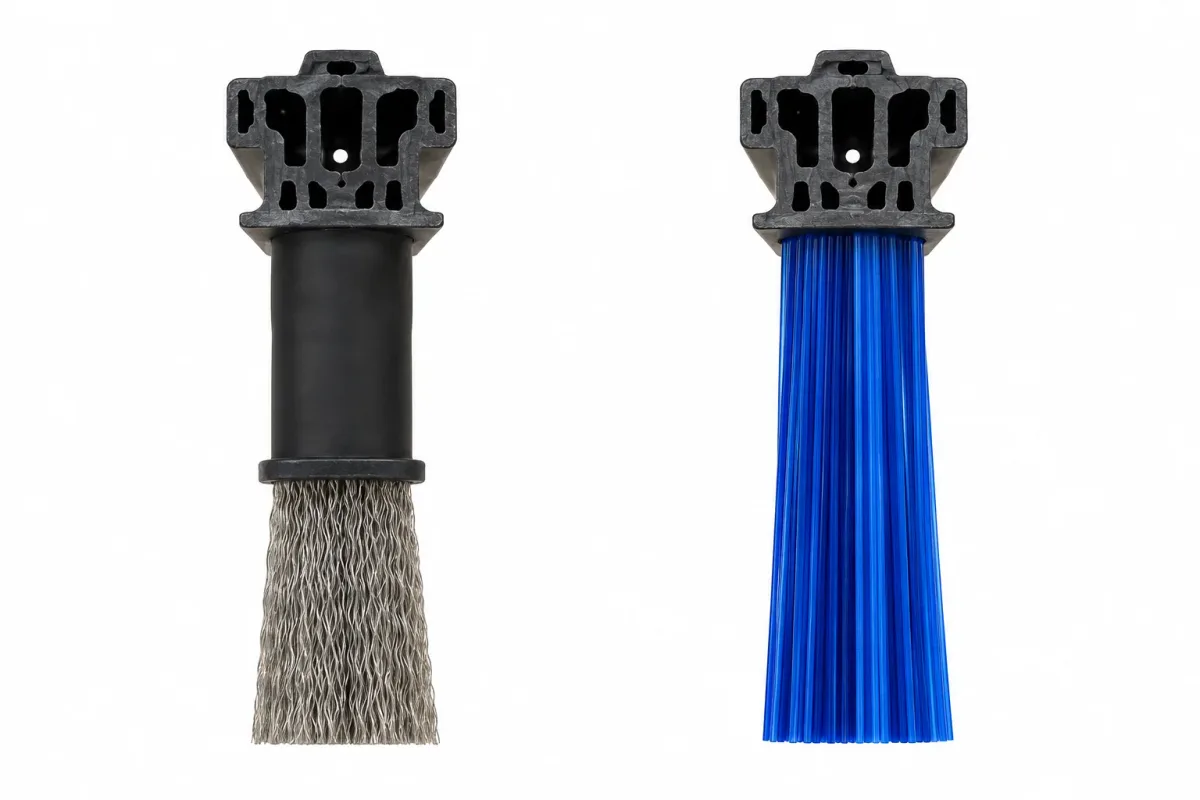
Use the process need as the starting point. For broad surface cleaning, washing, or controlled product contact, review cylinder brushes. For linear guiding, wiping, gap coverage, and equipment openings, review strip brushes. For internal passages and compact local features, review pipe and tube brushes or end brushes. For stronger metal cleaning and deburring, see the metal-processing page rather than choosing a wire or abrasive brush by name alone.
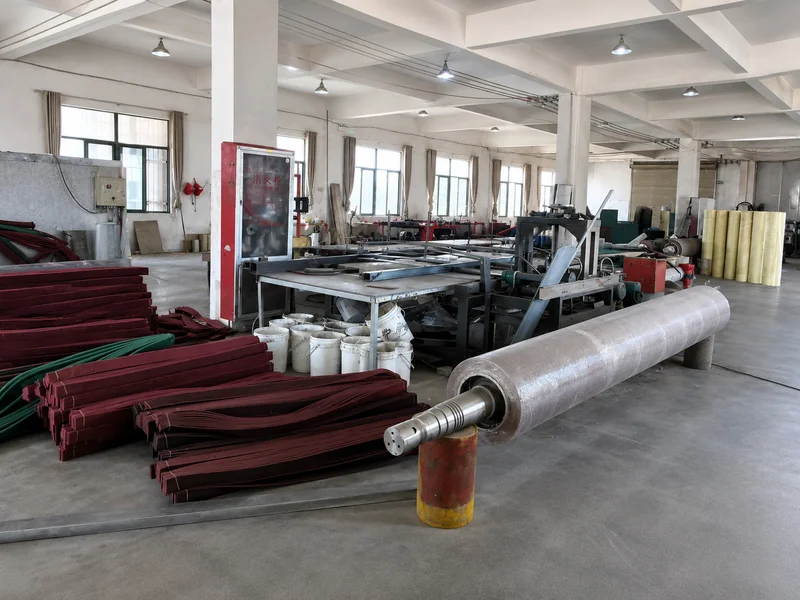
Where the process needs continuous liquid control, water removal, pressure, traction, or web support instead of bristle contact, review nonwoven mill rolls, industrial sponge rollers, or rubber-covered rollers according to the working surface and process medium.
Examples by Industry
Conveying and material handling
Brushes may guide products, clean belts, control dust around transfer points, separate items, or create flexible contact barriers. See conveyor-system brush applications.
Metal processing and fabrication
Typical work includes deburring, edge blending, weld cleaning, scale removal, surface conditioning, and continuous strip fluid control. See metal-processing brush applications.
Food and produce processing
Roller brushes are reviewed for washing, peeling, grading, and controlled product contact, with materials and hygiene requirements confirmed for the actual line. See food-processing brush applications.
Solar, electronics, and controlled environments
Solar-panel cleaning, ESD-control projects, and semiconductor equipment require the brush material and contact method to be matched to the target surface and customer process requirements. See solar-energy applications and semiconductor and ESD applications.
Precision, pharmaceutical, aerospace, and automotive work
These environments often require controlled debris removal, defined material compatibility, precision access, documentation, and process validation. See the related pharmaceutical, aerospace, and automotive application pages.
Start with the Process, Then the Brush
To narrow the product direction, begin with the process need: what must be cleaned, guided, supported, sealed, finished, or dried? Then consider the workpiece or web material, machine space, mounting interface, operating environment, and target result. These details help determine whether the application points to a cylinder, strip, belt, panel, or process roller before a custom design is reviewed.