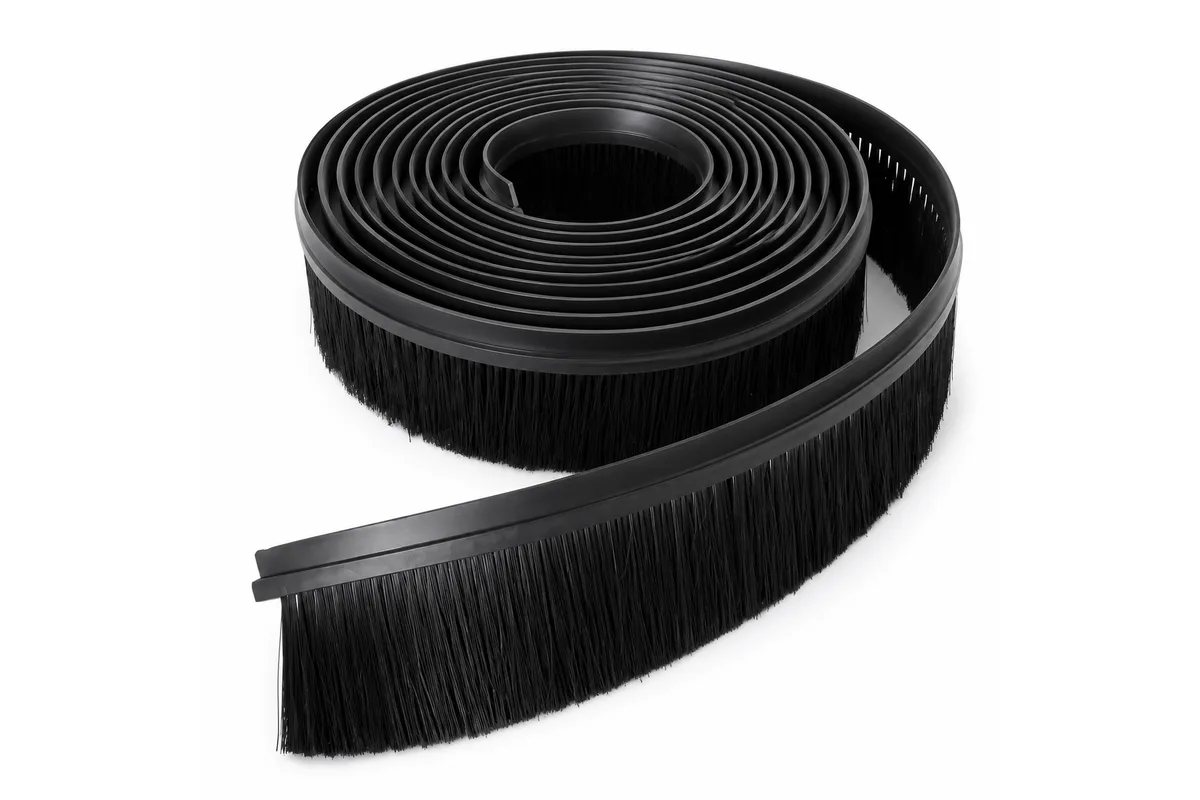
A strip brush can have the right filament length and still fail to fit a machine. The backing profile may not enter the holder, remain securely retained, or follow the required path. Choosing between a rigid and a flexible strip brush therefore starts with the mounting interface and installed geometry, not with the bristles alone.
In this guide, rigid means a backing that retains a defined cross-section and shape, typically a formed metal channel. Flexible means a bendable polymer or elastomer-based backing that can follow a suitable path during installation. Both types can provide sealing, guiding, dust control, or light wiping when their filament and mounting details suit the task. Flexibility of the backing does not describe softness of the filament.
Match the backing to the holder first
A metal-channel strip brush secures filament in a formed channel, generally with a retaining wire. The channel may slide into a matching holder, or the complete assembly may use a bracket or shaped mounting profile. For an existing track, confirm the channel’s width, height, cross-section, and entry direction. A brush that is too large may not insert; a smaller one may move or pull free. Holder angle and offset also set the filament’s installed position, even when the strip itself looks unchanged.
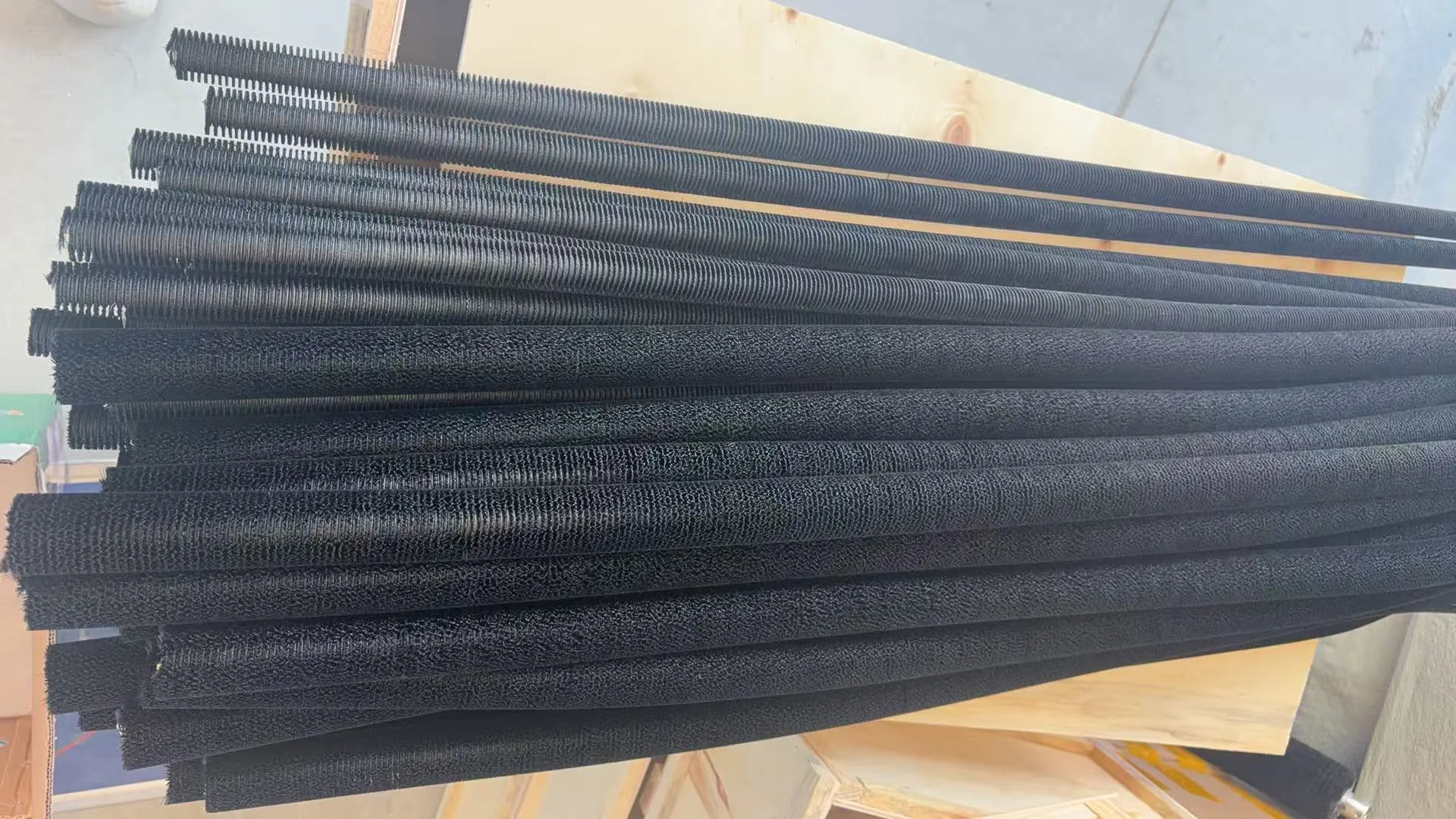
A flexible strip brush may have a plain extruded backing, a clip-on edge profile, or another defined mounting section. Filaments can be fused into a continuous backing or secured as tufts, depending on construction. Some flexible products are designed to fit particular aluminum holders also used for metal-backed strips. That compatibility belongs to the specified brush and holder sizes; it cannot be inferred from the word flexible. Other profiles need their own fixing method or support.
For either construction, request a dimensioned section of both the brush backing and the receiving holder. Check the retaining feature, mounting holes or slots, and the direction in which the brush is installed. A nominal channel size or a photograph alone does not establish a secure fit.
Curves: factory-formed or bent during installation?
A curved path does not automatically require a flexible backing. Metal-channel strip brushes can be formed into specified arcs, rings, and other shapes during manufacture. This suits a known geometry when a compatible holder or support keeps the finished brush in position. The achievable shape and radius depend on the channel section, material, and forming method. A factory-formed metal channel should not be treated as a freely adjustable strip on site.
A flexible backing can follow an appropriate curved or irregular path as it is installed. This may simplify fitting around covers, panel edges, and enclosure openings whose geometry does not suit a straight metal channel. The limit is still defined by the backing material, cross-section, bend direction, and filament arrangement. A tight or out-of-plane bend may twist the profile, disturb the filament line, or prevent the mounting feature from seating correctly.
Show the installed path on the drawing, including the inside or outside radius, bend plane, filament-facing direction, and how the backing is restrained. For a fixed, repeatable curve with a matching holder, a preformed metal-channel brush may be appropriate. For an irregular route, a flexible profile may be easier to install once its bend and retention have been checked.
Replacement fit depends on more than overall height
When an existing holder must stay in place, the original backing section is the first replacement constraint. Compare its dimensions with the holder opening and check for wear, deformation, or damage in the track. Metal-channel labels and polymer profile names vary between manufacturers; a similar label or outside appearance does not guarantee interchangeability.
Record filament trim separately from overall brush height. The trim is the exposed working filament measured from the backing exit to the tips; overall height includes the backing. Two brushes can have the same overall height but different exposed trim, changing how they reach the working surface. A deeper backing may also change the seated position inside the holder. The installed gap and intended contact direction must be checked rather than copied from an unmounted sample.
A used brush can help identify the profile and retention method, but its filaments may have worn or permanently deflected. Use the approved drawing, an unused reference, or the equipment’s required working gap to establish the new trim. For a curved replacement, determine whether the original was formed before delivery or bent into place during installation. That difference affects the replacement construction and fitting method.
Treat a construction change as a design check
A flexible-backed strip can replace a metal-channel design only if its section fits the retained holder, its backing remains positioned under working contact, and its filament reaches the intended surface. The reverse substitution also needs a compatible path and mount. Matching filament material and overall height is not enough.
For routine replacement, reproducing the approved construction is the starting point. If an OEM wants to change the backing type, confirm the new fixing method, contact geometry, retention, clearance, and service conditions on a sample or first article before batch production. This is particularly important where the brush meets a moving part or where a loose section could interfere with equipment.
To specify a new or replacement brush, send the holder cross-section, brush length, backing dimensions, filament material and trim, installation path, working gap, and expected quantity. Include bend radius and direction for curved sections, plus an existing drawing or sample where available. Brushcustom can review custom industrial strip brushes in metal-channel, preformed, and flexible-backed constructions against those details. Send the drawing through the RFQ form to confirm the proposed fit and production requirements.