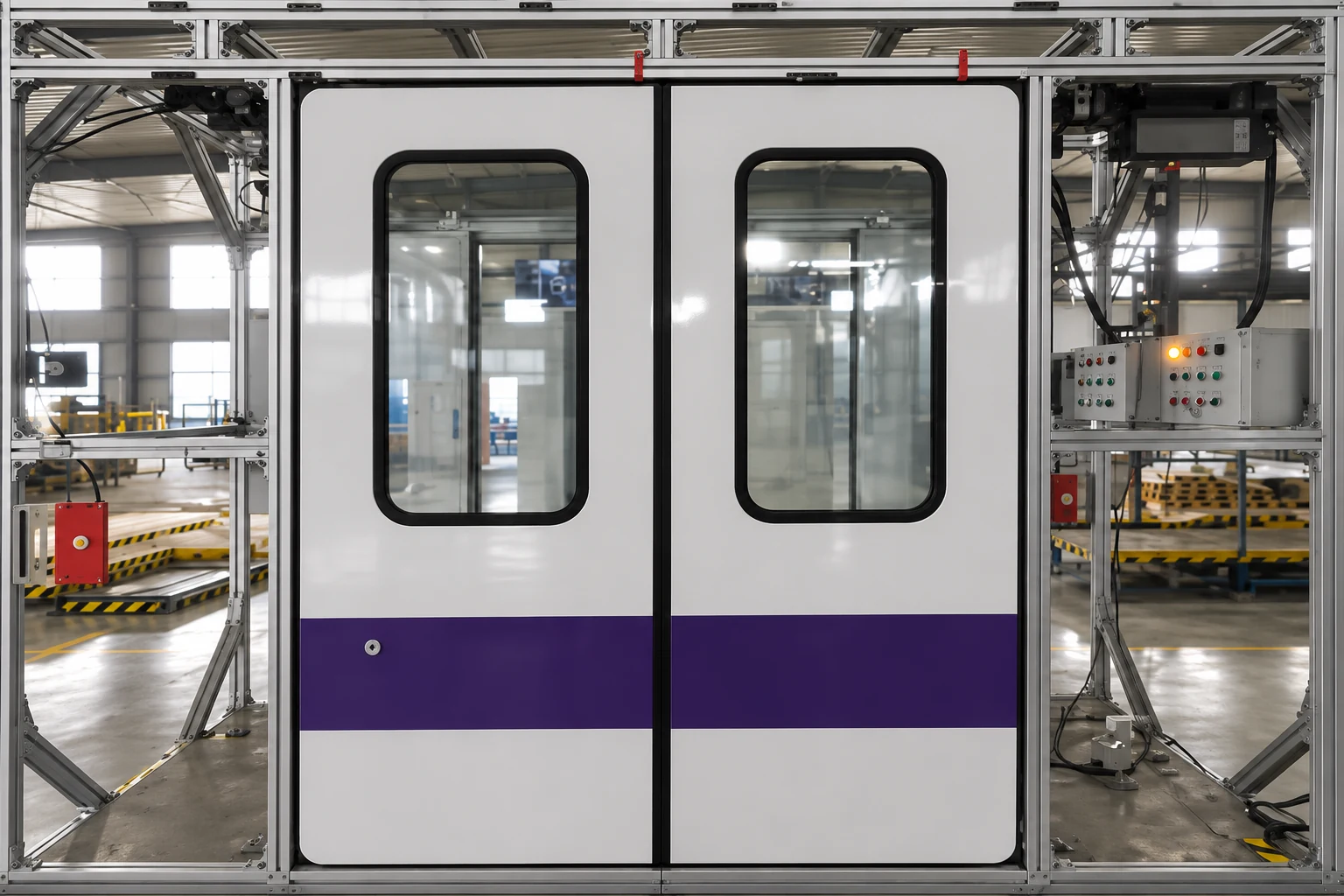
Strip brush seals can cover selected gaps between a sliding passenger door assembly and adjacent interior panels. Their flexible filaments help limit the entry of loose objects and debris into an exposed space while allowing the door to move. The correct brush depends on the door layout, mounting space, movement path, and the vehicle project’s material requirements. It is not a substitute for the door system’s safety devices or primary weather seals.
A documented position: between the door and interior panel
Kleeneze-KOTI describes formed brush strips fitted between sliding train doors and interior panels to reduce the chance of foreign objects fouling the door operating system. The supplier also documents brush strip seals for Queensland Rail trains. This establishes one real installation approach; it does not mean every rail door needs a brush at the same location.
The first design question is which gap the brush must cover. A panel-to-door interface, an opening near the mechanism, and the door’s closing edge have different functions and clearances. The OEM should identify the intended contact surface and check the full travel of the door before selecting a brush profile. A strip positioned near a moving mechanism must not obstruct access, drainage, inspection, or required door movement.
A brush may reduce local dust and airflow through a gap, but a conventional brush edge is not inherently airtight or watertight. Any leakage, acoustic, or environmental target needs testing on the installed assembly. The brush also cannot be treated as the door’s obstacle-detection or anti-drag protection. EN 14752:2025 addresses bodyside passenger entrance systems and their testing; it does not certify a standalone brush strip as a safety system.
Choose the construction from the mounting path
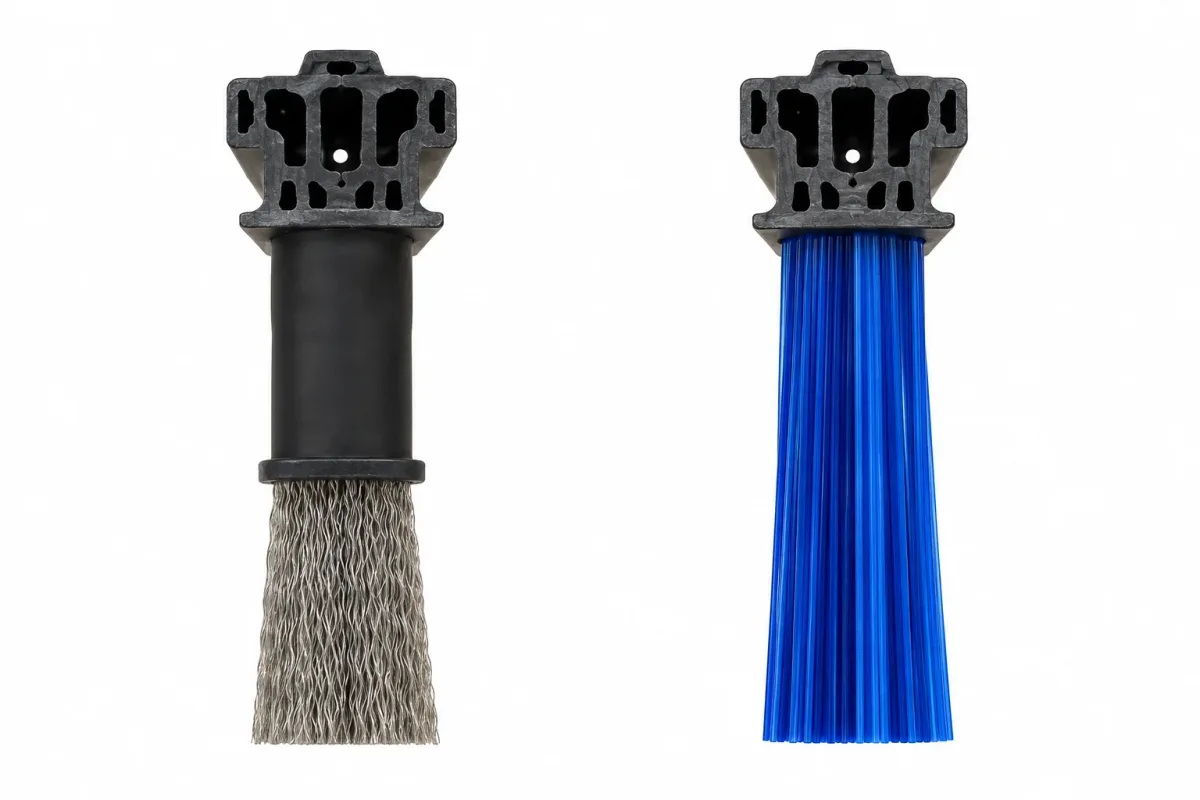
A metal-channel strip brush retains its filament in a formed metal backing. It can be supplied as a straight or shaped section and installed with a matching holder or mounting profile. The channel cross-section, holder fit, orientation, and finish must match the approved door drawing. A formed metal channel can follow a specified contour, but it remains a different construction from a continuously bendable backing.
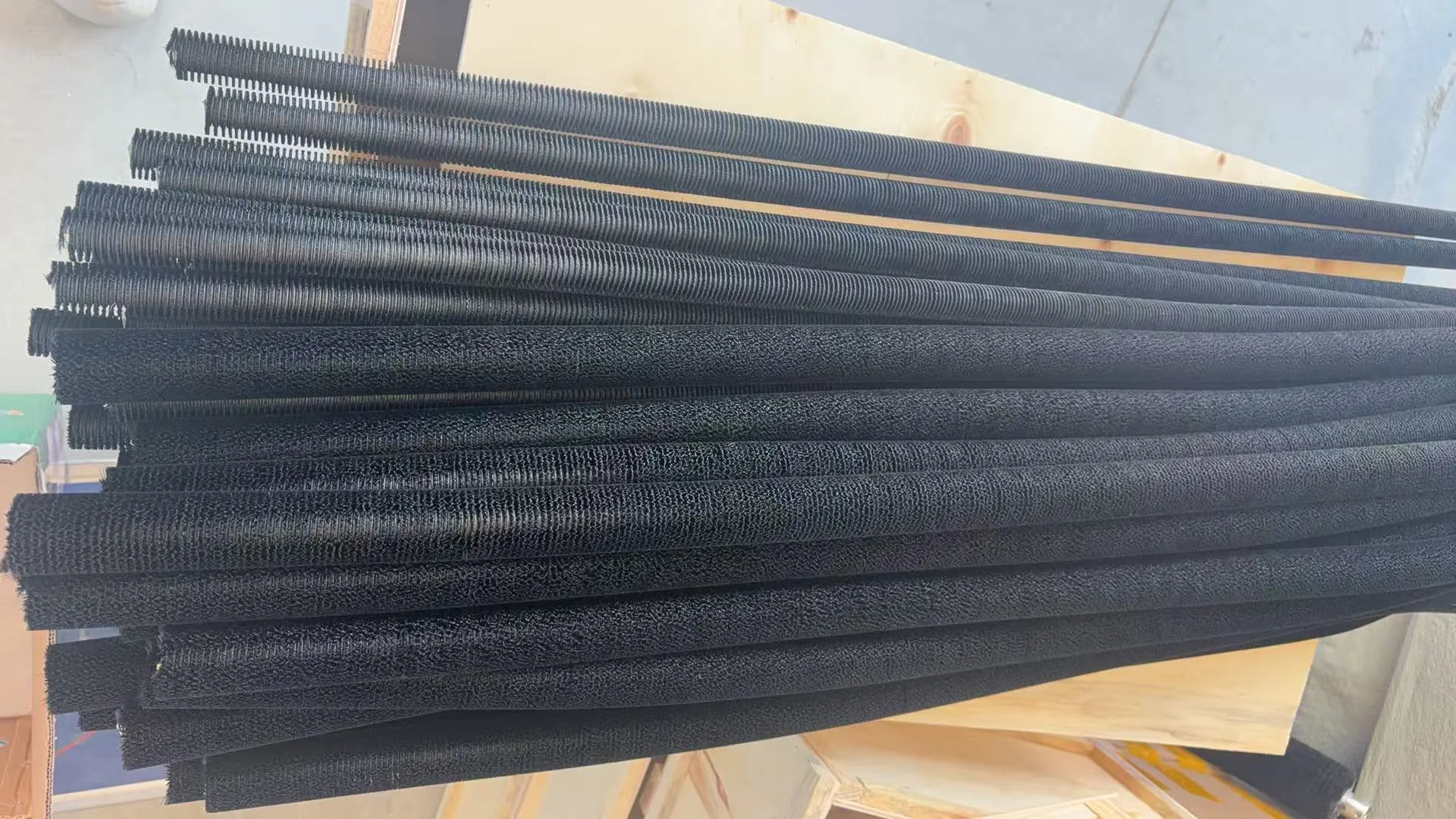
A flexible strip brush uses a polymer or elastomer-based profile. Depending on the design, the filaments may be fused into an extruded backing or tufted into a flexible profile. This can suit an irregular mounting path when the backing’s bend direction, minimum radius, retention method, and installed shape are acceptable. Neither construction should be chosen solely because the vehicle is a metro or railway train.
For either type, the filament must meet the target surface with suitable clearance throughout the door cycle. Excessive interference can increase wear or resistance to movement. Filament trim, diameter, density, and stiffness should therefore be reviewed together with the gap variation and contact direction, then checked on a prototype or approved door assembly.
Specify materials and fire evidence for the project
Nylon and polypropylene are possible filament materials, but a polymer name alone does not establish wear life, recovery, cleaning-chemical resistance, or fire performance. The selected grade and the completed brush construction need to be assessed against the actual service conditions. The carrier or flexible backing also needs secure retention and a finish suited to the vehicle environment.
Where the project applies the European railway fire standard, EN 45545-2:2020+A1:2023 sets requirements for the fire behaviour of railway-vehicle materials and components. The vehicle and project classification determine the applicable assessment. A flame-retardant filament grade alone does not demonstrate compliance of the finished brush assembly. Before approval, the door-system team should specify the applicable requirement, the construction to be assessed, and the supporting test and traceability documents. Brushcustom does not claim a universal railway fire rating for its strip brushes.
What to send for an OEM or replacement enquiry
For a new design, send the door and panel drawings showing the gap at relevant positions in the movement cycle, the available mounting envelope, the intended contact surface, and any holder or fastener details. Specify the required filament and backing materials, cleaning and environmental exposure, fire-performance requirement, document revision, and expected quantity.
For a replacement, add the approved part number or drawing, the holder cross-section, and an installed or unused reference sample if available. A worn sample may not reveal the original filament trim. A change to the carrier, working contact, or material may need door-system engineering approval and renewed validation before use.
Brushcustom manufactures custom strip brushes in metal-channel and flexible-backed constructions for drawing-based OEM and replacement projects. Send the installation details through the quotation form so the proposed geometry, materials, documentation, and production feasibility can be reviewed against your project specification.