Solar panel cleaning brushes are used to remove dust, sand, pollen, bird droppings, and light residue from photovoltaic module surfaces. In a commercial or utility-scale project, the brush is not selected as a general cleaning accessory. It has to match the cleaning system, panel surface, operating environment, cleaning mode, and replacement plan.
This guide explains how a solar panel cleaning brush is usually reviewed for OEM systems, replacement assemblies, robotic cleaning equipment, and O&M service programs. For the main application page, see custom solar panel cleaning brushes.
What Is a Solar Panel Cleaning Brush?
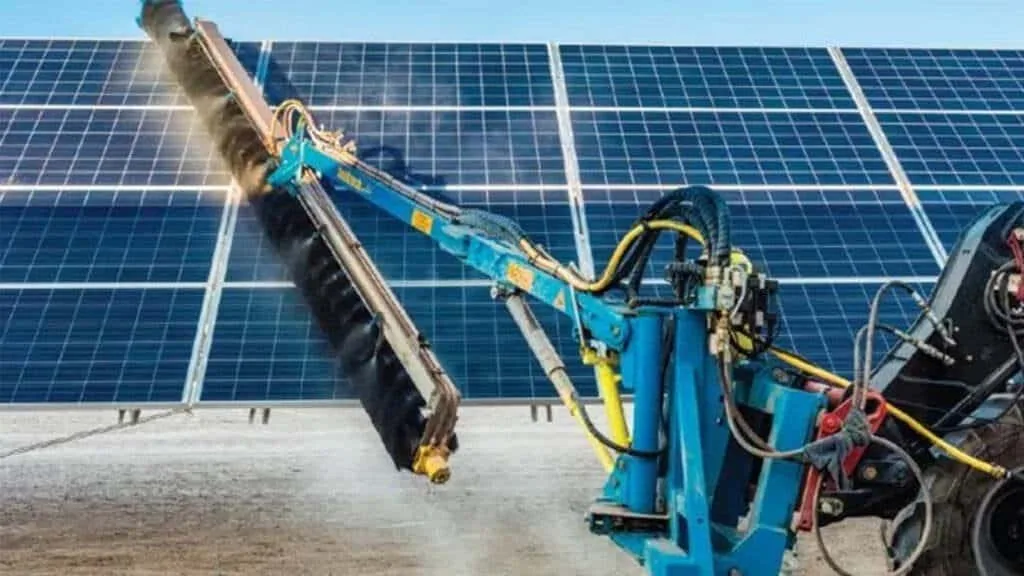
A solar panel cleaning brush is a soft-contact brush used in a manual, semi-automatic, robotic, truck-mounted, or fully installed cleaning system. Its job is to loosen and move surface contamination while keeping contact controlled enough for coated glass, module frames, and the cleaning equipment. The selected brush and cleaning method must follow the target module manufacturer's instructions and be validated for the actual system; a brush alone does not confirm scratch-free performance or warranty compatibility.
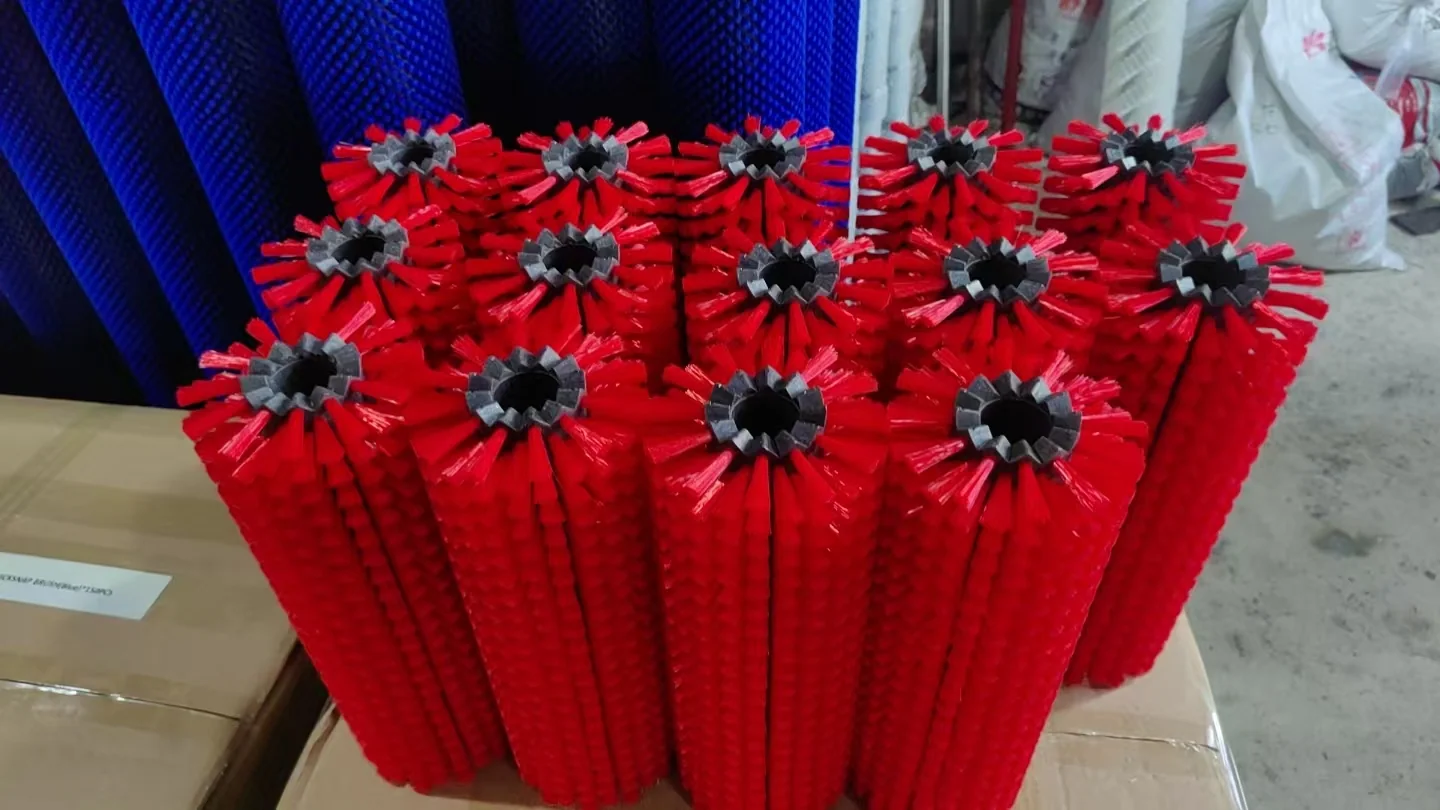
Most industrial buyers describe these products broadly as solar panel cleaning brushes. The actual build may be a roller brush, spiral roller, disc brush, long brush head, microfiber strip roller, or a replacement brush assembly made to match an existing machine.
How Solar Panel Cleaning Roller Brushes Work
The working principle of a solar panel cleaning roller brush is simple: the rotating brush face contacts the panel surface while the machine moves across the module row. The filament tips sweep loose dust and residue away from the glass. In wet systems, water helps float and carry particles away; in dry systems, the brush must release dust without letting trapped grit become an abrasive contact point.
Cleaning performance is controlled by more than brush softness. Brush length, outside diameter, trim, density, filament diameter, rotation direction, machine speed, contact pressure, water flow, and replacement condition all affect the result. A brush that works well on one robot or vehicle system may not fit another system without changes to shaft detail, balance, or filament construction.
Common Solar Cleaning System Types
Solar cleaning brushes are usually reviewed by equipment type first, because the machine decides the available space, mounting interface, working speed, and replacement method. The RPM ranges below are practical reference ranges, not fixed limits; final speed should be confirmed by the equipment design and approved cleaning method.
| System Type | Common Brush Direction | RPM Reference | Selection Notes |
|---|---|---|---|
| Manual pole or handheld tool | Disc brush, narrow roller, or long brush head | Disc heads: about 150-350 RPM; small rollers: about 300-500 RPM | Weight, control, water feed, and panel access matter more than high brush speed. |
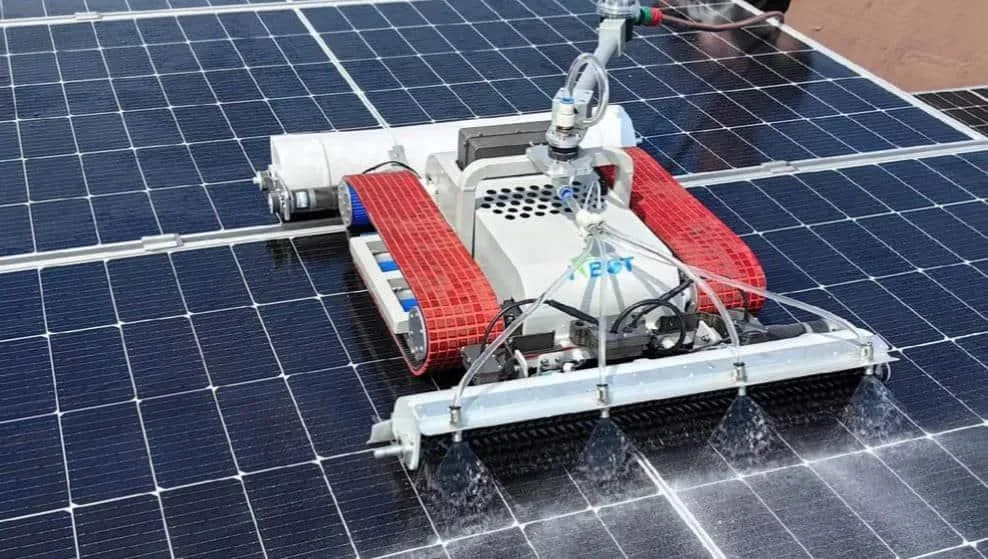
| Robotic solar cleaner | Roller brush, spiral roller, or microfiber roller | Commonly reviewed around 100-500 RPM; some heavy-duty crawler systems may reach about 600-700 RPM | Confirm brush length, OD, shaft detail, drive method, balance, and replacement cycle. |
| Truck-mounted cleaning arm | Long roller brush or rotating brush head | Wet roller systems are often reviewed around 300-500 RPM | Wet cleaning, water quality, operating reach, and stable contact are common review points. |
| Fixed automatic system | System-specific roller or spiral brush assembly | Often designed around 100-150 RPM for fixed dry or low-speed automatic cleaning systems | Confirm brush RPM, travel speed, cycle count, docking method, weather exposure, and spare brush planning. |
Roller, Spiral, Disc, and Microfiber Brush Formats
Solar panel cleaning roller brushes are common in robotic and wider-contact systems. They are reviewed by finished outside diameter, working length, shaft or bore detail, trim height, fill material, RPM, and balance requirement.
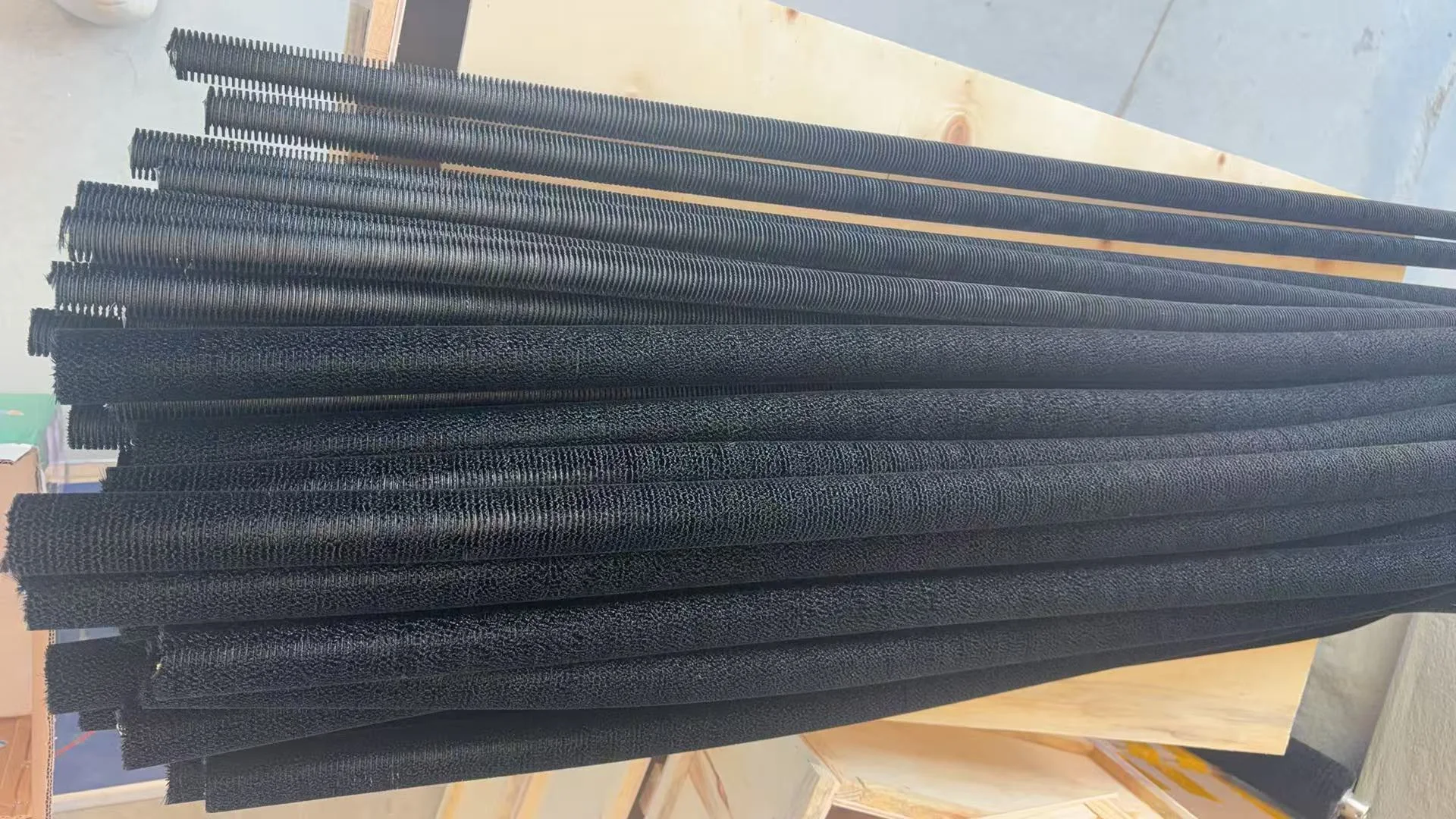
Spiral solar cleaning brushes are used where the system needs a continuous contact path along a rotating shaft. Spiral construction can help maintain longer sweep travel, but shaft detail, brush pitch, balance, and replacement method still need to match the machine.
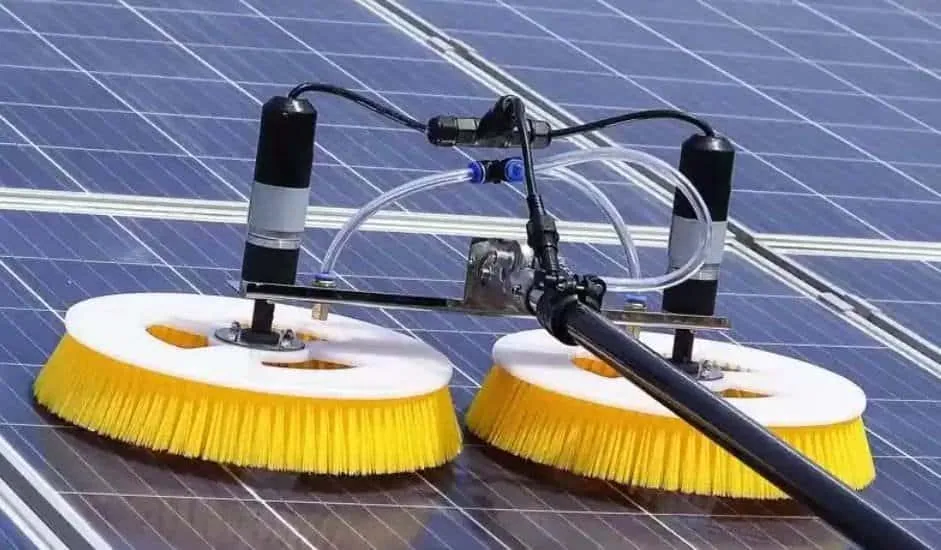
Disc brushes are used on some smaller rotating heads, pole tools, or localized cleaning systems. Disc brushes can be useful where the equipment needs a round contact face rather than a long roller.
Microfiber brush strips or microfiber roller brushes can be reviewed for dry dust removal or gentle wiping systems. It should not be treated as the universal best choice. Microfiber can hold fine dust and grit; if it is not cleaned or replaced correctly, the trapped particles may increase surface risk. It is best reviewed with the cleaning cycle, dust type, replacement plan, and whether the system is dry, wet, or hybrid.
Dry Cleaning vs Wet Cleaning
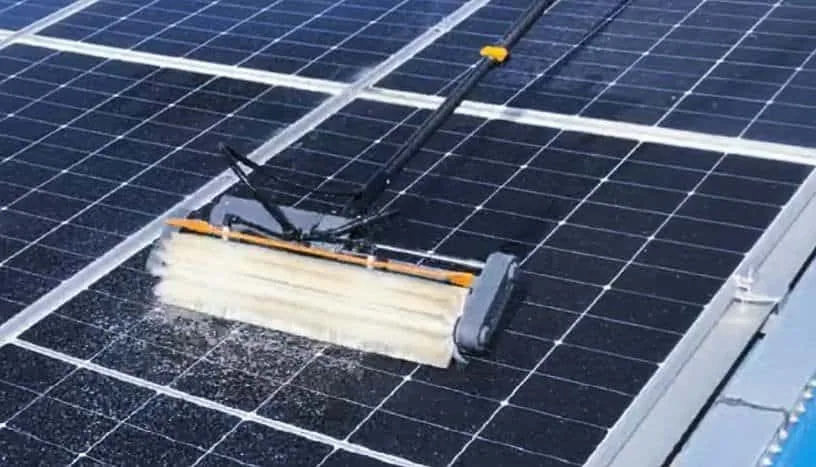
Dry cleaning is often reviewed for desert, remote, or water-limited sites where frequent dust removal is needed. Reference notes often place dry brush systems in a lower speed range, around 100-150 RPM, because the brush must release dust without dragging trapped grit across the glass. Dry cleaning is not the best answer for every condition, because sticky residue, hardened soiling, bird droppings, or dew-bonded dust may need water-assisted cleaning.
Wet cleaning combines brush contact with water flow. Wet systems are often reviewed at higher brush speeds, around 300-500 RPM, because water helps loosen and carry particles away from the glass. The buyer still needs to confirm water quality, pressure limits, approved cleaning method, and whether water may leave mineral deposits after drying.
Hybrid cleaning is common in real O&M planning. A site may use dry robotic cleaning for routine dust control and wet cleaning when residue becomes sticky or compacted. For brush selection, the important question is how the system actually operates, not only whether the machine is called automatic.
Filament Materials for Solar Panel Cleaning Brushes
Routine PV glass cleaning usually uses soft synthetic filaments or wiping materials rather than aggressive abrasive or wire fills. The material should be chosen with the panel surface, dust type, outdoor exposure, cleaning mode, and equipment design in mind.
Soft Nylon / PA Filaments
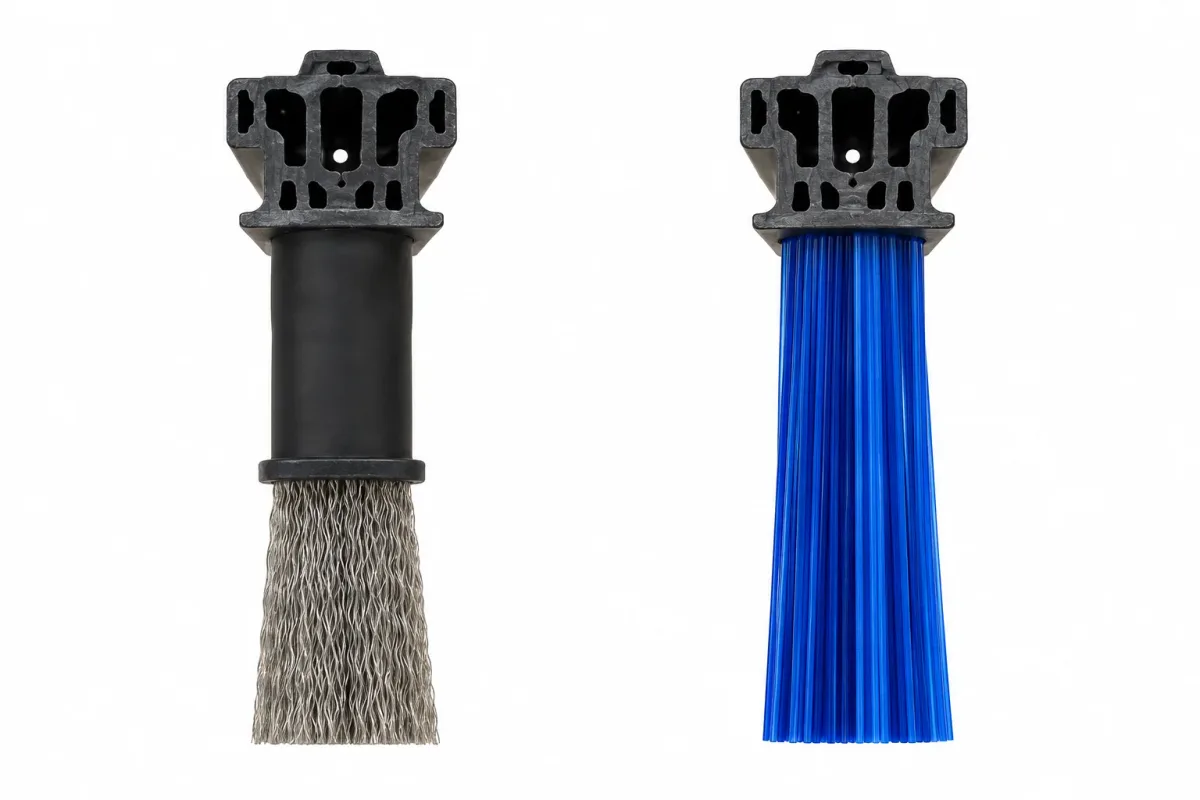
Soft nylon, including PA6 or PA66 directions where suitable, is often reviewed for roller brushes and robot brushes because it offers resilience, bending recovery, and wear resistance. Fine filament diameters may be used where surface protection matters, but the exact diameter should be checked against the machine contact pressure, site dust, and customer cleaning method.
PBT Polyester Filaments
PBT can be reviewed where moisture resistance, outdoor durability, shape recovery, and repeated wet service are important. It is not automatically better than nylon; the final choice depends on stiffness, filament diameter, trim length, UV exposure, water use, and the required service life.
PP / PE Synthetic Filaments
PP or PE materials may be used in some solar cleaning brush systems where lighter contact, water resistance, or cost control is important. Their stiffness, recovery, UV resistance, and wear life should be confirmed before production.
UV-Stabilized Filament Options
For outdoor solar cleaning brushes, Brushcustom can provide UV-stabilized filament options where the brush will remain exposed to sunlight. PA, PBT, PP, or PE filaments can be reviewed with UV stabilizer masterbatch depending on the required stiffness, color, outdoor exposure, cleaning mode, and expected replacement cycle.
Microfiber Brush Filaments and Strips
Microfiber is an ultra-fine synthetic fiber direction, commonly based on polyester, polyamide, or a polyester/polyamide blend. In solar cleaning brushes, it may appear as microfiber brush strips, a microfiber strip roller, or a soft mixed-fill roller brush. It can be reviewed for some dry dust or gentle wiping systems, but it should not be treated as the universal best material. A saturated microfiber surface can hold grit, so buyers should plan how the brush will be cleaned, inspected, and replaced.
Does Brush Speed Matter?
Yes, but there is no single correct RPM for every solar panel cleaning brush. Speed is a machine parameter. A handheld disc head, long roller brush, robotic cleaner, and truck-mounted cleaning arm can all use different operating speeds because their structure, weight, water flow, and control method are different.
For a custom solar cleaning roller brush, provide the operating RPM or machine speed if known. Speed affects brush contact, wear, balance, vibration, and how the brush follows the panel surface. Brushcustom should review RPM together with brush length, outside diameter, shaft detail, filament material, dry or wet cleaning mode, and the system's approved cleaning method.
Benefits of a Correctly Matched Solar Cleaning Brush
A correctly matched brush can support more consistent cleaning, reduce unnecessary manual contact, improve repeatability across long module rows, and simplify replacement planning for O&M teams. The benefit does not come from the brush alone. It comes from matching the brush to the cleaning system, panel condition, site environment, and maintenance schedule.
For custom manufacturing, this is why buyers should avoid choosing only by appearance. Two solar panel cleaning brushes may look similar in a photo but behave differently because of filament diameter, density, shaft construction, balance, trim height, and material recovery.
Information to Confirm Before Selecting a Solar Cleaning Brush
Before ordering a solar panel cleaning brush, confirm the cleaning system type, brush format, working length, outside diameter, shaft or mounting detail, filament material, dry or wet cleaning mode, operating speed, and whether the brush is for an OEM build or a replacement service program.
For replacement projects, send a drawing, measured sample, or clear photos with dimensions. For OEM projects, share the machine layout, expected contact method, operating environment, target replacement cycle, and whether the system uses roller, spiral, disc, or microfiber brush construction.
Related Brush Pages
If you already know the brush format, start with the related Product page:
- Custom Cylinder Brushes for roller-style solar cleaning systems and wide rotating brush assemblies.
- Coil and Spiral Brushes for continuous-contact roller designs and spiral brush construction.
- For solar pole-disc or localized rotating-head brushes, send the equipment drawing or a marked photo with your RFQ.
- Solar Energy Brush Solutions for the main application page.
FAQ
What is the working principle of a solar panel cleaning roller brush?
A solar panel cleaning roller brush rotates while the cleaning system moves across the panel row. The filament tips loosen dust or residue from the glass surface. In wet cleaning, water helps carry particles away. In dry cleaning, the brush design and cleaning cycle must keep loose dust from becoming trapped grit.
Are microfiber brushes best for solar panel cleaning?
Microfiber can be useful for some dry dust and gentle wiping systems, but it is not automatically the best material for every solar cleaning brush. It can hold fine dust and sand, so cleaning, inspection, and replacement must be planned. For many roller or wet systems, soft PA, PBT, PP, or PE filaments may be more practical.
Should solar panel cleaning brushes use dry or wet cleaning?
Dry cleaning is often reviewed where water is limited and the main soil is loose dust. Wet cleaning is often needed for sticky residue, bird droppings, hardened dirt, or industrial contamination. Many sites use a hybrid approach based on season, dust type, water availability, and O&M schedule.
What filament diameter is used for solar cleaning brushes?
Fine soft filaments are commonly reviewed for solar panel cleaning, but there is no universal diameter. The right diameter depends on material, brush density, trim length, contact pressure, panel surface, dust type, dry or wet cleaning, and the machine design.
What should I send for a replacement solar cleaning brush quote?
Send the current brush length, outside diameter, shaft or bore detail, mounting interface, filament material if known, machine photos, operating mode, and quantity. A drawing, marked photo, or sample is the fastest way to confirm fit.