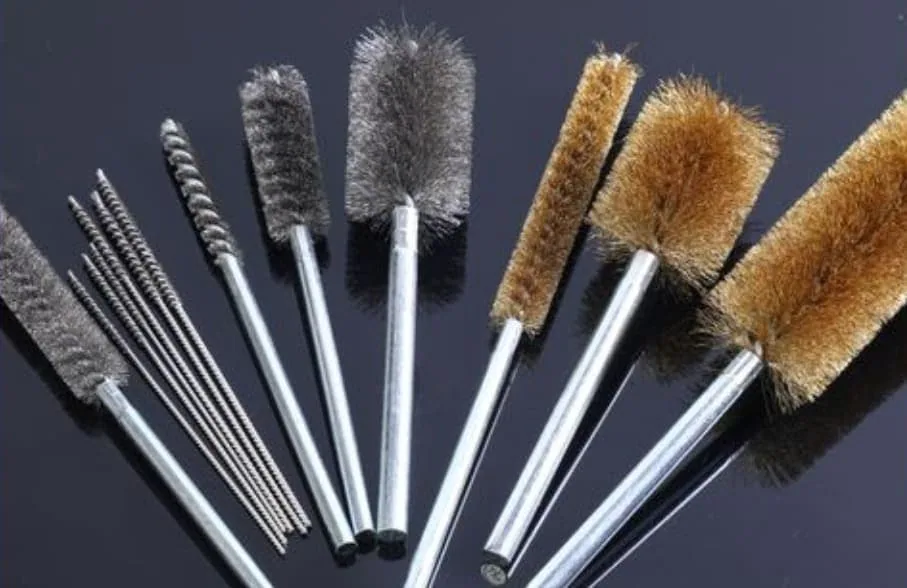
Pipe cleaning brushes and tube brushes are internal-contact brushes used to clean, clear, or lightly finish the inside surfaces of tubes, bores, nozzles, fittings, manifolds, and narrow passages. In industrial work, the right brush is selected by inside diameter, working length, access condition, residue type, surface material, and whether the brush will be used by hand, with a powered tool, or inside production equipment.
This guide focuses on industrial pipe brush and tube brush selection. For custom builds, the most useful starting information is the bore or tube ID, cleaning depth, passage shape, material to be cleaned, fill material preference, and the type of residue or burr that needs to be removed.
If you already have a drawing, sample, or defined dimensions for a custom build, see our custom pipe and tube brushes.
Types of Pipe Cleaning Brushes and Tube Brushes
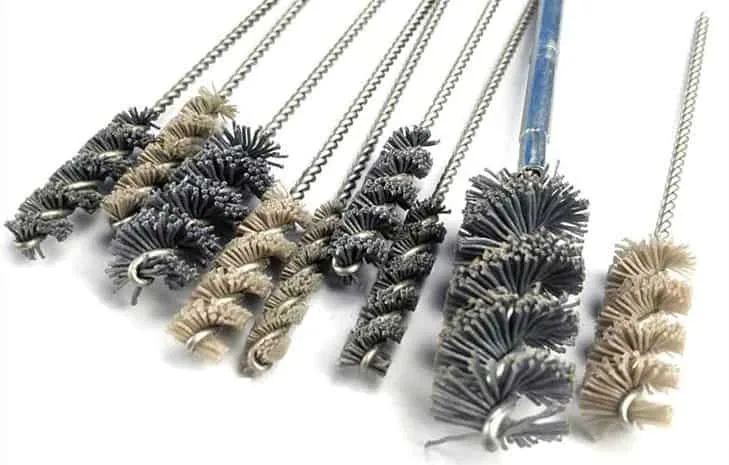
Most industrial pipe and tube brushes are variations of a twisted wire brush, with the filament held by a central stem wire. The right construction depends on the passage size, cleaning force, contact risk, and required reach.
Twisted Wire Tube Brushes
Twisted wire tube brushes are commonly used for straight tubes, drilled bores, fittings, nozzles, valve bodies, and maintenance access points. They can be built with different stem diameters, brush diameters, fill materials, and working lengths to match the passage.
- Stainless steel wire tube brushes: Used where stronger cleaning action and corrosion resistance are needed on compatible metal surfaces.
- Carbon steel wire tube brushes: Used for aggressive cleaning on ferrous parts where rust transfer and surface marking risks are controlled.
- Brass wire tube brushes: Used where a softer metal wire is preferred for brass, copper, or more sensitive metal surfaces.
Nylon Pipe Cleaning Brushes
Nylon pipe cleaning brushes are selected where the process needs internal cleaning with lower surface aggression than metal wire. They are often reviewed for plastic passages, coated surfaces, stainless equipment, food processing equipment, pharmaceutical maintenance areas, and general residue removal. Material suitability should be confirmed against cleaning temperature, chemical exposure, and any required documentation.
Abrasive Nylon Tube Brushes
Abrasive nylon tube brushes combine filament flexibility with abrasive action. They may be used for light internal deburring, edge blending, oxide removal, or surface conditioning inside bores and cross-holes. They should be treated as a finishing brush, not only a cleaning brush, because grit, pressure, speed, and dwell time affect the final surface.
Long-Reach and Flexible Tube Brushes
Long-reach and flexible tube brushes are used when the cleaning point is deep inside a tube, behind a bend, or beyond normal hand access. The stem, handle, or flexible extension must be matched to the required reach without making the brush too weak to maintain contact.
Small-Diameter Nozzle and Bottle Brushes
Small-diameter tube brushes may be used for nozzles, valves, ports, lab equipment, dispensing equipment, and narrow cleaning points. These brushes are usually specified by brush diameter, working length, filament material, and handle or stem detail.
Rotary-Driven Tube Brushes
Some pipe and tube brushes are used with a drill, rotary tool, or automated fixture. Powered use requires closer review of stem strength, brush diameter, maximum speed, direction of rotation, and operator safety. A brush that works by hand may not be suitable for powered operation without changes to construction.
How to Select the Right Pipe Brush or Tube Brush
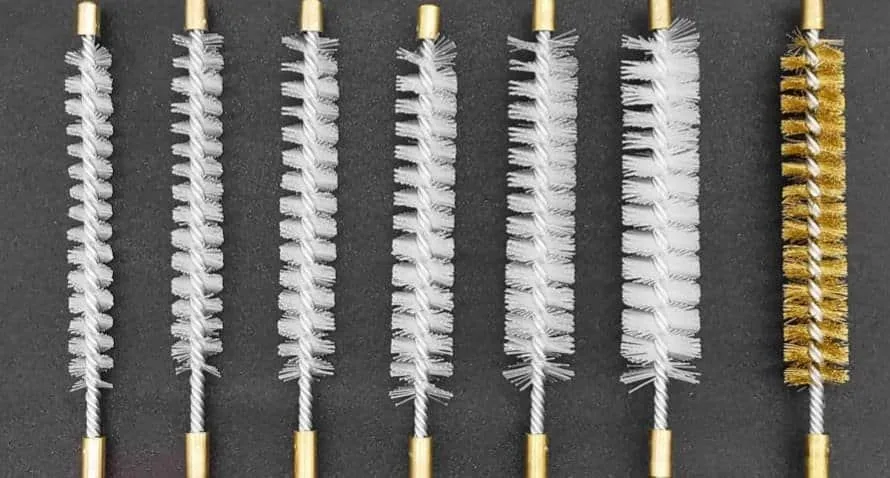
Industrial buyers usually start with the passage geometry and the work the brush must perform. A pipe brush that is too small may not contact the wall; a brush that is too large may bind, bend the stem, or create too much pressure.
Inside Diameter and Brush Fit
Confirm the internal diameter of the tube, bore, or passage before selecting the brush. The finished brush diameter is often slightly larger than the passage to create contact, but the correct amount depends on filament stiffness, fill density, passage material, and whether the brush is pushed, pulled, or rotated.
Working Length and Access
Working length is different from total brush length. For long tubes or blind holes, specify the cleaning depth, entry condition, bends, and whether the brush must pass through the full bore or only clean a defined area.
Fill Material and Surface Compatibility
Brush material should be selected according to the surface being cleaned and the residue being removed. The table below is a starting point for review, not a universal rule.
| Application Surface | Common Brush Direction | Review Notes |
|---|---|---|
| Stainless steel tubes or equipment | Nylon, stainless steel wire, or abrasive nylon | Match cleaning force to finish requirement and corrosion control. |
| Carbon steel bores or ferrous parts | Carbon steel wire, stainless steel wire, or abrasive nylon | Check rust, scale, burrs, and the required surface after cleaning. |
| Copper or brass tubes | Brass wire or nylon | A softer brush direction is often reviewed to reduce marking risk. |
| Plastic or coated passages | Nylon, PP, PBT, or other synthetic fill | Confirm chemical exposure, temperature, and surface sensitivity. |
| Food or pharmaceutical equipment | Food-contact compatible synthetic fill where required | Material documentation and plant cleaning procedures must guide selection. |
| Precision bores and hydraulic passages | Nylon, abrasive nylon, or application-specific honing brush | Define burr condition, cleanliness target, and inspection method before release. |
Residue, Burrs, and Cleaning Method
The brush should be matched to the material that needs to be removed. Loose chips, dry dust, soft residue, biofilm, oil film, rust, oxide, light burrs, and scale do not require the same filament or stiffness. If the goal is internal deburring or a controlled surface finish, abrasive nylon or honing-style brushes may need to be reviewed separately from ordinary cleaning brushes.
Manual, Powered, or Machine-Mounted Use
A manually used tube brush may prioritize flexibility and reach. A powered brush must also be checked for stem strength, safe speed, concentricity, and mounting detail. A machine-mounted brush may require repeatable dimensions, traceable material direction, and sample approval before release.
Where Industrial Pipe Brushes Are Used
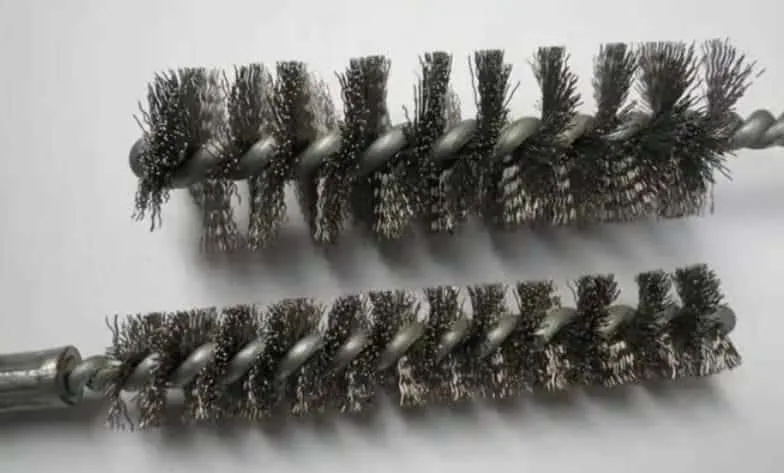
Pipe cleaning brushes and tube brushes are used wherever the working surface is inside the part or equipment. Common industrial uses include internal cleaning, residue removal, light deburring, and preparation before inspection or assembly.
- Food and beverage equipment: Cleaning nozzles, tubes, valves, drains, filling parts, and narrow equipment areas according to the plant cleaning procedure.
- Pharmaceutical and lab equipment: Cleaning non-product-contact maintenance points, change parts, ports, and narrow access areas where material control matters.
- Automotive and aerospace components: Removing chips, loose burrs, residue, or oxide from bores, cross-holes, manifolds, and fluid passages.
- Heat exchanger and condenser tubes: Cleaning tube interiors where diameter, reach, and residue type determine the brush construction.
- Hydraulic blocks and valve bodies: Cleaning drilled passages and intersections where loose contamination can affect performance.
- General equipment maintenance: Cleaning narrow tubes, ports, guides, and hard-to-reach internal surfaces in industrial machines.
Inspection, Cleaning, and Replacement
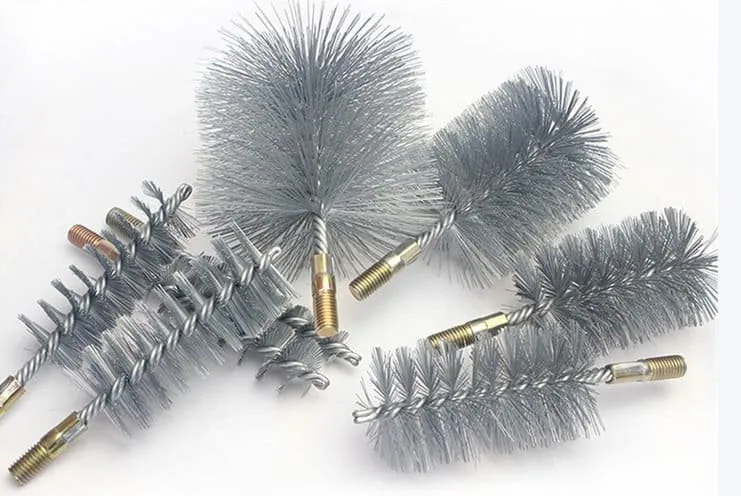
Pipe and tube brushes should be inspected before repeated use, especially when they are used inside narrow passages where a broken stem or loose filament can create a larger problem. Check the brush for worn bristles, missing fill, bent stem wire, corrosion, contamination, and loss of working diameter.
After use, remove trapped debris and dry metal brushes as needed to reduce corrosion risk. Replace the brush when it no longer contacts the internal surface consistently, when the stem is bent or weakened, or when the material condition no longer meets the customer's process requirement.
Information to Provide for Custom Pipe Brush Review
For a custom pipe cleaning brush or tube brush, send the inside diameter, cleaning depth, access condition, tube or bore material, residue type, required brush material, and whether the brush will be used by hand, powered tool, or machine fixture. A drawing, marked photo, sample brush, or machine reference can help confirm the stem, handle, thread, loop, or adapter detail.
For product-level options, see Pipe and Tube Brushes. For a project review, share your dimensions and application notes through the RFQ form.
FAQs About Pipe Cleaning Brushes and Tube Brushes
What is the difference between a pipe brush and a tube brush?
The terms often overlap. Buyers usually use pipe brush, tube brush, pipe cleaning brush, or tube cleaning brush when the brush works inside a round passage. In custom projects, the important details are inside diameter, working length, access, material, and cleaning goal.
How do I size a pipe cleaning brush?
Start with the inside diameter of the tube or bore. The brush is often made slightly larger than the passage for contact, but the correct finished diameter depends on filament stiffness, fill density, passage material, and cleaning method.
Should I choose nylon or wire for a tube brush?
Nylon is usually reviewed where lower surface aggression, chemical exposure, or hygiene control matters. Wire is reviewed where stronger mechanical cleaning is needed on compatible metal surfaces. The final choice depends on the surface, residue, and acceptable finish change.
Can pipe brushes be made long or flexible?
Yes. Long-reach and flexible pipe brushes can be reviewed for deeper tubes, curved access, or equipment maintenance points. The design must balance reach, stiffness, and enough contact pressure at the cleaning area.
Are pipe cleaning brushes the same as honing brushes?
Not always. A pipe cleaning brush removes residue, chips, or buildup. A honing or abrasive internal finishing brush is used when the process needs controlled deburring, edge blending, or surface conditioning inside a bore. The intended result should be defined before choosing the brush.