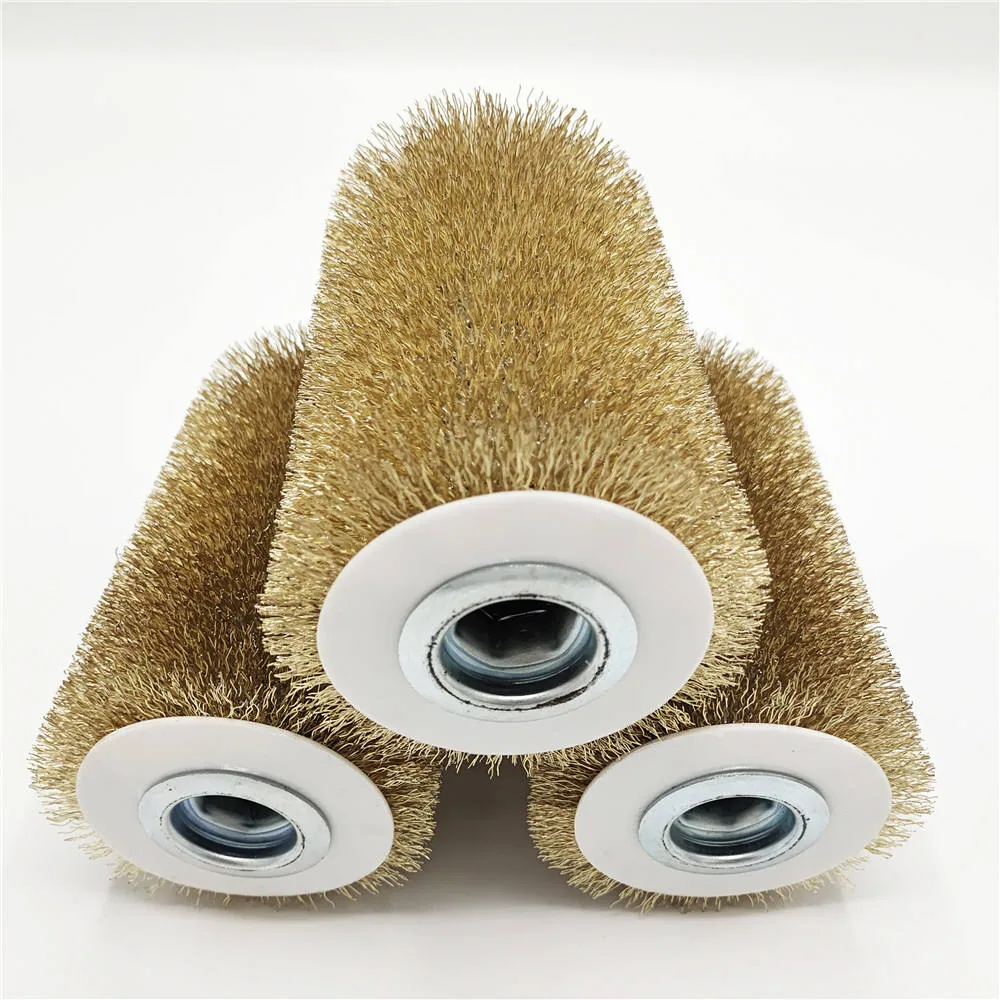
Quick answer: Use carbon steel wire for stronger rust, scale, paint, and weld cleaning on compatible carbon-steel or iron parts. Use brass wire when a softer brushing action is needed for light cleaning or a more surface-sensitive workpiece. Use stainless steel wire on stainless steel or aluminum when carbon-steel contamination and after-rust must be avoided. The final result also depends on wire diameter, crimped or knotted construction, trim length, speed, and contact pressure—not wire material alone.
This guide compares the fill materials used in custom industrial wire brushes. Before ordering, identify both the workpiece material and what must be removed. A brush that cleans carbon steel effectively can mark a softer surface or leave ferrous residue on stainless steel or aluminum.
Steel vs. Brass Wire Brush at a Glance
| Wire Material | Common Selection Direction | Main Limitation |
|---|---|---|
| Carbon steel wire | Stronger rust, scale, paint, weld residue, and general cleaning on carbon steel, iron, and compatible ferrous parts | Can leave ferrous contamination on stainless steel, aluminum, and other non-ferrous surfaces |
| Stainless steel wire | Stainless steel, aluminum, non-ferrous metals, wet environments, and applications requiring contamination control | The brush must remain dedicated to compatible workpieces; previous contact with carbon steel can transfer contamination |
| Solid brass wire | Lighter cleaning and softer contact where reduced marking is more important than maximum cutting action | Less durable and less aggressive than steel wire; it can still mark a surface or transfer brass under unsuitable conditions |
| Brass-coated steel wire | General brushing where a steel core with a brass-colored coating is specified | It is not equivalent to solid brass and should not be selected for the same contamination or reduced-sparking reasons |
“Steel wire” should not be treated as one material. Carbon steel and stainless steel have different corrosion and contamination behavior. Likewise, solid brass and brass-coated steel wire are not interchangeable, even when the finished brushes look similar.
When Should You Use a Carbon Steel Wire Brush?
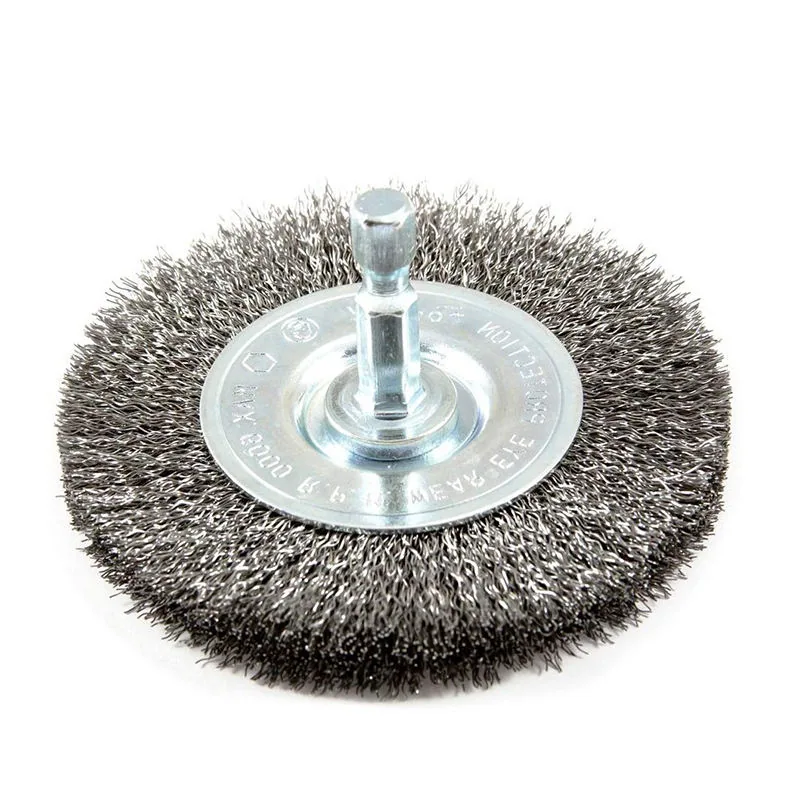
Carbon steel wire is generally the first direction to review for aggressive cleaning on carbon steel, cast iron, and other compatible ferrous workpieces. Common duties include removing rust, mill scale, paint, weld spatter, and surface contamination, as well as preparing a surface before coating or welding.
The required brushing action cannot be selected by material alone. Finer crimped wire is more flexible and conformable, while heavier wire or knotted construction provides a more concentrated action. Always use the finest wire and lowest effective pressure that completes the task. For powered brushes, the finished brush must also be compatible with the machine, guard clearance, mounting, and maximum operating speed.
Do not use a carbon steel brush on stainless steel when ferrous contamination or after-rust is unacceptable. Brushes used on carbon steel should also not be reused on stainless steel or aluminum.
When Should You Use a Stainless Steel Wire Brush?
Stainless steel wire is commonly reviewed for stainless steel, aluminum, other non-ferrous metals, wet processes, and work where carbon-steel residue could cause later rust spots. A stainless brush intended for stainless work should be clearly identified, stored away from carbon-steel dust, and never used first on carbon steel.
Stainless steel wire does not automatically mean “non-marking.” Wire diameter, brush form, speed, pressure, contact time, and the required finish still matter. Use a sample test when the surface is polished, coated, dimensionally critical, or appearance-sensitive.
When Should You Use a Brass Wire Brush?
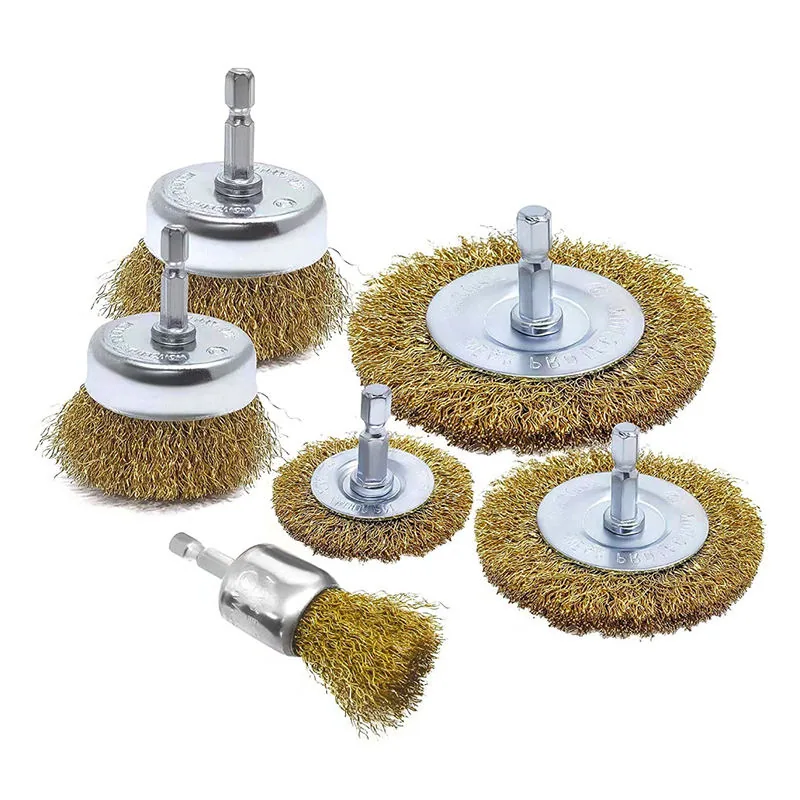
Solid brass wire is softer and generally less aggressive than carbon steel or stainless steel wire. It is useful for light oxidation, residue, and surface cleaning when the workpiece or required finish cannot accept the stronger action of steel wire. Typical review areas include copper and brass parts, electrical contacts, threads, molds, and decorative or appearance-sensitive components.
Brass is not guaranteed to be scratch-free. It can still mark a polished surface, and brass transfer may be unacceptable on some components. Confirm whether the brush is solid brass or brass-coated steel, then test the selected wire diameter, speed, and pressure on a sample or non-critical area.
Which Wire Brush Is Better for Rust Removal?
For heavy rust on carbon steel or iron, carbon steel wire is normally more effective because it provides stronger cutting action and better durability. A crimped carbon steel brush can handle light-to-medium rust, while knotted wire is reviewed for heavier scale and stubborn deposits. Brass wire is better suited to light surface corrosion or residue where reducing marks matters more than removal speed.
If the workpiece is stainless steel or aluminum, do not choose carbon steel merely because it removes rust faster. Review stainless steel wire or another compatible brush material to avoid embedded ferrous particles and after-rust.
Should You Use Brass or Stainless Steel Wire on Aluminum?
Both fine brass and stainless steel wire may be considered for aluminum, but they solve different problems. Brass provides softer contact for light cleaning; stainless steel wire is commonly selected where removing aluminum oxide or avoiding carbon-steel contamination is the priority. Neither choice is automatically damage-free. Use fine wire, light pressure, controlled speed, and a sample test, especially on polished, anodized, thin, or appearance-critical aluminum.
Does a Brass Brush Eliminate Spark Risk?
No. Brass and other non-ferrous tools are often described as non-sparking, but “reduced-sparking” is more accurate. Friction, impact, contamination, the powered tool, and the workpiece can still create an ignition hazard. A brass brush is not a substitute for a site-specific hazardous-area assessment, approved equipment, ventilation, or the operating rules for the material being handled.
Choose the Wire Brush Form for the Contact Area
After selecting the wire material, choose the brush form according to where the wire must contact the workpiece:
- Custom wire wheel brushes — circumference and edge contact for seams, welds, grooves, narrow working faces, and longer brushing paths.
- Custom wire cup brushes — broader face contact on accessible flat or slightly contoured surfaces.
- Wire-filled end brushes — concentrated axial contact in recesses, corners, slots, molds, and confined areas. The wider End Brush range also includes non-wire fill options.
- Pipe and tube brushes — internal cleaning, rust removal, deburring, or surface preparation inside bores, pipes, tubes, and passages.
For an overview of wheel, cup, end, and other wire-filled formats, see our custom industrial wire brushes.
Frequently Asked Questions
Can a carbon steel wire brush be used on stainless steel?
Not when surface contamination or after-rust must be avoided. Carbon steel particles can become embedded in stainless steel and later corrode. Use a dedicated stainless steel wire brush that has not contacted carbon steel, and keep it separated from carbon-steel tools and dust.
Will a brass wire brush scratch aluminum?
It can. Brass is softer than steel and may reduce the risk of deep marking, but wire diameter, pressure, speed, existing contamination, and the aluminum finish determine the result. Test polished, anodized, coated, or appearance-critical aluminum before production use.
Is solid brass the same as brass-coated steel wire?
No. Solid brass is brass throughout the filament. Brass-coated steel has a steel core beneath the coating, so its stiffness, wear, corrosion, contamination, and spark behavior should not be treated as equivalent to solid brass.
What determines how aggressive a wire brush will be?
Wire material is only one factor. Wire diameter, crimped or knotted construction, trim length, brush density, brush diameter, working face, operating speed, contact pressure, and engagement with the workpiece all change the brushing action.
Request a Custom Wire Brush Review
For a custom brush quotation, provide the workpiece material, deposit or coating to remove, required surface result, brush form, dimensions, mounting interface, maximum operating or no-load RPM, and quantity. If the wire material is uncertain, send a drawing, sample, or clear application photos so we can review carbon steel, stainless steel, solid brass, or brass-coated steel options with the brush construction. Request a custom wire brush quote.