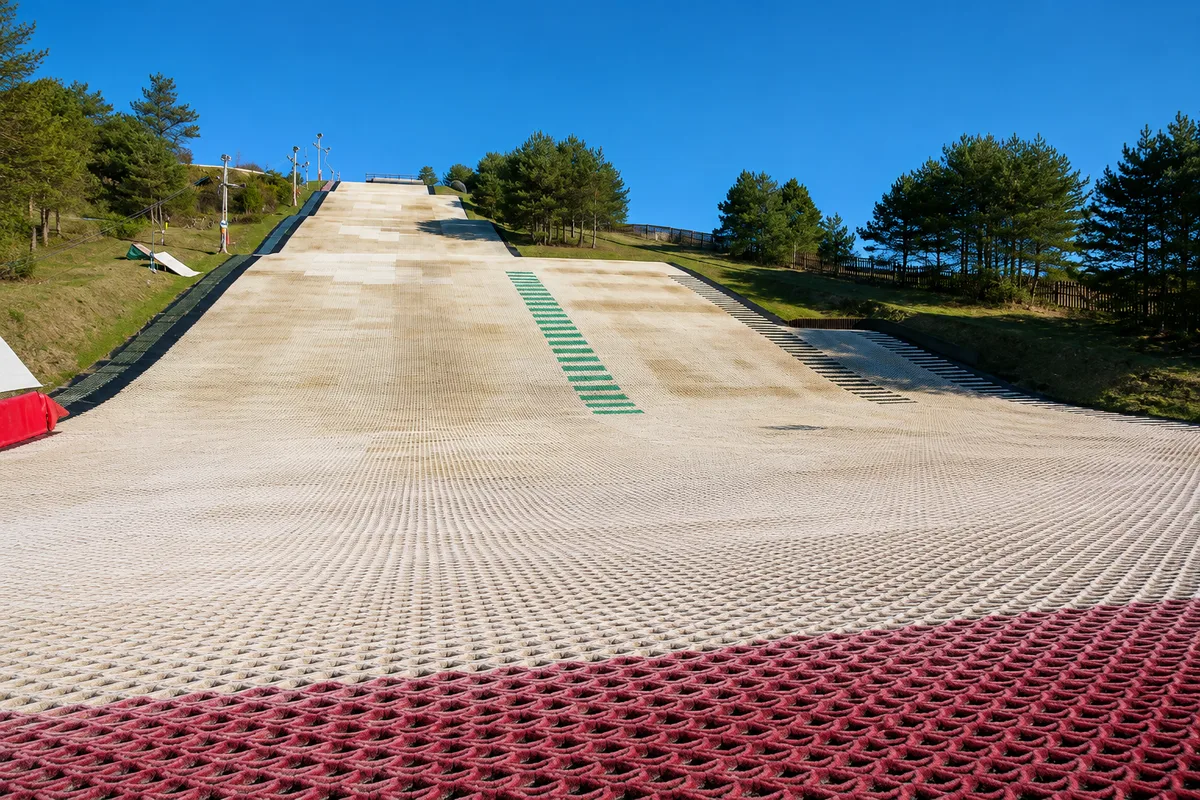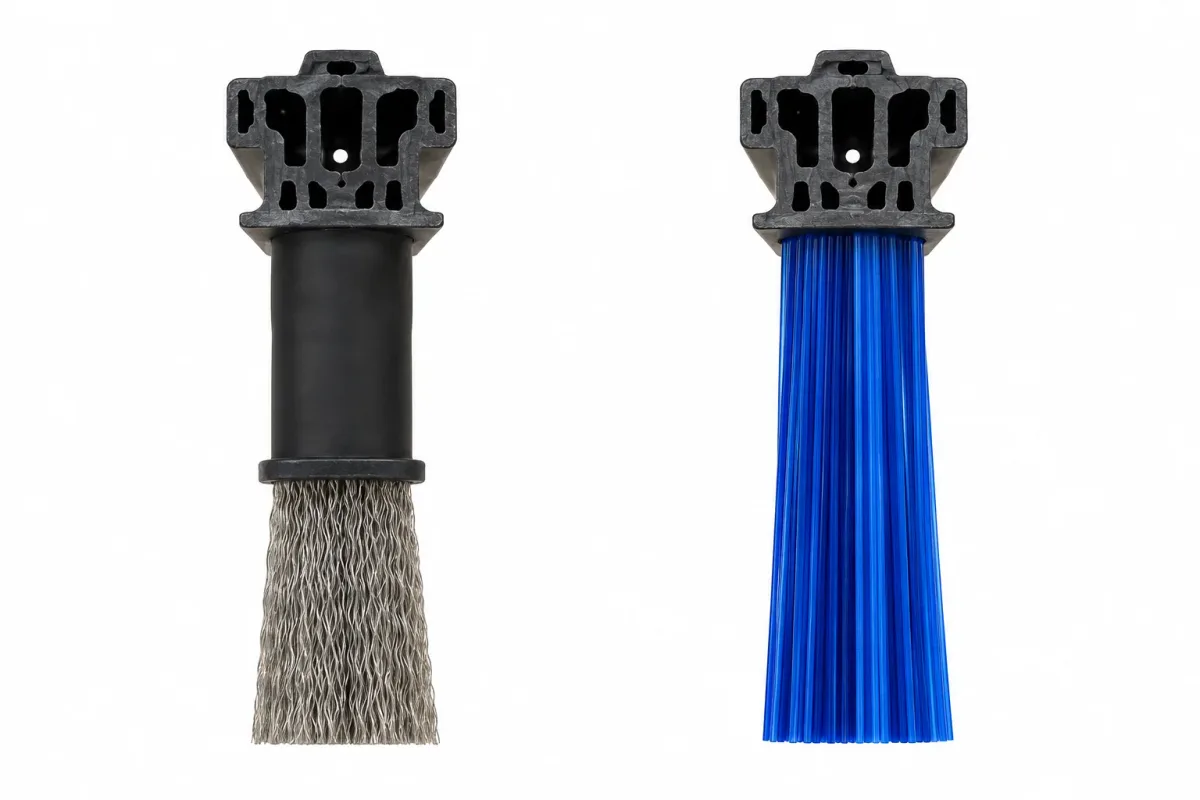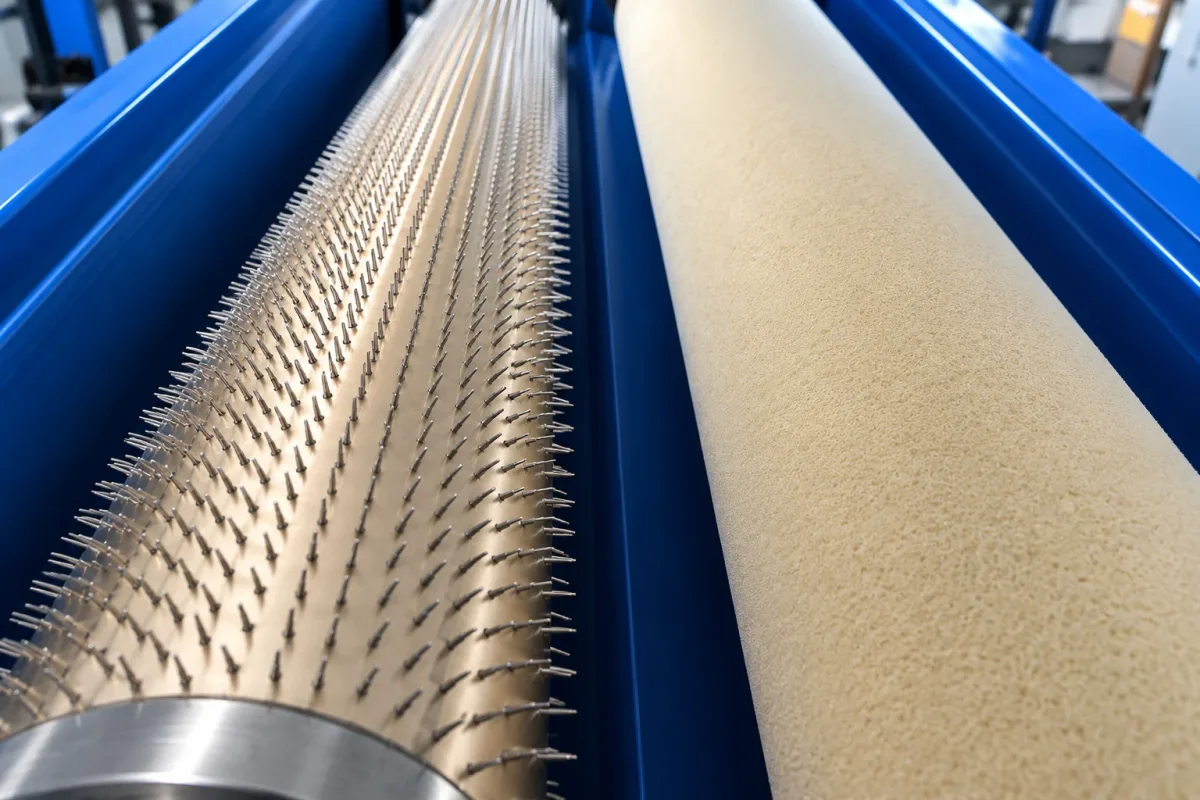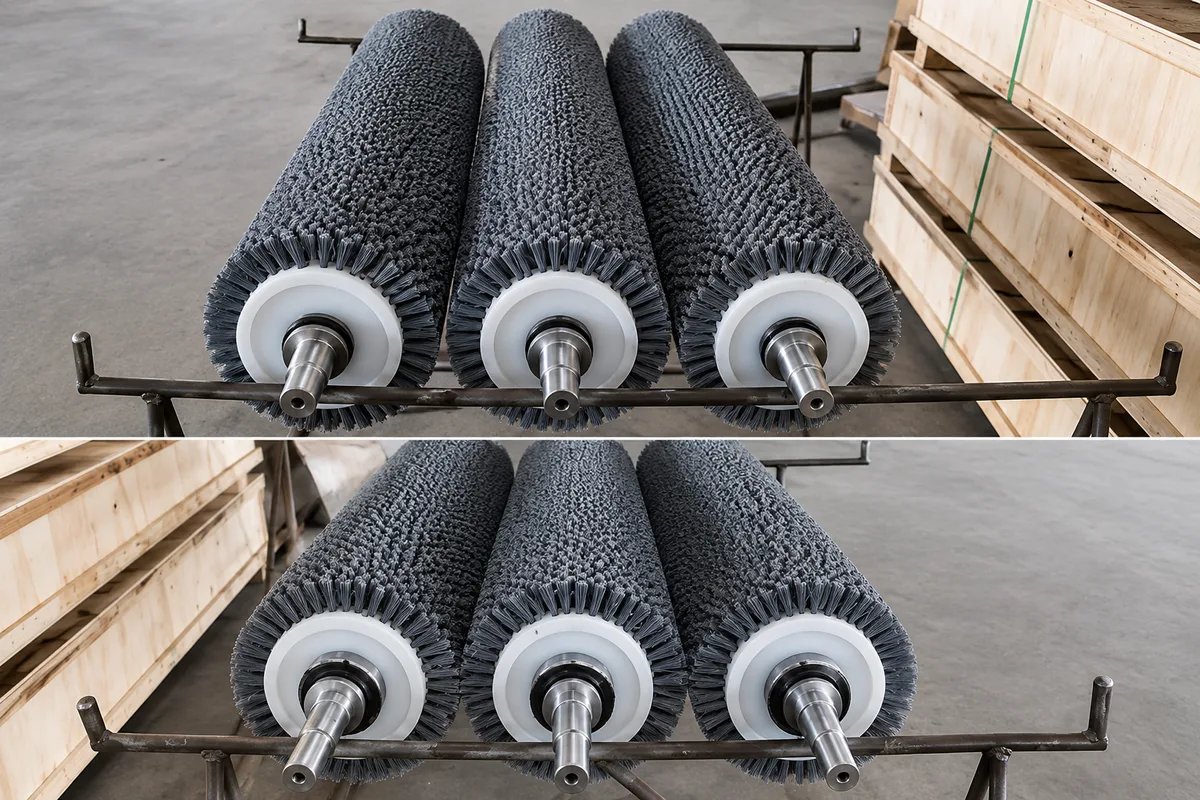
Start with the wheels that will cross the entrance. A large forklift tire needs enough travel over the brushes to clean its circumference; a small pallet-truck caster needs close support so it can cross smoothly. The frame must carry the actual wheel loads, including those concentrated on small contact areas.
Brushcustom manufactures custom forklift wheel cleaning mats and replacement brush components to an approved drawing. The selection work begins with the vehicle route, the dirt being carried in and the space available for installation.
What Does a Forklift Wheel Cleaning Mat Do?
A forklift wheel cleaning mat holds strip or lath brushes within a load-supporting frame and grate. As tires roll across it, the bristles loosen dry dirt from the tread. Dirt falls into the collection space below, where it can be removed during maintenance.
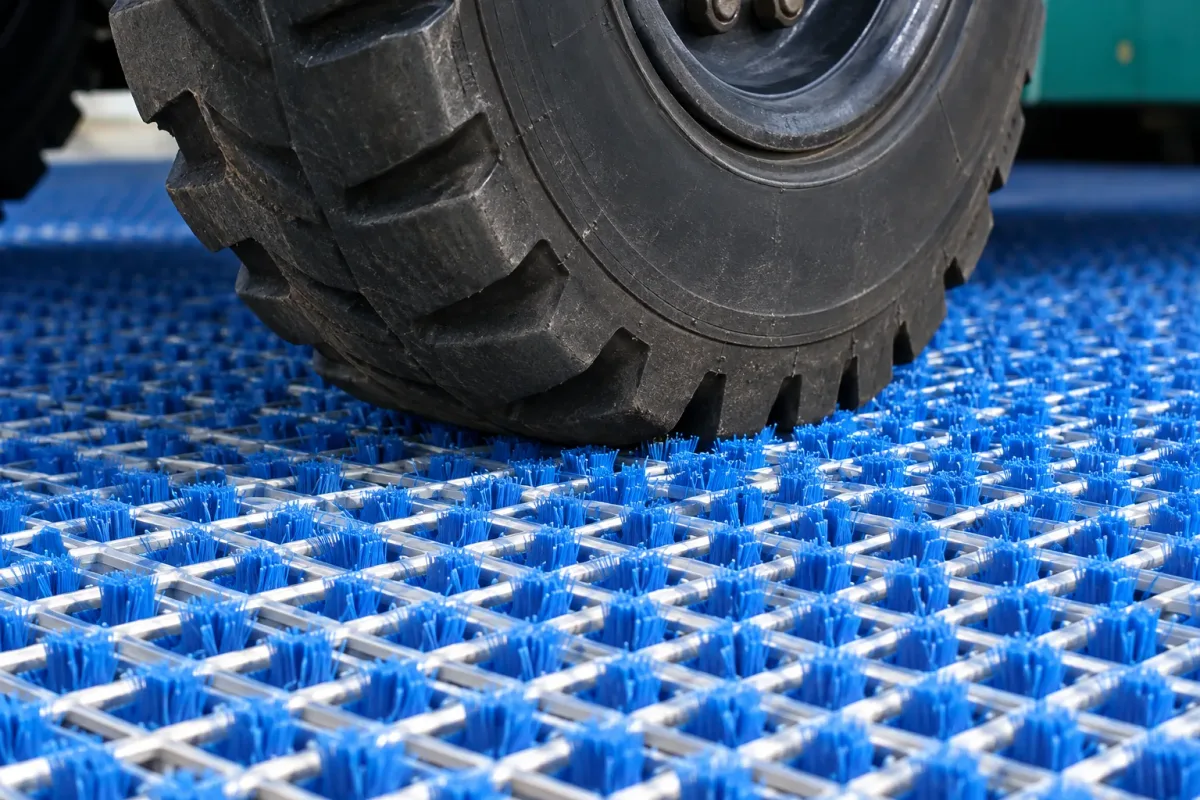
Several modules can form a cleaning field across an entrance. Typical contaminants include dust, grit, loose soil, small chips and loose tire-wear particles. Thick mud, grease and sticky deposits need a separate cleaning assessment. A dry brush field does not provide disinfection.
Size the Field for the Vehicles Using It
List all traffic on the route, including hand pallet trucks, carts and AGVs. A mat selected only from the main forklift’s dimensions may be unsuitable for smaller wheels using the same doorway.
| Vehicle information | Effect on the selection |
|---|---|
| Largest tire circumference | Travel needed for the planned number of cleaning rotations |
| Smallest wheel diameter and width | Supporting-grid openings and transitions |
| Wheel tracks, tire widths and lateral movement | Usable cleaning width |
| Maximum wheel loads and contact areas | Frame, grate and floor-support design |
| Tread depth and wheel material | Brush engagement and stiffness |
| Daily passes and repeated wheel paths | Debris removal and replacement planning |
Calculate Active Cleaning Length
For preliminary planning:
Tire circumference ≈ π × tire diameter
Active cleaning length ≈ planned tire rotations × tire circumference
The number of rotations is a trial assumption to be agreed for the brush construction, dirt and cleaning target. It is not a fixed rating for every brush mat.
For example, a 300 mm tire has a circumference of approximately 942 mm. If a project is initially laid out for three rotations, the active length is about 2.83 m; four rotations would require about 3.77 m. These examples show the space required, not a guaranteed cleaning result.
Use the largest tire circumference on the route. Count the active brush field along the direction of travel; entry ramps and non-brushed transitions add to the installation footprint. Confirm the proposed length using representative tires and contamination. Deep tread or compacted dirt may need a different brush engagement or cleaning process, rather than simply more length.
Cover the Full Wheel Path
Measure the outer edges of all expected wheel paths, including tire width and normal lateral movement. Front and rear tracks may differ, and a manually driven vehicle may not follow the same line on every pass.
Check the approach angle, two-way traffic and any route that lets tires bypass the brushes. Doorway width provides a space limit; it does not describe where the wheels actually run. Any guides or edge protection should fit the site’s traffic layout.
Confirm the Load Cases
A “five-ton forklift” may refer to lifting capacity. For the frame review, obtain the vehicle’s maximum operating weight and axle or individual wheel loads from the vehicle information. Include wheel widths and contact areas. Dividing the total weight equally between the wheels may miss the most heavily loaded wheel.
The structural review needs the frame spans, supporting grate, module connections, floor support and anchoring. A lighter vehicle with a small, heavily loaded wheel can present a different local load case from a heavier forklift with broad tires.
Small casters also need a smooth path over the openings and transitions. For AGVs and AMRs, check the vehicle manufacturer’s surface requirements, guidance and sensors. Where pedestrians share the crossing, the site review must also cover the walking surface and openings.
Match the Brushes to the Tread and Dirt
The brushes provide cleaning contact. The grate, frame and floor support provide the structural load path. Select brush spacing together with the supporting-grid layout so there is room for debris to fall away without leaving unsuitable openings for small wheels.
| Brush detail | What to consider |
|---|---|
| Angle and row direction | How bristles meet the tread and reach around raised features; record strip orientation for replacement |
| Filament diameter and trim | With the same material and other conditions, thicker filaments or a shorter exposed length generally give stiffer contact |
| Density | Contact across the tread, rolling resistance and space for dirt to escape |
| Projection above the grate | How far the bristles engage the tire under operating load |
Stiffer contact can help reach some deposits, but can also increase vibration, rolling resistance or marking on softer wheels. Check the assembled brush field with the actual wheel material and tread.
PA/nylon, PP and PBT are available material options. Choose the grade for moisture, temperature, abrasion and any cleaning chemicals at the site. Food, pharmaceutical, ESD or other controlled-environment requirements need separate evidence for the proposed assembly. The polymer name alone does not establish suitability.
Choose an Installation You Can Maintain
| Installation | What the site needs to accommodate |
|---|---|
| Surface-mounted | Entry and exit ramps, anchoring, protected edges and enough approach space |
| Recessed | Pit dimensions, floor support, a level traffic surface and access to lift sections |
A surface-mounted field avoids some excavation, but its ramps occupy space and introduce a height transition. Check that transition with the smallest wheels and the vehicle’s clearance requirements.
A recessed field can provide a flush route. The pit still needs room for collected dirt and access for cleaning. Review drainage if moisture can enter it. Floor capacity, civil work and anchoring belong in the site engineer’s approval before installation.
Agree on how sections will be lifted and where they will be placed during cleaning. Section weight and access can determine whether routine maintenance is practical. The route must be isolated while sections are removed.
Order the Right Replacement Section
First identify which parts are being retained:
| Replacement | Details needed for a match |
|---|---|
| Individual brush strip | Backing profile, length, retention method, filament, trim, density, angle and orientation |
| Brush grate or cassette | Outside dimensions, support members, locating features, lifting points and adjacent connections |
| Complete module | Frame dimensions, floor support, anchoring and the brush-and-grate arrangement |
If the original drawing is missing, record the section before dismantling it:
- Photograph its position and mark traffic direction and orientation.
- Measure the section and brush backing, including how it locks into the frame.
- Record row spacing and brush angle; measure trim in both worn and less-worn areas.
- Inspect the retained frame and grate for distortion, corrosion or loose connections.
- Send a sample if the backing profile or filament cannot be identified reliably.
Use a spare strip, original drawing or unworn reference to establish the manufactured trim height. Copying the shortest worn bristles would build the wear into the replacement. Uneven wear also warrants checking the frame level and vehicle path before ordering the same arrangement again.
Set Maintenance Intervals From Site Conditions
Inspect frequently during the first operating period. Record how quickly dirt collects and how many vehicle passes occur between cleanings. Use those observations to set the routine schedule.
Accumulated dirt can restrict bristle movement and return to the tires. Provide access for vacuuming, sweeping or another cleaning method suitable for the installation. Cleaning the collection space may restore contact without replacing the brushes.
Consider replacement when bristles remain flattened or bent, trim has fallen below the agreed wear limit, bases are loose, or filaments are missing. Inspect the grate and frame at the same time. Compare the cleaning result with the agreed target; calendar age alone is a poor guide when traffic and contamination vary.
Check the Installation and Cleaning Result
Confirm the structural design and permitted vehicles before arranging a site trial. A loaded vehicle crossing without visible damage is not proof of the mat’s load capacity.
Within the approved test plan, check the vehicles representing the critical wheel loads and contact areas, as well as the smallest wheels. Look for movement, excessive deflection, catching at transitions and unacceptable vibration. Check guidance and sensor operation on any AGVs or AMRs using the route.
For the cleaning trial, use normal site contamination and agree on a specific target, such as reducing grit carried from a loading area into production. Record:
- vehicle, tire condition and dirt before crossing;
- travel direction, speed and active field length;
- dirt remaining on the tires and carried beyond the field;
- differences between wheel paths and repeated passes.
For a controlled-cleanliness area, agree on sampling locations and a particle-measurement method before the trial. Dirt collected below the grate shows that material has been removed, but does not by itself establish how much remains on the wheels.
Frequently Asked Questions
Can I replace only the worn wheel tracks?
Yes, if the design permits local replacement and the retained components are serviceable. Check the height and contact difference between new and worn strips. Replacing a complete working section may give more even contact when the surrounding brushes are also near their wear limit.
Can forklifts turn on the cleaning field?
Plan for straight crossing at the approved speed unless turning has been included in the design. Steering, hard braking and strong acceleration add forces that must be considered in the frame, anchoring and brush arrangement.
Information to Send for a Custom Mat
For an initial review, send the information available in these five groups:
- Traffic: vehicle types, daily passes, largest tire and smallest caster dimensions.
- Loads: maximum operating weight and available axle or wheel loads. Confirm the required load data before structural drawing approval.
- Site: available length and width, approach route and preferred surface-mounted or recessed installation.
- Cleaning target: dirt type, operating environment and the result required.
- Supply scope: complete field, modules or replacement brushes, with quantities and any existing drawings or photos.
View our custom forklift wheel cleaning mats for manufacturing options and send the available details for review.