
Glass-processing lines need controlled contact at several stages: washing, removing process water, supporting a sheet during transport, and cleaning equipment without creating unwanted marks. The correct contact material depends on the glass type, coating status, contamination, water chemistry, machine layout, and quality requirement.
For coated, mirrored, tempered, laminated, or otherwise surface-sensitive glass, do not assume that a soft-looking brush is automatically suitable. Confirm the target glass, coating or film, cleaning method, contact pressure, and acceptance standard with the equipment or glass-process owner before production.
For custom product options organized around washing, water removal, cooling, and transfer equipment, see our industrial brushes and rollers for glass processing.
Glass Washing and Surface Cleaning
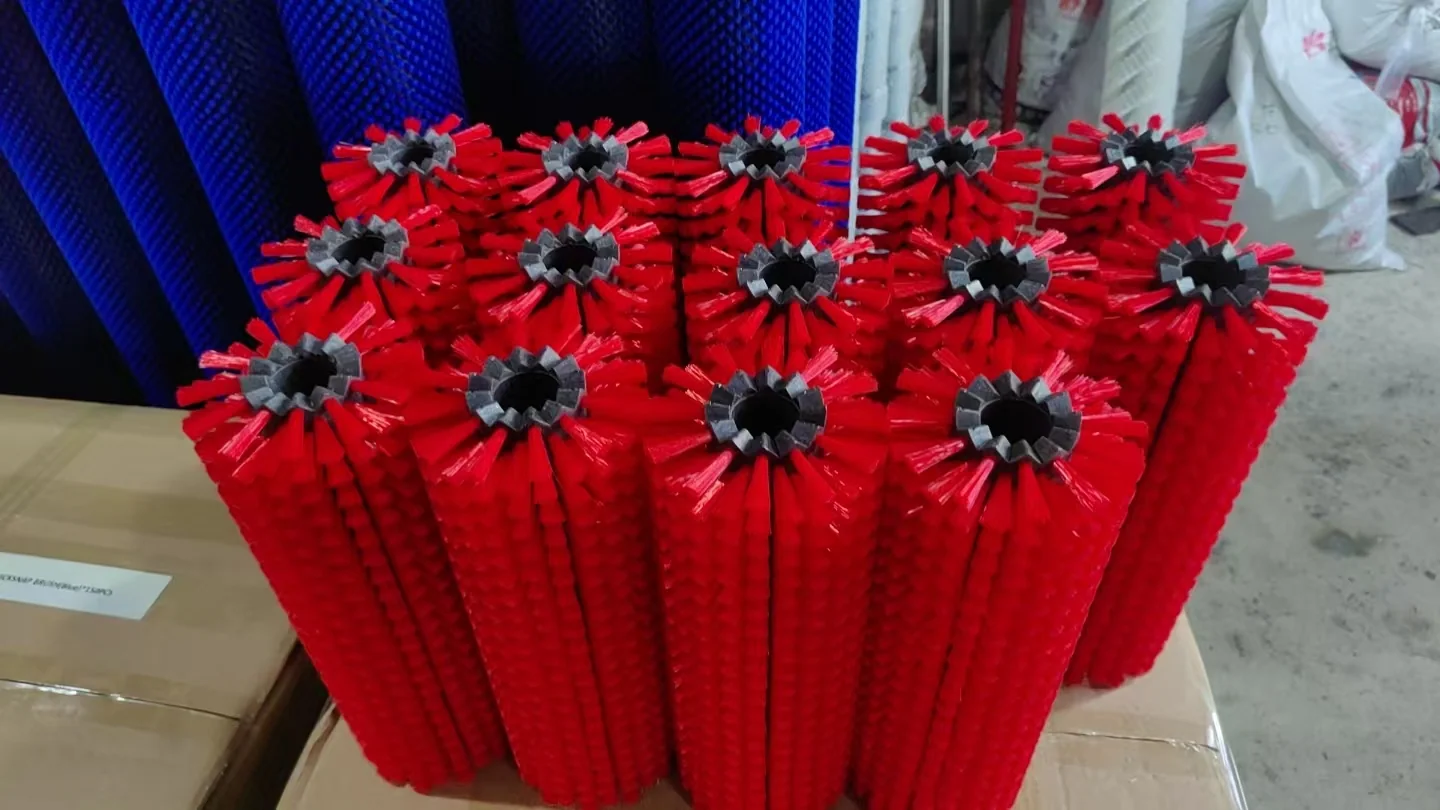
Cylinder brushes are reviewed for washing sections where bristles must contact a broad moving surface with controlled flexibility. Brush diameter, face length, filament material, filament diameter, fill density, shaft configuration, and rotation direction are defined around the actual machine. The aim is repeatable cleaning contact, not an aggressive general-purpose brushing action.
For sensitive surfaces, trial validation on the real glass and process conditions remains important. Water quality, pressure, detergents, line speed, and trapped particles can influence the result as much as the brush construction.
Water Removal After Washing
After washing or rinsing, a PVA industrial sponge roller can be reviewed to absorb and remove surface water before the next stage. Unlike a bristle roller, a sponge roller uses a porous working surface that absorbs liquid and releases it under the machine's controlled contact and drainage arrangement.
For a custom PVA sponge roller, define the process liquid, concentration, operating temperature, line speed, contact pressure, required water removal, finished dimensions, core or shaft, and mounting details. Confirm the applicable PVA grade and wet-state properties for the stated process conditions rather than selecting by color or dimensions alone.
Sheet Support and Transport Contact
Rubber-covered rollers can be reviewed where a line needs support, traction, separation, or controlled transport contact. The cover compound, hardness, surface finish, roller geometry, and shaft detail must match the machine and the glass surface requirement. A continuous roller surface is used for a different purpose from a cleaning brush, so the two should not be substituted without reviewing the process.
What to Confirm Before Quoting
- Glass type and whether a coating, film, or special surface is present
- Process stage: washing, water removal, transport, spacing, or cleaning
- Working width, finished OD, shaft, bore, journals, and mounting detail
- Wet or dry contact, process liquid, temperature, line speed, and pressure
- Surface-marking limits and the required validation or sample process
Send the approved drawing for custom production. Brushcustom supports large-volume OEM and replacement orders for cylinder brushes, industrial sponge rollers, and covered rollers when the material, dimensions, mounting details, and tolerances are confirmed for the actual line.