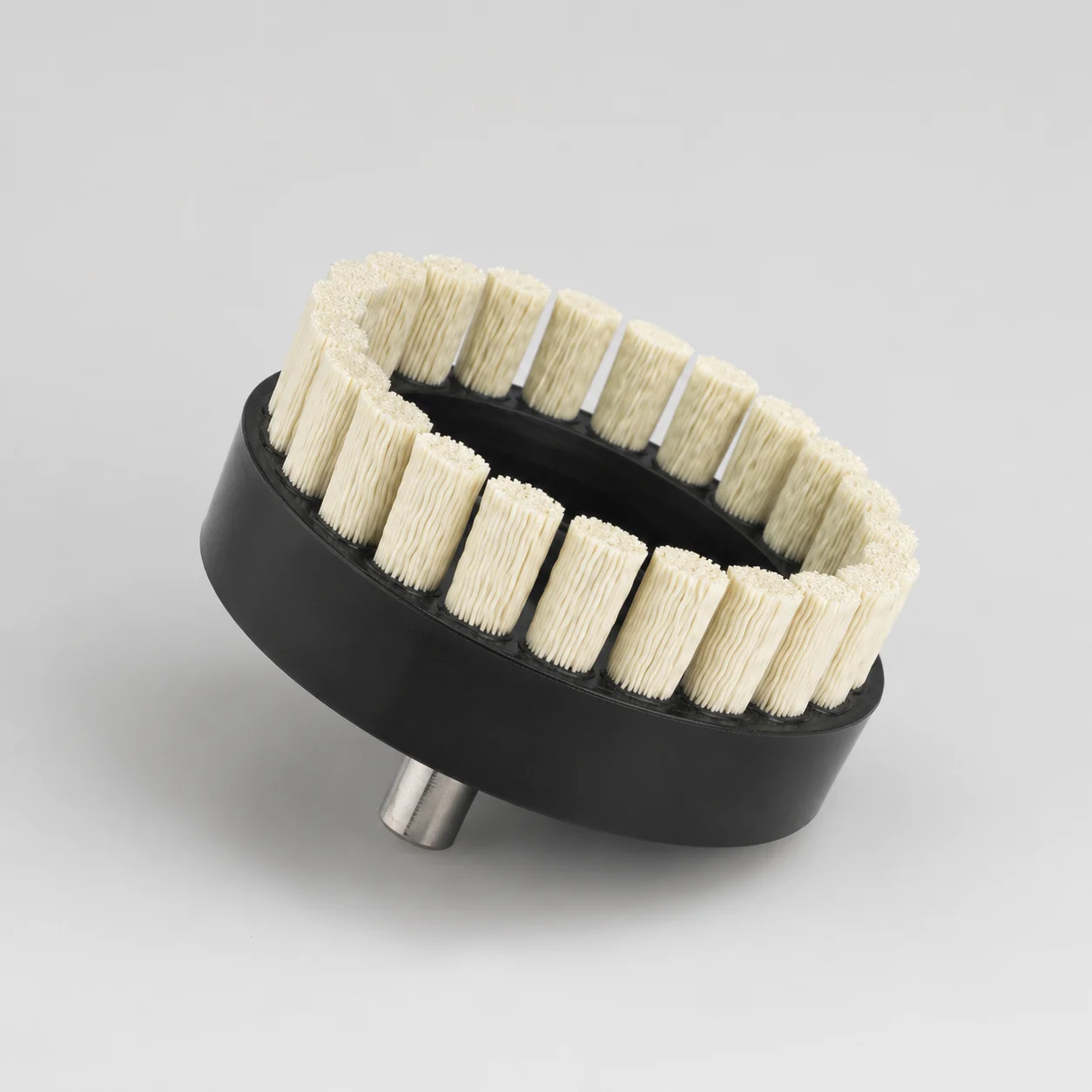
Tufted pattern disc brushes
Spaced abrasive-filament tufts provide flexibility around holes, slots, contours, and recessed features.

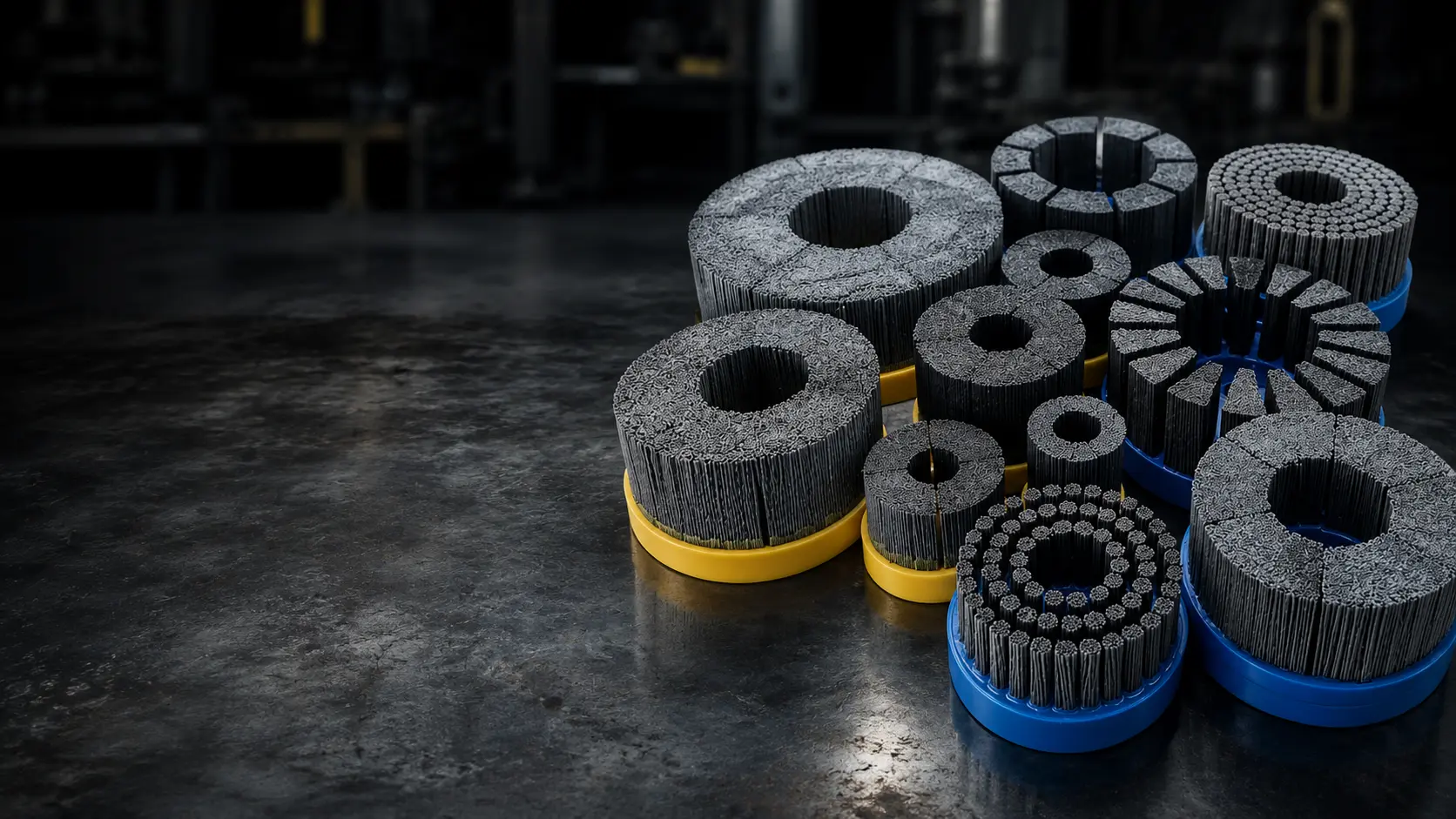
Custom disc brushes for deburring, edge rounding, surface conditioning, and controlled finishing. Built to your required diameter, working face width, mounting detail, material, and operating speed.
Request a QuoteA disc brush is a rotary brush designed to work through its face rather than through a narrow outer edge. It is commonly used where the process needs broader contact, more stable pressure, and more consistent brushing action across edges or surfaces.
In industrial applications, disc brushes are often used for deburring, edge rounding, surface conditioning, cleaning, and controlled finishing.
Disc brushes are usually specified by process duty, face size, mounting detail, fill material, and operating speed rather than by one universal stock format.
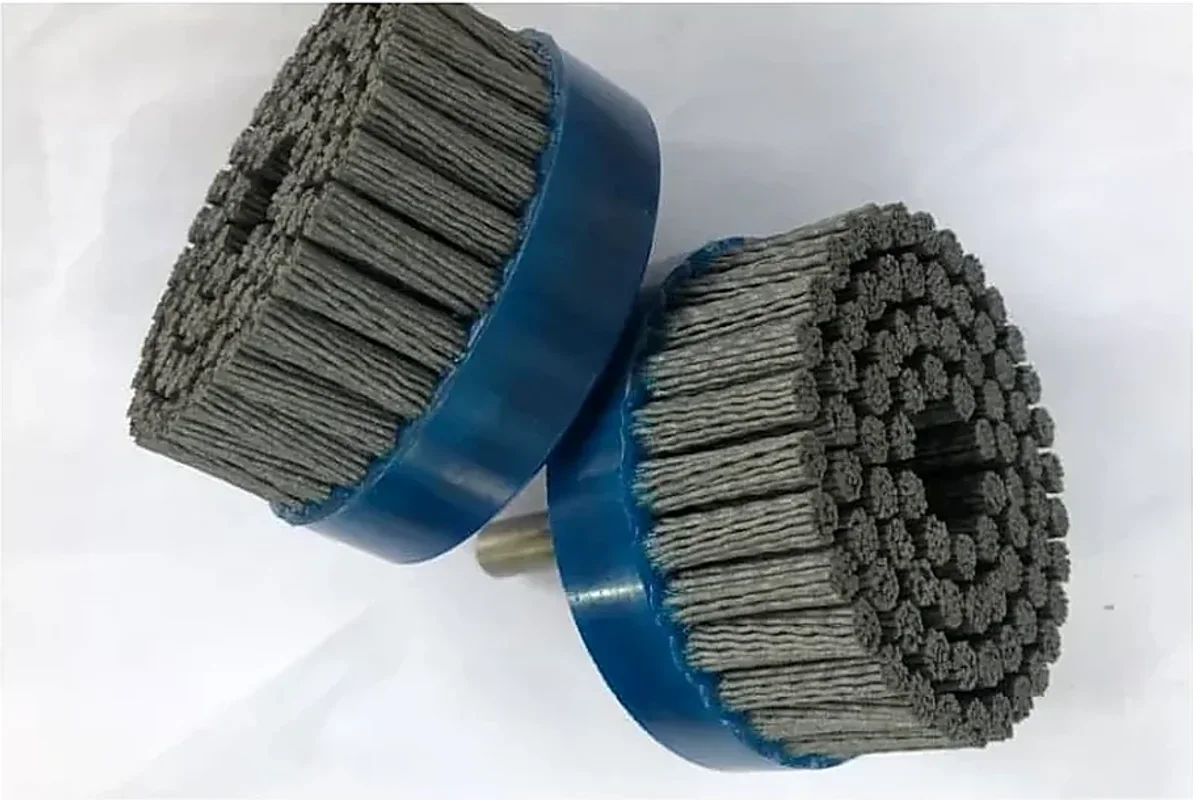
The working face can be arranged to change flexibility, contact density, chip clearance, and surface coverage. Select the pattern around the part geometry and required finishing result.
Spaced abrasive-filament tufts provide flexibility around holes, slots, contours, and recessed features.
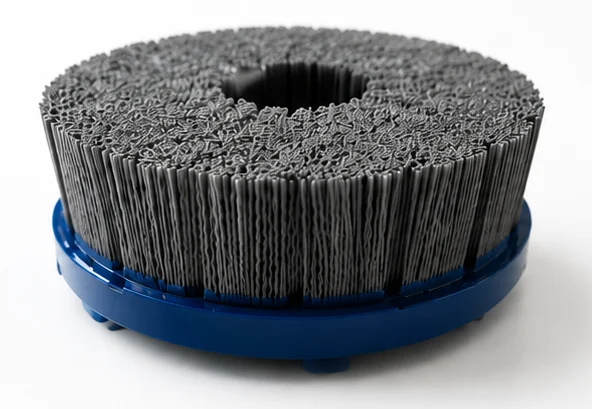
A high-density working face provides stable contact for flat surfaces, stronger deburring, and uniform finishing.
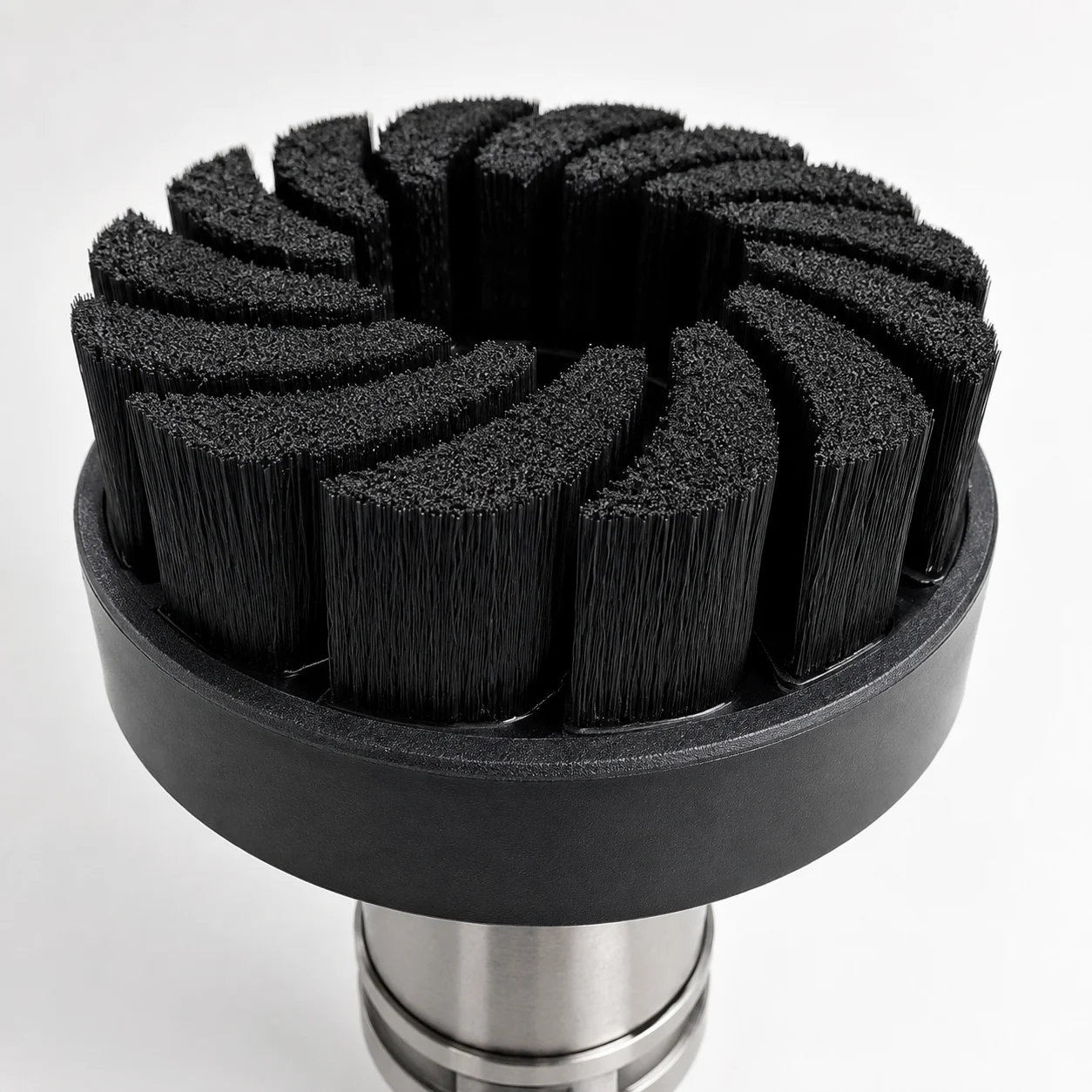
Separate working segments provide clearance between contact zones and can be configured for deburring, sanding, or polishing.
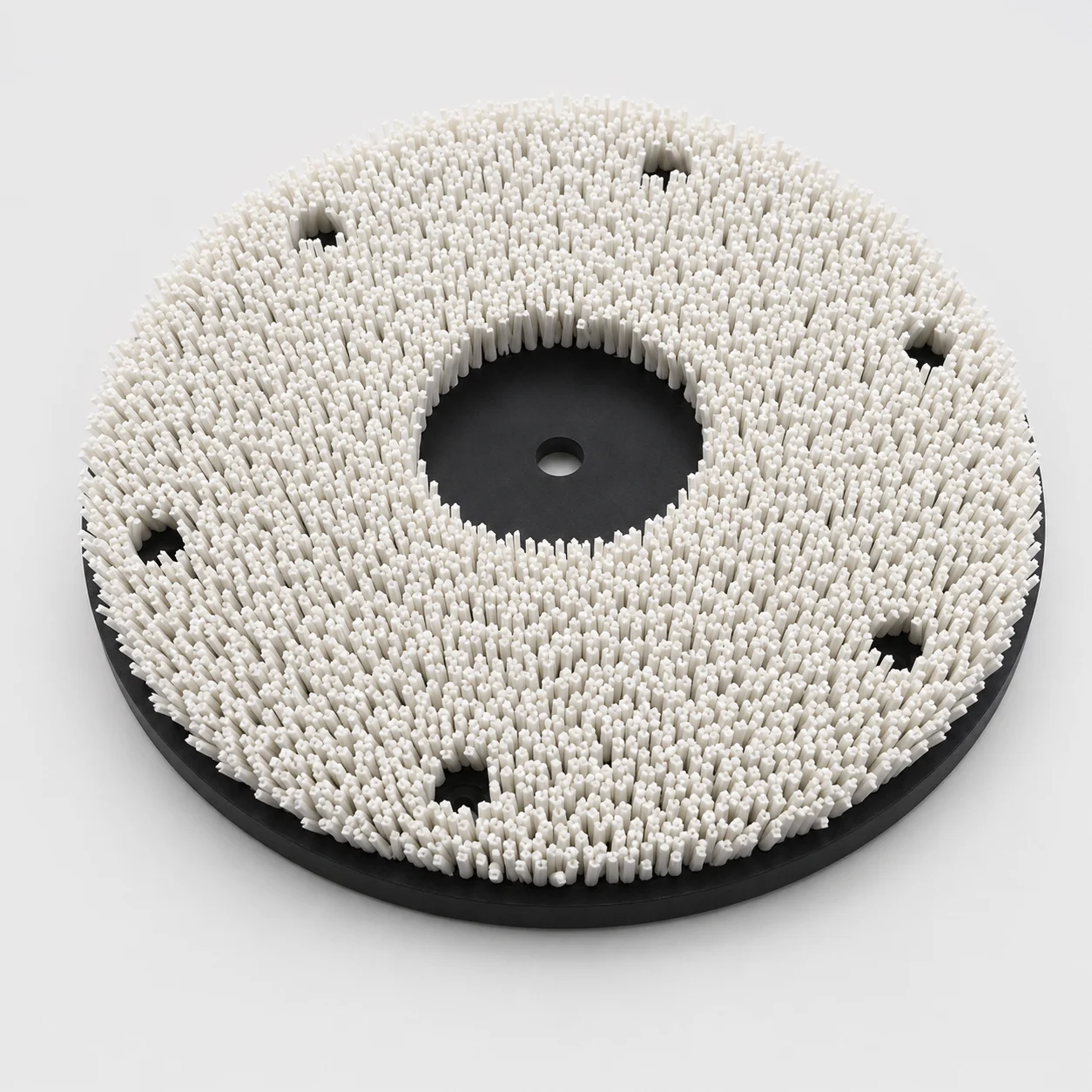
Abrasive filaments arranged in circular rows provide broad rotary contact for machine cleaning and surface finishing.
Disc brushes are used where stable face contact matters more than aggressive edge attack. They are commonly specified for deburring stamped or machined parts, edge rounding after cutting, surface conditioning before coating or bonding, and other finishing tasks that require repeatable contact across the work area.
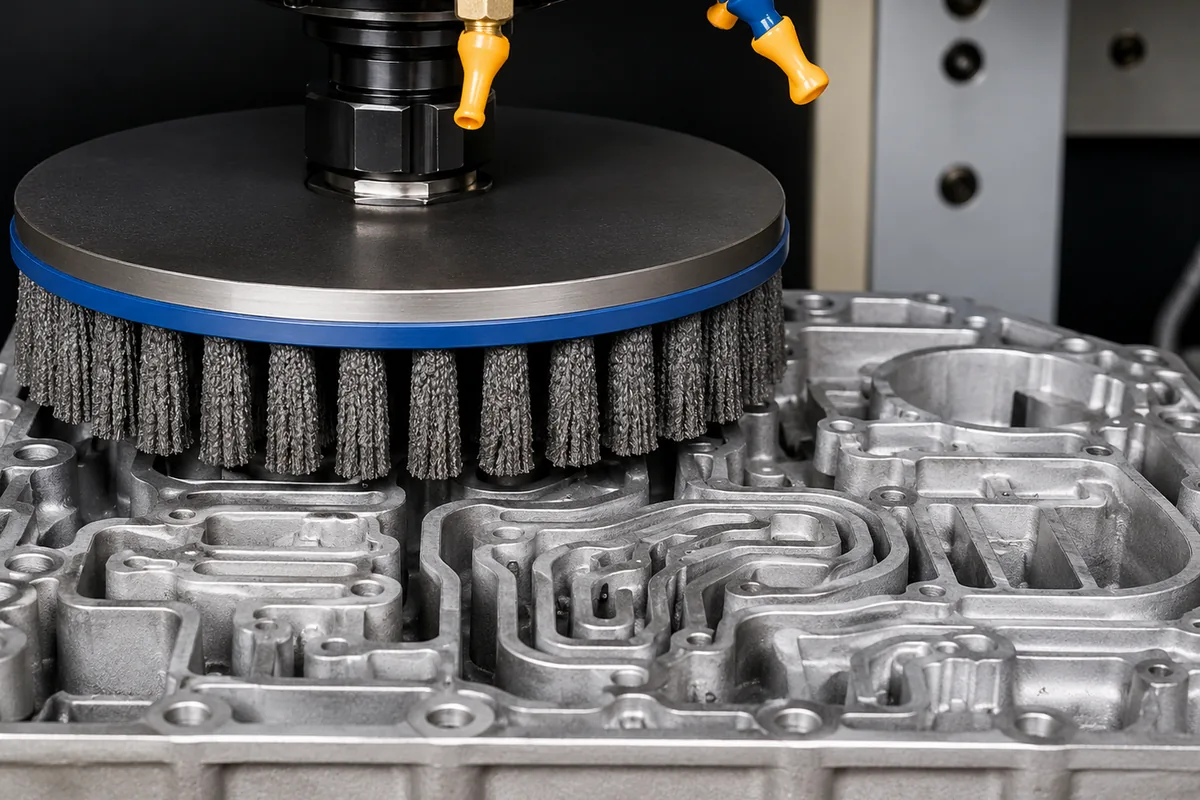
Remove light burrs after machining, stamping, drilling, or cutting while keeping the brushing action more controlled.
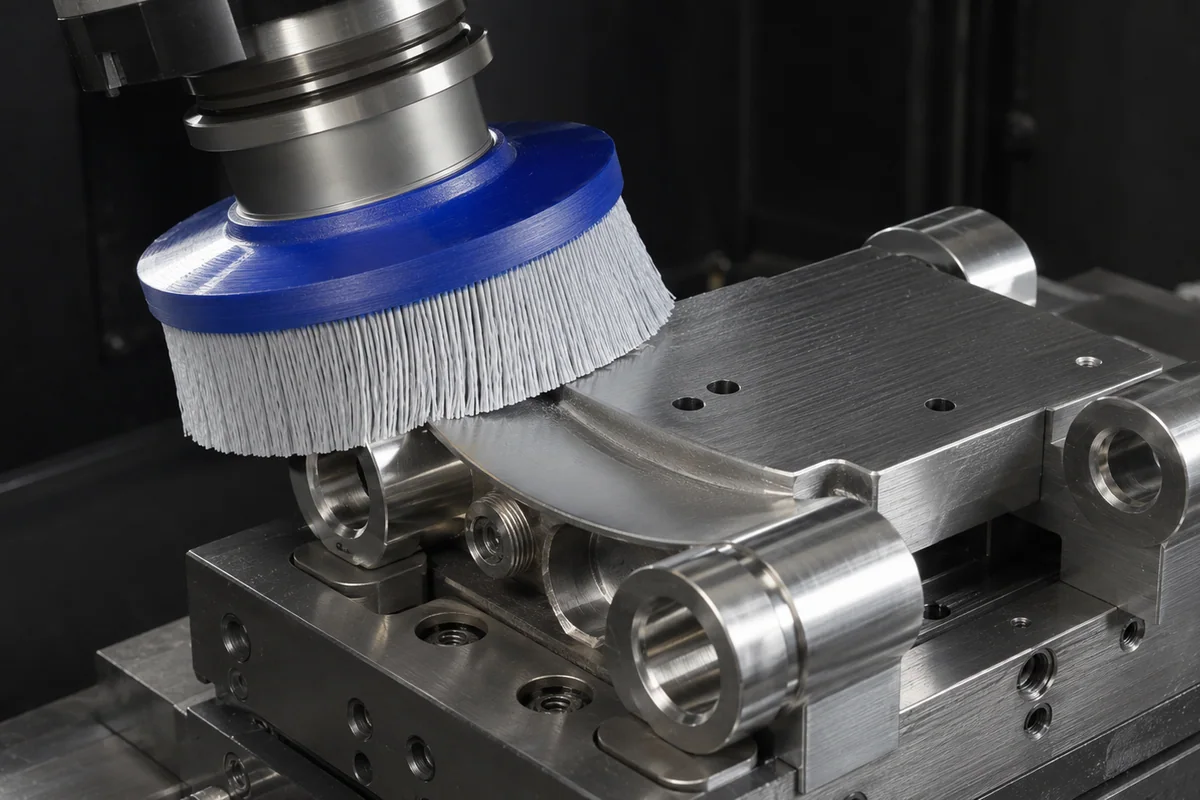
Smooth sharp cut edges and improve consistency before coating, assembly, or handling.
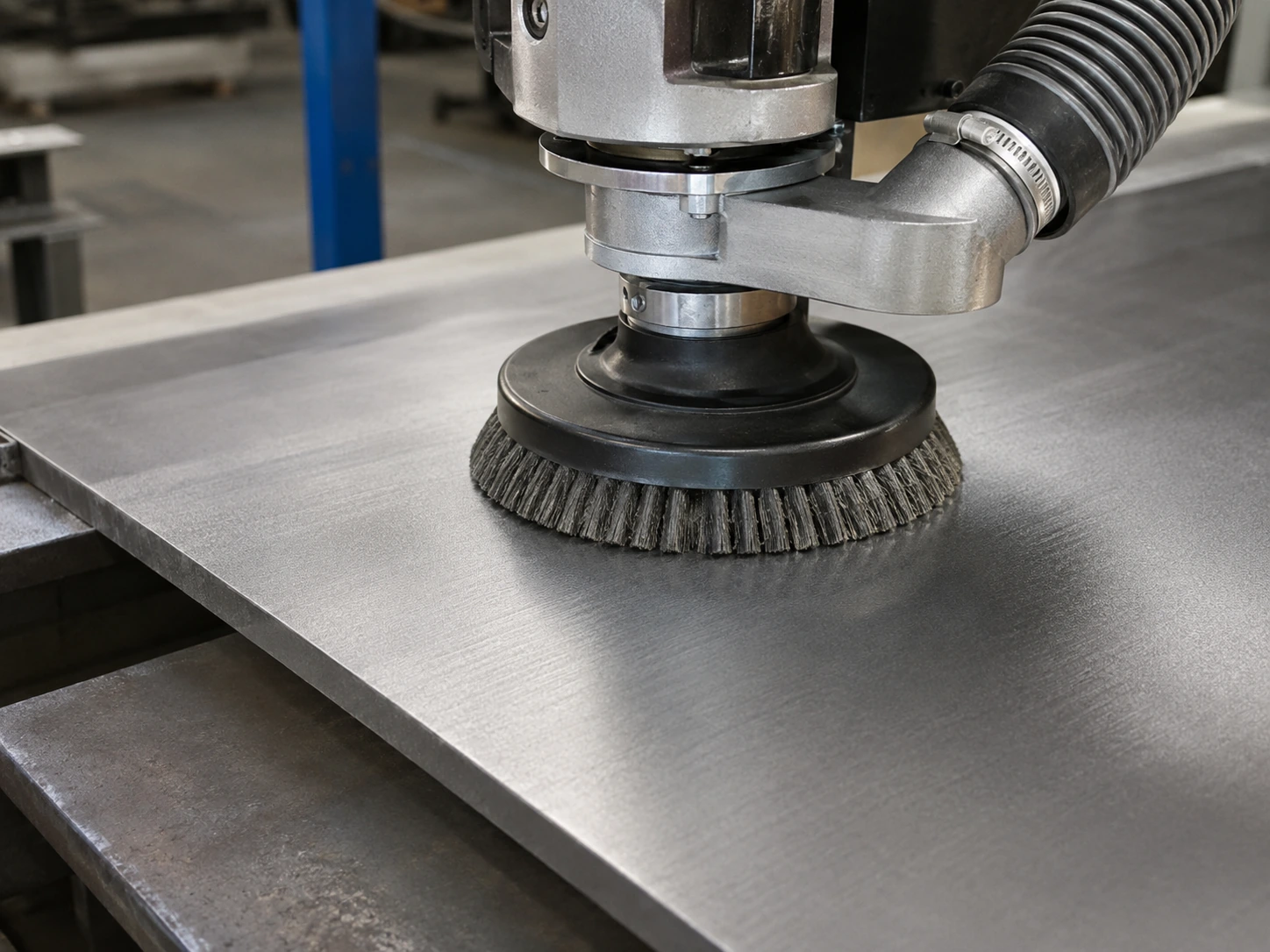
Prepare the surface for bonding, coating, cleaning, or secondary finishing where even contact matters.
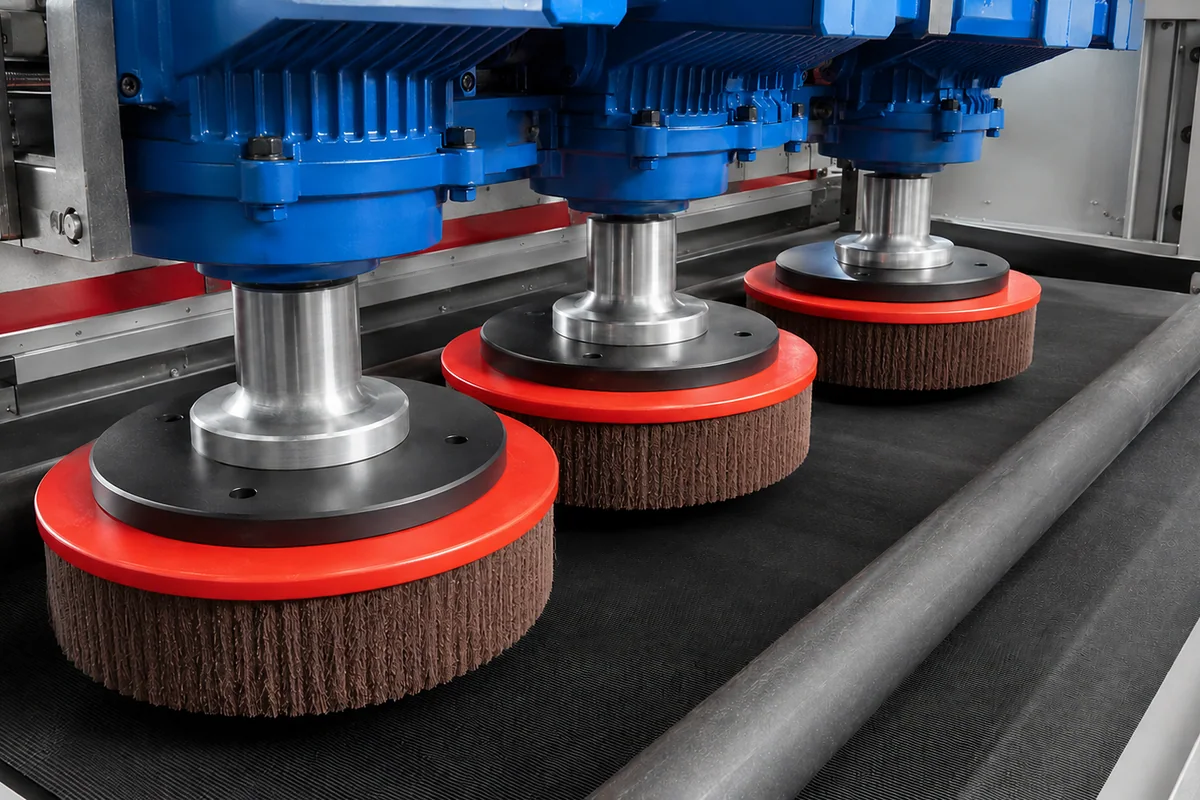
Used on OEM and line-mounted equipment where repeatability, stable running, and predictable surface effect are important.
Disc brushes are usually built to machine and process requirements rather than to one universal stock size standard. If a full drawing is not available, the dimensions below are normally enough to begin technical review and reduce wrong-fit replacements.
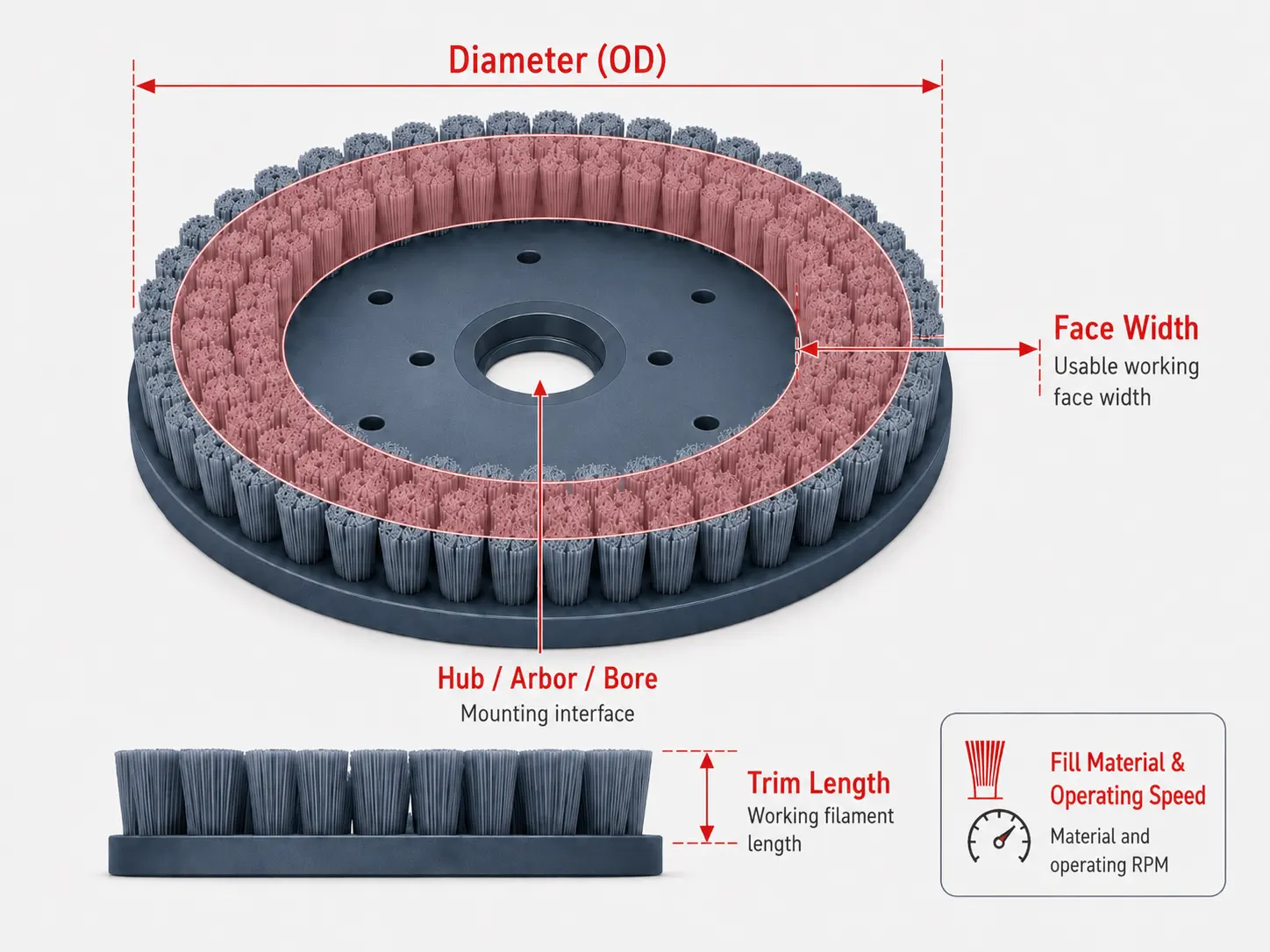
Provide the finished outside diameter used in production. This affects contact area, surface speed, and machine clearance.
Share the usable brush width so the working face can match coverage, edge reach, and the actual contact requirement.
Confirm the working filament length because it changes flexibility, contact pressure, and finish behavior.
Mounting interface dimensions should match the spindle or machine fixture correctly before production is released.
Material type and RPM or line condition should match the workpiece, finish target, wear expectation, and stability requirement.
The round brush base can be built around the spindle, holder, or drive system used on the machine. Provide a drawing, sample, or clear photo of the existing interface for replacement projects.
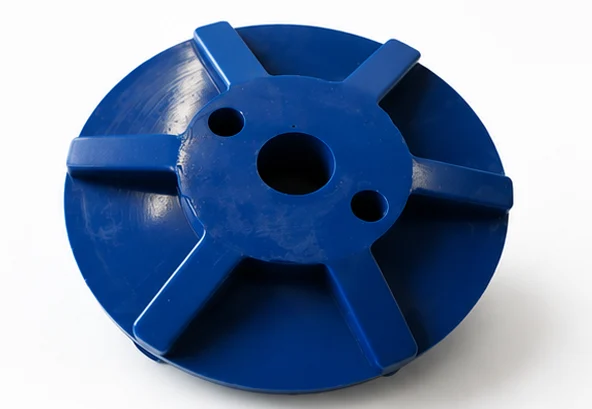
A center arbor hole and matching drive holes or locator pins secure the brush to a CNC, milling, or automated finishing machine.
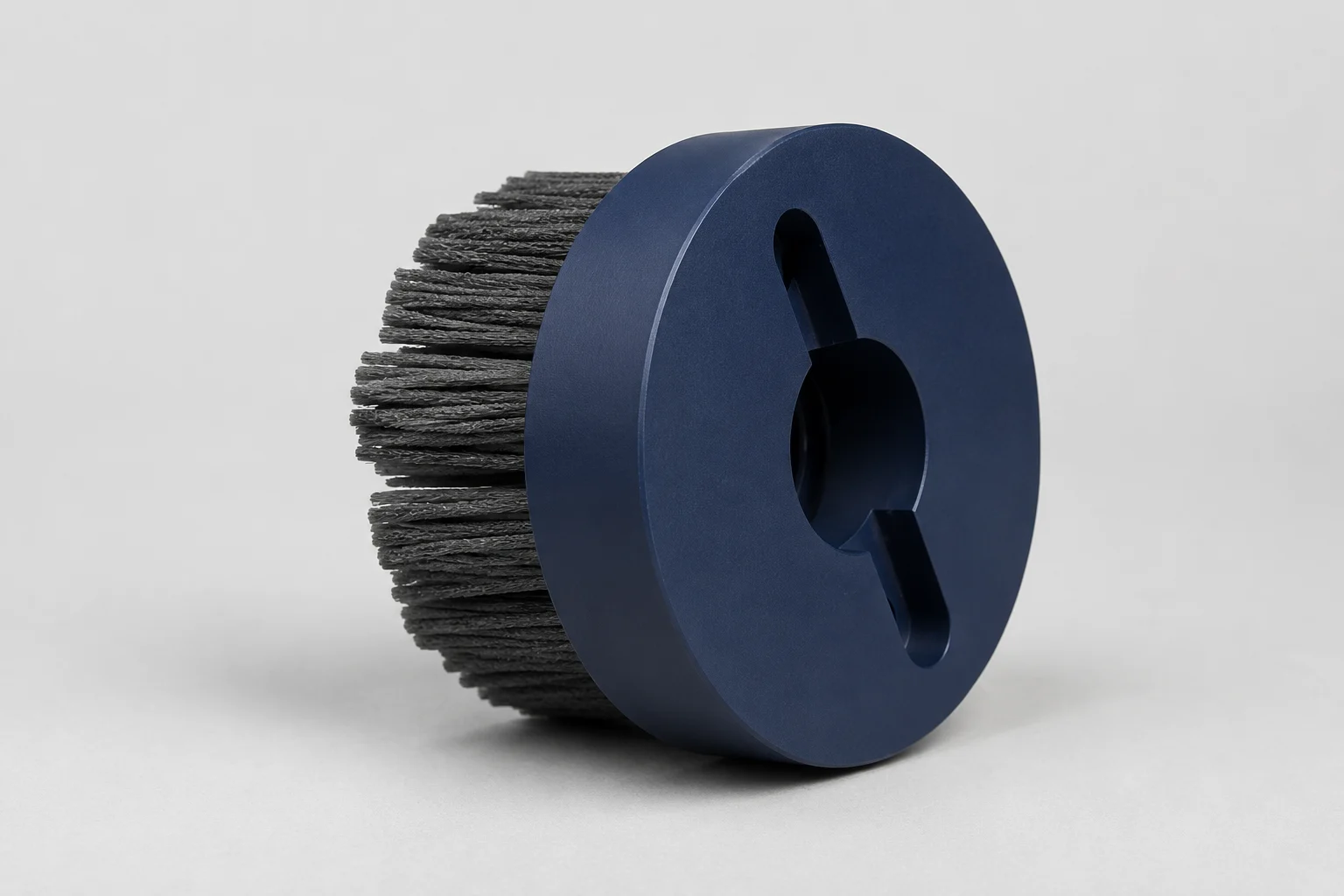
A keyed interface allows the disc brush to mount directly to a compatible shell mill holder for CNC deburring and finishing.
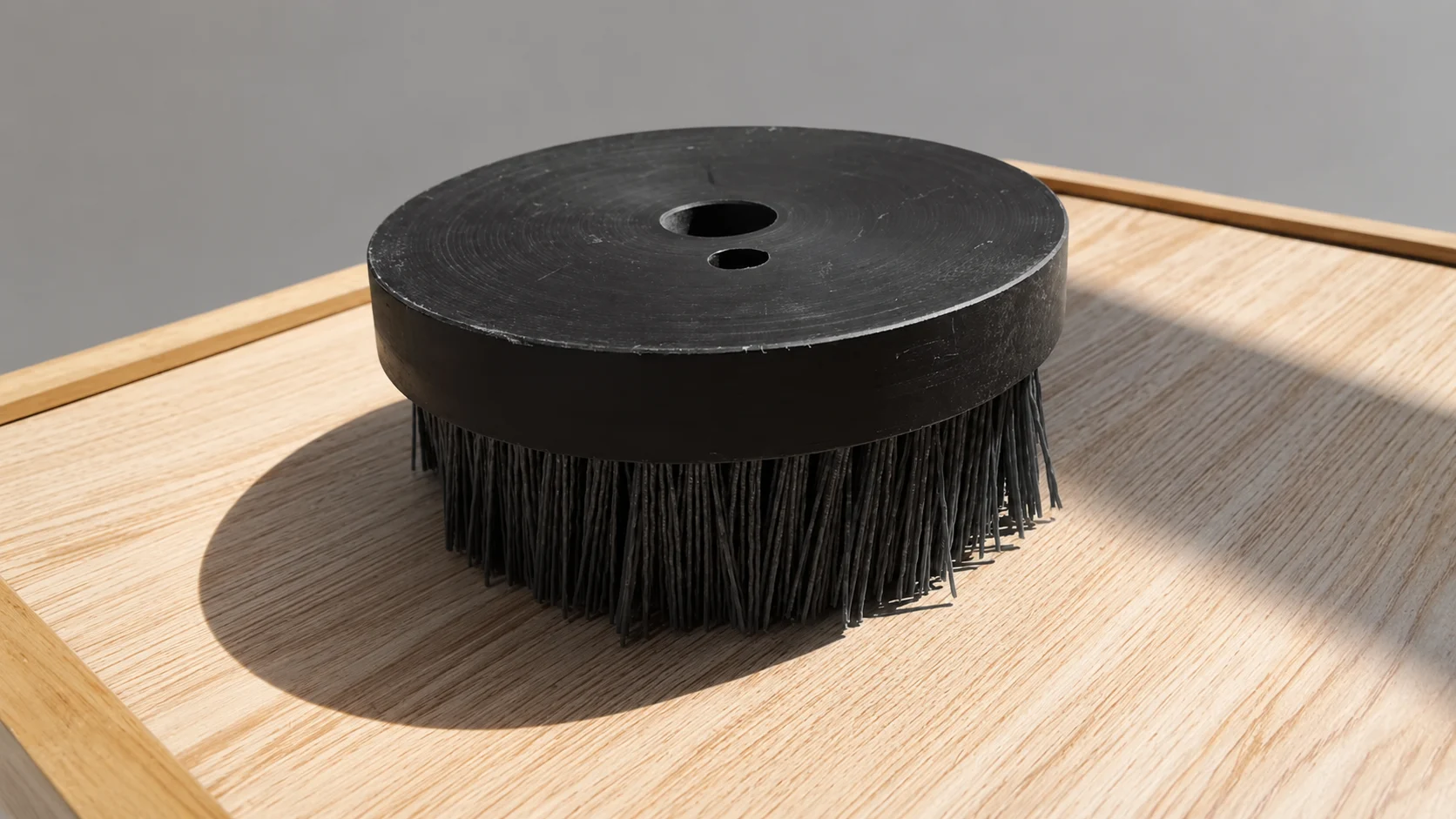
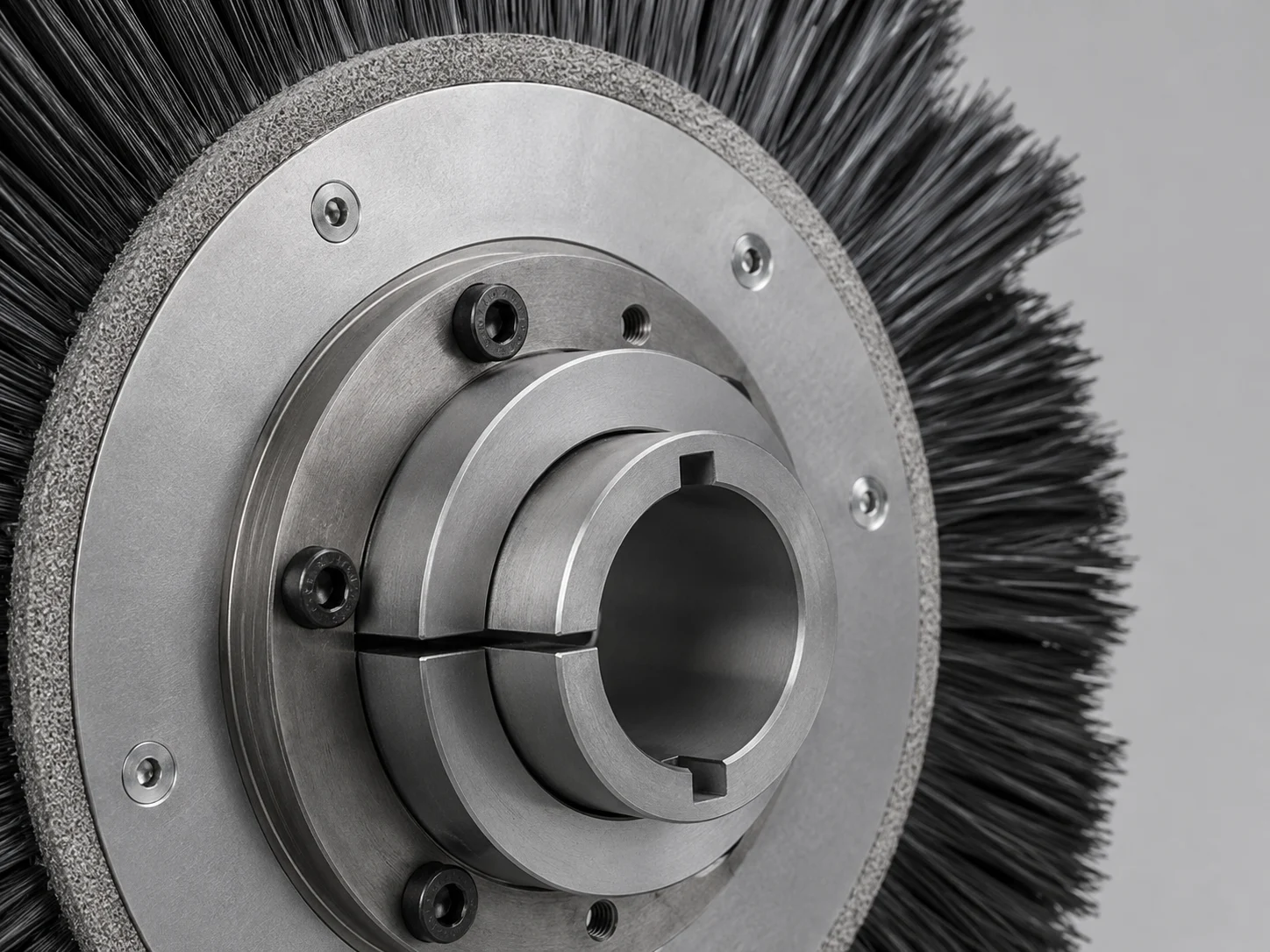
Round, hexagonal, splined, or other custom bores can be combined with the required bolt-hole and adapter pattern.
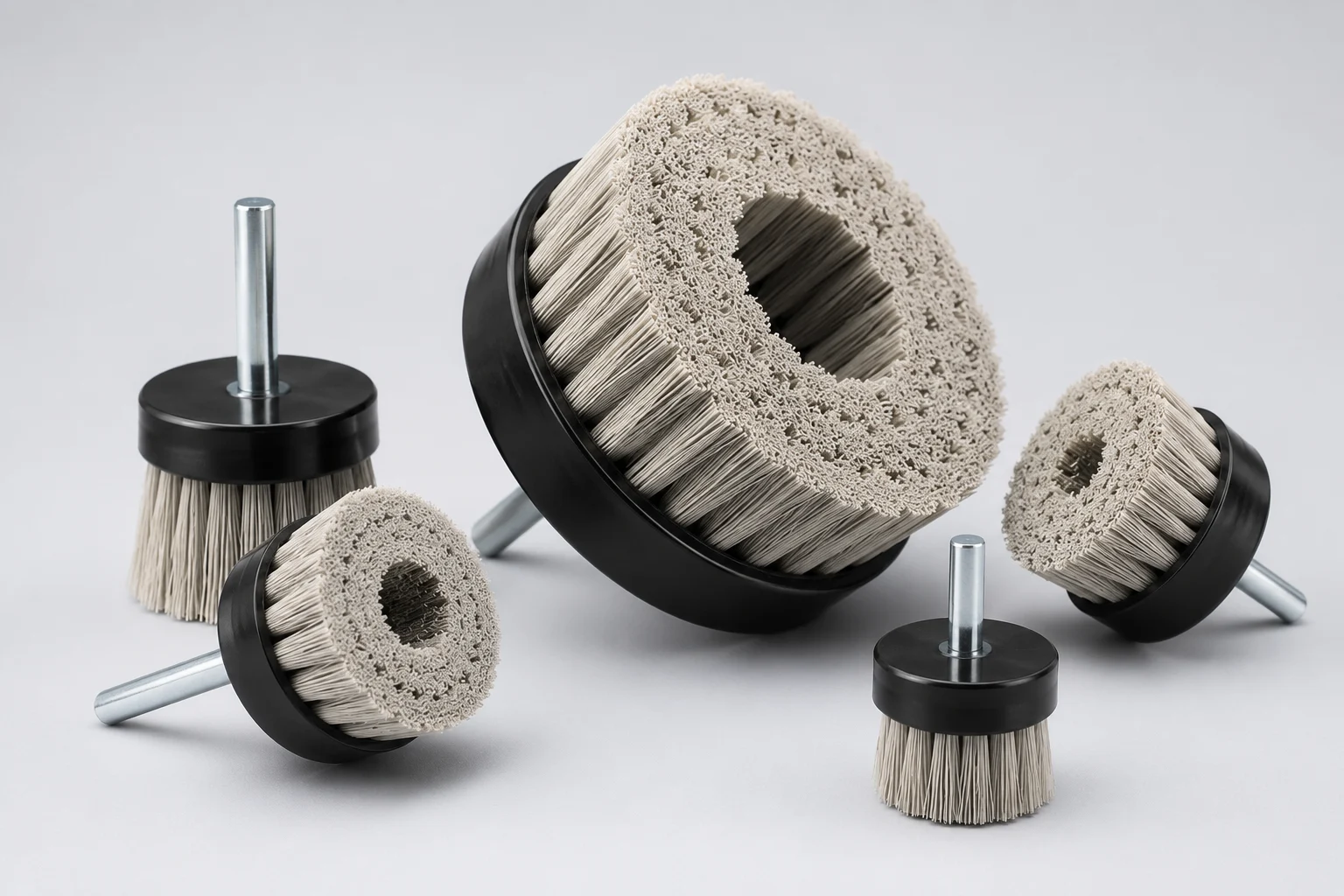
A built-in shank allows smaller disc brushes to be held directly in a chuck, collet, tool holder, or power tool.
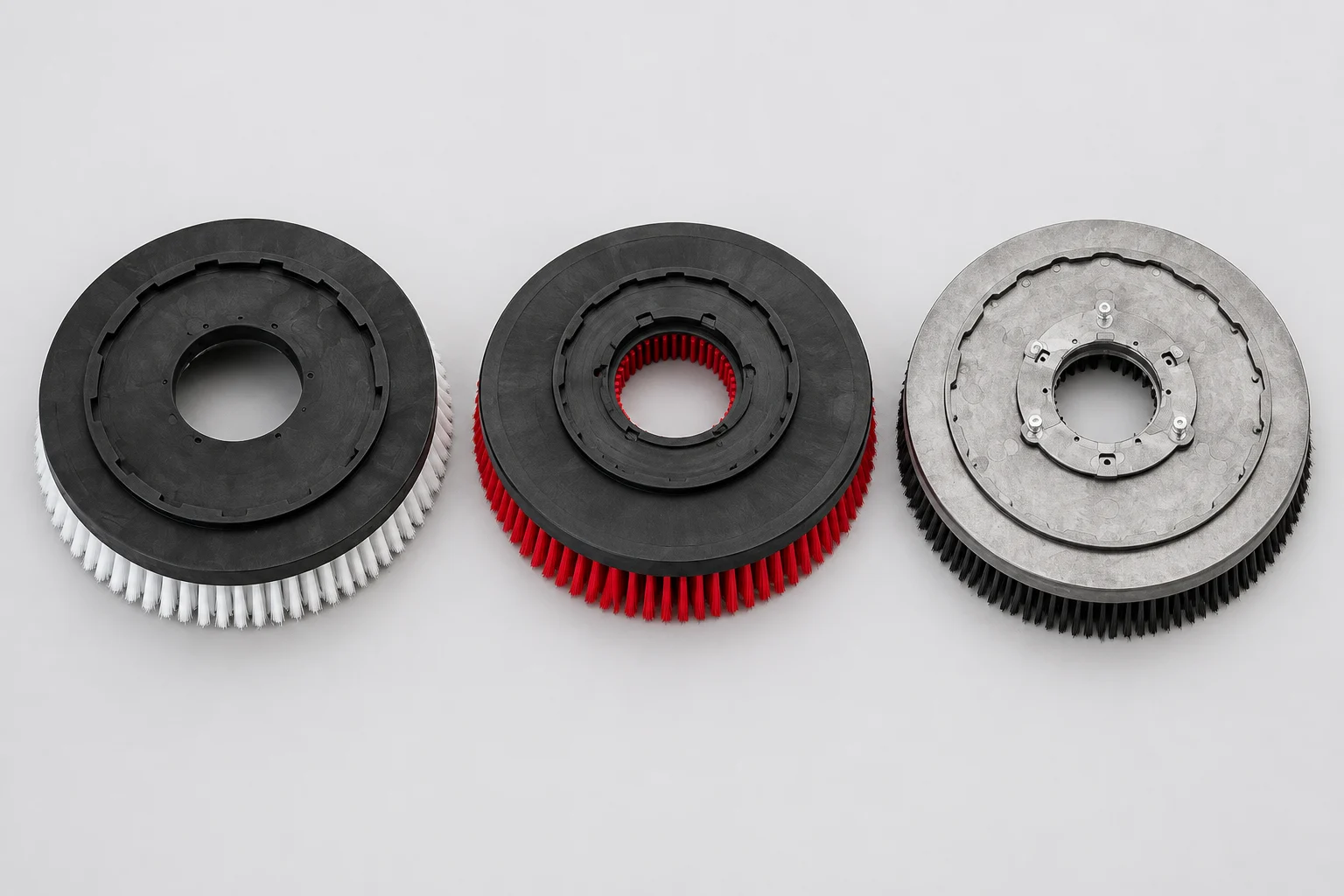
Cleaning-machine disc brushes can be supplied with the drive hardware required for the specified equipment make and model.
Disc brushes are available with four abrasive filament options. Abrasive type, grit, filament diameter, and density can be matched to the workpiece and required finish.
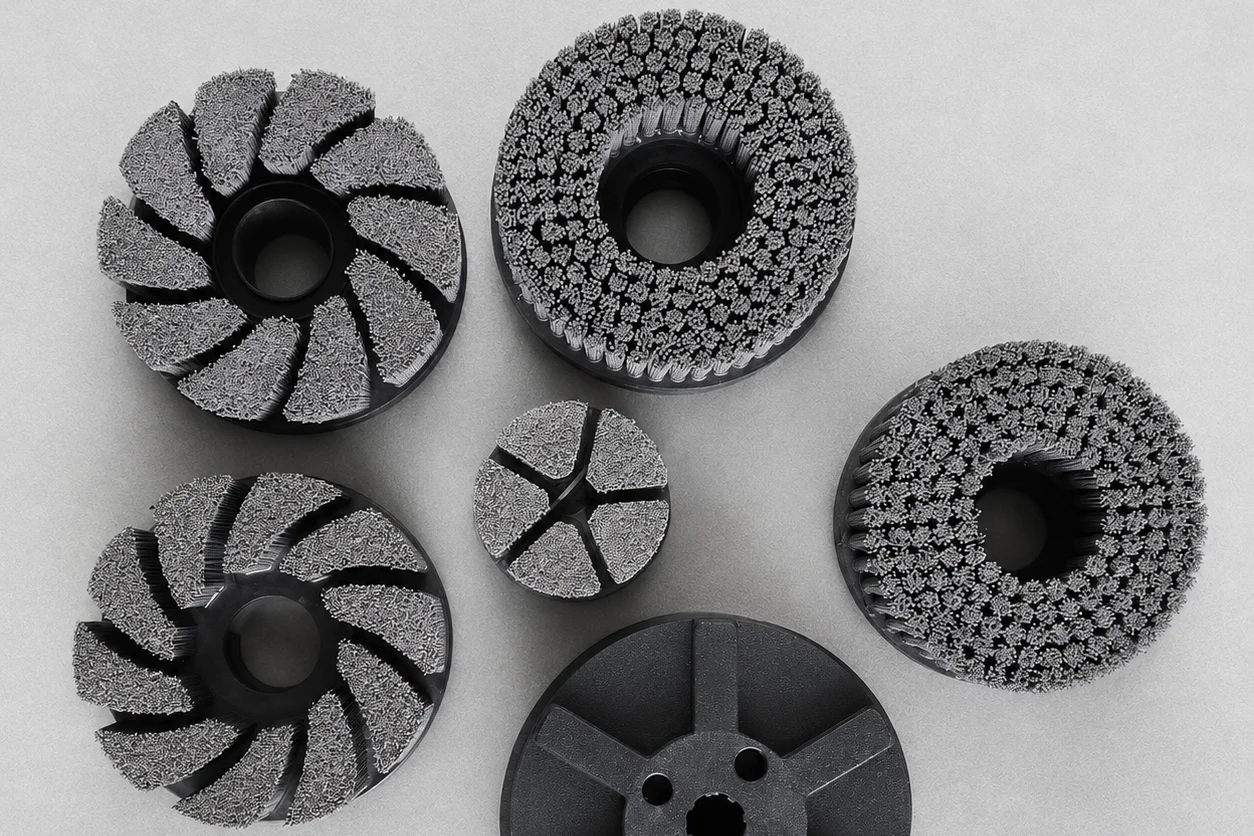
For general deburring, edge rounding, cleaning, and surface conditioning.
For controlled cutting and finishing on steel, alloys, and other industrial components.
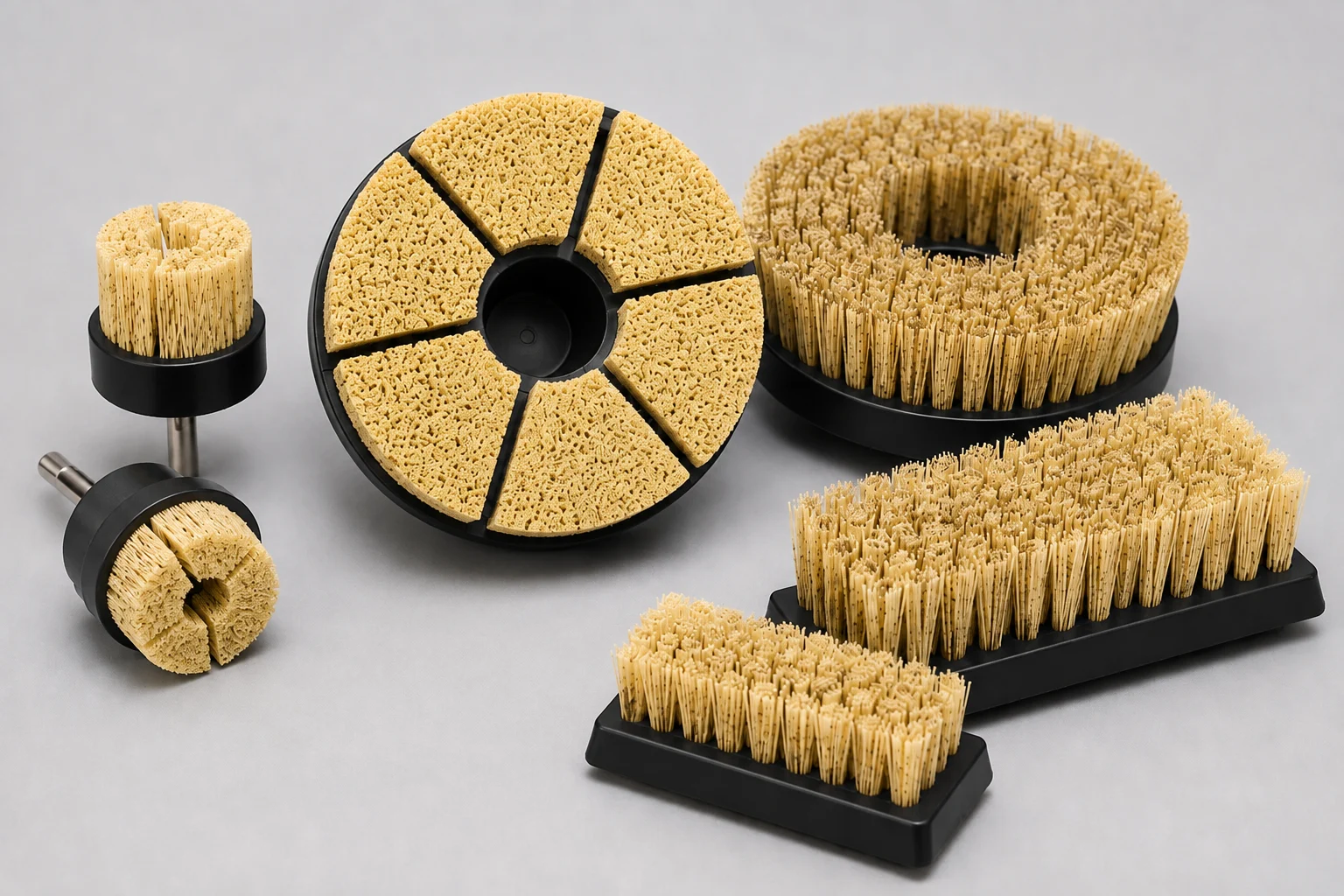
For hard materials and applications requiring precise, consistent abrasive action.
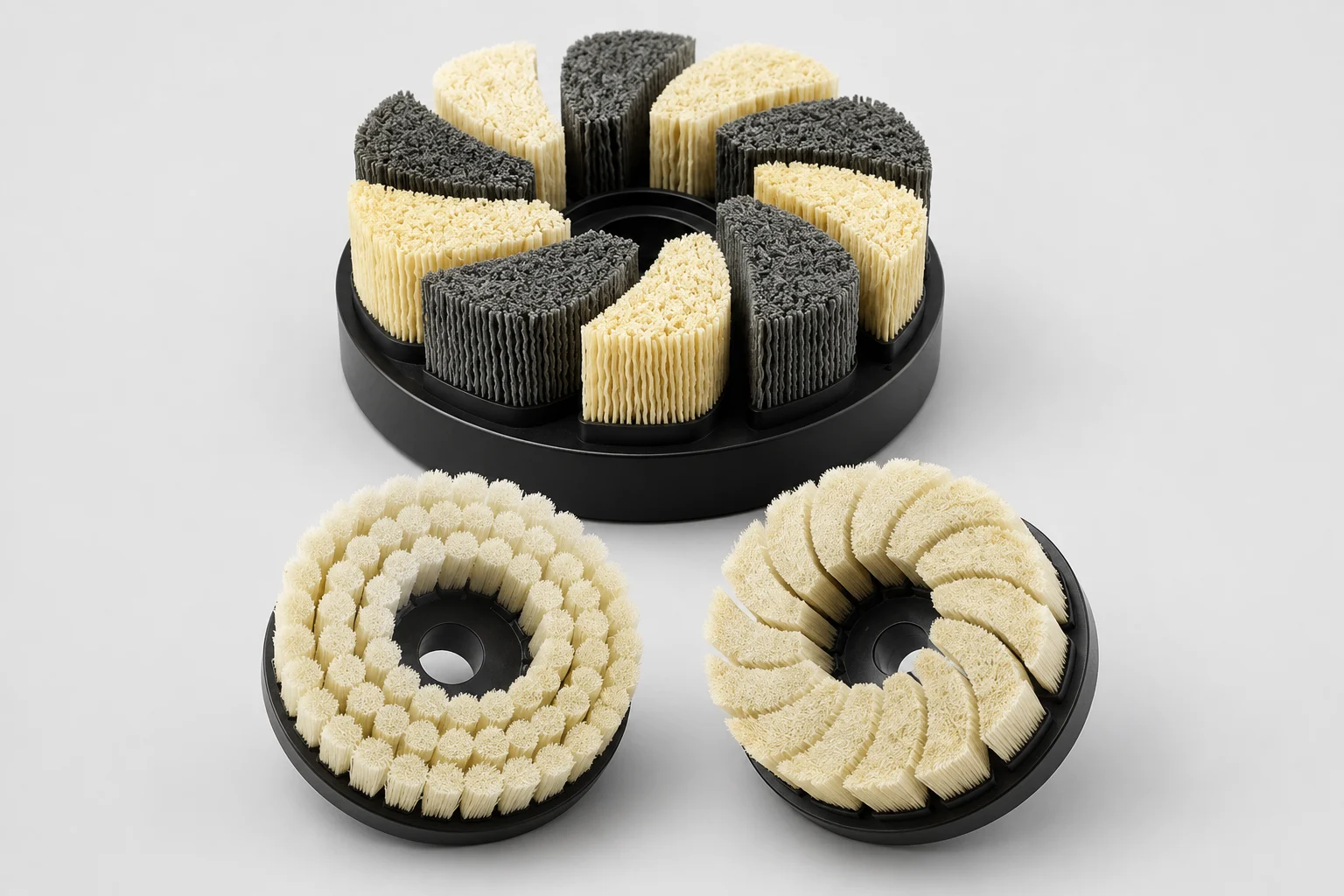
For higher cutting performance, demanding deburring, and production finishing.
Disc brushes are commonly used for deburring, edge rounding, cleaning, surface conditioning, and controlled finishing where stable face contact matters.
Yes. Disc brushes can be customized by diameter, working face width, trim height, hub detail, bore or arbor detail, base material, fill material, and operating requirement.
The most important details are diameter, working face width, trim height, mounting detail, fill material, and operating speed. A sample or marked photo is often helpful for replacement matching.
No. They are also used on glass, ceramics, food equipment, and other industrial components depending on the required brushing effect and material compatibility.
Yes. A drawing or physical sample is usually the fastest and most reliable way to confirm fit, construction, and replacement accuracy.
Custom production from your drawing. Large-volume production is supported for OEM and replacement projects.